
 Laily UPN
By Sarah Lewis
Published October 26, 2026
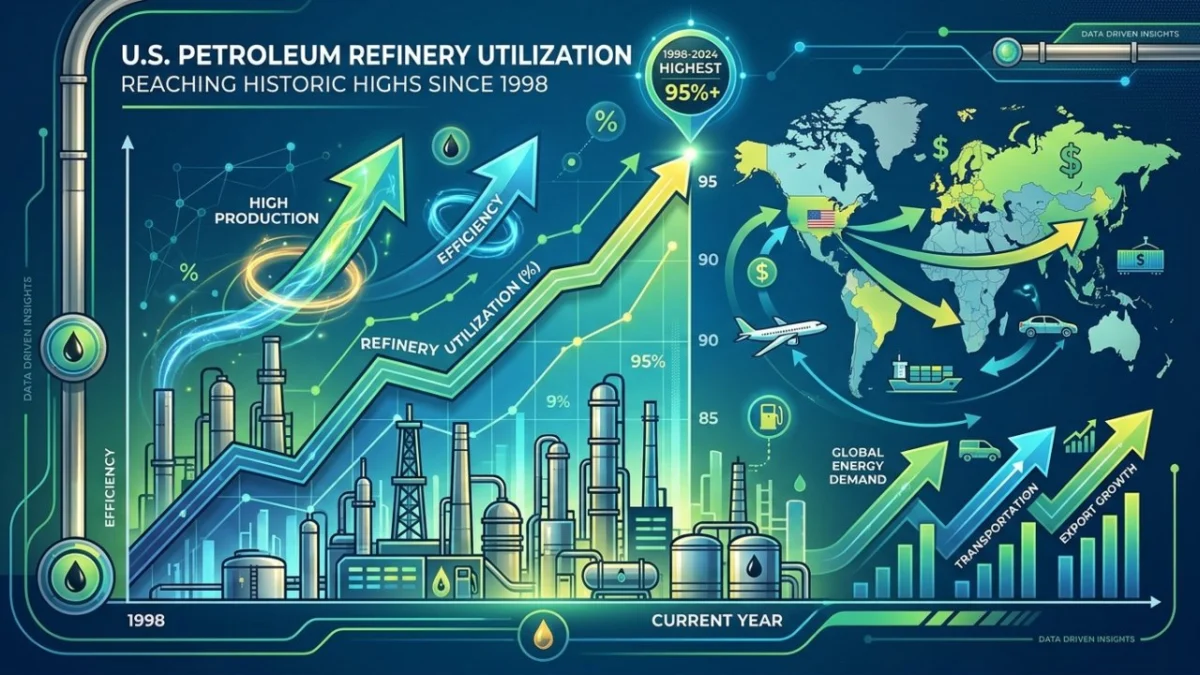
The American energy landscape has reached a historic inflection point. Between May and September 2026, United States refineries achieved an average utilization rate exceeding 95%—a level of intensity not witnessed in nearly three decades. While this surge underscores the resilience and responsiveness of the U.S. energy sector, it also highlights an underlying structural tension: the industry is running harder than it has since 1998, yet total output remains tempered by a diminished physical footprint. For small business owners, particularly those operating in energy-sensitive sectors, this period of peak activity offers a critical window to reassess supply chain dependencies and fuel procurement strategies.
The Main Facts: A Historic Spike in Efficiency
The U.S. refining sector has spent the last several months operating at a pace that defies traditional seasonal norms. Typically, refinery utilization rates hover around the 92% mark during the summer, as plants prepare for peak travel demand and increased agricultural activity. However, the 2026 season pushed these facilities to their mechanical limits, sustaining a 95% average for five consecutive months.
This surge is not merely a product of domestic demand; it is a direct response to a global energy market grappling with tightening supplies. The U.S. has transitioned into a pivotal role as a primary supplier of refined petroleum products—specifically distillates—to international markets. Consequently, refineries are no longer just servicing the local pump; they are serving as the backbone for global energy security.
Chronology: From Winter Planning to Summer Peak
To understand how the industry arrived at this unprecedented peak, one must look at the timeline of operational decisions made over the past year:
- Q1 2026: Refineries began their transition from winter-grade fuel production to summer blends. Strategic inventory builds were prioritized to hedge against anticipated global volatility.
- May 2026: The onset of the summer driving season saw utilization rates climb sharply, breaking past the 93% barrier and signaling the start of a high-intensity production cycle.
- June–August 2026: As international demand for U.S. distillate fuel oil (diesel and heating oil) surged, refineries shifted their "product slate." Rather than focusing solely on gasoline, plants optimized their processes to extract maximum distillate volumes.
- September 2026: Despite the typical seasonal taper, utilization remained stubbornly high, holding at the 95% threshold as domestic agricultural demand for diesel began its harvest-season ramp-up.
- October 2026: As the peak season concluded, rates began a gradual, anticipated decline. However, they remain significantly above the five-year average, suggesting that the pressure on infrastructure has not yet fully dissipated.
Supporting Data: The Capacity Paradox
While the 95% utilization rate is an impressive metric, it is vital to contextualize it against the reality of total production capacity. It is a common misconception that high utilization equals record-breaking production volumes.
The data reveals a more nuanced story. While the intensity of the refining process is at a 28-year high, the total volume of output has only reached its highest level since 2019. The reason for this gap lies in the 4% reduction in U.S. refining capacity that has occurred over the last seven years.

Why Capacity Has Contracted
Several factors have contributed to this decline:
- Strategic Decommissioning: Older, less efficient refineries have been retired or converted into biofuel facilities.
- Regulatory Hurdles: Stricter environmental compliance costs have made the maintenance and expansion of older plants economically unfeasible for some operators.
- Market Realignment: The energy transition has led some major players to pivot capital expenditure away from traditional oil refining and toward renewable energy assets.
For the small business owner, this means that even when refineries are "running flat out," there is a lower ceiling for total supply than there was in the previous decade. This structural constraint makes the market more susceptible to price spikes if a single major refinery experiences an unplanned outage.
Official Responses: Insights from the EIA
Jimmy Troderman, a principal contributor for the U.S. Energy Information Administration (EIA), has been instrumental in clarifying the drivers behind this trend. According to Troderman, the sustained demand for distillate exports has been the primary engine driving these high utilization rates.
"High international demand for U.S. distillate fuel oil exports has kept refinery outputs elevated," Troderman noted. This is a critical observation for entrepreneurs in the transportation, logistics, and construction sectors. When global markets dictate the price and availability of diesel, local businesses—which often operate on tighter margins—must be prepared for the ripple effects of global price fluctuations.
The EIA’s data suggests that while the U.S. remains a net exporter, the margin between domestic supply and international demand is increasingly narrow. Any disruption in international logistics or a spike in foreign demand can directly impact the availability of fuel at local U.S. stations.
Implications for Small Businesses
For the entrepreneur, the current energy climate is a double-edged sword. On one hand, high utilization rates indicate a stable, functioning supply chain. On the other, the lack of "spare" capacity creates a risk profile that requires proactive management.
1. The Diesel Dependency Risk
Businesses in agriculture, logistics, and heavy construction are uniquely exposed to the volatility of distillate prices. Because refineries have optimized their outputs to favor these fuels for export, local availability is generally good, but prices are tethered to global benchmarks. Business owners should consider locking in fuel contracts or exploring "hedging" strategies if their annual fuel spend exceeds a specific threshold.

2. Strategic Inventory Management
The dip in utilization during October serves as a warning. As refineries move into maintenance cycles, the temporary reduction in output can lead to localized supply shortages. Small businesses should avoid "just-in-time" fuel procurement during these transition months. Maintaining a slightly larger on-site fuel reserve can act as a buffer against short-term price volatility.
3. Forecasting and Data Literacy
The era of assuming "fuel will always be available at a stable price" is over. Small business leaders are now expected to be amateur energy analysts. Utilizing forecasting tools provided by the EIA and other industry watchdogs can help leaders anticipate when price hikes are likely. For example, understanding that winter heating demand will soon compete with diesel demand is a vital insight for planning Q4 and Q1 budgets.
4. The Competitive Edge
Companies that can successfully model their energy needs against market conditions gain a distinct competitive advantage. If you know that fuel prices are likely to rise due to an anticipated decline in refinery output, you can adjust your shipping rates or service quotes in advance, protecting your profit margins while competitors are caught off guard by rising costs.
Looking Ahead: Preparing for 2027
As we head into the final quarter of 2026, the data suggests a period of stabilization, but not necessarily a return to the "cheap energy" era. The combination of high utilization and reduced capacity is likely to remain the status quo for the foreseeable future.
Small business owners should take this opportunity to:
- Audit Energy Usage: Identify where fuel consumption can be optimized through route planning, fleet maintenance, or equipment upgrades.
- Diversify Suppliers: Don’t rely on a single fuel provider. Having secondary options can be the difference between operational continuity and a costly shutdown.
- Monitor Policy Shifts: Keep an eye on government regulations regarding refinery emissions and infrastructure, as these will directly influence the total U.S. refining capacity in the coming years.
The record-breaking performance of U.S. refineries is a testament to the sector’s technical capability. However, for the small business community, it serves as a reminder that the global economy is more interconnected than ever. By staying informed, utilizing available data, and adopting a proactive approach to resource management, entrepreneurs can navigate this complex landscape and turn potential energy risks into managed operational costs.
For continuous updates and in-depth analysis on how these trends evolve, business leaders are encouraged to monitor the EIA’s daily energy reports, which provide the most granular data available for strategic planning.


 Nila Kartika Wati

 Rifan Muazin

 Iffa Jayyana

 Suro Senen

 Pevita Pearce

 Basiran

 Azzam Bilal Chamdy
