
 Nana
This story was produced by Grist and co-published with The Miami Herald. It was supported by the Pulitzer Center, the Society of Environmental Journalists Story Incubator, and Covering Climate Now.
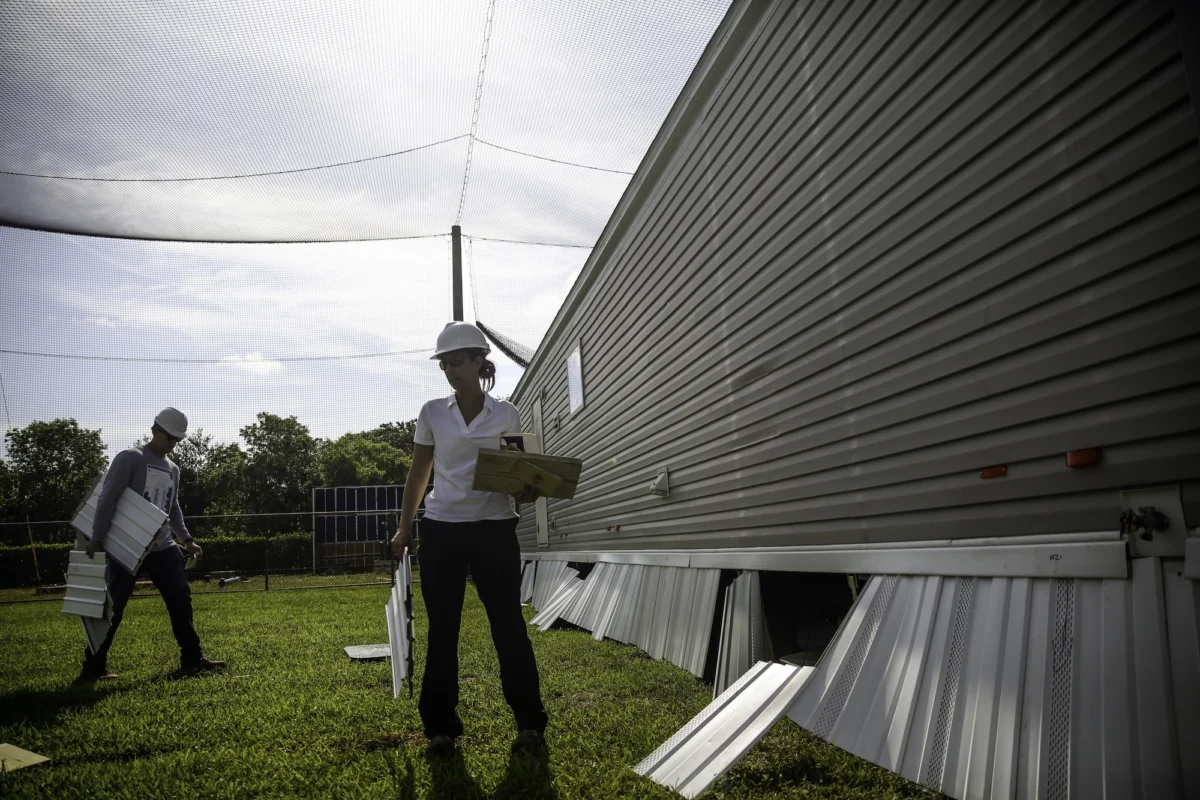
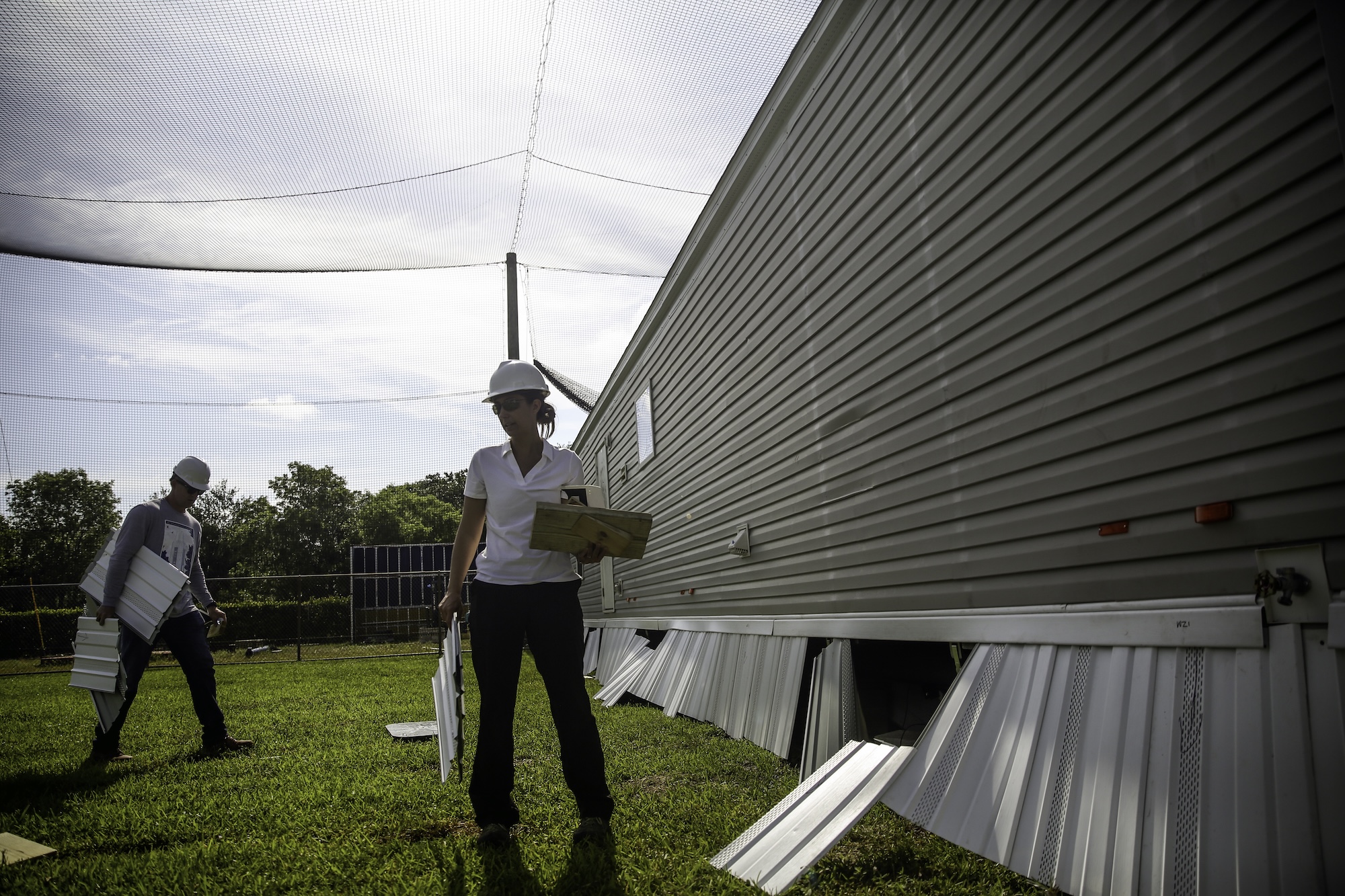
The first signs of trouble are always subtle. A piece of vinyl skirting begins to flutter like a nervous pulse. A sliver of siding near the roofline pulls away, exposing the skeletal frame beneath. Then, the 12 massive fans arrayed across the 14-foot-high "Wall of Wind" at Florida International University (FIU) accelerate in unison. The air pressure spikes, forcing a synthetic gale across the laboratory at highway speeds.
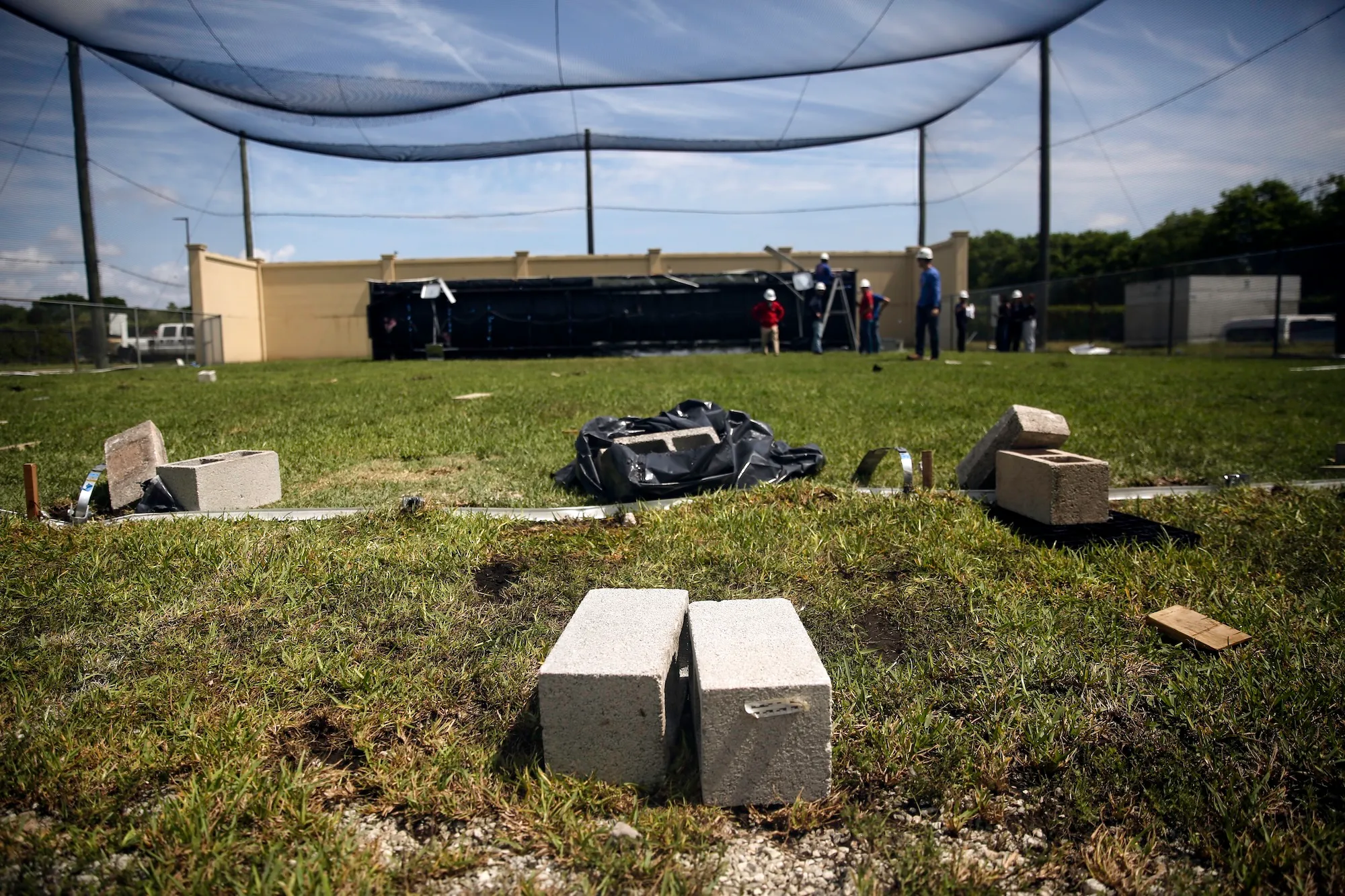
Inside the facility, a manufactured home—the modern descendant of what was once colloquially called a mobile home—begins to shudder on its supports. A deafening roar fills the testing chamber. As the wind pushes against the walls and screams over the roof, a window blows out, shattering under the intense pressure differential. The house strains against the steel straps and ground anchors holding it to the concrete piers. One by one, they snap.
Finally, the last three anchors give way in a simultaneous, violent release of tension. The entire structure pitches backward, then overturns, collapsing into a heap of twisted metal and wood.
For Elaina Sutley, a structural engineer at the University of Kansas, this catastrophic failure is exactly what she came to see.
The Anatomy of Failure: A Scientific Crusade
Sutley has dedicated her career to understanding why buildings fail in the face of nature’s most violent outbursts. By bringing manufactured homes to Miami and subjecting them to hurricane-force winds—reaching speeds of up to 157 mph with driving rain—she and her colleagues are performing a high-stakes autopsy on living structures. The goal is simple: identify exactly where these homes fail and determine whether modest, cost-effective design adjustments could allow them to withstand the increasingly powerful hurricanes and tornadoes triggered by a changing climate.
The implications of this research extend far beyond the laboratory. More than 20 million Americans reside in 6.7 million manufactured homes. This segment of the housing market is disproportionately exposed to extreme weather, yet it remains one of the most vulnerable. Many of these structures were built before 1994, the year Hurricane Andrew decimated South Florida and prompted the federal government to overhaul its wind standards. Today, however, the requirements for securing these homes vary wildly depending on the jurisdiction, a fragmented system that Sutley’s experiments are now putting to a rigorous, empirical test.
A Personal Mission: Born from Destruction
Sutley’s obsession with structural integrity is not merely academic; it is rooted in personal trauma. Fifteen years ago, she was a master’s student in Tuscaloosa, Alabama, when an outbreak of tornadoes swept through the region with wind speeds exceeding 190 mph.
"I was on the second floor of an apartment building," she recalls. "I hid in the bathroom as the walls around me warped and twisted."
When the winds finally died down and she stepped outside, the landscape was disorientingly unfamiliar. Landmarks she relied on for navigation were gone. A friend’s home, which had previously blocked the view of a nearby hospital, had vanished. The tornadoes killed hundreds and caused $4.2 billion in property damage.
Standing in the wreckage, the realization hit her with the force of the storm: "We don’t design buildings to withstand tornadoes." Since then, she has devoted her research to natural hazards, seeking to protect the populations most at risk when the sky turns dark.
The Structural Challenge: Why Manufactured Homes Differ
To understand why these homes are uniquely vulnerable, one must look beneath the floorboards. Unlike traditional, site-built houses that are bolted to deep concrete foundations, manufactured homes are designed to be transportable. They sit on piers and rely on a system of straps and ground anchors to stay put.
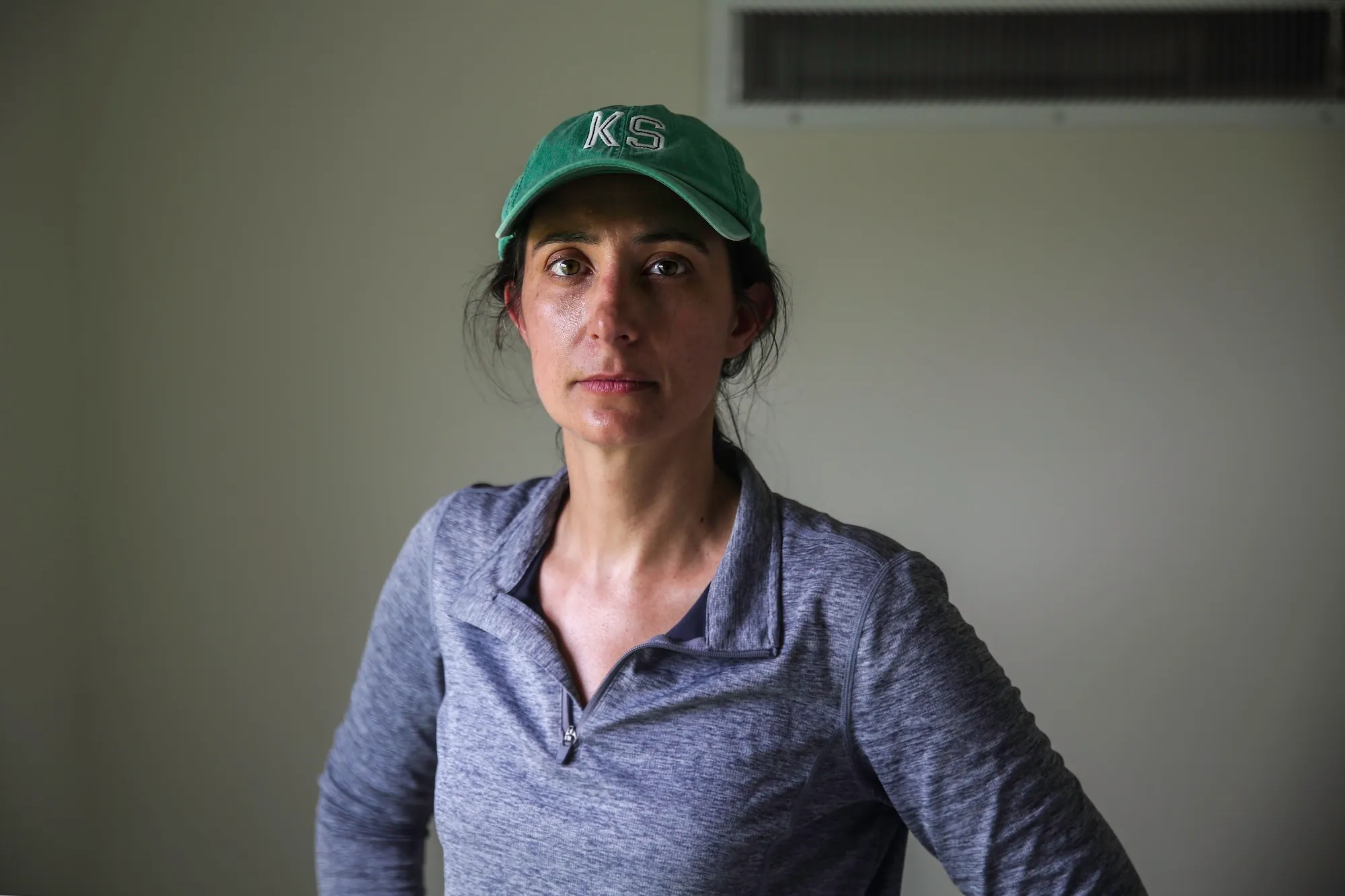
"When we look across the country, we see that manufactured housing is exposed at a higher rate to certain climate hazards than other forms of housing," explains Andrew Rumbach, a senior fellow at the Urban Institute.
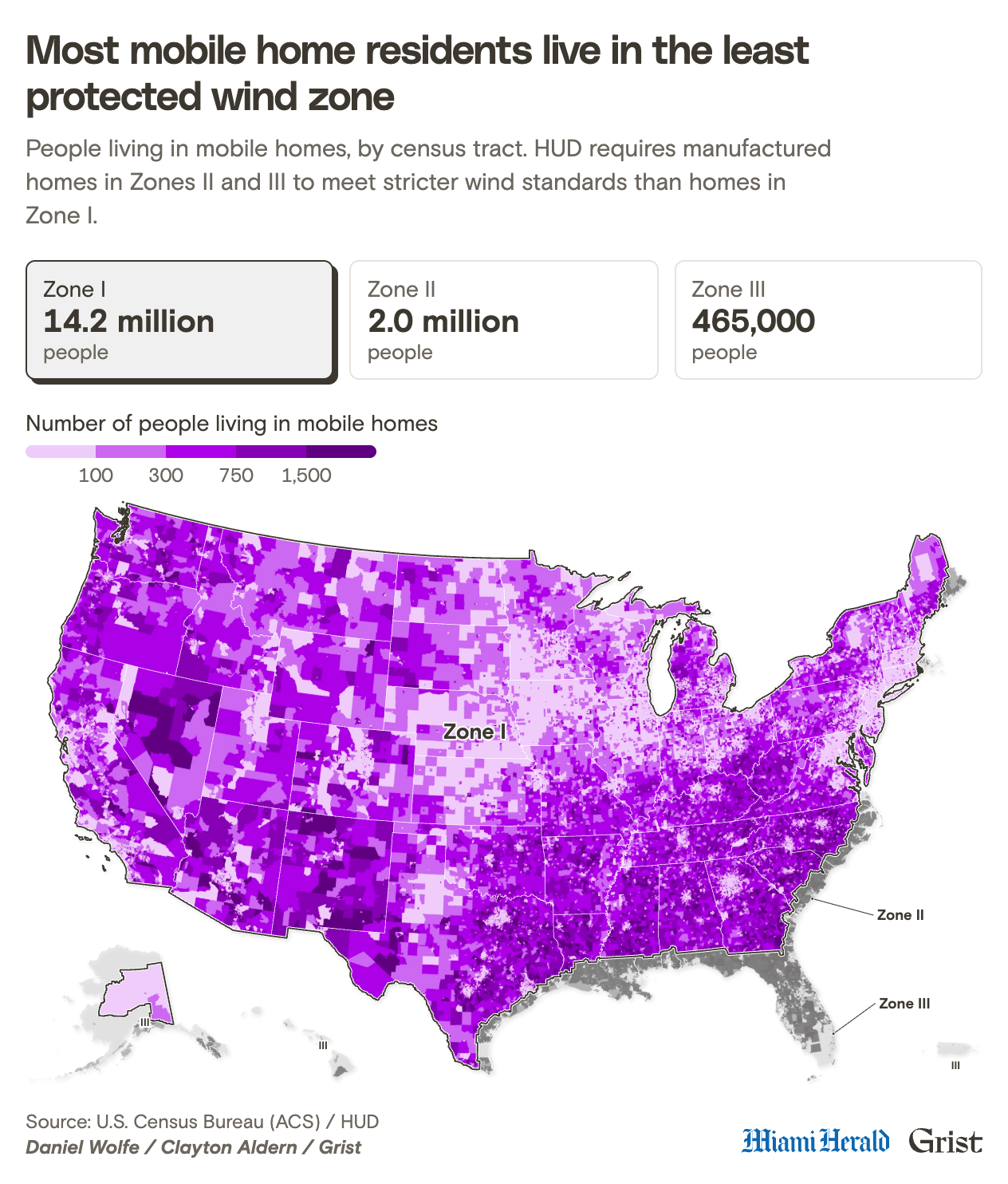
According to data co-authored by Rumbach, approximately 5 million of these homes are located in areas highly prone to climate disasters. Over the last decade, more than half of all new manufactured homes were installed in the Gulf states, a region currently grappling with the increasing frequency of major hurricane landfalls. Because these homes are governed by a single federal construction and safety code—the HUD code—rather than local building regulations, the findings of Sutley’s FIU study have the potential to change safety standards on a national scale.
The Testing Protocol: Testing to Destruction
The FIU Wall of Wind serves as a crucible for these designs. The experiment is designed to be binary: the house either holds, or it fails. Sutley’s team varies a host of conditions: the wind speed, the angle of the gusts, the home’s elevation, and the integrity of the skirting.
A critical focus is the "anchoring system." All manufactured homes require ground anchors—essentially massive, industrial-grade tent stakes—that secure diagonal ties to the home’s frame. These prevent the house from sliding or lifting. However, vertical ties, which provide crucial resistance against uplift, are not currently required in "Wind Zone 1," which covers the majority of the United States.
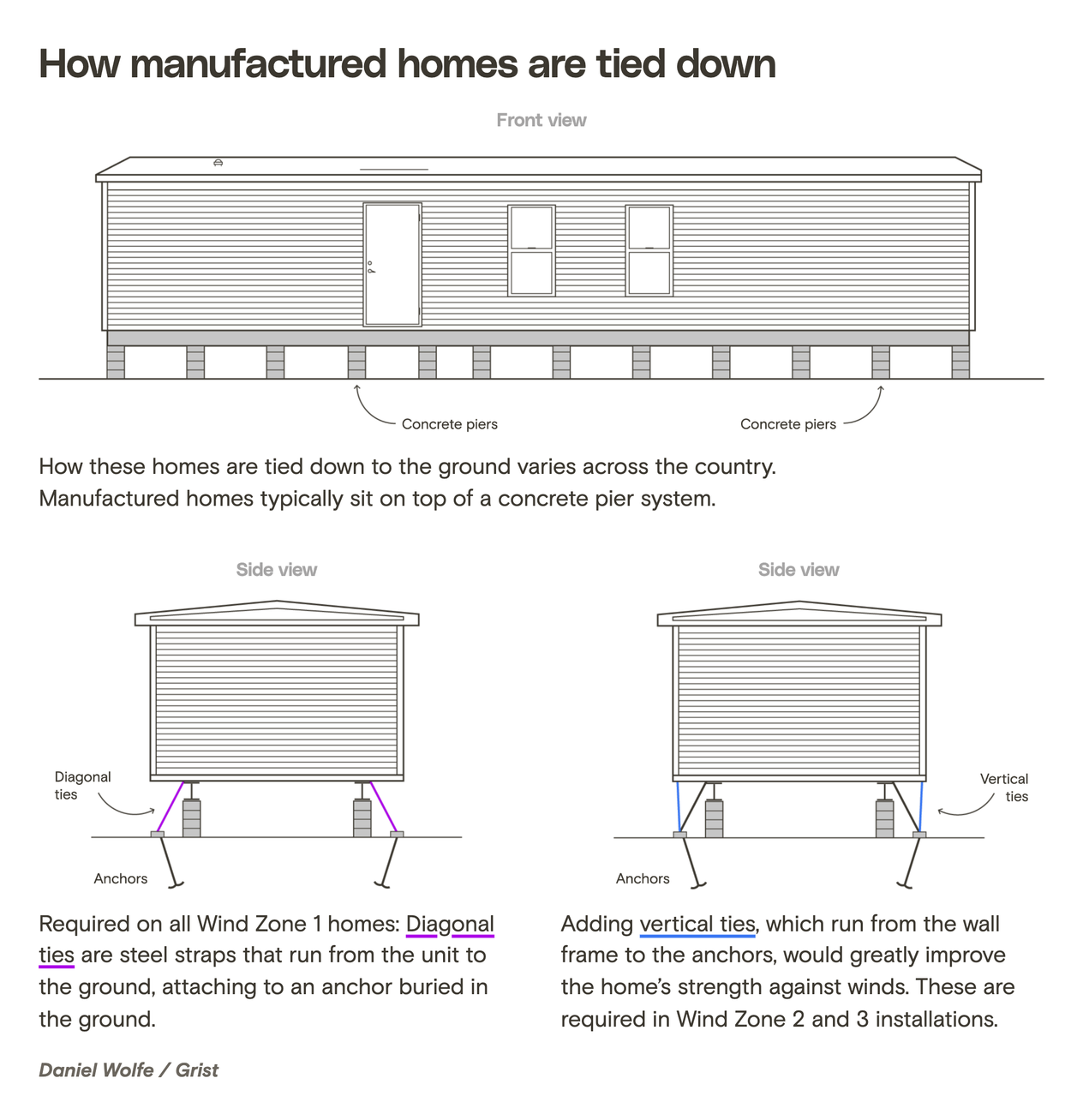
The preliminary data is already sending a clear signal: Wind Zone 1 standards are insufficient. Sutley’s team suggests that applying the more stringent Wind Zone 3 retention systems nationwide—which include mandatory vertical ties—could significantly lower the risk of total structural failure.
Regina Blanchard, an industry veteran who owns a mobile home transport company in Hollywood, Florida, has watched the quality of these connections decline over decades. "They used to wrap the ties around the entire structure," she says. "Now, they are just riveted into tabs on the bottom. That is horrifying, because all the torque and stress of an uplift is focused on those few rivets."
Innovation Beyond the Strap
In collaboration with Clayton Homes, one of the nation’s largest manufacturers, Sutley has also been testing an alternative to the traditional tie-down strap: metal struts. Unlike straps, which only provide resistance when pulled taut, struts are rigid bracing systems that can resist both pushing and pulling forces.
This innovation represents a potential paradigm shift. Struts could offer a more durable, cost-effective solution for retrofitting existing homes, providing a mid-range safety option that does not require the astronomical expense of pouring a full concrete foundation.
The Economic Equation: Cost vs. Resilience
The research, however, faces the perennial challenge of the housing market: affordability. The cost of a new manufactured home is already high, ranging from $80,000 to $120,000, with setup costs—plumbing, electrical, and HVAC—adding another $40,000 to $50,000.
Critics argue that adding more stringent safety requirements will price out the very families these homes are designed to house. However, Rumbach pushes back on this narrative. "When a manufactured home doesn’t perform well in a heatwave, or is destroyed by a storm, that is much more costly to a homeowner," he notes. "The financial burden of displacement is far greater than the incremental cost of better engineering."
FEMA estimates that hurricane winds contribute to $29 billion in losses annually. If the HUD code were updated, the industry-wide shift could create economies of scale, driving down the cost of resilient features. Clayton Homes has already begun experimenting with energy-efficient and climate-resilient designs, demonstrating that safety features do not necessarily require a prohibitive price tag.
Official Responses and Future Implications
The Department of Housing and Urban Development (HUD) has stated it is reviewing the findings from the FIU tests. A spokesperson for the agency affirmed that they are "committed to using research and innovation to make manufactured housing safer, more resilient, and more affordable."
While the bureaucratic process is often slow, the path forward is illuminated by the data gathered at the Wall of Wind. The proposed changes are structurally modest—a stronger strap, a more robust connection, or a rigid strut—but the cumulative impact could be profound.
When asked if these small, incremental changes could actually save lives, Sutley pauses, her eyes reflecting the massive turbines behind her. "I absolutely believe they could," she says.
For now, the debris from the latest test remains on the floor of the testing facility. But the lessons learned from the wreckage are being cataloged, providing a blueprint for the next generation of homes. In the world of structural engineering, every failure is merely a set of instructions for the next success. By forcing these homes to break, Sutley and her team are learning how to build them to last.


 Raul Delapena Setiawan

 Laily UPN

 Reynand Wu

 Sagoh


 Azzam Bilal Chamdy

 Ali Ikhwan
