
 Asro
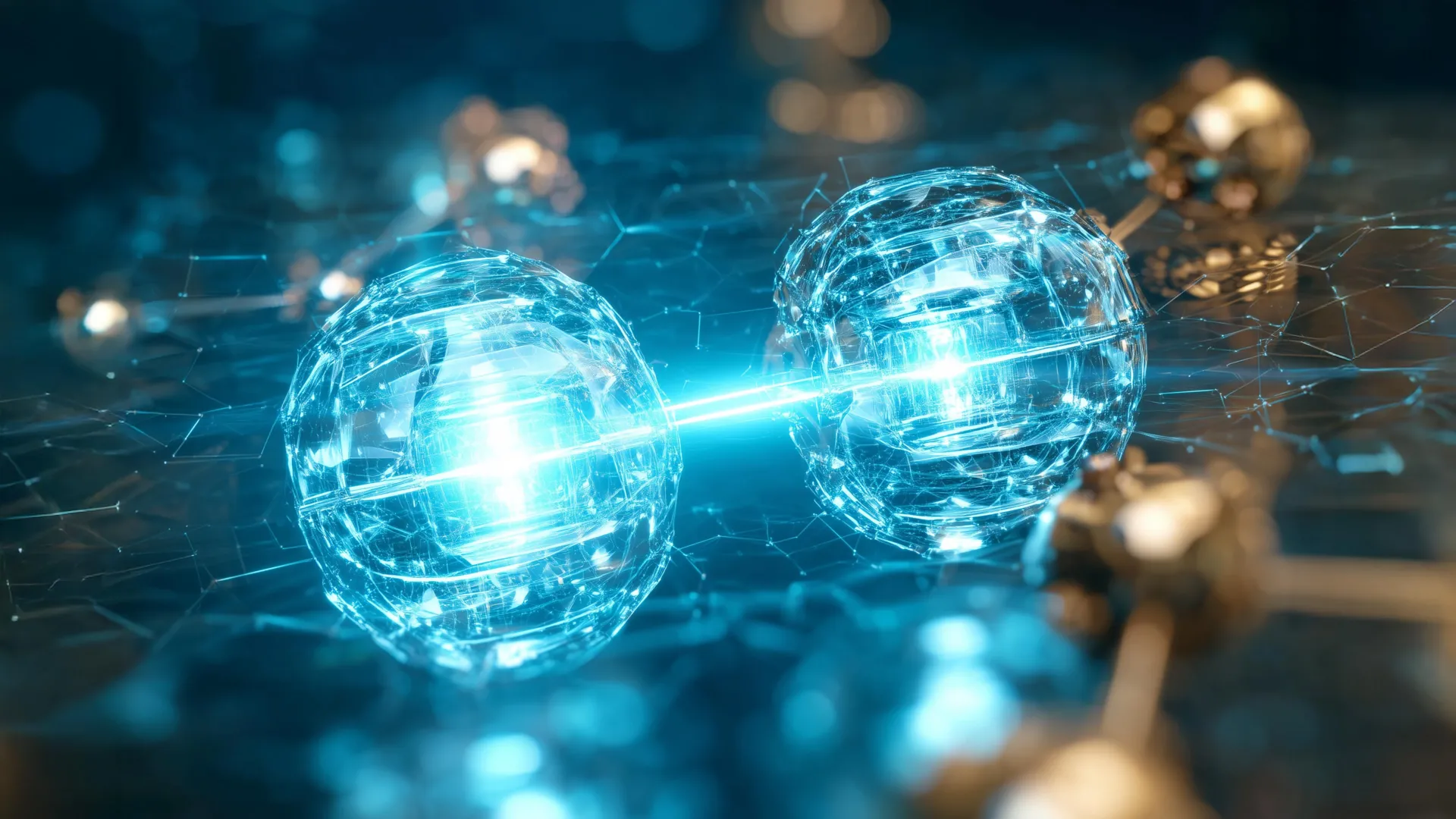
Introduction: The Fragility of the Quantum Realm
In the race to build a functional, fault-tolerant quantum computer, the global scientific community is currently hitting a formidable wall. While companies like IBM, Google, and Rigetti have made massive strides in scaling up the number of qubits—the fundamental building blocks of quantum information—these systems remain notoriously fragile. They are plagued by "decoherence," a state where environmental interference causes quantum information to collapse into errors.
Now, a research team from the University of Surrey has proposed a radical departure from conventional hardware. By pivoting toward the peculiar properties of superfluid helium-3, the researchers believe they have discovered a path toward qubits that are inherently more resilient to noise. This new design, dubbed the Superfluid Helium Oscillator Quantum (SHOQ) device, promises to reduce error rates by a factor of 100, potentially unlocking the next era of quantum scalability.
The Main Facts: What is the SHOQ Device?
The study, recently published in the journal npj Quantum Information, details a novel architecture that leverages the quantum mechanical properties of superfluid helium. Unlike traditional superconducting circuits, which rely on the flow of electrons, the SHOQ device utilizes the motion of charge-neutral helium atoms.
Key Technical Pillars:
- Charge Neutrality: By using a medium that carries no electric charge, the SHOQ qubit is naturally insulated from the stray electromagnetic fields that disrupt current superconducting qubits.
- Frictionless Flow: Superfluid helium-3 exists in a state where it flows without viscosity. This unique state allows for long-lived quantum states that are not easily rattled by external thermal or electrical fluctuations.
- Hybrid Compatibility: Rather than aiming to displace current technologies, the SHOQ architecture is designed to function as a modular component, potentially acting as a "quantum memory" bank that works in tandem with existing hardware.
Chronology: From Theoretical Physics to Prototype
The development of the SHOQ device is the result of years of synthesis, bringing together decades of knowledge regarding low-temperature physics and modern quantum information theory.
The Evolution of the Idea
- The Theoretical Foundation: Researchers at the University of Surrey’s Quantum Sciences Group, led by Dr. Priya Sharma and Dr. Eran Ginossar, began by analyzing the limitations of the "transmon"—a superconducting qubit design pioneered by Professor Jens Koch of Northwestern University.
- Synthesis of Concepts: The team recognized that while individual components—such as microfluidics and superfluid mechanics—had been studied for years, they had never been unified into a coherent quantum computing architecture.
- Mathematical Validation: The Surrey team spent months modeling the behavior of superfluid helium within a micro-scale oscillator. Their mathematical simulations confirmed that the system could maintain quantum coherence significantly longer than current industry standards.
- The Fellowship Support: Following the successful modeling phase, Dr. Priya Sharma was awarded an IAA Commercialisation Fellowship. This funding has provided the necessary runway to transition from the chalkboard to the laboratory bench.
- Current Status: The project has moved into the engineering phase, where the team is now designing the physical prototype, leveraging specialized cryogenics equipment capable of reaching the near-absolute-zero temperatures required for superfluidity.
Supporting Data: Why Superconductors Struggle
To understand why the SHOQ device is being hailed as a potential game-changer, one must first look at the Achilles’ heel of current quantum systems: Electromagnetic Sensitivity.
The "Static Electricity" Problem
Current leading-edge quantum computers rely on superconducting circuits. These are essentially microscopic wires cooled to temperatures where electricity flows without resistance. However, these circuits are incredibly sensitive. Any stray charge—even the equivalent of a microscopic spark of static electricity—can "flip" the state of a qubit, turning a 0 into a 1 or vice-versa, and destroying the calculation.
The Scaling Hurdle
As engineers add more qubits to a processor, the complexity of shielding these qubits from interference grows exponentially. It is akin to trying to keep a room perfectly silent while adding thousands of speakers; the noise floor eventually swallows the signal.
The SHOQ Advantage
The SHOQ device changes the medium. Because helium-3 is electrically neutral, it does not interact with the electric fields that cause these errors. The calculations performed by the Surrey team suggest that this intrinsic immunity to noise could reduce error rates by two orders of magnitude compared to current superconducting qubits. In the world of quantum computing, where even a 1% error rate is considered "noisy," a hundred-fold reduction represents a leap toward "fault-tolerant" quantum computing.
Official Responses: The Vision of the Surrey Team
The research team emphasizes that this discovery is not a "magic bullet" but a strategic addition to the quantum toolbox.
Dr. Priya Sharma, Lead Author
"We are not the first to think about the individual components behind this idea, but what we have done for the first time is bring them together in a microfluidic device and work out the specific details that could enable the device to function as a qubit," said Dr. Sharma. "The maths tells us that it should work. We have taken what we already know about superfluid helium and quantum technologies and turned that into an educated design… The next step is to make a prototype and put those predictions to the test."
Dr. Eran Ginossar, Co-Author
"We don’t necessarily need one type of qubit to do everything," Dr. Ginossar noted. "Combining different quantum technologies could allow us to take advantage of the strengths of each. Superfluid helium gives us a fundamentally different type of quantum hardware to explore. If the predicted performance can be demonstrated experimentally, it could eventually work alongside existing superconducting technologies as part of a larger quantum system."
Implications: The Future of Quantum Architecture
The implications of a successful SHOQ prototype are profound, particularly regarding the concept of Quantum Memory.
The "Memory" Paradigm
One of the greatest challenges in quantum computing is the "storage" of information. In a conventional computer, your hard drive (RAM/SSD) stores data while the CPU processes it. In many quantum computers, the same hardware is expected to do both. If the SHOQ device can be perfected, it could serve as a dedicated, high-stability memory buffer. Because superfluid helium is exceptionally stable, it could theoretically hold quantum states for much longer than the current generation of superconducting qubits.
Heterogeneous Quantum Systems
The Surrey team’s vision points toward a "hybrid" quantum computer. In this future architecture, a processor might use superconducting qubits for high-speed logic gates—where their fast switching speed is an advantage—and then "hand off" that information to a superfluid-based memory bank to prevent it from decaying.
Collaborating for the Future
The collaboration with Professor Jens Koch, a key figure in the development of the transmon qubit, adds significant credibility to the project. By bridging the gap between the pioneers of the current generation and the innovators of the next, the Surrey-led team is ensuring that the SHOQ device is not an isolated experiment, but a viable, compatible evolution of the technology.
Conclusion: The Road Ahead
The path to a practical, large-scale quantum computer is littered with abandoned ideas and failed experiments. The SHOQ device, however, stands out for its elegant simplicity and its reliance on the well-understood—yet underutilized—physics of superfluids.
The transition to a functional prototype will be the true test. The team must demonstrate that the microscopic oscillations of helium can indeed be controlled, measured, and entangled with the outside world. If they succeed, the University of Surrey could be responsible for a fundamental shift in how we handle the most delicate information in the universe.
As Dr. Sharma and her team prepare for the experimental phase, the scientific world will be watching. If the math holds up in the physical world, the "static" of quantum computing may finally be silenced, paving the way for a new era of computational power that was previously deemed impossible.



 Nana Muazin

 Nila Kartika Wati


 Layla Zulfa

 Jia Lissa
 Nana

 Rifan Muazin
