
 Jia Lissa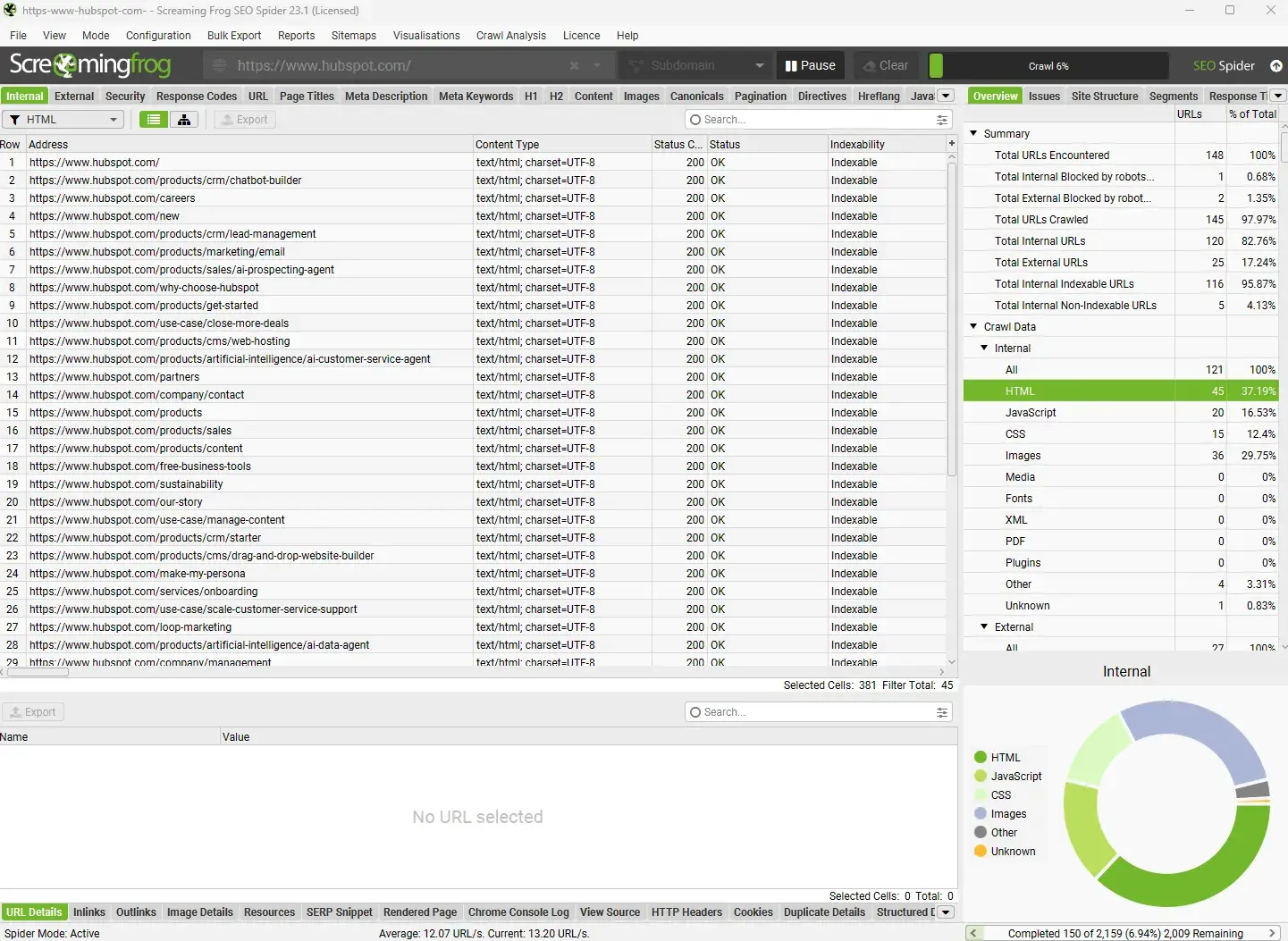
In the digital-first economy, search engine optimization (SEO) is no longer a luxury—it is the bedrock of sustainable growth. According to HubSpot’s latest State of Marketing report, 50% of small businesses identify their website, blog, and organic search presence as their most significant leverage points for customer acquisition. Yet, for small business owners and lean marketing teams, the landscape of SEO software is a double-edged sword: an abundance of choice often leads to "tool fatigue," where limited budgets are drained by fragmented subscriptions that fail to provide a unified view of performance.
The challenge is clear: how can a small business maintain a competitive edge without breaking the bank? The answer lies not in buying every tool on the market, but in building a deliberate, scalable tech stack that aligns with specific business growth goals.

The Foundation: Defining Your SEO Growth Goals
Before investing in any software, decision-makers must map their current business needs to the capabilities of their tools. A business in the "launch" phase has fundamentally different requirements than an established company attempting to scale content production.
Chronology of SEO Maturity
Small businesses typically navigate a predictable path of SEO maturity:
- The Audit Phase: Focused on benchmarking current site health and fixing technical bottlenecks.
- The Discovery Phase: Centered on keyword research and understanding audience intent.
- The Optimization Phase: Scaling content production and optimizing on-page elements.
- The Authority Phase: Developing backlink profiles and building topical authority through clusters.
- The Analytics Phase: Proving ROI and connecting organic traffic to CRM-driven revenue.
By auditing your current stage, you avoid the common trap of paying for enterprise-level features that your team isn’t yet ready to utilize.
Supporting Data: When to Stay Free vs. When to Invest
Budget constraints are the reality for most small-to-medium enterprises (SMEs). However, there is a distinct tipping point where "free" tools become a liability.
| Situation | Recommendation |
|---|---|
| Learning the basics / First-time audits | Start Free (Google Search Console, Website Grader) |
| Managing multiple products/locations | Go Paid (Comprehensive platforms like SE Ranking or Semrush) |
| Proving ROI to stakeholders | Go Paid (Tools with CRM/Revenue attribution) |
| Need specific data (Rankings) | Stay Free (Google Search Console + Looker Studio) |
The golden rule for small teams is integration. If a tool doesn’t "talk" to your existing CRM or analytics platform, it creates a data silo. Silos are where productivity goes to die.
Categorized Tool Recommendations: Building Your Stack
To build a professional, lean, and high-impact SEO stack, focus on these five core pillars.
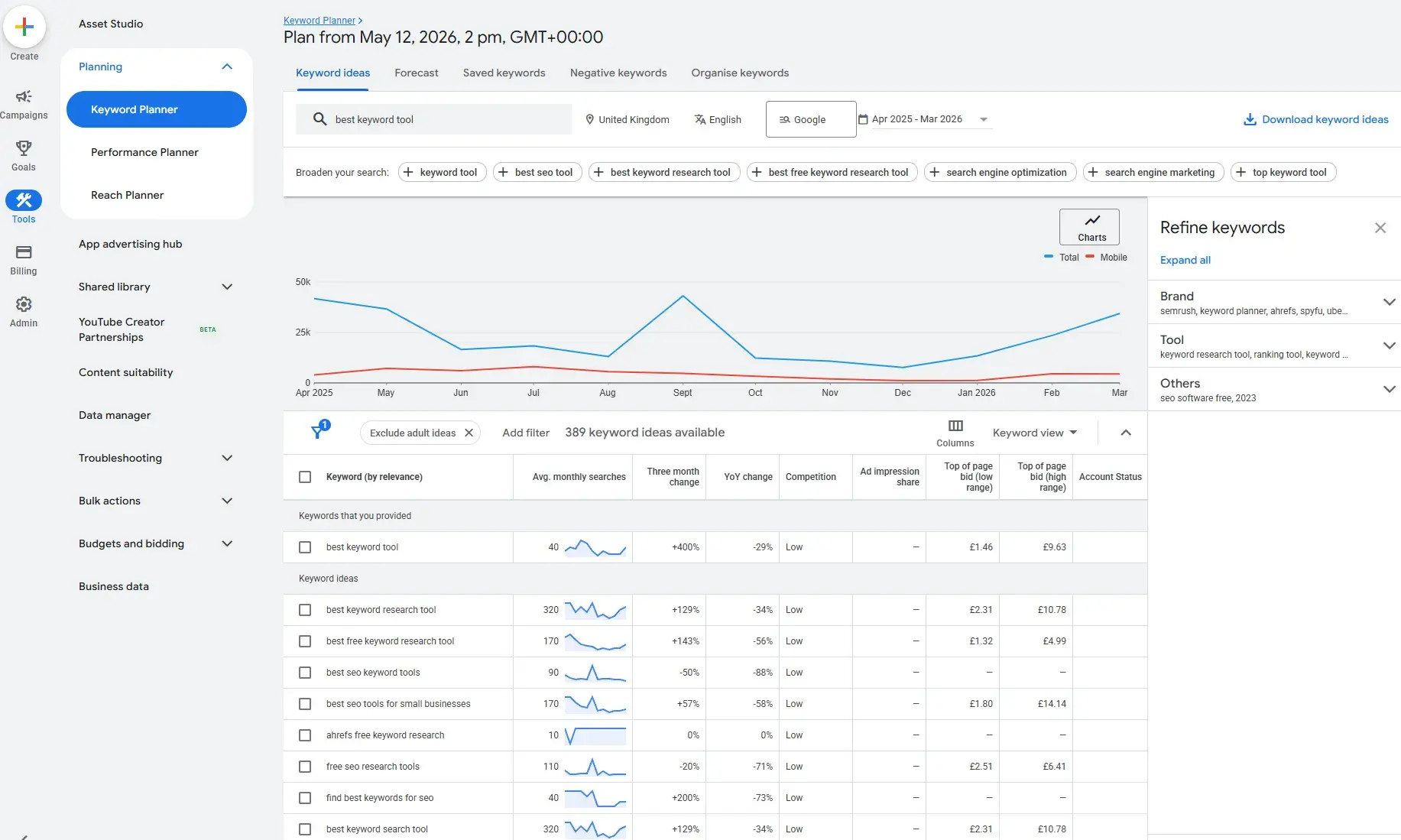
1. Keyword Research: Beyond Surface-Level Data
Keyword research remains the compass for all content strategy.
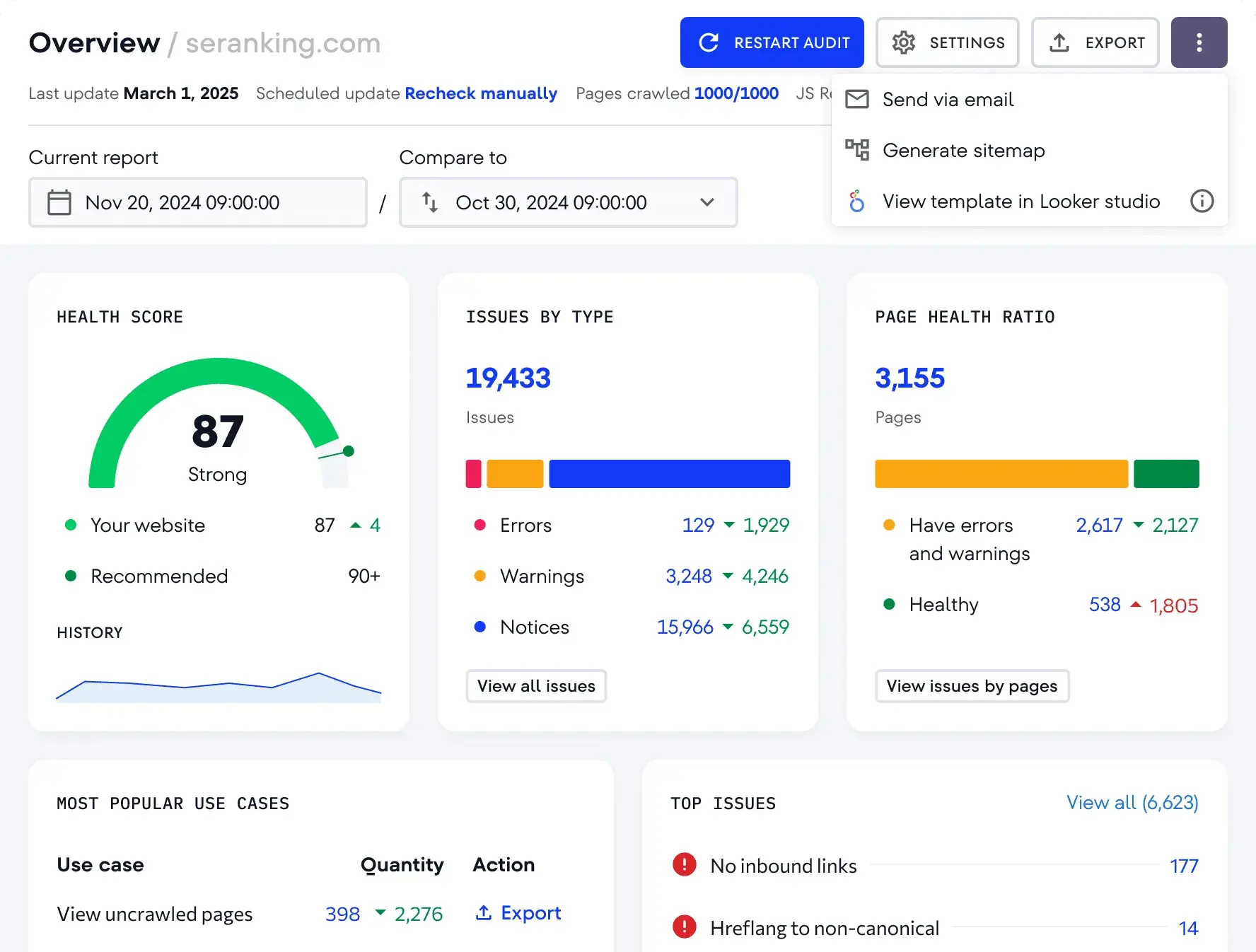
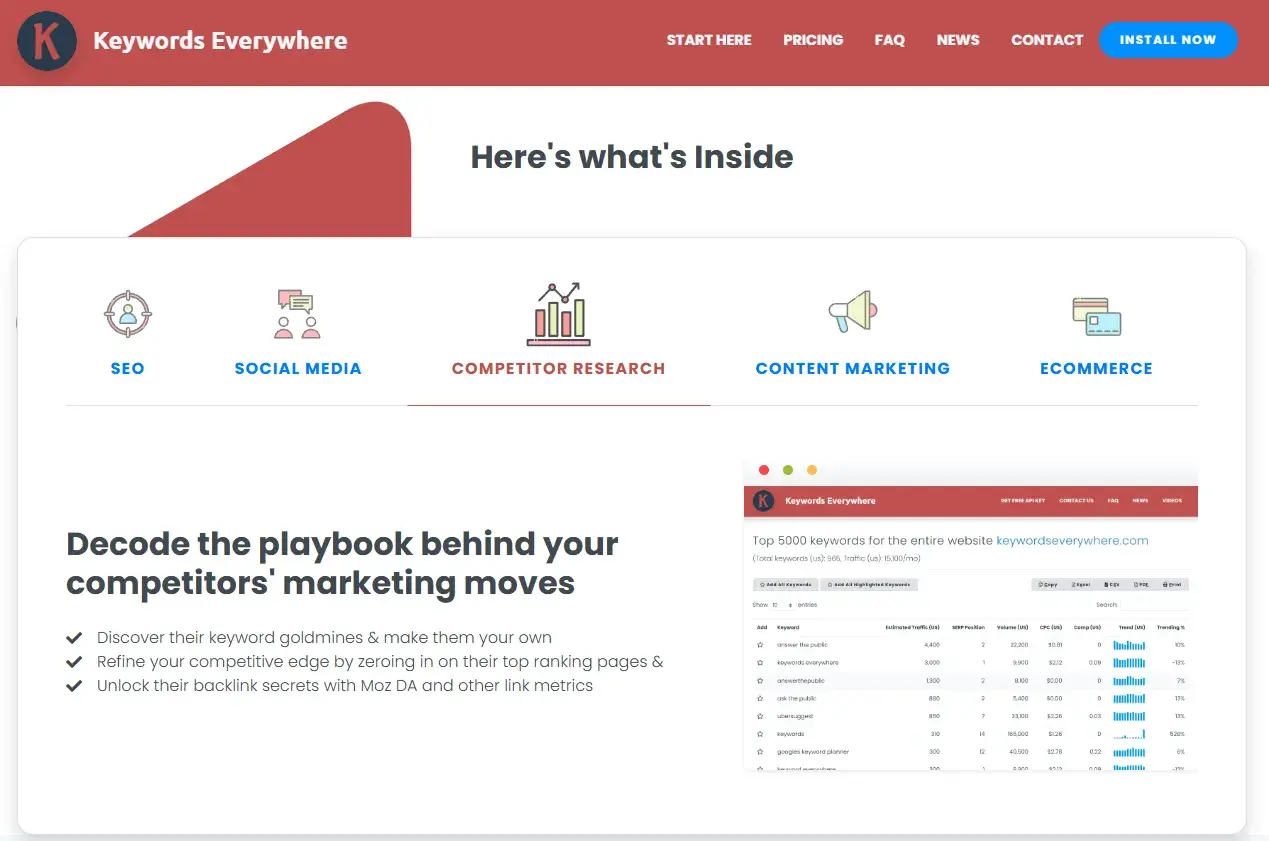
- Keywords Everywhere: A browser extension that provides lightweight insights directly in Google SERPs. It is an affordable ($7/month) solution for solopreneurs.
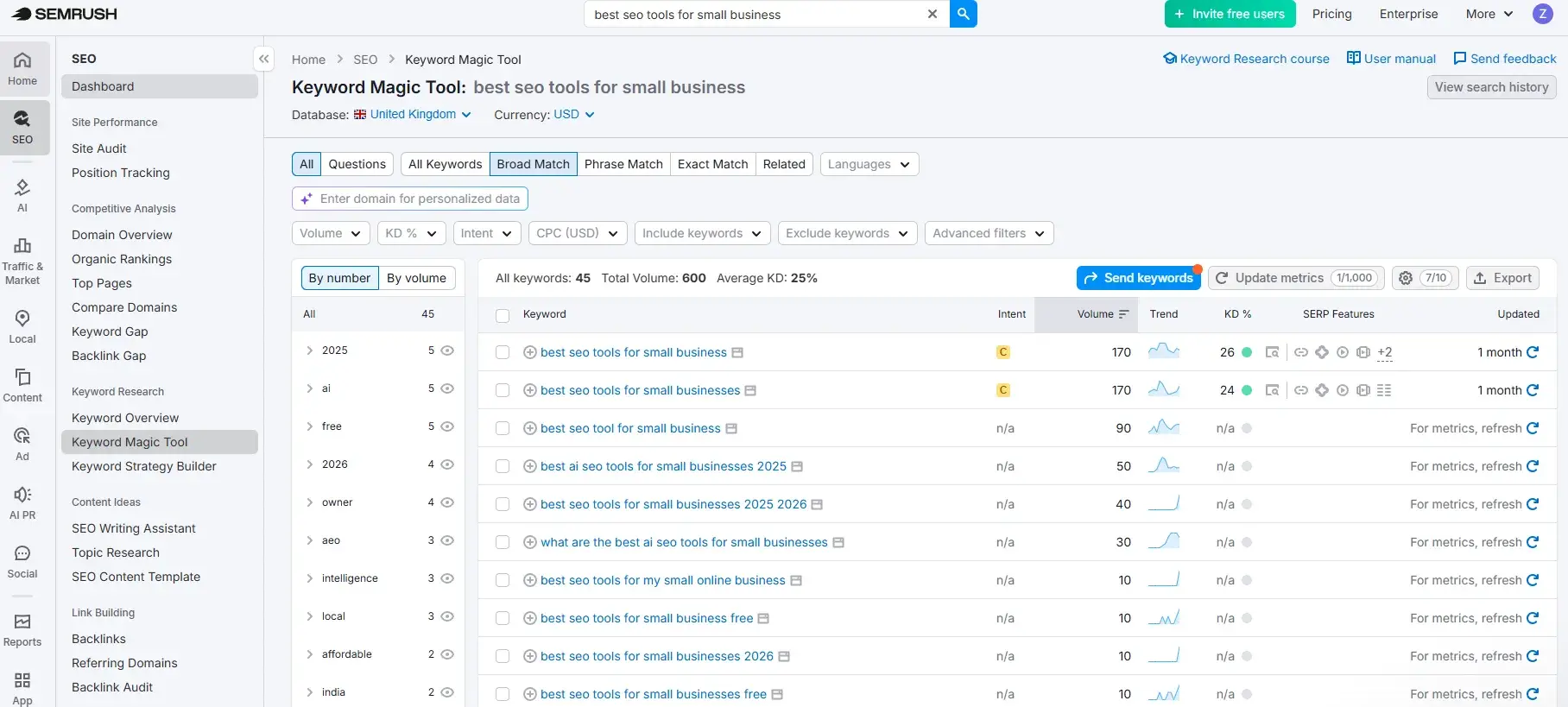
- Semrush: The gold standard for data-rich strategies. Its "Keyword Magic Tool" offers access to over 25 billion keywords, allowing for deep intent filtering—crucial for distinguishing between informational and transactional searches.
2. Technical SEO: Preventing Silent Traffic Drops
Technical issues like crawl errors or slow page speeds can sabotage your rankings overnight.
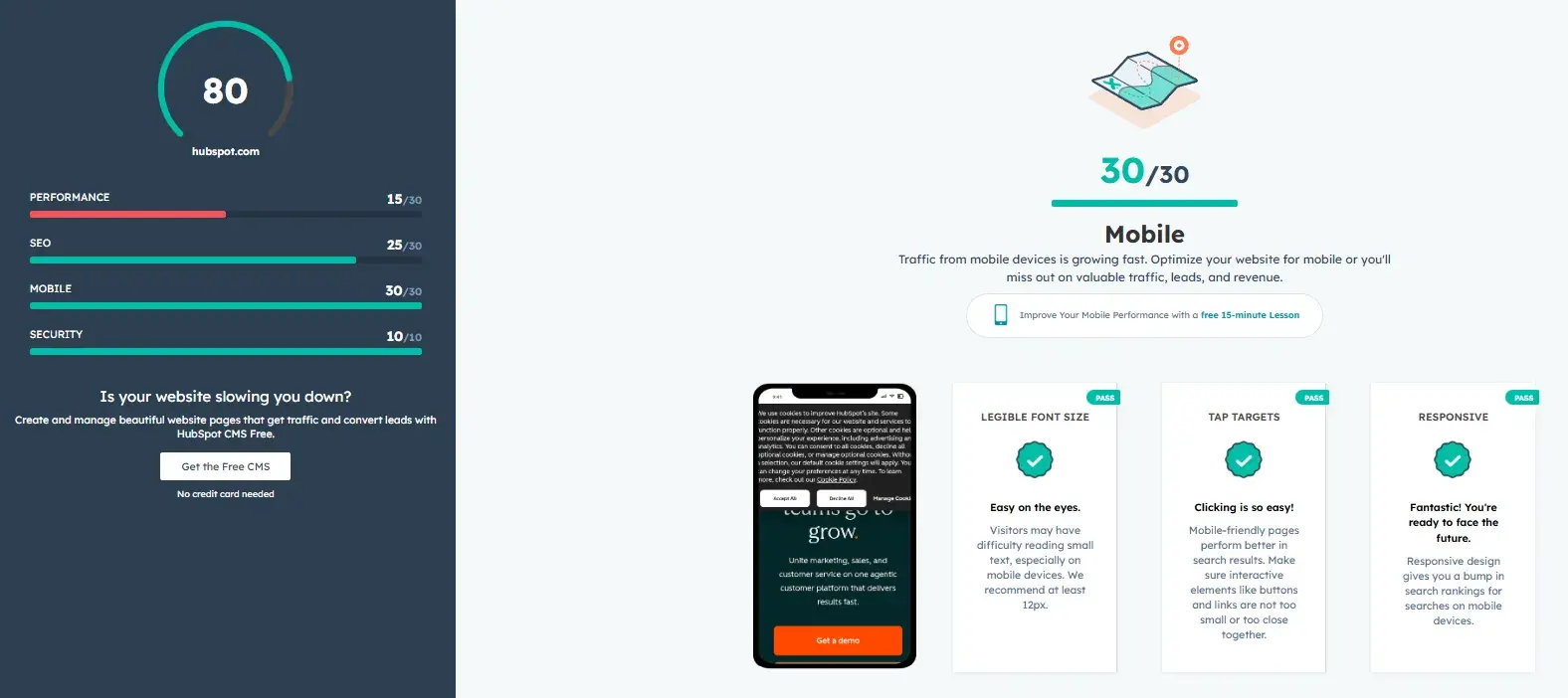
- HubSpot Website Grader: A free, jargon-free starting point that provides a clear snapshot of site performance, mobile readiness, and security.
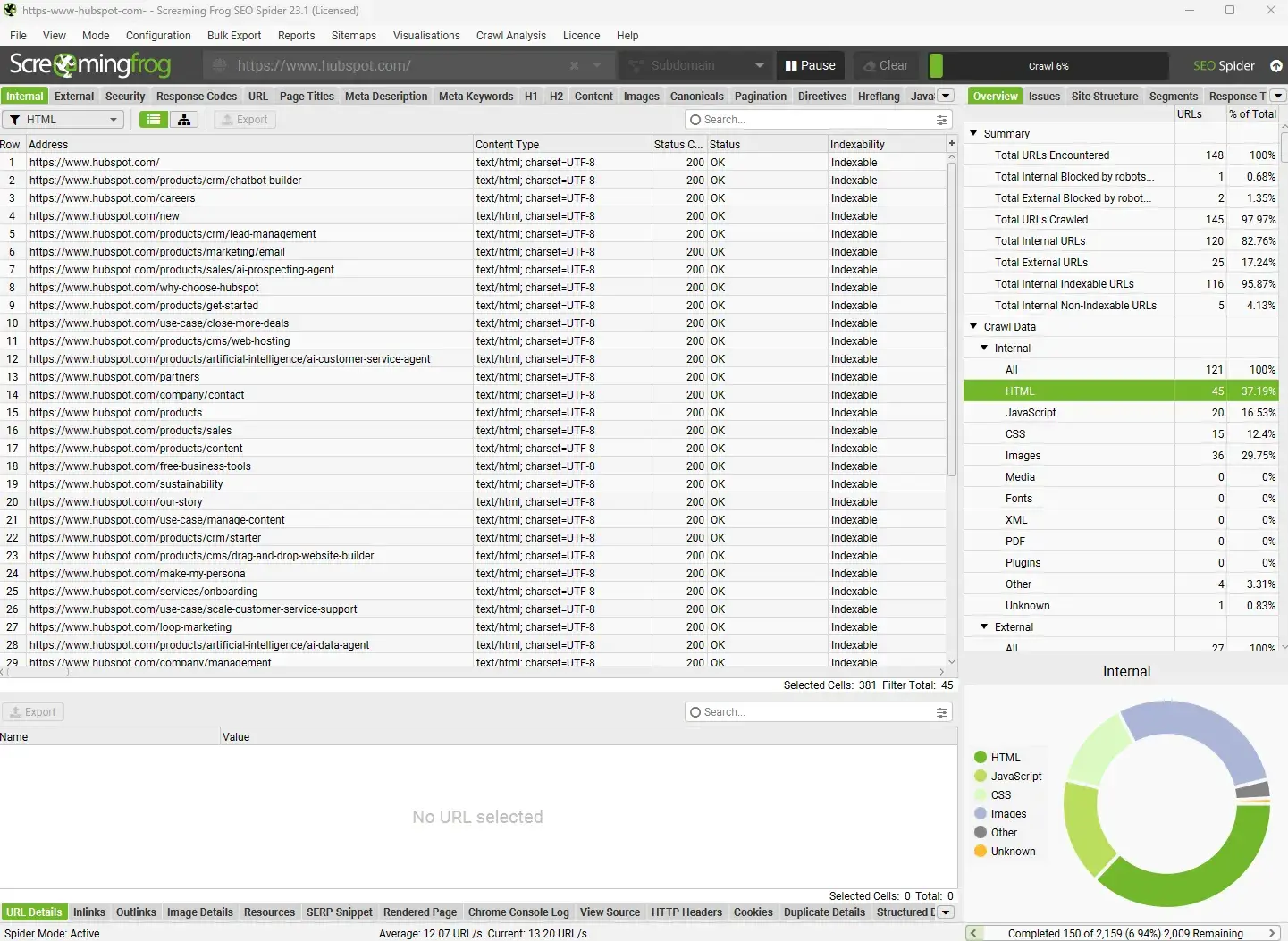
- Screaming Frog: For growing websites, this desktop-based crawler is essential. While technical, it provides a comprehensive page-by-page audit that can be connected to Google Analytics for a holistic view of content health.
3. Content Optimization and On-Page Strategy
Content must be optimized to compete in an increasingly crowded search environment.
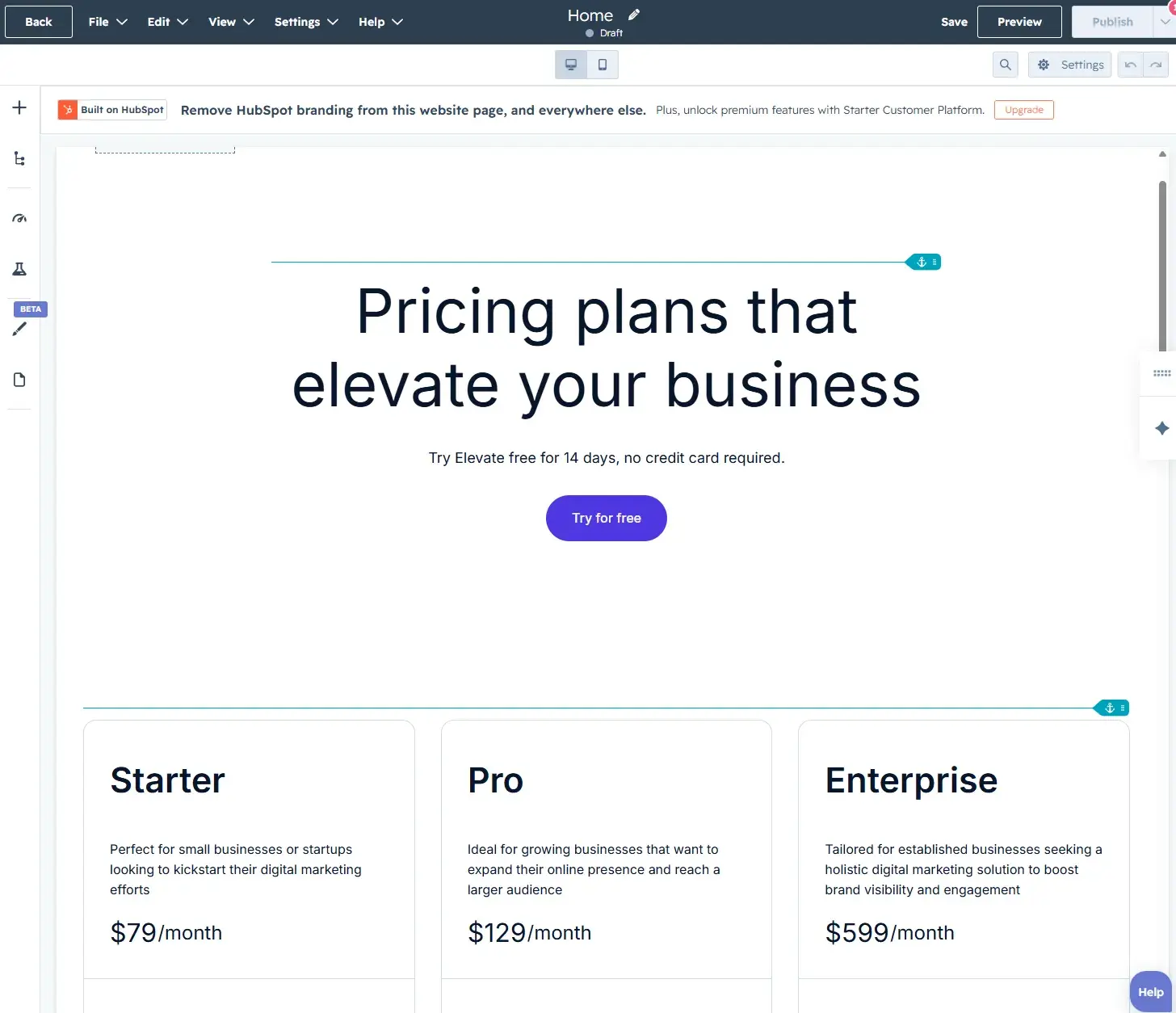
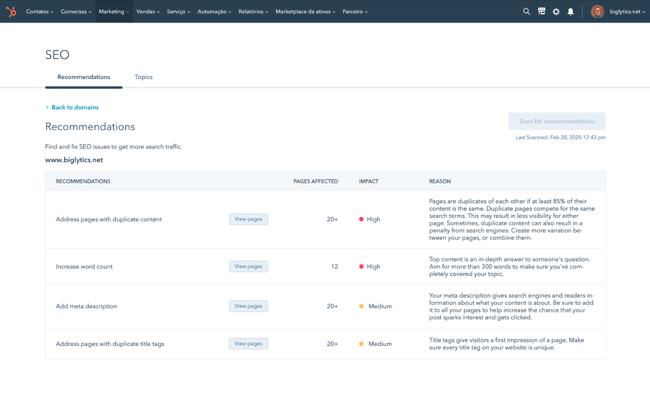
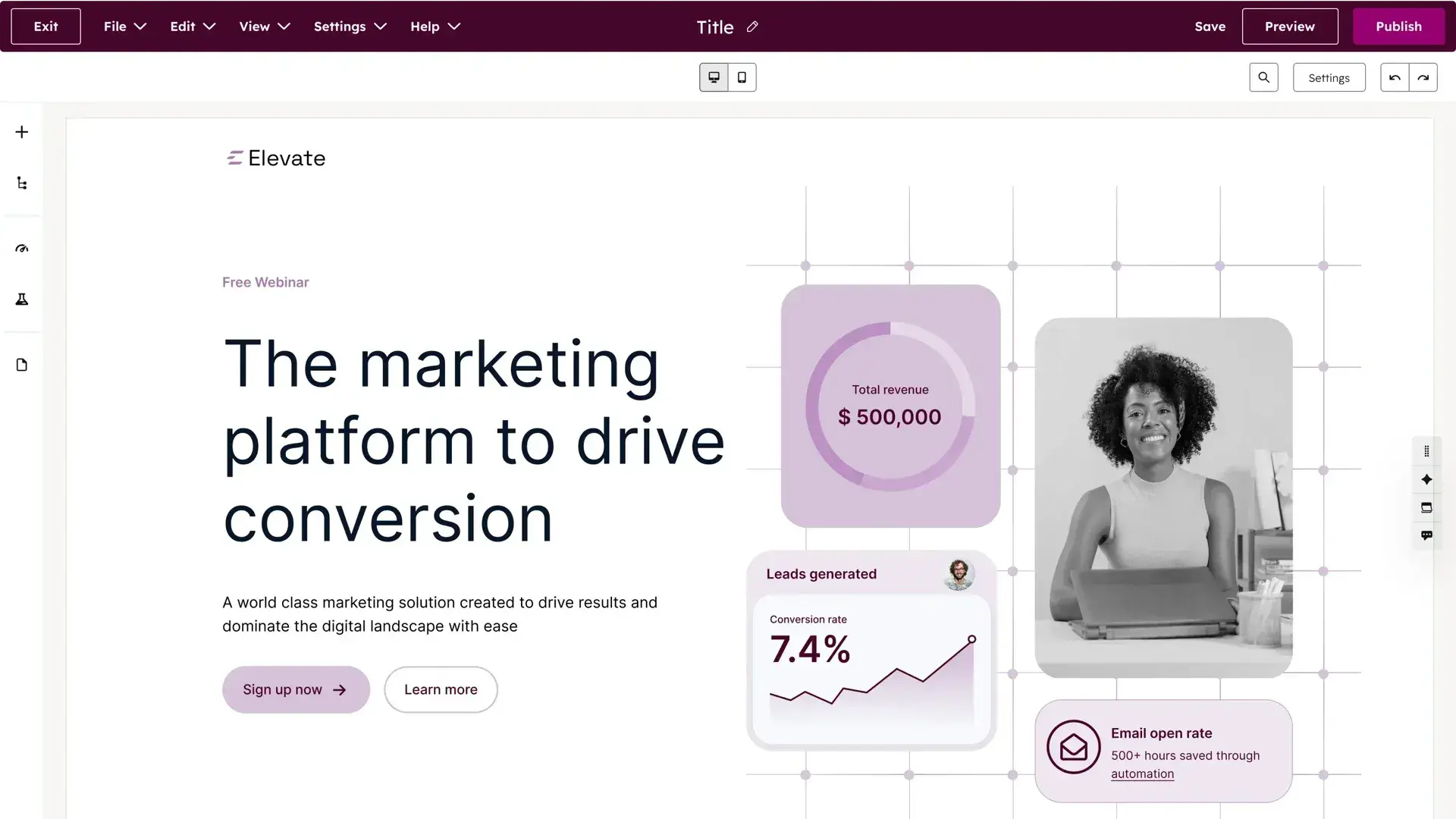
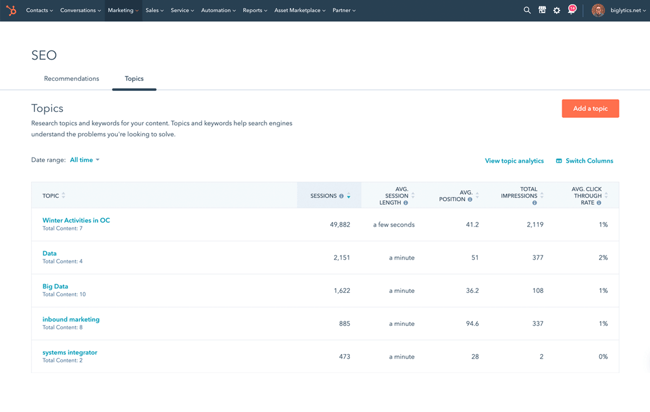
- HubSpot Content Hub: This platform unites content creation with optimization. It is particularly powerful for its "topic cluster" approach, which helps small businesses build topical authority by linking pillar pages to supporting blog posts—a tactic favored by search engine algorithms.
- Surfer SEO: For teams producing high volumes of content, Surfer provides data-driven recommendations on word count, heading structures, and NLP terms, helping to close the gap between your content and the top-ranking pages.
4. Backlink Intelligence and Outreach
Backlinks remain a significant ranking signal.
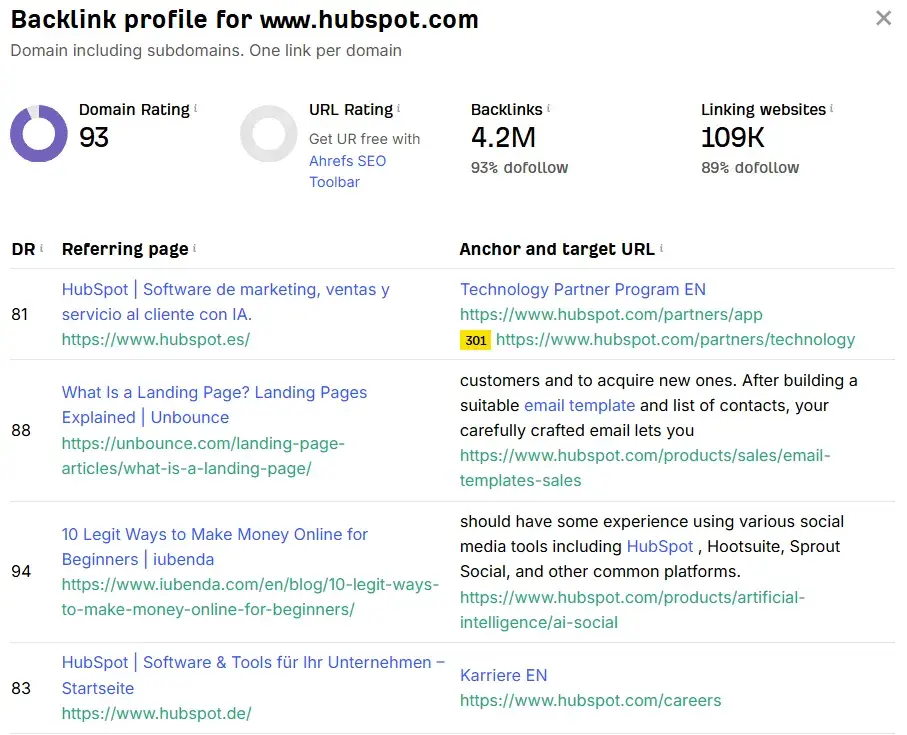
- Ahrefs: Trusted for its massive link database. Its backlink checker is a powerful tool for analyzing your own profile and identifying "link gaps" where your competitors have secured coverage that you haven’t.
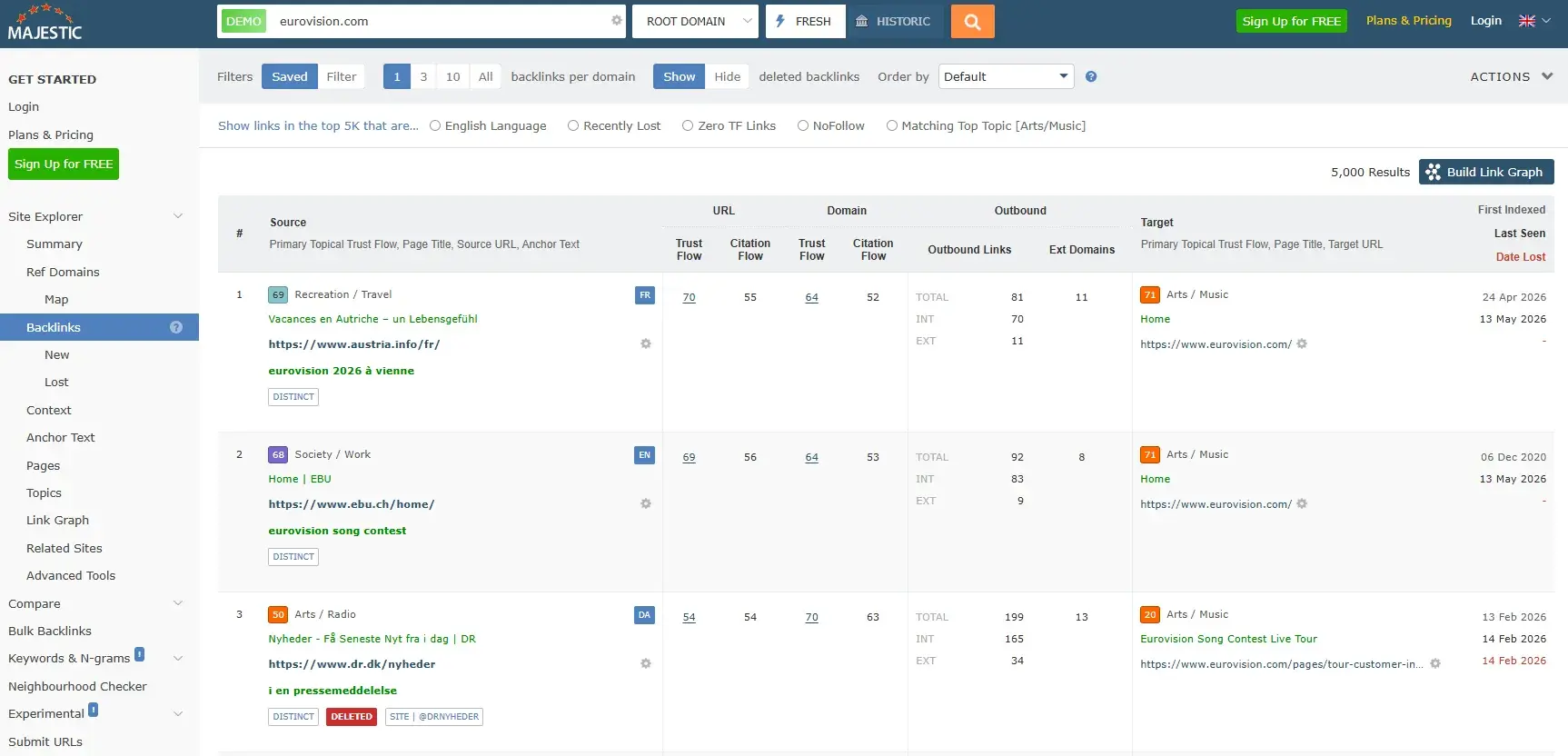
- Majestic: A specialist tool for deep link analysis. If your primary focus is granular link quality scoring rather than all-in-one management, Majestic is an industry-trusted alternative.
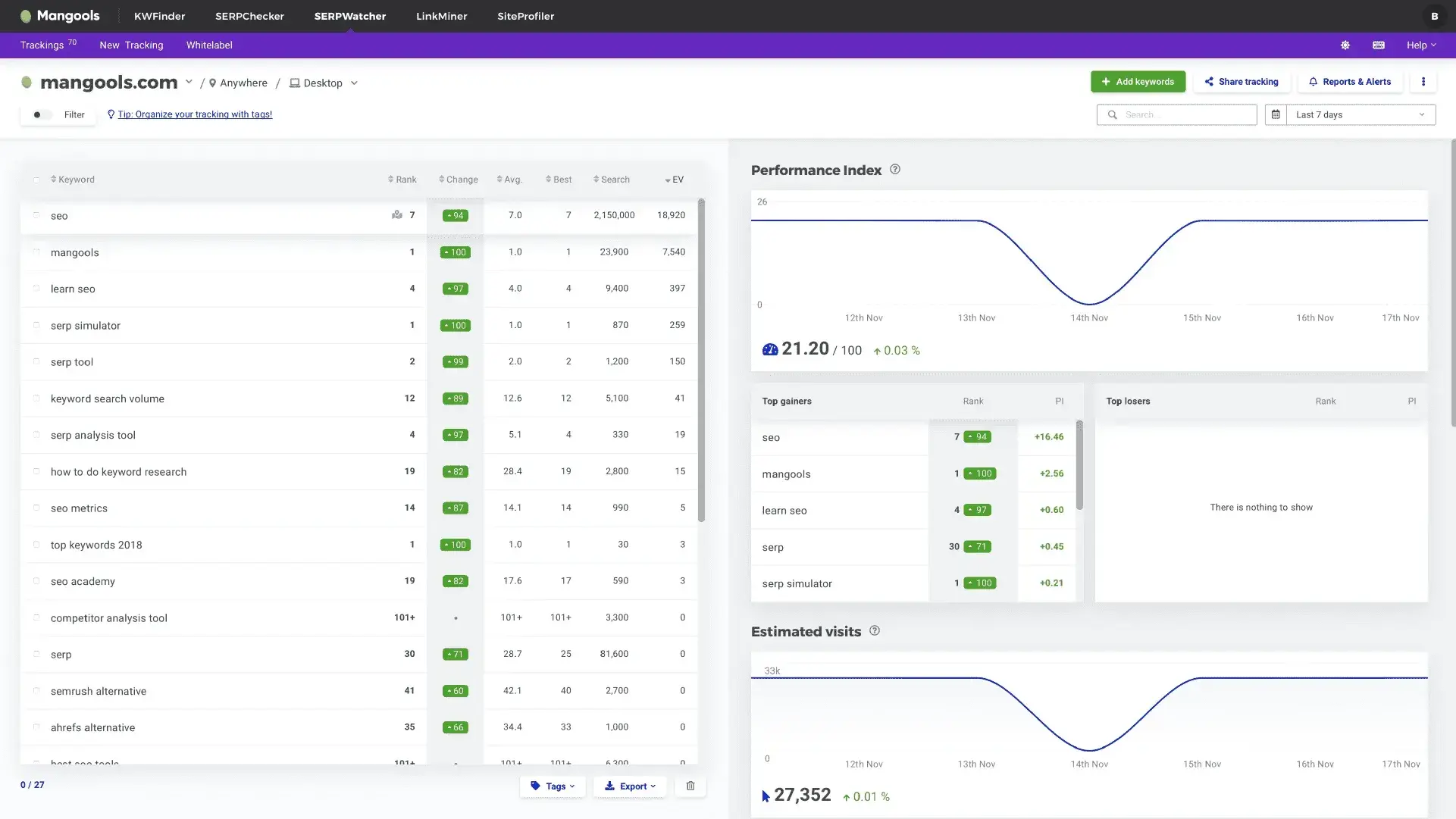
5. Rank Tracking and AI Search (AEO)
The era of traditional ranking is evolving into Answer Engine Optimization (AEO).
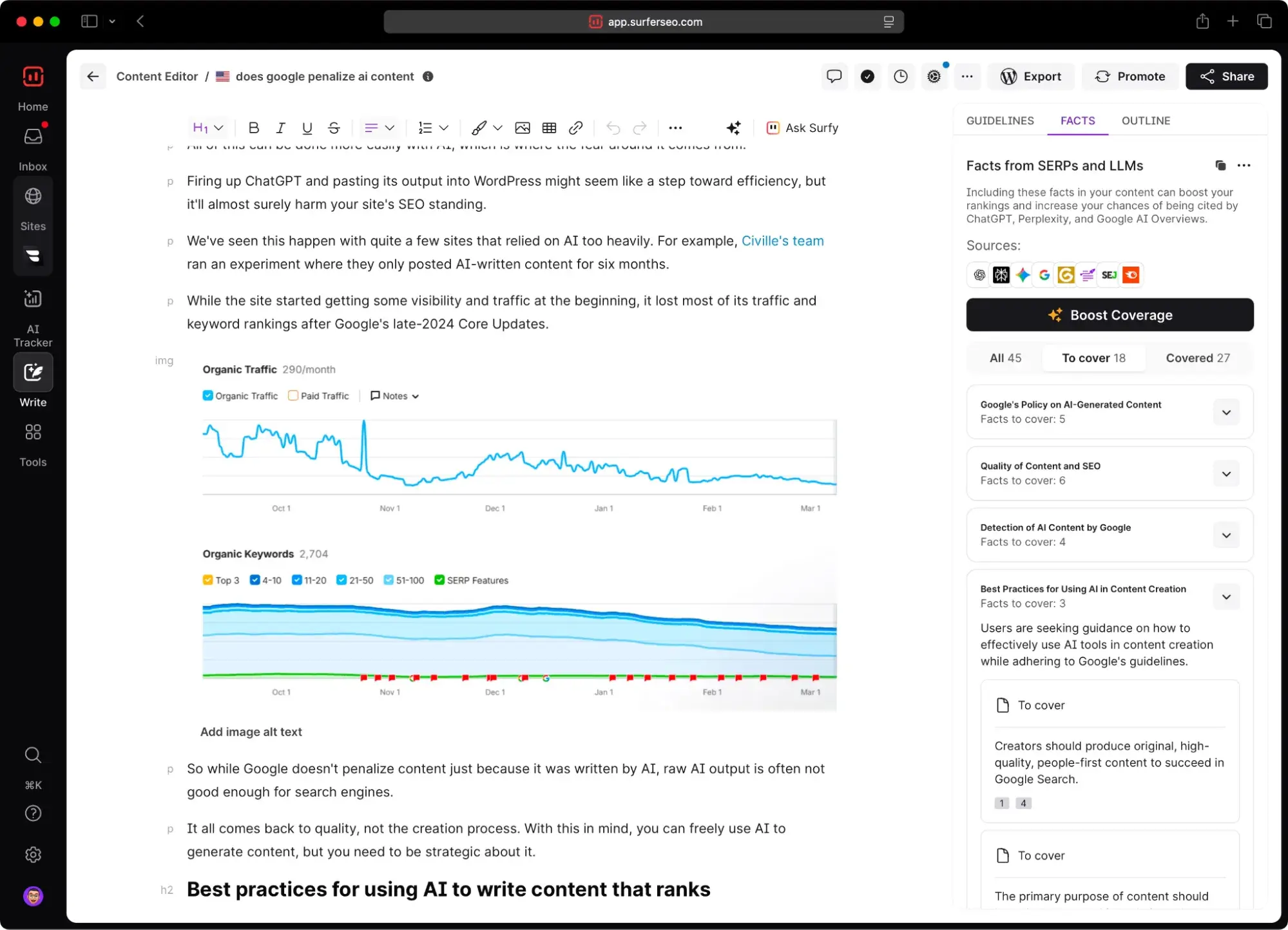
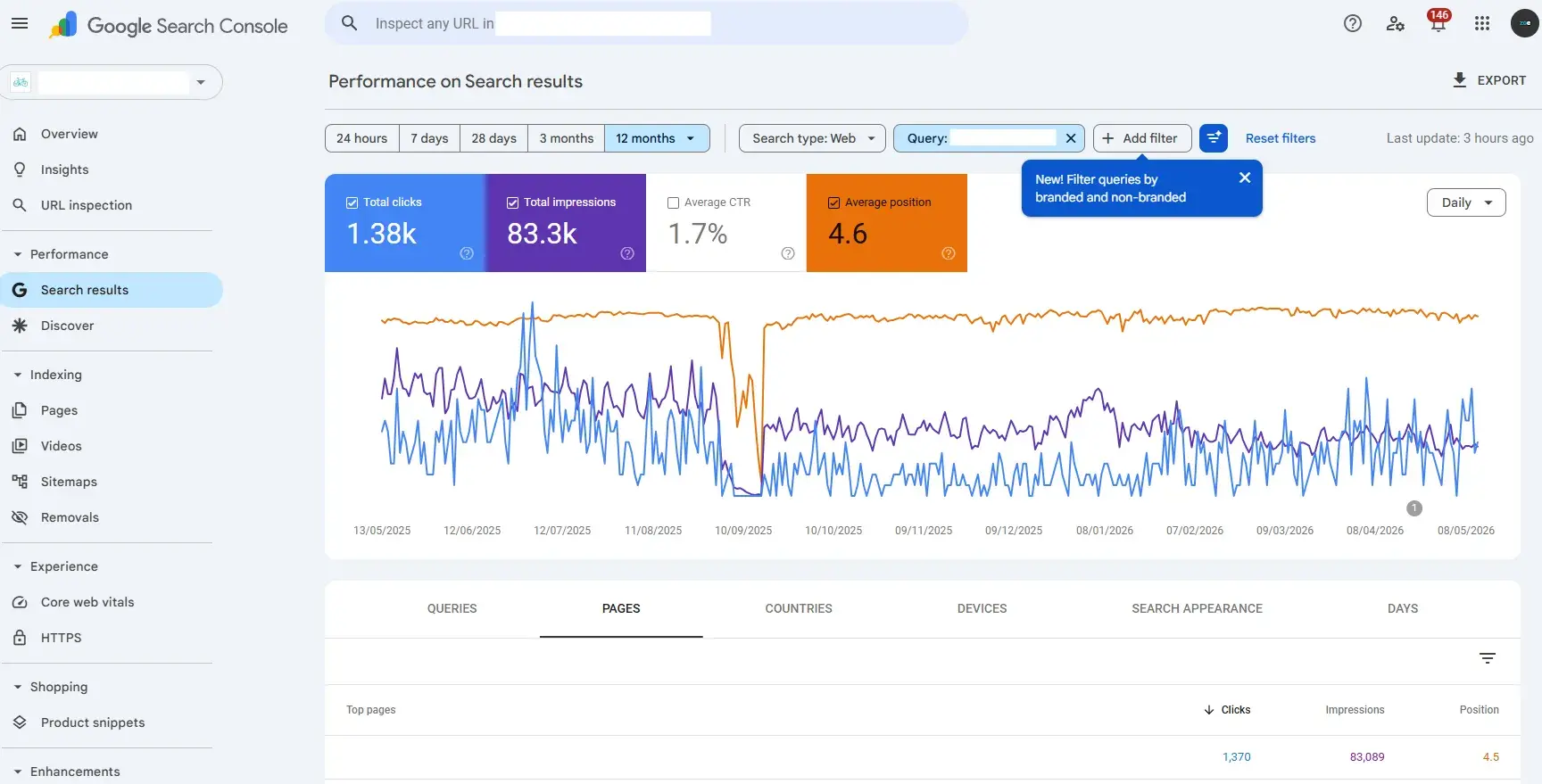
- Google Search Console: The non-negotiable, free baseline for performance tracking.
- HubSpot AEO: As AI-driven search (ChatGPT, Perplexity, Google AI Overviews) becomes the norm, this tool allows marketers to measure "Brand Visibility" in AI answers. It tracks whether your brand is being cited in a positive or negative light—a crucial metric for reputation management.
Official Perspectives: The Value of Connected Ecosystems
The shift toward all-in-one platforms like HubSpot is driven by the need for attribution. When asked about the necessity of integrated systems, SEO consultants consistently emphasize the "Loop of Success." By connecting SEO data to CRM and lead information, businesses can stop asking "how much traffic did we get?" and start asking "how much revenue did this specific blog post generate?"
This transition is not just convenient—it is defensive. In a climate where AI is changing how users discover information, having a unified data source allows a small business to pivot their strategy rapidly based on actual revenue data, not just vanity metrics.
Strategic Implications: Future-Proofing Your Business
The most successful small businesses are those that treat their SEO stack as a living infrastructure.
Key Takeaways for Decision-Makers:
- Prioritize Interoperability: Ensure your tools share data. If you have to manually copy data from an SEO tool into a spreadsheet to make a decision, you are losing valuable time.
- Focus on "Actionable" Data: Avoid tools that generate thousands of data points you don’t know how to use. Opt for tools that provide clear, "do-this-next" recommendations.
- Invest in AEO Awareness: The future of SEO is not just a blue link in a search engine. It is being the cited source in an AI-generated answer. Your future tech stack must account for AEO capabilities.
- Audit Your Stack Annually: Just as you audit your website, audit your subscriptions. Are you paying for a tool that is now redundant because of a feature update in your CRM?
Conclusion
Building a robust SEO tech stack for a small business is a balancing act between cost and capability. By starting with the foundational, free Google tools and layering in specialized, high-impact software—and eventually consolidating into a connected platform like HubSpot—businesses can create an SEO engine that is not only cost-effective but also infinitely scalable.
In the race for organic visibility, the winners will not necessarily be those with the biggest budgets, but those with the most efficient, integrated, and data-driven workflows. By choosing the right tools now, you ensure that your SEO efforts are not just "doing work," but actively contributing to your bottom line for years to come.


 Pevita Pearce
 Reynand Wu
 Ammar Sabilarrohman
 Suro Senen

 Evan Lee Salim

 Ali Ikhwan