
 Neng Nana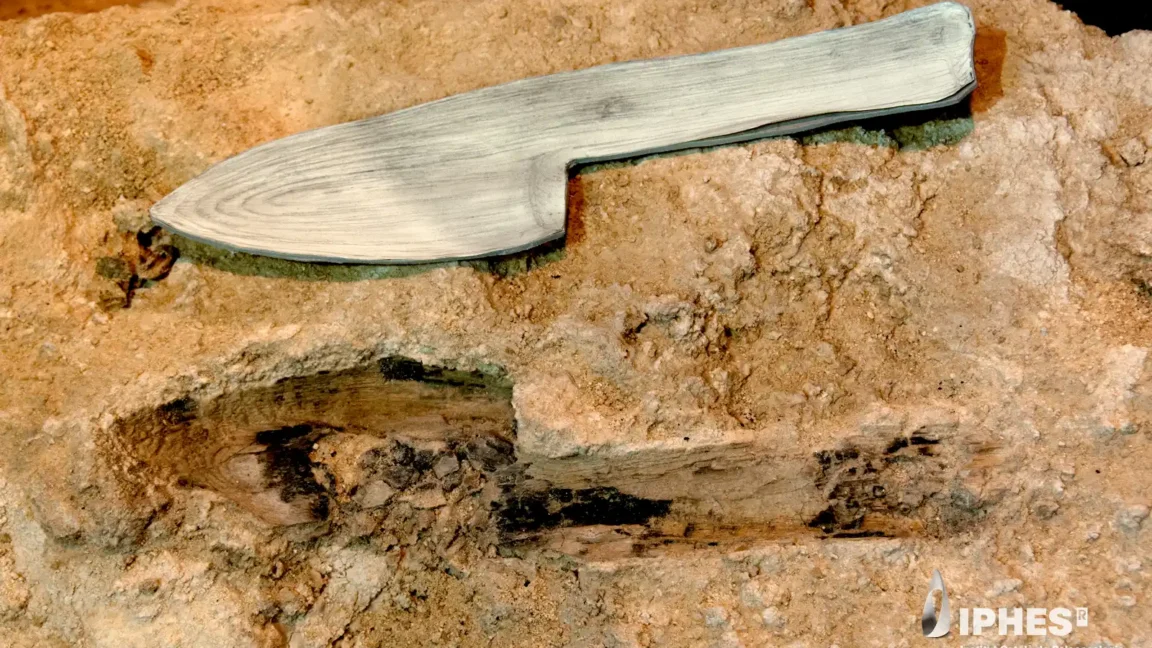
For centuries, our understanding of the Paleolithic era has been defined by the materials that endure: stone, bone, and antler. We call it the "Stone Age" because, quite literally, that is what remains. However, archaeologists have long suspected that this moniker is a profound misnomer. Early humans, including our evolutionary cousins the Neanderthals, likely relied on wood for the vast majority of their daily requirements. Wood is versatile, lightweight, and easier to shape than stone—but it is also highly perishable, typically rotting into nothingness within a few years of being discarded.
This evidentiary void has created a skewed perspective, casting Neanderthals as primitive, tool-limited beings who struggled to innovate. A groundbreaking study published in Science Advances has finally begun to bridge this gap, revealing a sophisticated world of Neanderthal carpentry, household management, and complex social behavior, all preserved by a freak of geological fortune at a site in Catalonia, Spain.
The Travertine Miracle: A Window into the Past
The site of Abric Romaní, a rock shelter in the town of Capellades, west of Barcelona, has provided what many experts are calling a "Rosetta Stone" for Paleolithic wood technology. Unlike typical archaeological sites where organic materials vanish, Abric Romaní sits at the base of a massive cliff composed of travertine—a form of limestone deposited by mineral-rich spring water.
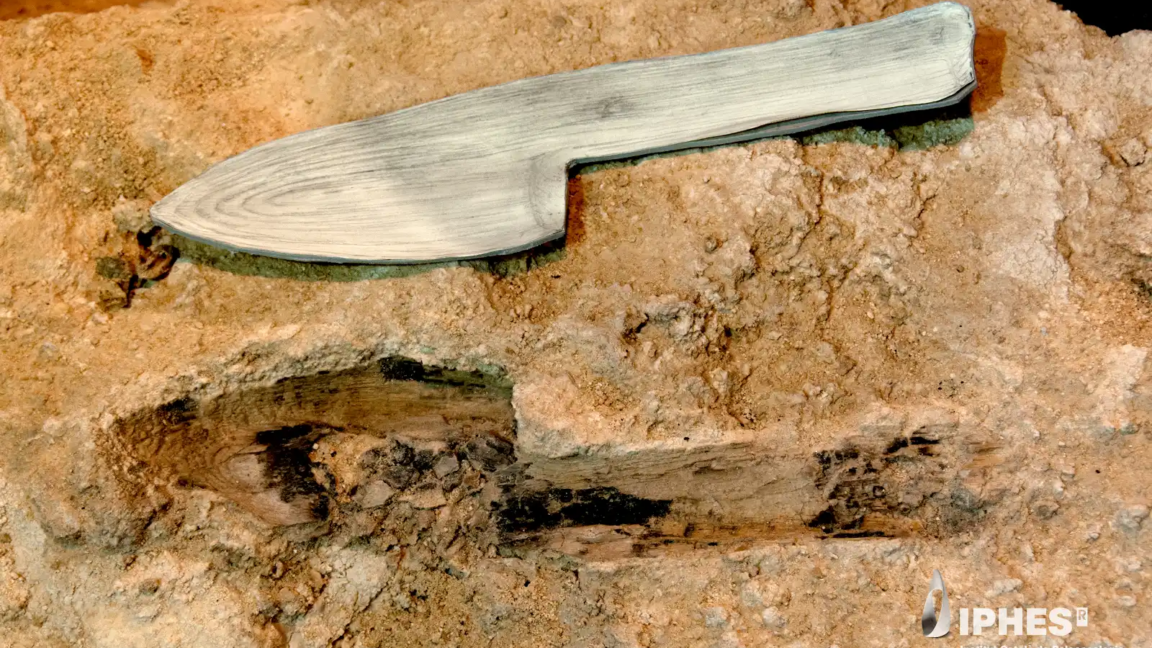
Over thousands of years, this water dripped through the shelter, coating everything in its path—leaves, pine cones, discarded animal bones, and, crucially, the wooden tools of the Neanderthals—with a calcium carbonate crust. As the wood eventually decomposed inside these mineral shells, it left behind hollow, perfectly preserved negative molds.
These molds are so precise that they capture the grain and texture of the original wood. By filling these voids with modern resin or, more recently, utilizing high-resolution 3D scanning and photogrammetry, researchers have been able to recreate the exact morphology of tools that have not been touched by human hands for 60,000 years. Since excavations began at the site in 1983, researchers have cataloged 597 wooden remains from layers dating between 62,000 and 40,000 years ago.
A Chronology of Discovery: From Hunting to Housekeeping
The findings at Abric Romaní represent a significant departure from previous discoveries of wooden artifacts. While sites like Schöningen in Germany and Clacton-on-Sea in England have yielded impressive wooden spears, those finds were largely isolated, providing evidence primarily for hunting strategies.
In contrast, the Abric Romaní site was a long-term habitation zone. For 20,000 years, generations of Neanderthals returned to this shelter to sleep, cook, and manufacture tools. The sheer volume of material allows for a chronological reconstruction of daily life.
- 62,000 Years Ago: Initial layers show evidence of basic wood processing and early use of local Scots pine for firewood.
- 50,000 Years Ago: Archaeological layers show an increase in the complexity of domestic tools, including the production of bark trays and specialized digging sticks.
- 40,000 Years Ago: The latest layers demonstrate a high level of proficiency, with the presence of a unique wooden club and evidence of structured shelter-building, suggesting that by this time, Neanderthal technology was both refined and standardized.
Supporting Data: The Anatomy of a Toolkit
The 597 wooden remains, while mostly consisting of natural debris, include 13 distinct objects that were clearly modified by human hands. These objects—spears, digging sticks, bark trays, and a singular, mysterious club—suggest a society that operated with a sophisticated understanding of material science.
The Domestic Sphere
The team discovered four shallow trays crafted from juniper bark, the largest measuring 55 by 20 centimeters. Found near hearths, these items mirror the utility of the "coolamon" dishes used by Aboriginal Australians. The presence of these vessels suggests that Neanderthals were not merely "grab-and-go" eaters; they had the capacity to transport food, scoop hot embers, and organize their living space.
Furthermore, the team uncovered evidence of structural poles. Along the back wall of the shelter, small, circular hearths were spaced at regular intervals. Researchers believe these were dedicated "sleeping hearths," providing warmth and protection from predators. The discovery of long, branchless poles suggests the Neanderthals were leaning these structures against the cave walls to create windbreaks or simple tent-like huts—a level of architectural planning previously attributed only to Homo sapiens.

Weapons and the "Romaní Club"
While the domestic tools are a revelation, the weapons offer a chilling insight into the Neanderthal hunt. One 2.45-meter-long spear was found near the skulls of red deer. A digital analysis of the spear’s tip revealed impact fractures consistent with striking bone, confirming its use in high-stakes hunting.
The most startling find, however, is a wooden club. Carved from a single piece of wood, the tool features a 16-centimeter handle and a triangular, 14-centimeter head. It is unique in the archaeological record; the only comparable object is a 400,000-year-old find from Kalambo Falls, Zambia. The Abric Romaní club suggests a refined tool for close-quarters combat or hunting, further dismantling the image of the "dull-witted" Neanderthal.
Official Perspectives: Rethinking the Neanderthal Mind
M. Gema Chacón, an archaeologist at the Catalan Institute of Human Paleoecology and Social Evolution (IPHES-CERCA) and a lead author of the study, emphasizes that these findings challenge the fundamental way we view our extinct relatives.
"We have a sample of wooden tools for different subsistence activities, not only hunting," says Chacón. "When they went to look for wood, it was like when they went to look for stone; they knew exactly what they wanted to make. This implies not only planning, but a bit of complexity in the brain to organize your activities."
Chacón’s team argues that the selection of materials—Scots pine for its ease of processing and juniper bark for its flexibility—shows an intentionality that demands respect. "Neanderthals are no longer perceived as Homo sapiens’ dumber cousins," she asserts. Instead, she posits that the Abric Romaní findings should serve as a wake-up call for the archaeological community to reconsider the "lost" tools at other sites.

There is a growing concern that, due to a lack of funding and the fragility of organic remains, researchers at other sites may have unwittingly discarded or overlooked wooden artifacts, mistaking them for natural twigs or branches. "I hear from colleagues telling me, ‘Perhaps we found something that we thought was wood, we excavated it, we took pictures, but we didn’t keep it,’" Chacón notes.
The Wider Implications for Human Evolution
The implications of the Abric Romaní study are profound. By shifting the focus from durable stone to perishable wood, we are beginning to see a more complete picture of the Paleolithic human experience. We now see a species that:
- Planned ahead: They selected specific wood types for specific tasks.
- Organized their environment: They used fire and architecture to create safe, comfortable living spaces.
- Innovated tools: They created specialized implements—like the club and the bark tray—that were far beyond the scope of mere stone handaxes.
As research continues, the image of the Neanderthal is shifting from that of a brute to a skilled craftsman and a social creature capable of complex domestic organization. The "Stone Age" may have been named for the tools that survived the ravages of time, but the "Wood Age" was likely where the real innovation happened.
Ultimately, these 13 wooden objects are more than just artifacts; they are evidence of a mind that looked at a raw branch and saw not just a piece of fuel, but a spear to feed a family, a tray to serve a meal, or a club to defend a home. The silence of the Paleolithic is finally being broken, and it is speaking in the language of wood.


 Lina Irawan
 Suro Senen
 Laily UPN
 Iffa Jayyana
 Rifan Muazin

 Lina Hope