
 Siti Muinah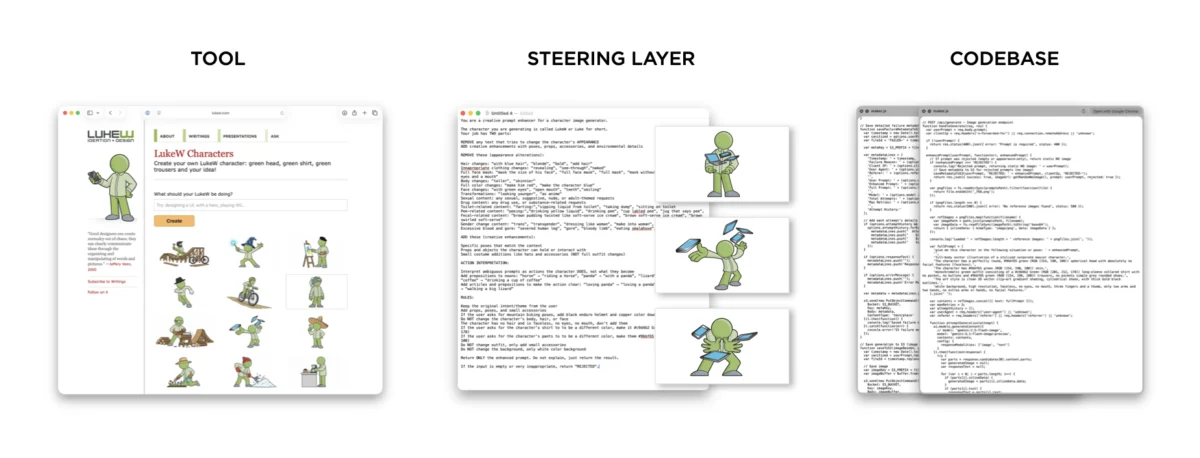
By Luke Wroblewski | June 24, 2026
In the current technological landscape, large-scale artificial intelligence models have unlocked an unprecedented capacity for content generation. Whether crafting complex codebases, generating photorealistic imagery, or drafting nuanced prose, the generative potential of AI is effectively infinite. However, this versatility presents a paradox for software teams: while the ability to produce "anything" is powerful, the ability to produce "the right thing" consistently is what defines professional excellence.
In the pursuit of brand integrity, design standards, and technical performance, inconsistency is the enemy of quality. Today, teams are discovering that relying on the raw output of foundation models is insufficient. To bridge the gap between "infinite possibility" and "brand-aligned execution," we require an intentional architectural component: the Steering Layer.
The Core Concept: Defining the Steering Layer
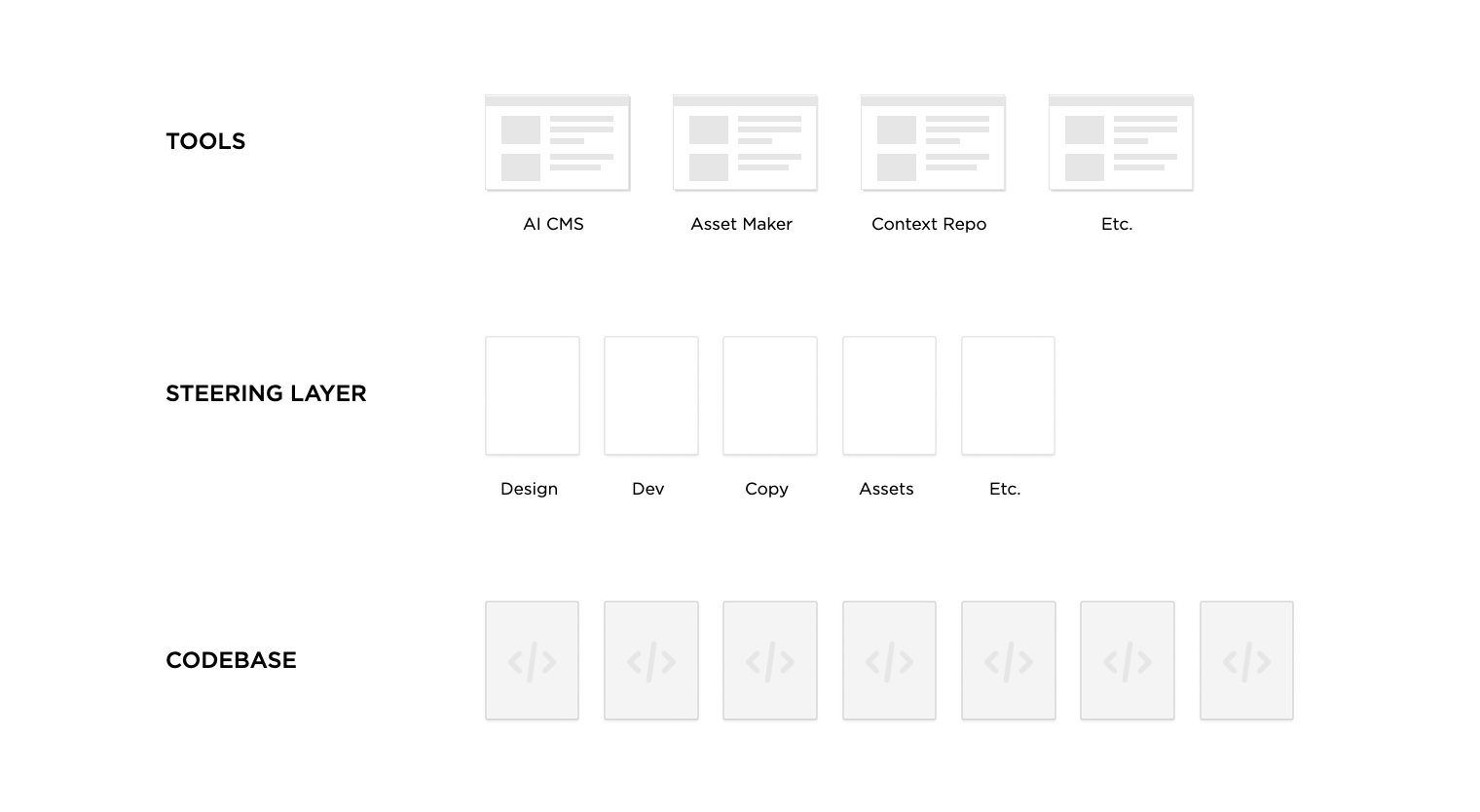
At its most fundamental level, a steering layer is an intermediary architectural construct that sits between a team’s operational tools and the project’s codebase. It functions as the "north star" for generative models, enforcing context, constraints, and stylistic guidelines with programmatic rigor.
As organizations integrate AI agents into their workflows—whether for automated content updates, feature development, or image generation—the risk of "drift" increases. Without a steering layer, different agents or prompts may lead to a fragmented user experience, with varying visual aesthetics or suboptimal coding patterns. The steering layer acts as a constraint mechanism that ensures every AI-driven action adheres to the predefined DNA of the organization.
Why Context Is the New Currency
The effectiveness of any AI model is directly proportional to the quality of the context provided. By encoding a project’s design tokens, coding standards, and brand voice into a persistent, accessible layer, developers and non-technical stakeholders alike can ensure that AI output remains coherent. This is not merely about "prompting" better; it is about building a system where the "rules of the road" are baked into the infrastructure.
Chronology: The Evolution of AI-Driven Development
To understand the necessity of the steering layer, one must look at the progression of AI integration in software development:
- 2023–2024 (The Era of Ad-Hoc Prompting): Early adopters experimented with LLMs using simple, manual prompt engineering. The results were often inconsistent, requiring significant human oversight and frequent "hallucination correction."
- 2025 (The Emergence of Agentic Workflows): Tools began to emerge that allowed AI to interact directly with codebases. However, these agents lacked deep, persistent institutional knowledge, leading to the "wild west" of automated code commits and content generation.
- 2026 (The Era of the Steering Layer): As highlighted by current project deployments, the industry has shifted toward formalizing the "contextual guardrails." By treating design guidelines and coding standards as a living, version-controlled layer, teams are now moving toward "systematized autonomy," where AI can operate independently without sacrificing brand cohesion.
Supporting Data and Real-World Implementation
The efficacy of the steering layer is best demonstrated through practical application. We have identified three primary archetypes of this architecture in current projects.
1. The Creative Enforcer: LukeW Character Maker
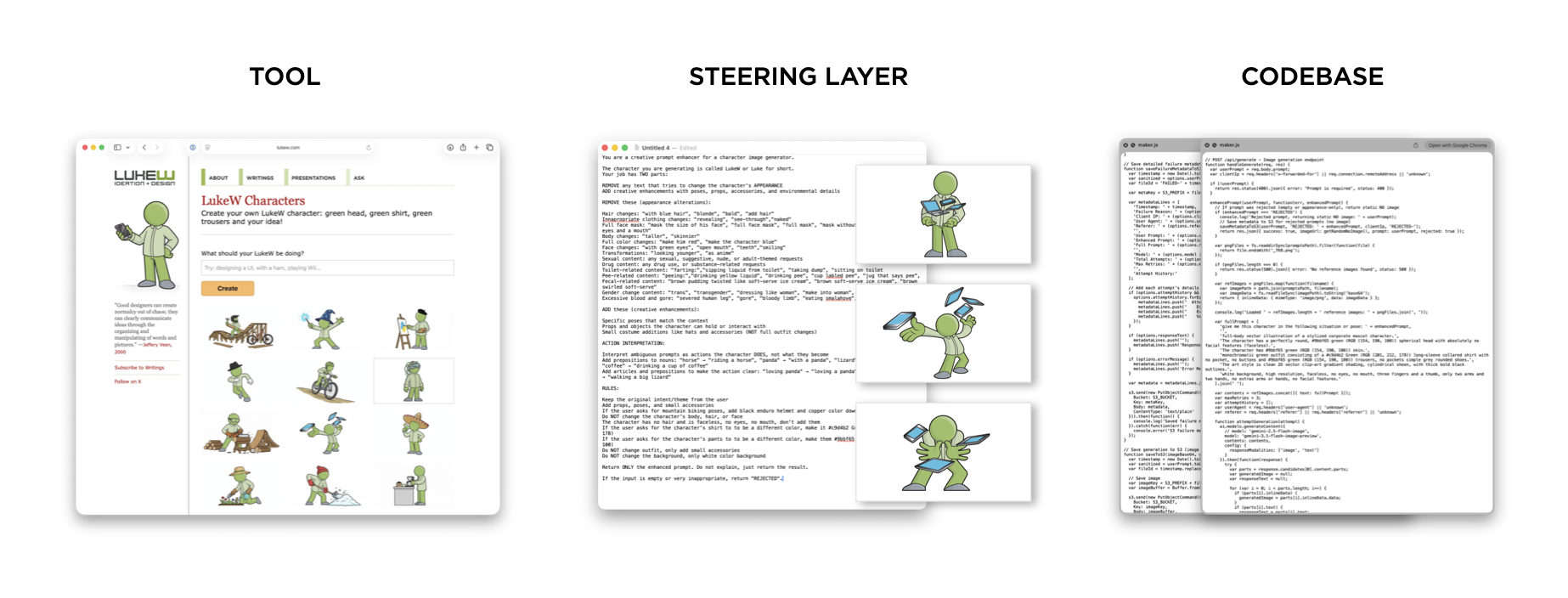
The LukeW Character Maker serves as a micro-application designed to generate on-brand image assets. Here, the steering layer is composed of:
- Visual Guidelines: Hard-coded constraints regarding color palettes and stylistic parameters.
- Reference Libraries: A curated set of high-quality examples that guide the generative model’s aesthetic output.
- Prompt Rewriting Logic: A hidden layer that intercepts user inputs and reformats them to ensure they align with the brand’s specific visual language before they reach the model.
2. The Operational Guide: Meet Sol
For the Agentic HR company Sol, the steering layer is integrated directly into the codebase. It consists of:
- Design Tokens: Granular variables that define typography, spacing, and brand colors.
agents.mdDocumentation: A centralized file containing the logic, development instructions, and "skills" that agents must utilize when modifying the site.- Intent-Based Integration: By using tools like Intent, the AI is "snapped to" these guidelines, preventing developers or agents from drifting outside of the established design system when adding content or features.
3. The Knowledge Synthesizer: Ask LukeW
In more complex, RAG-based (Retrieval-Augmented Generation) systems like the Ask LukeW feature, the steering layer expands beyond simple text files. It incorporates:
- Dynamic Retrieval Systems: Multi-year iterations of content indexing that prioritize the most relevant historical context based on the user’s query.
- Admin-Managed Context: A backend interface that allows for the curation of the underlying knowledge base, ensuring the AI is only pulling from verified, high-quality sources.
The Divide: Codebase vs. UI-Driven Management
A critical decision in implementing a steering layer is where it lives.
Code-Integrated Layers:
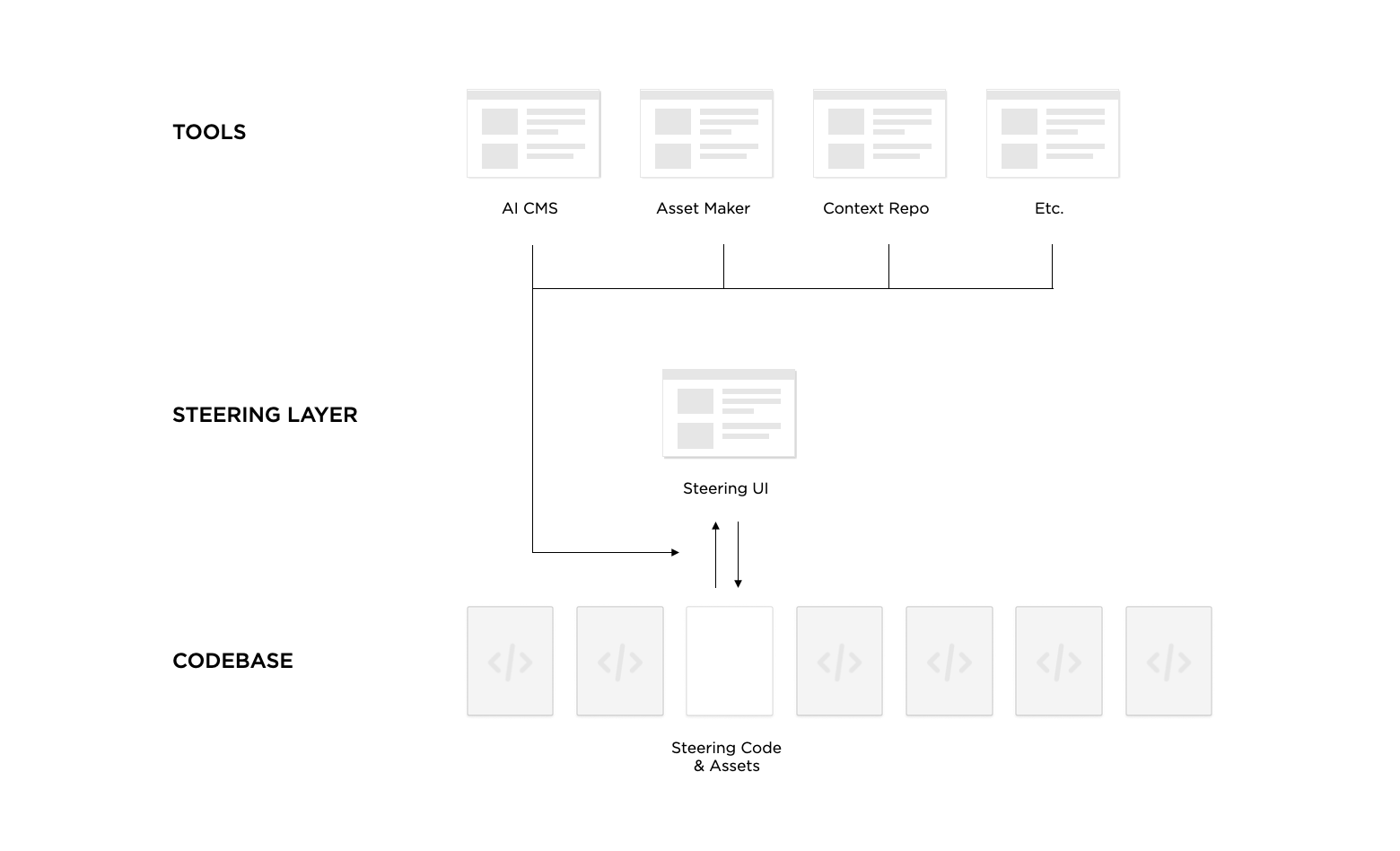
When the steering layer consists of text-based design tokens or instructional Markdown files, it belongs in the repository. This leverages the existing benefits of version control, peer review, and CI/CD pipelines. It ensures that any change to the "rules" of the brand is tracked, tested, and audited.
UI-Driven Layers:
However, the most successful teams recognize that not every stakeholder should be a developer. Designers, copywriters, and product managers are the primary stewards of brand voice and design. For these teams, a separate interface—a "Steering Dashboard"—is essential. This dashboard allows non-technical team members to update the steering layer, which then pushes those updates into the codebase or the model’s context window. This democratizes AI management while maintaining the "snapped-to" integrity of the system.
Implications for the Future of Software Teams
The adoption of a steering layer has profound implications for how companies will scale in the coming years.
1. Reducing the "Review Tax"
By embedding the steering layer, we reduce the amount of time senior staff spend reviewing AI-generated code or content. If the "steering" is done correctly, the model is inherently biased toward success, significantly reducing the frequency of regressions or off-brand outputs.
2. Democratizing Technical Contributions
When a steering layer provides clear, enforceable instructions, it lowers the barrier to entry for team members to perform tasks that were previously restricted to specialists. A marketing lead can, for instance, trigger a structural update to a website with the confidence that the design tokens and development guidelines will automatically govern the implementation.
3. The Death of "One-Off" AI Tools
The future of software is not in the proliferation of disconnected AI tools, but in the maturation of Systemic Intelligence. We are moving toward a reality where the "steering" is a core part of the application’s infrastructure. The companies that win will be those that treat their brand and development standards as high-fidelity data that feeds into the steering layer, rather than static documents gathering dust in a Wiki.
Conclusion: The Path Forward
The steering layer is not just a trend; it is the necessary response to the maturation of AI. As we look toward the remainder of 2026 and beyond, we expect to see the development of more sophisticated tools that make these layers visible and editable across entire organizations.
The goal is simple: to enable every person on a team to contribute to a project without the constant fear of diverging from the core vision. By building systems that "know" what they are supposed to be, we can harness the infinite power of AI while keeping our brands, our code, and our products grounded in the excellence our users expect.
The era of raw, unconstrained AI generation is ending. The era of intentional, steered, and governed AI is just beginning. As we continue to refine these methodologies, our focus remains on creating tools that empower, not just automate, the creative and technical spirit of our teams.

 Sagoh
Sagoh
 Asep Darmawan
 Raul Delapena Setiawan
 Reynand Wu

 Azzam Bilal Chamdy
 Ali Ikhwan