
 Nana Muazin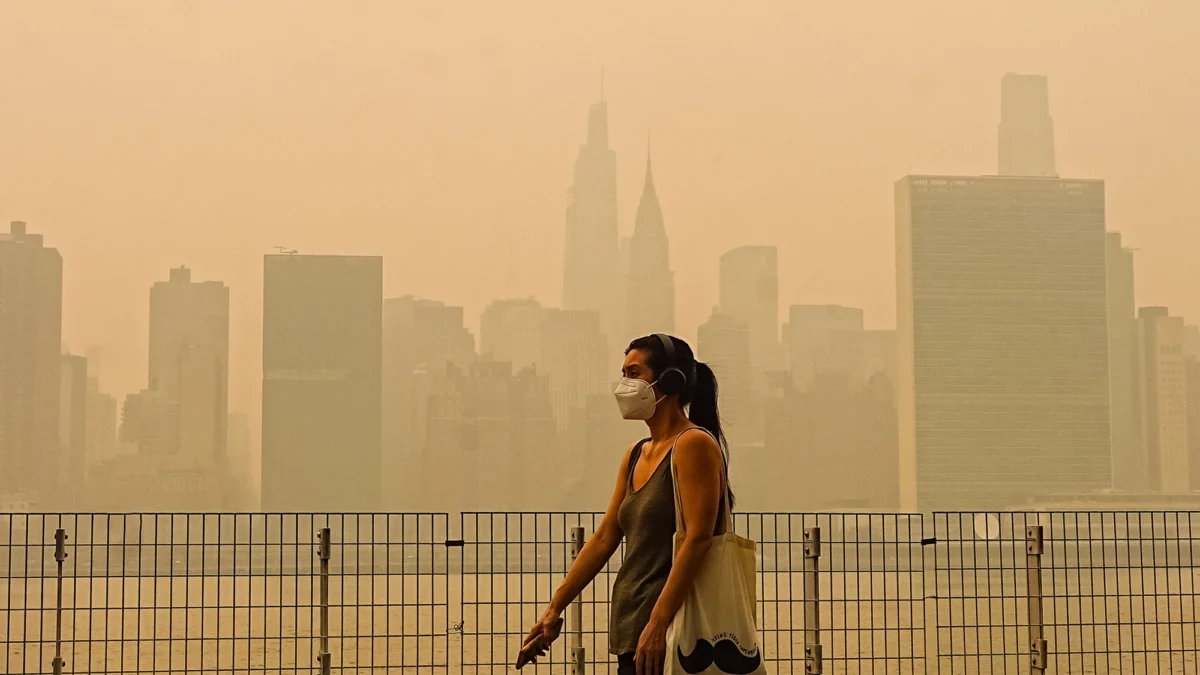
The year 2026 has become a harrowing case study in the volatility of a warming planet. From the orange, toxic haze that smothered New York City following record-breaking Canadian wildfires to the catastrophic flash floods that claimed lives in Texas, the human and economic cost of climate change has transitioned from a future threat to an immediate, daily reality. In the United States alone, the tally of climate-related disasters this year has reached a staggering $3.2 trillion, with a human death toll exceeding 17,000.
As the world reels, a pivotal scientific breakthrough has arrived that threatens to reshape the legal landscape. A new peer-reviewed study published in Earth’s Future has established a robust methodological framework that links individual corporate carbon emitters directly to specific, localized extreme weather events. This development strikes at the heart of the fossil fuel industry’s most potent defense: the claim that climate change is too diffuse a phenomenon to assign legal blame.
A Year of Unprecedented Climate Volatility
The environmental markers of 2026 have been nothing short of apocalyptic. The year began with a “mind-blowing” March heat dome in the United States, which set records from Arizona to Minnesota. By April, the crisis had moved to South Asia, where temperatures in India, Pakistan, and Bangladesh surged to a lethal 113–122 degrees Fahrenheit.
May brought unprecedented heatwaves across the United Kingdom, France, and Spain, as well as North Africa, shattering historical temperature benchmarks. By mid-summer, a 1,000-year storm event in Texas resulted in tragic flash flooding, killing multiple people and underscoring the inadequacy of current infrastructure to handle the climate-altered reality. Shortly thereafter, the Canadian wildfire smoke crisis exposed over 106 million North Americans to hazardous air quality, turning the skies of the Eastern Seaboard a ghostly, apocalyptic orange.
These events are not merely "bad weather," as industry lobbyists often frame them. They are the calculated consequences of a global temperature increase driven by the systemic reliance on fossil fuels.
Chronology of Disenfranchisement: From Discovery to Denial
The history of climate science is as much a story of corporate obfuscation as it is of empirical discovery. For over half a century, major oil and gas companies have possessed internal research acknowledging their role in planetary warming. Instead of pivoting to cleaner energy, these entities invested heavily in a sophisticated, multi-decade disinformation campaign designed to sow doubt and undermine public confidence in scientific findings.
- 1970s–1990s: Industry scientists conduct early research confirming the link between fossil fuel combustion and global warming.
- 2000s–2010s: Climate attribution science emerges, allowing researchers to quantify how much human-induced warming increased the probability of specific events.
- 2017: A wave of litigation begins as states, municipalities, and tribal governments file over 40 lawsuits against Big Oil, alleging that the industry knowingly contributed to climate damage.
- 2025: Industry defense strategies escalate, focusing on blocking discovery processes and discrediting scientific bodies like the National Academies of Sciences (NAS).
- 2026: The publication of Christopher Callahan’s study provides a potential "smoking gun" for plaintiffs, creating a direct statistical link between specific corporate emissions and localized disasters.
Data-Driven Accountability: The Callahan Model
At the center of this shifting legal ground is Christopher Callahan, an Earth systems scientist and assistant professor at Indiana University’s O’Neill School of Public and Environmental Affairs. His recent research represents a quantum leap in "source attribution"—the science of connecting a specific, individual emitter to a specific extreme weather event.
Callahan’s methodology involved running over 150 simulations across eight different climate models. By isolating the atmospheric carbon dioxide contributions of specific entities—including major corporations like ExxonMobil and Chevron—he created a statistical model to determine how these emissions changed the probability of extreme heat or rainfall.
The findings are binary and uncompromising: "There is no level of emissions that does not contribute to changing climate impacts," Callahan stated. "Every ton matters."
His model has already yielded startling results. By comparing real-world outcomes to a hypothetical world without the carbon footprint of the fossil fuel industry, Callahan calculated that these companies increased the likelihood of the 2021 Pacific Northwest heatwave by 31 percent and the catastrophic 2022 rainfall in Pakistan by 7 percent. What was once a "pipe dream" for legal scholars—the ability to show that "Company X caused Injury Y"—is now supported by rigorous, peer-reviewed data.
Official Responses and the Corporate Counter-Offensive
The fossil fuel industry is not sitting idle. Faced with the prospect of discovery—a process that could force executives to testify under oath and release internal documents—the industry has mobilized its legal and political machinery.
Organizations like the American Petroleum Institute (API) have identified "stopping extreme climate liability policy" as a top priority for 2026. This strategy relies on two fronts: legal skepticism and political interference.
During an October 2025 panel hosted by the Federalist Society, attorney Michael Buschbacher argued that climate litigation is merely a "payday for contingency fee lawyers." He questioned the feasibility of establishing causation, asking, "How do you show that emissions from company X cause injury Y from a hurricane or whatever?"
However, the industry’s pushback has turned increasingly aggressive. A Politico investigation revealed a covert campaign by oil industry allies to discredit a recent National Academies of Sciences (NAS) report on extreme weather. This pressure campaign bore fruit when Republican attorneys general successfully forced the NAS to pull a critical chapter on climate science from a reference manual intended for federal judges. The move was widely criticized by the scientific community, with one NASA scientist calling it "pathetic," questioning who will defend scientific integrity if the academies will not.
Implications for the Future of Litigation
The intersection of science and the courtroom is set to become the primary theater for the climate battle. For decades, the legal barrier of "causation" has protected the fossil fuel industry from accountability. Plaintiffs had to prove that a specific disaster was directly caused by the actions of a specific company—a task that previously seemed impossible.
The new attribution science changes this dynamic significantly. While some legal experts suggest that final judgments will still hinge on complex legal doctrines rather than pure science, others argue that the ability to present compelling, quantifiable data will "rock the courtroom."
If these lawsuits move forward, the discovery phase could expose the extent to which these corporations prioritized profit over public safety, even as their own internal models warned of the coming catastrophe. As Kim Cobb, an expert in observational climate studies at Brown University, notes, the ability to pinpoint these links is "extremely valuable" and serves as a tool for both legal accountability and future disaster planning.
The Path Forward: Science vs. Politicization
The future of attribution science remains caught in a tug-of-war between objective research and political obstruction. The Trump administration’s systematic cuts to scientific programs and monitoring systems serve as a direct attempt to blind the public to the very data that proves the industry’s role in the climate crisis.
Despite this, the scientific consensus remains firm. Climate scientists like Michael Mann and Kristina Dahl continue to defend the integrity of attribution studies, emphasizing that these findings provide a necessary roadmap for understanding our current trajectory.
As Yann Quilcaille of ETH Zürich succinctly put it, "We need to act quickly, and we have the solutions." The question is no longer whether we can link climate disasters to the fossil fuel industry; the science has already done that. The question is whether the legal and political systems possess the fortitude to hold those responsible to account before the next 1,000-year storm arrives.


 Laily UPN

 Asep Darmawan

 Basiran
 Nana Wu
 Nana
Nana
 Siti Muinah