
 Asep Darmawan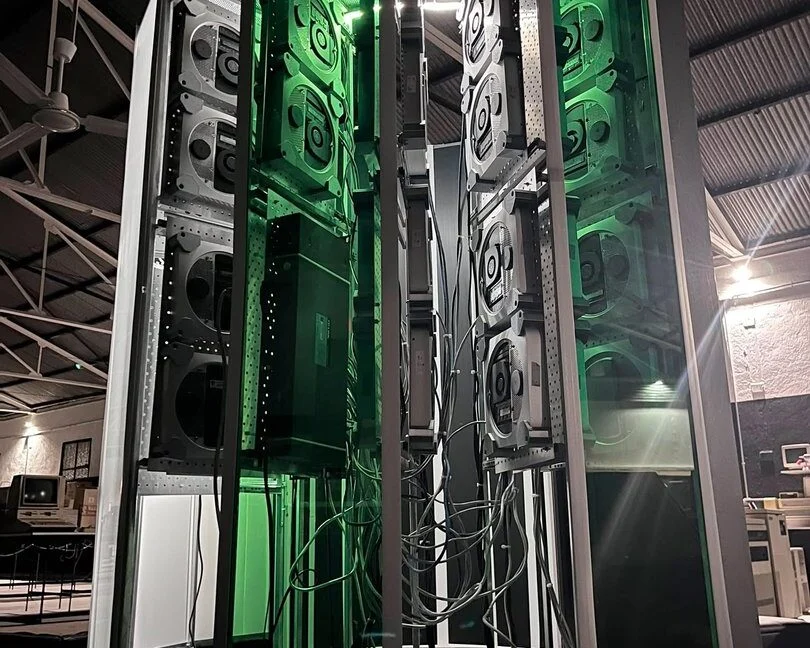
In the annals of computing history, few silhouettes are as recognizable as the Cray-1. With its iconic C-shaped chassis and integrated padded bench seating, the machine wasn’t just a supercomputer; it was a monolith of 1970s engineering, a status symbol for national laboratories, and the undisputed king of floating-point operations. Today, the Museo de Historia de la Computación in Spain has bridged the gap between that golden age of vector processing and the modern era of distributed computing by unveiling a 1:1 scale visual replica of the Cray-1, powered not by liquid-cooled gold, but by a fleet of vintage 2012-era Mac Minis.
This project, which spanned 18 months of intensive development, serves as a dual-purpose tribute: honoring the 50th anniversary of the Cray-1’s debut and commemorating the half-century mark of Apple’s own founding. By housing a cluster of 30 consumer-grade computers within the shell of a legendary supercomputer, the museum has created a living exhibit that demonstrates the staggering evolution of processing power while maintaining the aesthetic integrity of one of computing’s most beautiful machines.
The Genesis: A Project of Architectural Contrast
The challenge of recreating the Cray-1 was never about pure speed—by modern standards, the original Cray-1’s peak performance of 160 megaflops is eclipsed by a standard digital wristwatch. Instead, the challenge for the creative team at the Museo de Historia de la Computación was to build an educational tool that could visually represent the shift from the rigid, specialized vector processing of 1976 to the fluid, parallel, multi-core clusters of the 21st century.
The project began as an internal initiative to celebrate the museum’s collection. As the planning committee looked for a centerpiece that could bridge the gap between historical curiosity and modern performance, the Cray-1 emerged as the obvious candidate. However, rather than simply building a hollow shell, the team decided to make the replica functional, allowing visitors to visualize exactly how many "modern" units it would take to emulate—and eventually dwarf—the computing power of a Cold War-era titan.
Chronology of Construction
The project followed a rigorous 18-month timeline, broken down into distinct phases of hardware sourcing, software architecture, and environmental integration:
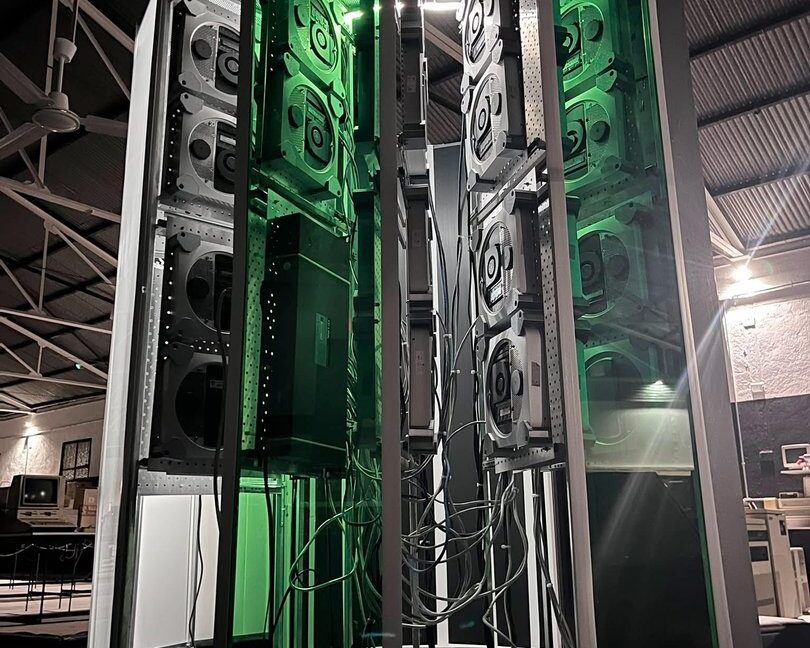
- Months 1–4: Sourcing and Acquisition: The team scoured secondary markets to acquire a uniform set of Mac Minis. They settled on a configuration of 30 units, primarily from the 2012 model year, supplemented by two 2014 units to ensure stability.
- Months 5–9: Chassis Fabrication: The team reverse-engineered the Cray-1’s dimensions, ensuring that the final build retained the original’s iconic C-shape. This required precision steel fabrication to ensure the rack could support the weight of the hardware while maintaining the aesthetic of the original circular base.
- Months 10–14: Software Orchestration: The team eschewed standard Linux distributions in favor of macOS Mojave (10.14). This choice was strategic, leveraging macOS’s robust built-in support for the Message Passing Interface (MPI). This software layer acts as the "glue," allowing individual nodes to communicate and distribute tasks across the cluster.
- Months 15–18: Thermal and Power Testing: To ensure the system would run continuously for museum visitors without the noise associated with modern server rooms, the team engineered a custom passive cooling system, integrating aluminum trays and a convection-focused rack design.
The Hardware: Consumer Tech as a Supercomputer
At the heart of this replica are 64 active processing cores. The hardware makeup is eclectic: five PCs are quad-core i7 models, while the remaining 25 are dual-core i5 units. When networked together, these 30 nodes can achieve a peak of 1.3 teraflops of performance. Notably, the system previously hit 1.5 teraflops during initial testing phases before a single node went offline—a testament to the sensitivity of cluster computing.
The choice of Mac Minis was deliberate. The museum wanted to highlight that the power once reserved for government laboratories is now relegated to a "junk drawer" category of hardware. In 1976, the Cray-1 was a multi-million-dollar behemoth that required specialized cooling and massive amounts of electricity. Today, the museum runs a system with roughly 8,000 times the theoretical performance of the original using hardware that can be picked up for a fraction of a modern graphics card’s price.
Comparative Performance: Then vs. Now
| Metric | Original Cray-1 (1976) | Museum Replica (2026) |
|---|---|---|
| Architecture | Vector Processor | Parallel Cluster |
| Peak Performance | 160 Megaflops | 1.3 Teraflops |
| Cooling | Freon-based Liquid Cooling | Passive Convection |
| OS | COS (Cray Operating System) | macOS Mojave |
Implications: The Shift in Computing Philosophy
The core of the museum’s exhibit is the contrast in philosophy. The original Cray-1 was a marvel of vector processing—applying a single instruction to multiple data elements simultaneously. This was the pinnacle of scientific research, designed for weather modeling and nuclear physics.
In contrast, the replica uses a parallel cluster approach. By distributing work across independent processors, the museum’s system mimics the distributed computing environments found in modern cloud data centers. Visitors can interact with a custom Python script that performs matrix multiplications, watching as the system scales from a single-core process to a full-cluster execution. This allows museum-goers to visualize the "division of labor" inherent in modern computing, a concept that is often abstract and invisible to the average user.
Engineering the Environment: The Silence of the Cluster
One of the most profound engineering challenges was acoustic management. Modern server farms are defined by the roar of high-velocity fans, which create a harsh, industrial environment. The museum team was determined to avoid this.
By utilizing a custom steel rack chassis, the team allowed for natural airflow. Each Mac Mini is mounted on an aluminum tray that serves as a heat sink, facilitating passive convection cooling. The result is a machine that is nearly inaudible, allowing visitors to sit on the replica’s iconic bench and study the inner workings of the cluster without the distraction of white noise. It is an ironic inversion of the Cray-1’s history—a machine famous for its loud, liquid-cooling pumps is now represented by a near-silent display of desktop hardware.
Official Responses and Museum Vision
"We wanted to make the invisible visible," says the lead curator of the Museo de Historia de la Computación. "The Cray-1 is a ghost of a different era. By putting it on the floor, we aren’t just showing people a piece of metal; we are showing them the democratization of power. The fact that 30 machines from a decade ago can outperform a supercomputer that once cost millions is the most important lesson in the history of technology."
The museum notes that the project has exceeded expectations in terms of both stability and public interest. Educators from across Europe have reached out to study the configuration, as the MPI-based macOS setup provides a unique, user-friendly interface for students to learn the basics of distributed computing.
Future Outlook
As the project enters its operational phase, the museum plans to introduce interactive software modules that will allow guests to run their own simulations on the Cray-1 replica. Whether it’s simulating fluid dynamics or calculating the digits of Pi, the replica provides a tactile link to the history of the industry.
In a world where we carry more computing power in our pockets than the Apollo missions had in their entirety, the Cray-1 replica serves as a humble, albeit impressive, reminder of where we began. It is a tribute to the pioneers of vector processing and the modern developers who continue to push the boundaries of what consumer hardware can achieve. The Museo de Historia de la Computación has not only built a display; they have built a bridge across fifty years of digital evolution.


 Muslim
 Nana Wu
 Raul Delapena Setiawan
 Dwi Wanna

 Rifan Muazin