
 Rifan Muazin
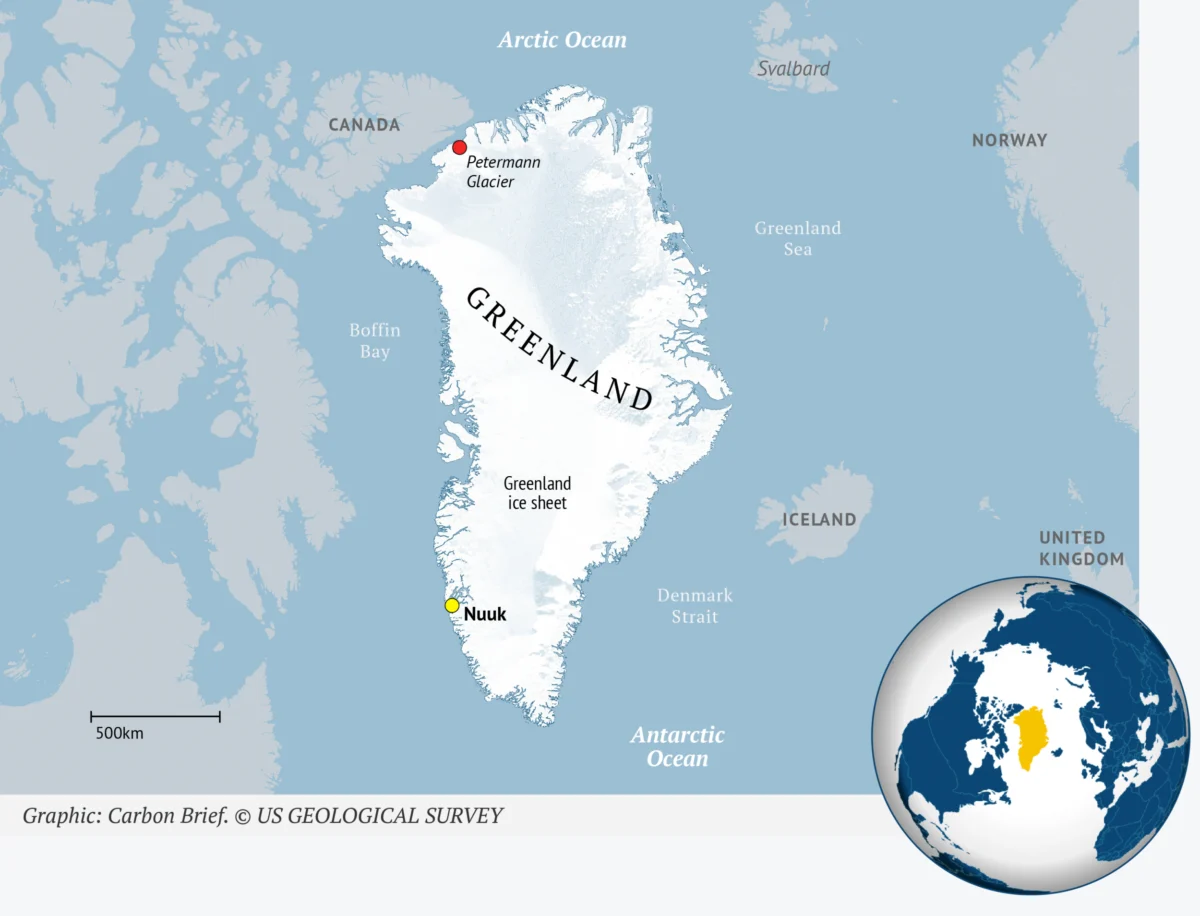
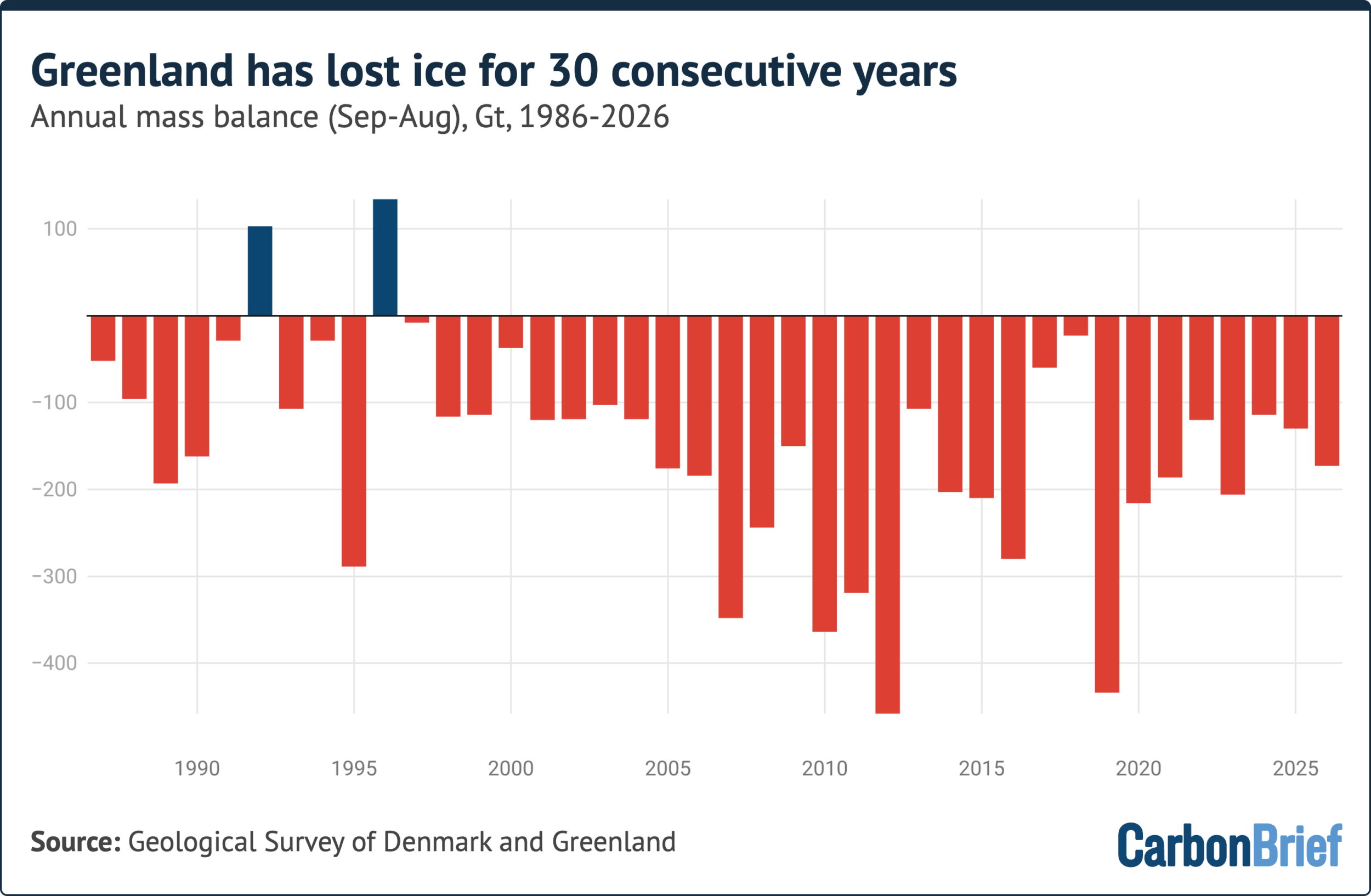
In a sobering milestone for climate science, Greenland has officially recorded its 30th consecutive year of net ice loss. For three decades, the world’s second-largest ice sheet has failed to accumulate enough snow to offset the volume of ice lost to melting and discharge. This persistent downward trajectory, spanning every year since 1996, serves as a definitive "fingerprint" of human-caused climate change, moving beyond the noise of natural weather variability into a long-term, structural decline.
Over the 12-month period ending in August 2026, the Greenland ice sheet shed approximately 135 billion tonnes of ice. While this figure might appear "moderate" compared to the record-breaking melt years of the past, the fact that the ice sheet ended the year in the red despite a relatively cool, mild summer underscores the severity of the underlying imbalance.
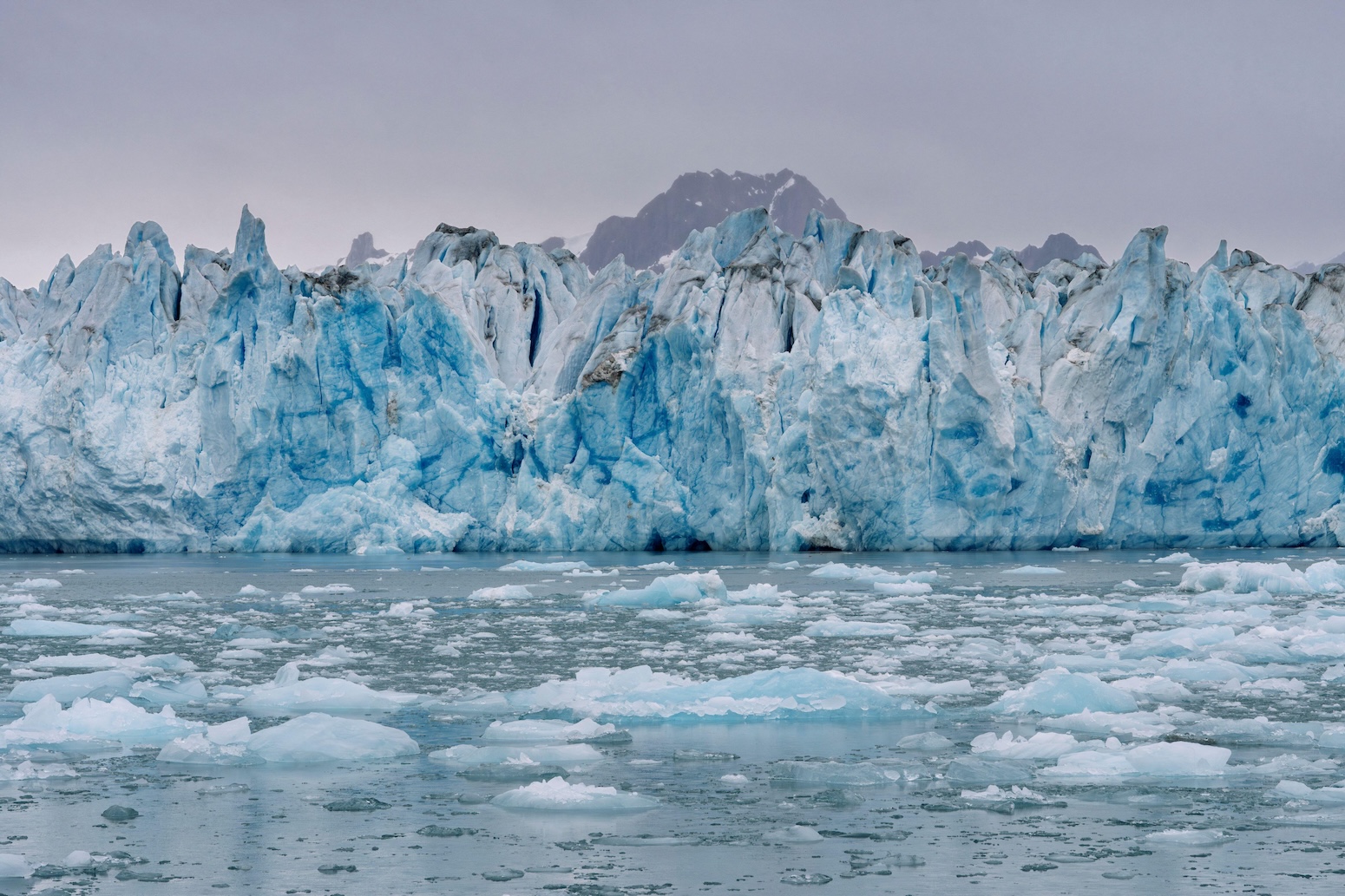
The Mechanics of Mass Balance: A Shrinking Reservoir
To understand the health of the Greenland ice sheet, glaciologists utilize two primary metrics: Surface Mass Balance (SMB) and Total Mass Balance.
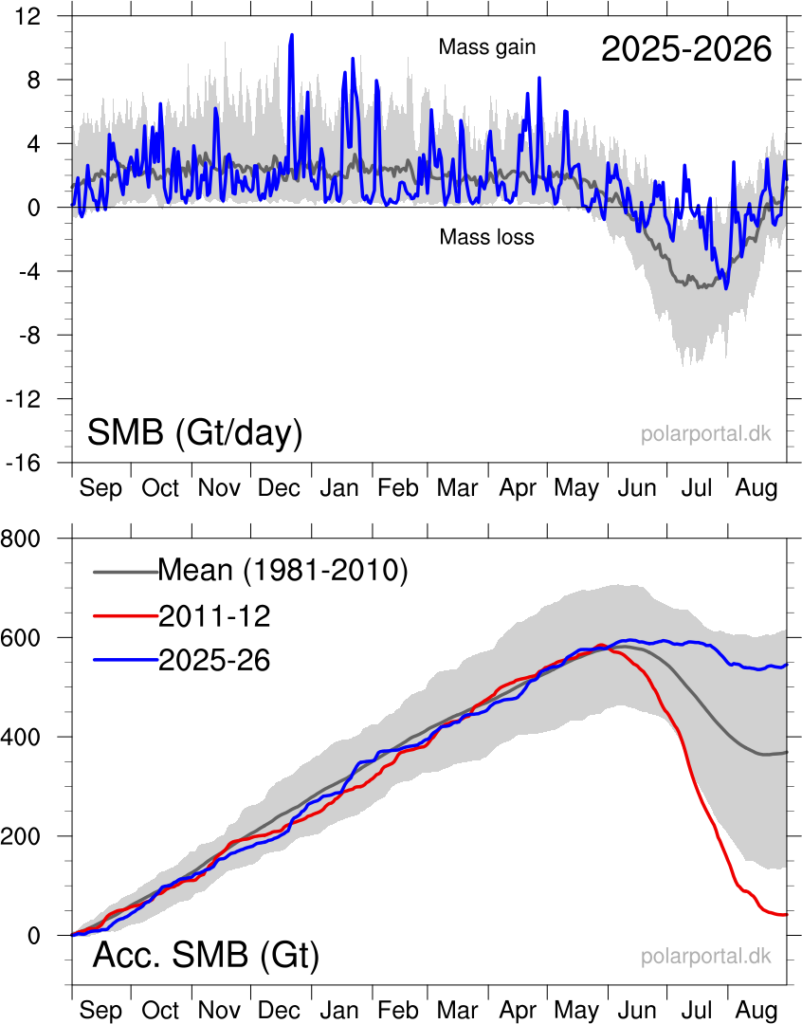
The SMB represents the net difference between snow accumulation—the ice sheet’s only method of "growth"—and surface melt. The annual cycle typically runs from September 1st through August 31st. During the winter and spring, the ice sheet gains mass, creating a protective buffer. As temperatures rise in mid-June, this balance shifts, and the ice sheet begins to shed water.
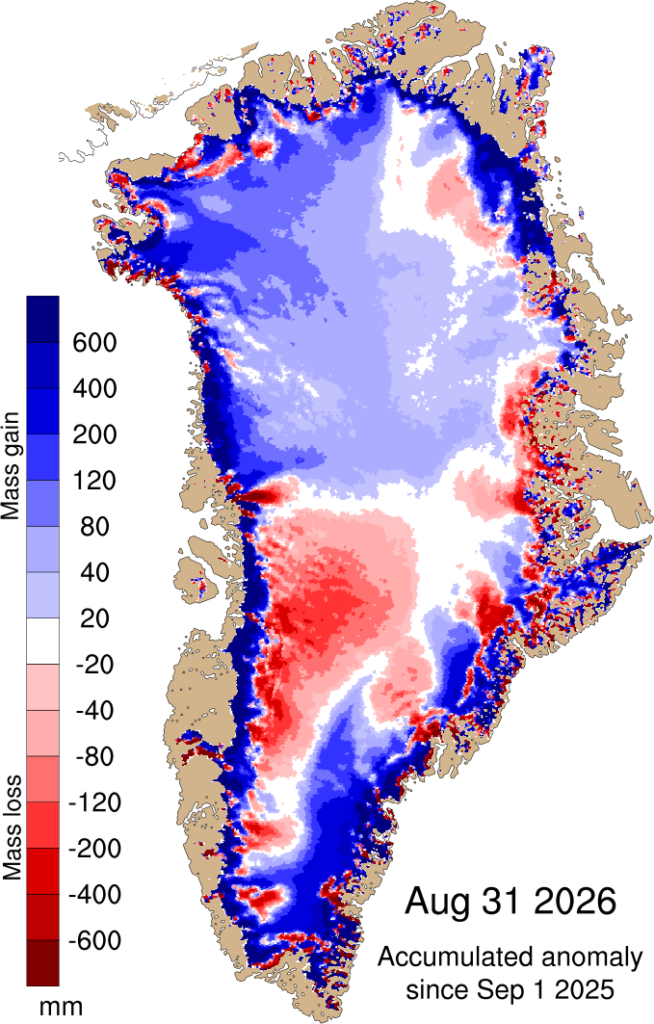
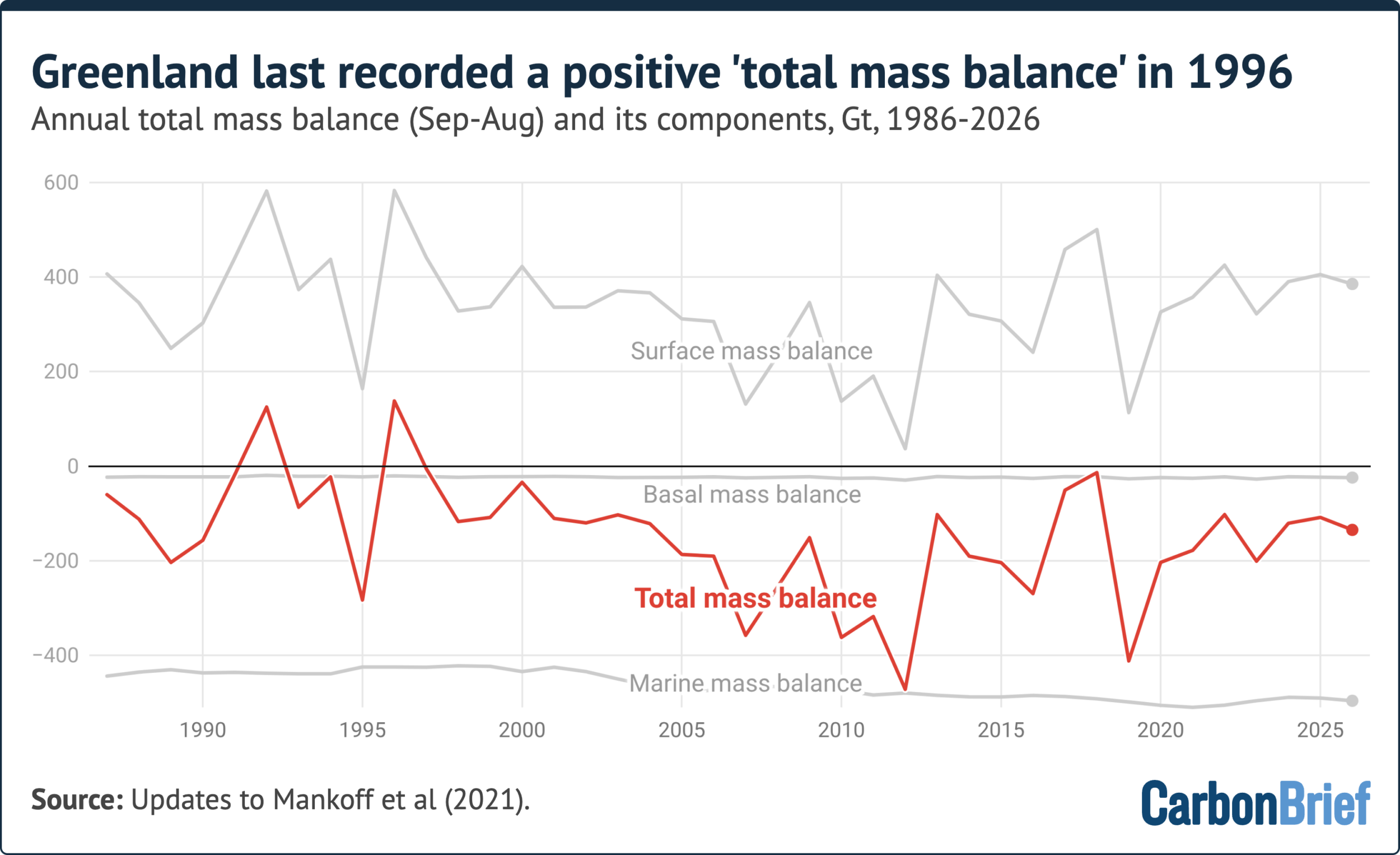
In the 2025-26 cycle, Greenland saw a surface mass balance gain of 519 billion tonnes. While this sits roughly 178 billion tonnes above the 1981–2010 average, it is only one side of the ledger. When factoring in the "marine mass balance"—the loss of ice through iceberg calving and the melting of glacier fronts in contact with warm ocean water—as well as basal melting at the underside of the ice sheet, the net result is a significant deficit.
Depending on the modeling approach used, the net loss for the year ranges from 135 billion to 173 billion tonnes. This discrepancy highlights the complexity of measuring a landmass of this scale, as scientists must account for varying ice thickness, flow velocity, and the complex interaction between glaciers and the warming Atlantic.
A Chronology of Decline: Three Decades of Red
The consistency of this decline is what most alarms the scientific community. To climate researchers, a 30-year dataset is the gold standard for separating long-term climate trends from ephemeral weather patterns.
- 1996: The last year in the instrumental record where the Greenland ice sheet recorded an annual net gain in mass.
- 1996–2010: The period of transition, where the frequency and severity of melt events began to consistently outpace replenishment.
- 2012: The record-setting year of loss, where an estimated 458 billion tonnes of ice disappeared, driven by an extreme heat event that blanketed nearly the entire surface of the sheet.
- 2020–2026: A period characterized by "quiet" but persistent decline. Even in years with favorable weather—such as the cool summer of 2026—the ice sheet continues to lose over 100 billion tonnes annually.
This 30-year streak confirms that Greenland is no longer oscillating between growth and loss; it has transitioned into a state of chronic hemorrhage.
Supporting Data: The Role of Weather Patterns
The 2025-26 season provided a unique case study in how global weather patterns influence the ice sheet. This year, the Northern Hemisphere was dominated by a high-pressure "Omega" block in the jet stream.
While this pattern brought record-breaking, catastrophic heatwaves to Southern Europe and North America, it placed Greenland on the "cool" side of the atmospheric loop. For much of the summer, Greenland enjoyed cloud cover and frequent snowfall, which helped preserve the albedo of the ice sheet—the ability of bright, white snow to reflect solar radiation back into space.
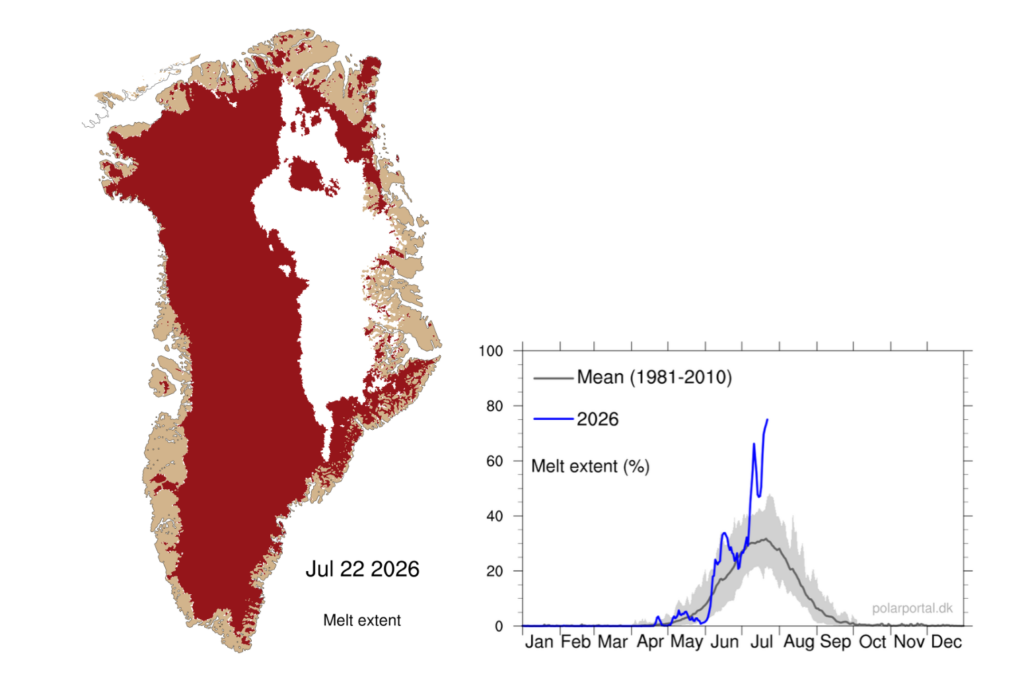
Despite these favorable conditions, the ice sheet still failed to reach a state of equilibrium. On July 22, 2026, at the peak of the melt season, 74.9% of the ice sheet was experiencing surface melt. The fact that the sheet ended the year in such a significant deficit even under "lucky" atmospheric conditions suggests that the system has lost its resilience.
The Calving Crisis: Edge-of-Sheet Instability
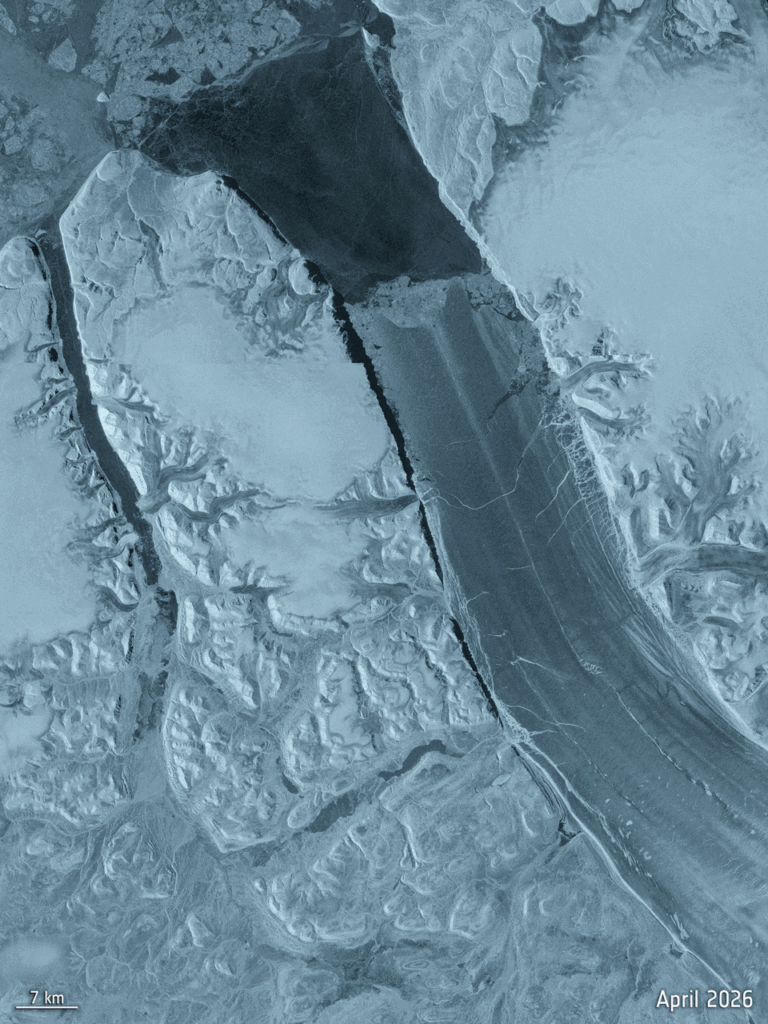
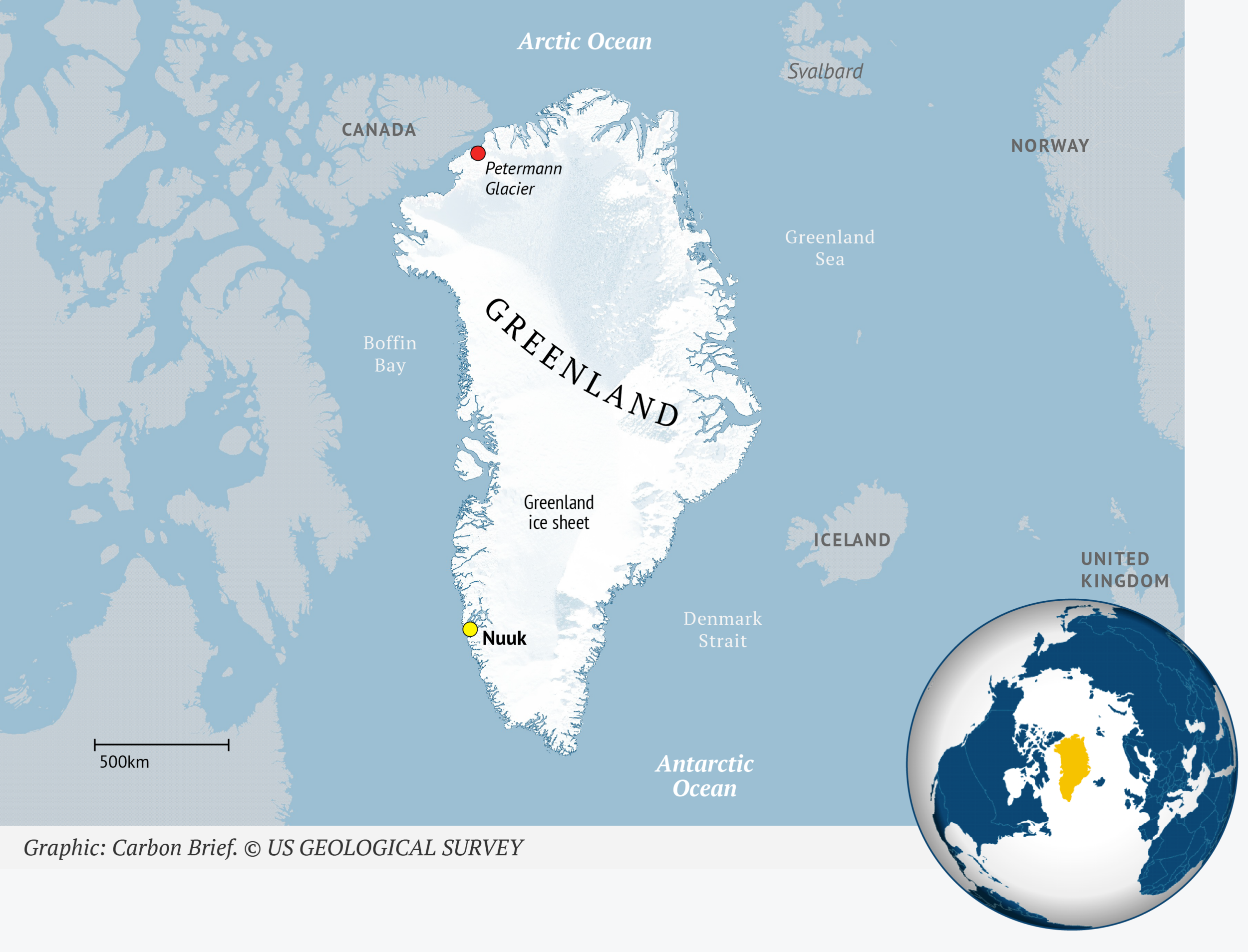
While surface melt captures headlines, the most dramatic ice loss occurs at the edges. On August 4, 2026, a massive "ice island" broke away from the Petermann glacier in northwest Greenland. Measuring over 76 square kilometers and 150 meters thick, the iceberg contains enough freshwater to submerge greater London to a depth of over 6.6 meters.
This calving event was not a surprise; it was the culmination of years of structural weakening and widening rifts within the glacier. Scientists are currently monitoring two additional ice islands, which are expected to detach in the near future. Together, these events threaten to remove nearly a quarter of the Petermann glacier’s remaining floating ice tongue.
Because these glaciers act as a "brake" on the flow of inland ice into the ocean, their collapse accelerates the discharge of ice from the interior, further contributing to sea-level rise. Research indicates that calving and glacier retreat have driven roughly two-thirds of Greenland’s total ice loss to date.
Implications: The "Greenlandification" of Antarctica
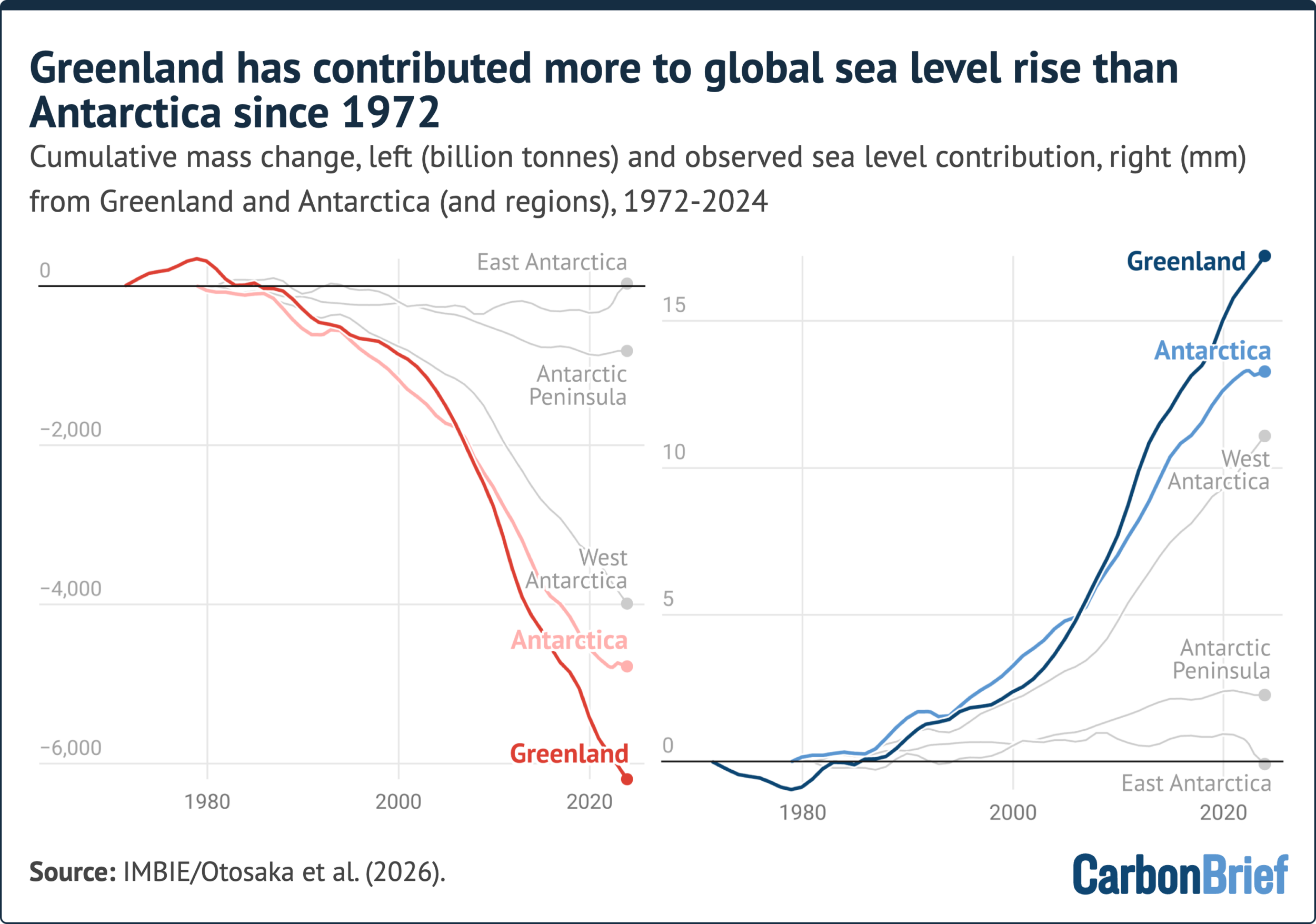
The consequences of Greenland’s decline are not contained to the Arctic. According to the Ice Sheet Mass Balance Intercomparison Exercise (IMBIE), Greenland and Antarctica together lost over 11,000 billion tonnes of ice between 1979 and 2023, accounting for roughly 25% of all observed global sea-level rise.
Perhaps more concerning is the phenomenon researchers have dubbed the "Greenlandification of Antarctica." For decades, Antarctica was considered largely stable, particularly in its massive East Antarctic sector. However, recent reports show that the processes that have decimated Greenland’s glaciers—increasing surface melt, the collapse of ice shelves, and the acceleration of marine-terminating glaciers—are now being replicated in the southern polar region.
Greenland is currently the largest single contributor to ice-driven sea-level rise, but its role is shifting from a primary victim of climate change to a bellwether for the rest of the planet. If the world’s largest ice sheet, Antarctica, begins to mimic the trajectory of Greenland, the resulting sea-level rise would be catastrophic for global coastal populations.
Future Outlook
As we look toward the end of the decade, the scientific consensus is clear: the 30-year decline of the Greenland ice sheet is not a temporary fluctuation. It is a fundamental shift in the earth’s cryosphere.
The increased snowfall observed in some regions—driven by warmer air holding more moisture—is insufficient to compensate for the accelerated melting and calving. Furthermore, as the ice sheet thins, its surface elevation drops, exposing it to warmer air at lower altitudes, which creates a positive feedback loop that accelerates further melting.
The data from 2025-26 serves as a stark reminder that even in "moderate" years, the ice sheet is losing massive quantities of water to the global ocean. As policy debates continue regarding carbon emissions and mitigation strategies, the Greenland ice sheet continues to provide a cold, hard, and irrefutable count of the climate cost—one billion tonnes at a time. The next 30 years will likely determine not only the fate of Greenland’s glaciers but the habitability of the world’s coastlines.

 Siti Muinah
 Basiran

 Ammar Sabilarrohman

 Muslim

 Suro Senen

 Neng Nana
