
 Nana Muazin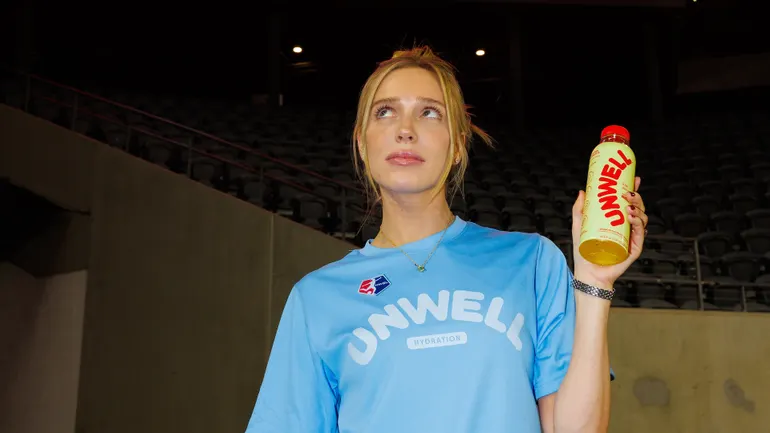
In the modern business landscape, success has become a double-edged sword. As brands achieve cultural resonance, they are frequently met with an influx of opportunities—media invitations, collaborative ventures, and expansive market-entry strategies. This phenomenon, often driven by the siren song of “total addressable markets,” lures leaders into a dangerous trap: the belief that because they have captured an audience, they have earned the right to sell them anything.
However, as Sunny Bonnell and Ashleigh Hansberger, co-founders of the brand consultancy Motto, argue in a recent analysis, there is a fundamental disconnect between having an audience and having "brand permission." In an era where AI and rapid scaling have made expansion cheaper and faster than ever, the most significant challenge for modern executives is no longer finding new places to grow—it is discerning which opportunities truly belong in the brand’s narrative.
The Chronology of the “Audience First” Experiment
For decades, the standard corporate playbook was rigid: build a product, refine it, and then spend millions of dollars in marketing to assemble an audience around that offering. Over the last ten years, this model has been effectively inverted by the creator economy.
- The Rise of the Creator-Led Business: Influencers, athletes, and media personalities began by building massive, loyal audiences through content. These individuals bypassed traditional gatekeepers, establishing direct, intimate relationships with their followers.
- The Monetization Pivot: Once an audience was established, the transition to commerce seemed logical. Creators began launching beauty lines, beverage brands, and wellness products, leveraging their “built-in” distribution channels to avoid traditional customer acquisition costs.
- The AI Acceleration: The advent of generative AI and low-code platforms further lowered the barrier to entry. Companies could now pivot from a product-based business to an "intelligence layer" or a multi-platform ecosystem almost overnight, creating a perception that boundaries were disappearing.
- The Reality Check: The recent shuttering of high-profile ventures—most notably Alex Cooper’s Unwell Hydration, which closed roughly two years after launch—served as a sobering reminder that cultural influence does not guarantee commercial longevity.
The Great Audience Delusion: Supporting Data and Insights
The core issue lies in a fundamental misunderstanding of what an audience represents. Many leaders view a follower count as a bankable asset, assuming that an audience is simply a market waiting to be monetized. However, the data suggests that “attention” is often mistaken for “product-market fit.”
The Metrics Trap
Modern marketing has become hyper-efficient at measuring attention—tracking clicks, impressions, and conversion rates—but it remains strikingly poor at measuring meaning.
- Borrowing vs. Earning: A million followers can facilitate a successful launch, effectively collapsing the distance between obscurity and the first purchase. However, they cannot collapse the distance between a one-time trial and a long-term habit.
- The "Confetti" Phase: When a brand launches a new product to an existing audience, initial sales figures often look stellar. This "false positive" can lead executives to believe they have successfully diversified, when in reality, they have only cashed in on a limited supply of "borrowed demand."
According to the analysis provided by Bonnell and Hansberger, the most successful moves a brand makes have a sense of "inevitability." When consumers see an expansion, they should think, "Of course that makes sense." When a company requires a 50-slide PowerPoint presentation to justify a new product line, it is usually a sign that they have moved beyond their permission boundary.
The Anatomy of Brand Permission
Every brand operates within a "permission boundary"—a metaphorical territory that customers are willing to let the brand occupy based on trust, expertise, and shared values. When a company crosses this line without a clear, logical thread, it risks diluting its identity.
Why Does This Matter?
The distinction between "awareness" and "meaning" is the difference between a fleeting trend and a sustainable business.
- Awareness provides scale: It ensures people know you exist.
- Meaning provides leverage: It gives customers a reason to choose you over a competitor when your name is stripped from the label.
When a brand stretches too thin, it falls into "strategic sprawl." Executives, often pressured by the ease of modern production and the promise of new revenue streams, begin to treat the brand as a logo that can be slapped onto anything. This is the path to losing the very thing that made the brand special in the first place.
Implications for Future Leadership
As the business environment becomes increasingly complex due to AI-driven capabilities and globalized digital markets, leadership must shift its focus. The ability to grow is no longer the primary differentiator; the ability to say no is.
The Discipline of Focus
The true test of a leader is not how many new categories they enter, but how disciplined they are in maintaining the brand’s focus.
- The Scarcity Advantage: Early-stage companies often succeed because they are constrained by limited capital and resources. These constraints force them to be laser-focused. Success, paradoxically, often removes these constraints, leading to a loss of focus.
- The Role of Vision: Vision serves as the guardrail against sprawl. It allows leaders to distinguish between an opportunity that compounds the brand’s value and one that merely capitalizes on its current "heat."
Strategic Recommendations for Executives
To ensure long-term viability, leaders should apply the following internal audit before entering new markets or launching new products:
- The "Why" Test: Can you draw a clear, defensible line between what the brand is currently famous for and where you are asking it to go next?
- The "Independent" Test: If you were to remove the brand name, would the product still be compelling? Does it solve a real problem or satisfy a genuine desire?
- The "Retention" Test: Are you building for the "launch party," or are you building for the years that follow?
- The "Uncomfortable" Choice: Are you prepared to walk away from a profitable, high-attention opportunity because it doesn’t align with the brand’s core purpose?
Conclusion: The Path to Meaningful Expansion
The temptation to monetize cultural influence is understandable, but it is often a path to mediocrity. In a marketplace saturated with brands clamoring for attention, the companies that thrive are those that respect the boundaries of their influence.
Focus is how meaning is made. Every category entered, every partnership formed, and every technology adopted adds a subplot to the brand’s story. If those subplots are disconnected, the audience loses the thread, and the brand becomes little more than a generic commodity.
Successful brands do not simply look for more places to go; they choose the meaningful places to go. As artificial intelligence makes it easier than ever to build and expand, the most valuable commodity in business will remain a clear, unwavering point of view. Leaders who can resist the allure of easy growth in favor of disciplined, brand-aligned expansion will be the ones who define the future of their respective industries.


 Rifan Muazin
 Azzam Bilal Chamdy
 Laily UPN
 Iffa Jayyana

 Suro Senen
 Lina Hope
 Lina Irawan