
 Reynand Wu
A profound disconnect exists in the modern climate discourse: while the overwhelming majority of citizens in developed nations express a desire for climate action, they remain convinced that their neighbors, colleagues, and fellow citizens are far less concerned than they truly are. This systematic miscalculation, known as the "perception gap," acts as a silent brake on global progress, creating a false sense of isolation among those who are ready to act.
According to a landmark study published in Nature Climate Change, the general public consistently underestimates the climate commitment of their peers while simultaneously overestimating the real-world actions taken by others. This research, based on a rigorous analysis of over 5,000 participants across Germany and the United States, challenges the long-held assumption that simply "correcting" these misperceptions will automatically unlock a wave of public participation in climate-friendly behaviors.
The Anatomy of the Perception Gap
The study explores the complex interplay between personal climate attitudes, actual behavioral outcomes, and the psychological heuristics that govern how we perceive the social environment. By moving beyond traditional surveys—which often rely on self-reported "willingness to act"—the researchers utilized five distinct experiments to track verifiable behavior, such as financial donations and participation in environmental legal challenges.
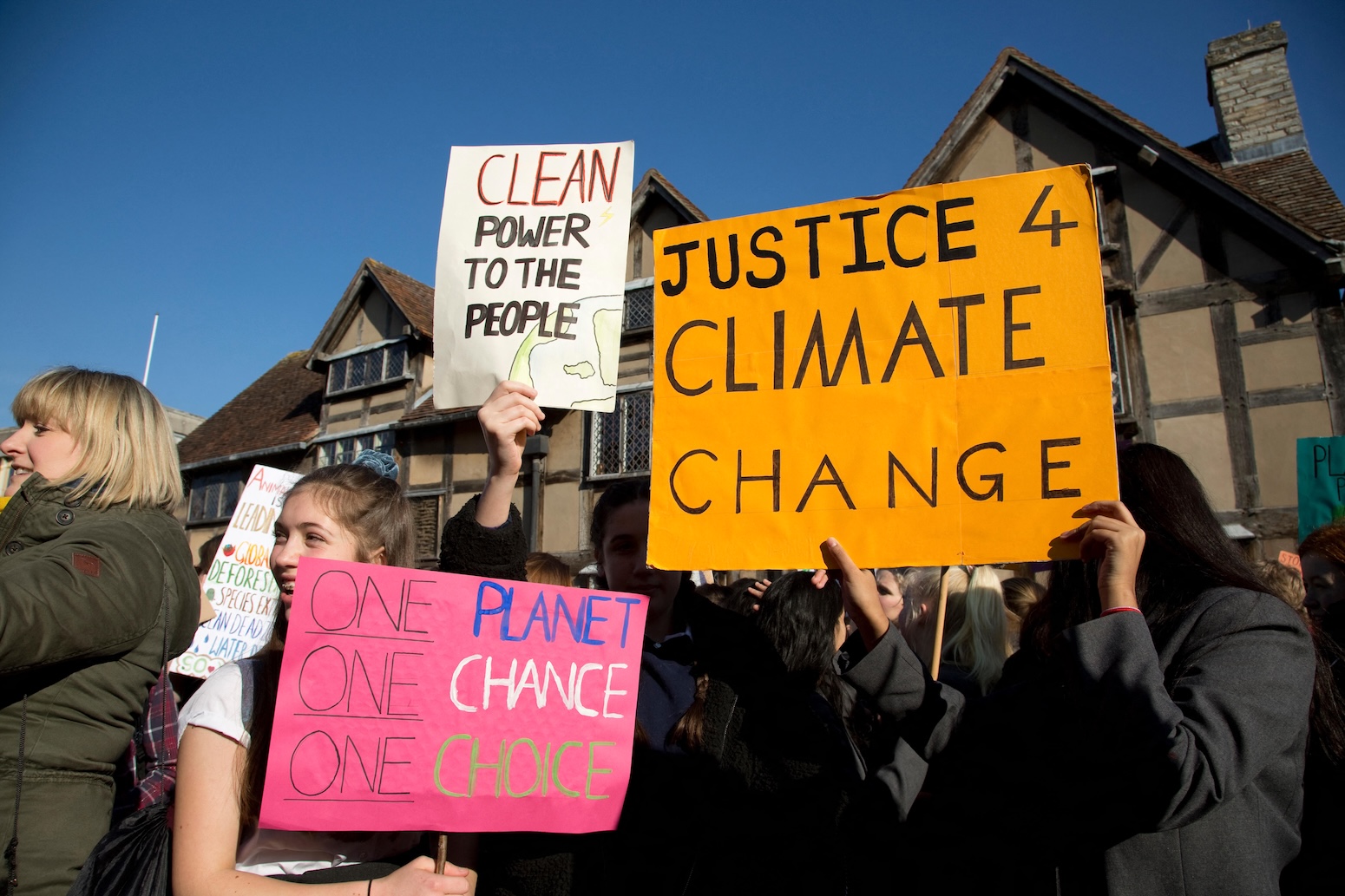
The researchers found that the perception gap is not merely a product of ignorance or bias. Instead, it appears to be a systemic cognitive hurdle. As the authors suggest, human beings are inherently poor at making accurate estimations about the behaviors of large groups. When individuals look at the population, their estimations tend to "regress to the mean," systematically overestimating the prevalence of infrequent behaviors while underestimating the prevalence of common, popular, and pro-climate stances.
Chronology of the Research: Testing the Limits of Action
The research team, led by Dr. Kevin Tiede of the University of Erfurt’s Institute for Planetary Health Behaviour, conducted their multi-stage investigation throughout 2024 and 2025. The methodology was designed to move beyond the "cheap talk" of surveys and into the realm of observable, costly, and verifiable actions.
- Phase One (Donation Dynamics): Participants were asked to pledge 1% of their household income to the World Wide Fund for Nature (WWF). While 37% of respondents expressed a verbal willingness to contribute, only 4% followed through when the moment of truth arrived. Crucially, the participants guessed that their peers would be more active than they actually were, yet they underestimated the general level of public support for the principle of such donations.
- Phase Two (Legal Activism): In an experiment involving a Greenpeace-led constitutional complaint against the German government, participants were asked to join as claimants. The researchers tracked both the willingness to join and actual participation rates, mapping these against the perceived participation levels of the general public.
- Phase Three (Work-for-Protection): Participants performed an online task where completing "pages" of work triggered financial donations to environmental causes. By measuring the volume of work completed, the researchers were able to quantify real-world effort, comparing this to the participants’ estimations of how hard their peers would work.
- Phases Four and Five (Information Intervention): The researchers attempted to bridge the gap by informing different groups about the actual behavior of their peers. One group was told 4% had donated (the reality), while another was told 68% were willing to donate (the perceived potential).
Supporting Data: A Landscape of Miscalculation
The data reveals a stark "attitude-behavior gap." In nearly every experiment, there was a significant divide between what people said they would do and what they ultimately did. The researchers documented a "consistent pattern" where small, infrequent actions were perceived as more common than they are, and large-scale, popular support for policy measures was perceived as lower than it actually is.
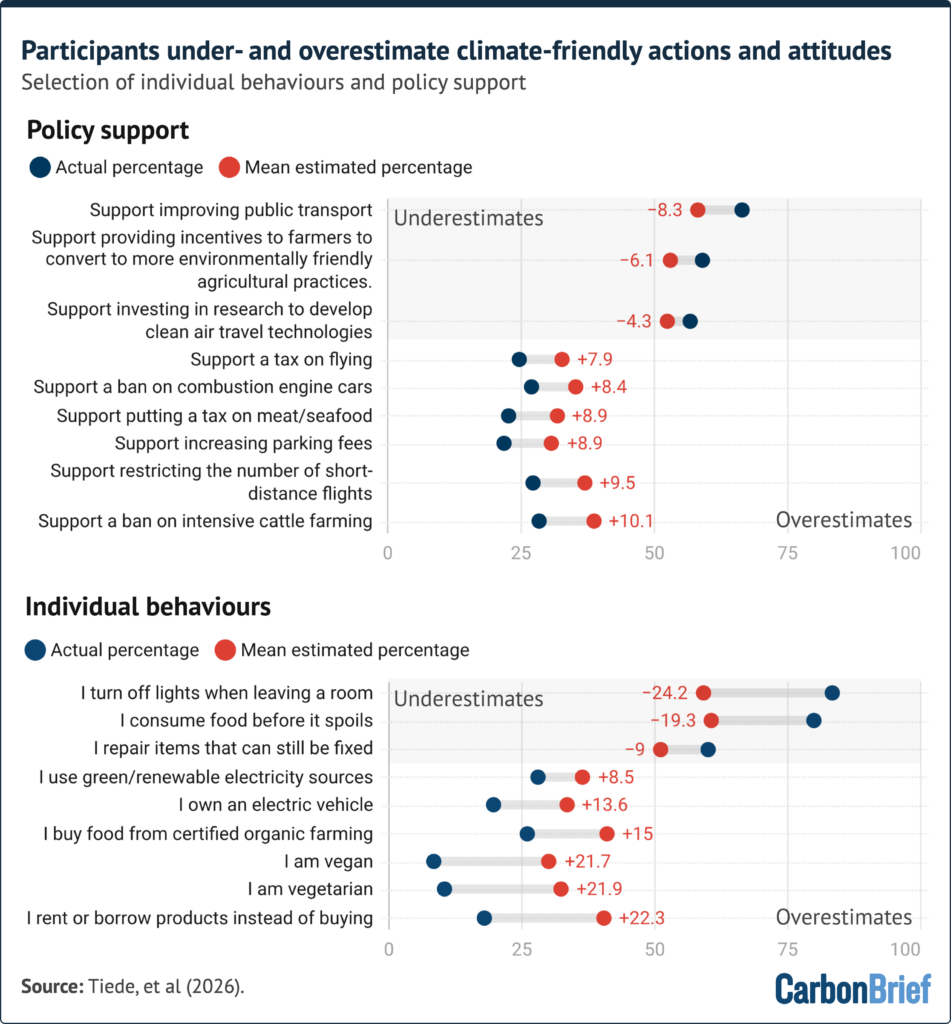
This phenomenon of "pluralistic ignorance"—where an individual holds a personal belief but falsely believes the majority of the group holds a different one—is particularly acute in the climate domain. Because people believe they are in the minority, they may feel less emboldened to take public action, fearing social isolation or a lack of collective momentum.
The study highlights that individuals who are already deeply engaged in climate discourse—those who follow climate news and frequently discuss the issue—have more accurate perceptions of the public’s views, yet even they fall prey to the "regression to the mean" effect that biases their estimations of the broader population.
Official Perspectives and Expert Analysis
The implications of this research are being felt across the fields of social psychology and climate policy. Prof. Madalina Vlasceanu of Stanford University’s Doerr School of Sustainability, who was not involved in the study, describes the findings as a "vital addition to the literature."
Vlasceanu notes that the study’s failure to find a "silver bullet" for behavior change—specifically, the fact that correcting misconceptions did not automatically lead to more donations—is a sobering reminder of the complexity of social change. "Correcting the perception gap is not enough," she explains. "It may take multiple, repeated attempts at communication, or for people to directly experience the ‘norm’ that climate action is widely supported, rather than simply being told."
Prof. Mauro Bertolotti of the Università Cattolica del Sacro Cuore offers a more cautious view. While acknowledging the importance of the attitude-behavior gap, he remains skeptical of laboratory-based experiments. He warns that the artificial environment of a survey can create expectations that do not translate to the messy, high-stakes decisions of real-world environmental activism. "Experiment environments often come with assumptions that are different from real life," Bertolotti says, "and may not replicate the complex decision-making processes involved in choosing to support a climate cause."
Implications for Policy and Communication
The researchers behind the study offer a clear, if challenging, directive for policymakers and climate communicators: stop trying to "convert" the unreachable and start facilitating the majority.
1. Moving Beyond Conversion
The study suggests that communication strategies should stop focusing on the shrinking minority of climate skeptics. Instead, they should target the "silent majority"—the large segment of the population that already supports climate action but feels alone in that sentiment due to the perception gap.
2. The Role of Convenience and Subsidies
Because there is a clear divide between "willingness" and "action," the research argues that the most effective way to close the gap is to reduce the "cost" of participation. Facilitating climate-friendly behavior through convenience, infrastructure, and targeted subsidies will likely yield better results than moralizing or information-heavy campaigns.
3. Prioritizing Fairness and Visibility
To build genuine, long-term support, environmental policies must be transparently fair. When the public perceives a policy as equitable, they are more likely to support it visibly. The study underscores that "identity signaling"—such as public protests or widespread adoption of sustainable lifestyles—serves as a crucial mechanism for signaling to others that they are not alone in their commitment.
4. Co-benefits as a Driver
Finally, the research suggests that public engagement is most effectively sustained when the "effectiveness and co-benefits" of climate action are made clear. People are more likely to participate when they see the tangible, local advantages of a green policy, such as improved air quality, reduced energy costs, or local job creation, rather than just the abstract global goal of carbon reduction.
Conclusion: A New Path for Climate Action
The Nature Climate Change study serves as a necessary reality check. We have spent years assuming that if people only knew how much their peers cared about the climate, they would surge forward in a collective movement. The reality, as revealed by Dr. Tiede and his team, is far more nuanced.
While the "perception gap" is indeed real, closing it is only the first step. The true challenge lies in transforming the latent, passive support of the majority into active, sustained, and observable engagement. By shifting focus from abstract data correction to structural changes that make sustainable choices easier and more visible, society may finally begin to narrow the distance between our climate aspirations and our actual impact. The path forward is not found in simply telling people what others think, but in building the systems that allow that shared concern to manifest as meaningful, collective action.

 Ammar Sabilarrohman
 Nana Wu
 Lina Irawan

 Suro Senen
 Jia Lissa