
 Basiran
For many parents in the FIRE (Financial Independence, Retire Early) community, the primary goal of work is to demonstrate discipline, value creation, and the fruits of labor to their children. Yet, as authors and creators often discover, there is a disconnect between the "passion" we encourage our children to pursue and the harsh economic realities of the modern marketplace. This is the story of the "Passion Poverty Career" (PPC)—a term coined to describe professions that offer immense personal satisfaction but struggle to provide the financial stability required for a comfortable life in an expensive, high-inflation world.
The Reality of the Creative Economy
When I first accepted a book deal with Portfolio Penguin in 2019, my primary motivation was to model work ethic for my children. I wanted them to see a tangible result—a physical book on a store shelf—that served as proof of the relationship between years of study, discipline, and effort. However, the process unveiled a sobering truth: writing is a "Passion Poverty Career."
Despite authoring two national bestsellers, Millionaire Milestones and Buy This Not That, a reliance on writing income alone would place me squarely in the low-income bracket by any objective measure. The economics of publishing are notoriously difficult; even authors whose work reaches the top 0.3% of annual sales rarely clear $100,000 annually.
This creates a systemic problem. If a household relies on writing or the arts as a primary income stream, the standard of living drops precipitously. In a city like San Francisco, where the median rent for a two-bedroom apartment is already a staggering $6,200, such a career path could force a family into downsizing, eliminating all leisure spending, and potentially qualifying for low-income housing assistance. With projections suggesting that rent for such units could hit $10,000 a month by the time today’s elementary schoolers graduate college, the ROI on a degree leading to a "passion" career is increasingly negative.
The Chronology of Influence: From Sofa Cushions to Life Paths
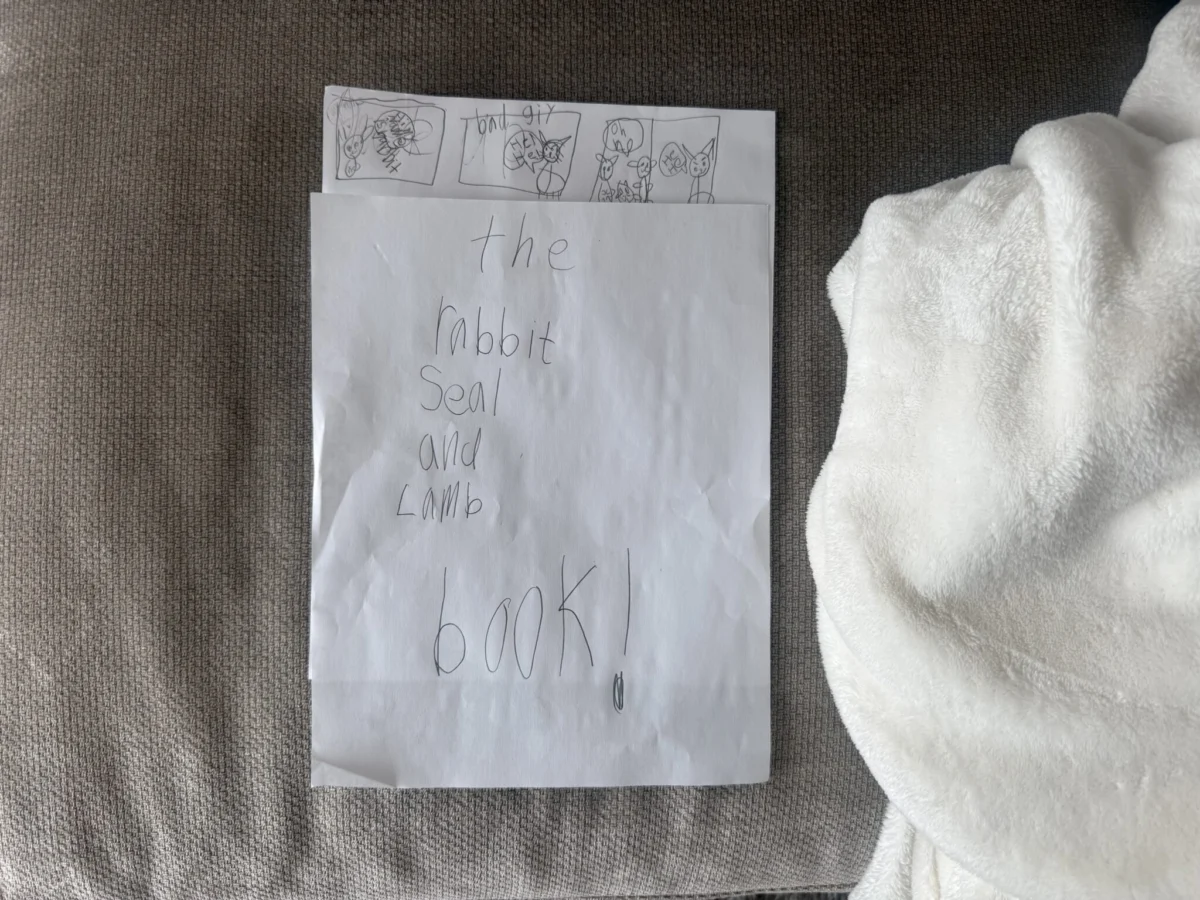
The realization that children inevitably mirror their parents’ professional trajectories hit home during a quiet morning at home. While cleaning the sofa, I discovered a hand-drawn manuscript titled "The Rabbit, Seal, and Lamb Book."

Initially, I assumed it was the work of my son, who often writes fantasy fiction. Upon closer inspection, however, I realized it was the work of my six-year-old daughter. Every word was spelled correctly, and the narrative was imbued with the same enthusiasm I feel when I sit down to write.
This discovery was bittersweet. As a parent, witnessing a child’s natural love for learning is a triumph. Yet, history shows that children follow their parents’ professional paths with high frequency—a phenomenon known as "professional gravity." From the Manning family’s football dynasty to the Pritzker, Walton, and Murdoch business empires, professional identity is passed down through osmosis. What a child hears at the dinner table becomes their definition of "normal." If I continue to prioritize and discuss my writing at home, I am, by default, nudging my children toward a career path that is increasingly being commoditized and devalued by artificial intelligence.
Supporting Data: The Income Gap
The disparity between creative, social-service-oriented roles and high-earning, specialized technical or professional fields is widening. While the arts and humanities remain essential to the fabric of society, the market treats them as optional luxuries.
| Career Path | Typical Degree | Median Mid-Career Salary |
|---|---|---|
| Physician/Surgeon | MD + Residency | $240,000 – $400,000+ |
| Software Engineer (Big Tech) | BS Computer Science | $200,000 – $400,000+ |
| Investment Banker | BS Finance | $250,000 – $500,000+ |
| Corporate Lawyer | JD | $200,000 – $500,000+ |
| Actuary | BS Math/Stats | $130,000 – $200,000 |
The data provided by the Bureau of Labor Statistics and compensation surveys underscores a clear reality: the most lucrative paths require a mix of specialized education, long-term technical training, or high-stakes problem solving. Journalism, teaching, and pure creative writing remain conspicuously absent from the top rungs of compensation. For parents, the imperative is not to crush dreams, but to provide an "honest map of the territory."
Implications: The Role of the Parent as an Investor
If we accept that children will follow our professional footsteps, we must ensure those footsteps are worth following. For those of us whose careers aren’t in the top 1% of earners, we must shift our household focus toward the one skill set that transcends any specific industry: Investing.

By normalizing the discussion of stocks, real estate, and economic cycles at the dinner table, we provide our children with a foundation of financial literacy. When I was in 10th grade, my father’s simple explanation of ticker symbols in the newspaper changed my entire life trajectory, leading me to Goldman Sachs, Credit Suisse, and eventually, the creation of the FIRE movement. That single, casual conversation did more for my financial health than any classroom lesson.
Redefining Parental Guidance
The objective of modern parenting should not be to dictate a child’s future, but to create the conditions for them to succeed with "full information." This requires a strategic pivot:
- De-emphasize the Struggle: Stop focusing dinner table conversation on the grind of "passion" jobs. If your career is a passion project, acknowledge it as such, but do not present it as the primary vehicle for financial survival.
- Highlight Structural Wealth: Discuss the mechanics of money. When children hear terms like "PE multiples," "dollar-cost averaging," and "asset allocation" as often as they hear about their school assignments, these concepts move from intimidating jargon to familiar territory.
- The "Big Firm" Strategy: Teach children that professional success is not just about the job (e.g., lawyer), but the firm (e.g., Big Law vs. small private practice). The difference in compensation between these tiers can be life-altering.
- Leverage Technology: Use tools like financial dashboards to track net worth and cash flow in real-time. By making your own financial management visible and transparent, you allow your children to observe the habits of an investor rather than just the habits of an employee.
Conclusion: A Better Inheritance
There is a profound difference between pressure and guidance. Pressure forces a child into a mold; guidance provides the tools for them to choose their own path intelligently. If my daughter continues to write, I will support her. But I will also ensure she understands the financial consequences of that choice before she reaches adulthood.
Ultimately, the best inheritance isn’t a trust fund or a portfolio of stocks—it is a worldview that understands how the world works. By shifting our focus from the "passion poverty" of our own day-to-day work to the "investment literacy" of our long-term financial life, we empower our children to pursue their interests from a position of strength rather than desperation.
As we look toward the future, let us move beyond the "follow your passion" cliché. Instead, let us tell our children, "Follow your passion, but build your foundation on the bedrock of financial knowledge." That is the true responsibility of the modern parent.

 Nana Wu

 Sagoh

 Raul Delapena Setiawan

 Reynand Wu



 Azzam Bilal Chamdy

 Ali Ikhwan
