
 Laily UPN
As the geopolitical landscape remains fractured by the ongoing US-Iran war, the global economy has been forced into a state of involuntary structural adjustment. While initial fears centered on a catastrophic spike in energy costs and a subsequent return to carbon-intensive reliance, new analysis from Carbon Brief indicates a counterintuitive outcome: global fossil-fuel emissions are projected to decline by approximately 0.5% in 2026. This shift, driven by the volatility surrounding the Strait of Hormuz, represents a significant turning point in the global energy transition, potentially accelerating the end of the fossil-fuel era despite the immediate turbulence.
The Core Conflict: A Global Energy Shock
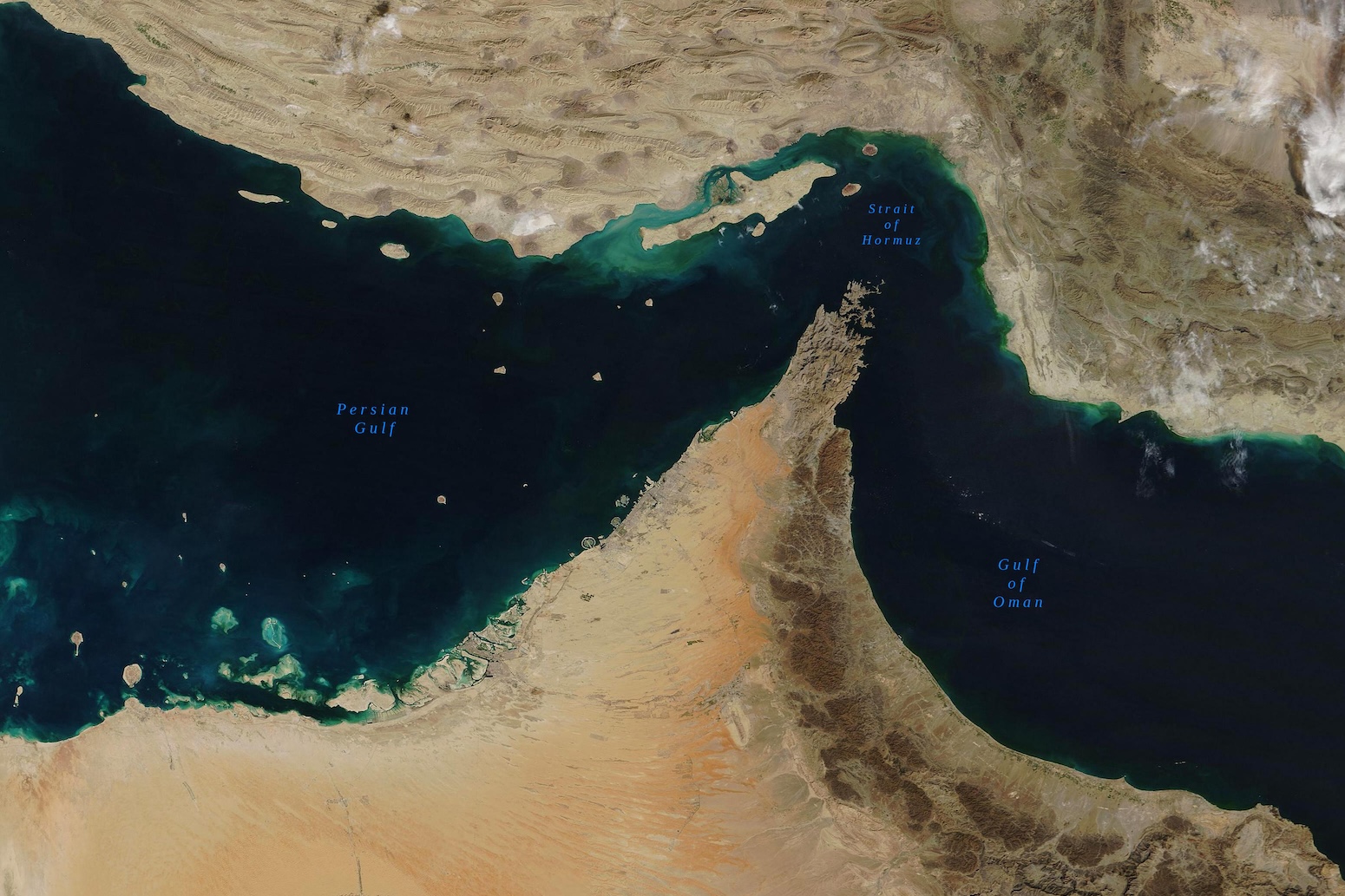
The closure and subsequent disruption of the Strait of Hormuz—a vital maritime artery for global energy—has acted as a massive, albeit painful, catalyst for market behavioral changes. As oil and gas prices soared, the economic incentive to maintain business-as-usual operations evaporated. Governments and corporations, once comfortable with traditional supply chains, found themselves confronted with an urgent necessity to decouple from vulnerable hydrocarbon sources.
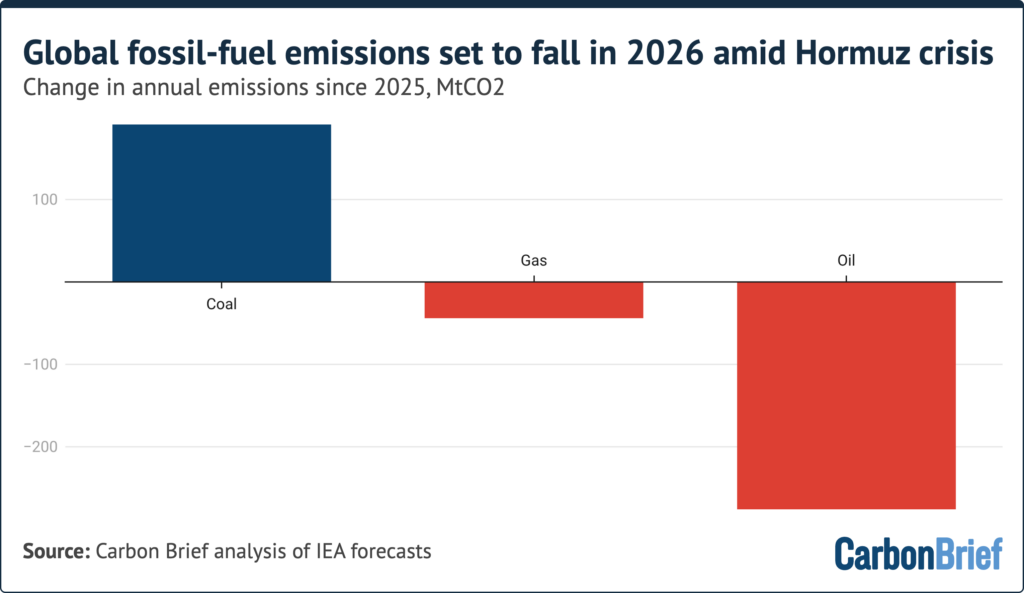
While headlines have been dominated by a perceived "return to coal," the reality is far more nuanced. Although coal demand is forecast to rise by roughly 1.2% this year, this increase is being vastly overshadowed by the precipitous drop in oil and gas consumption. The resulting net effect is a contraction in total carbon dioxide (CO2) output from fossil fuels, which currently constitute two-thirds of all global greenhouse gas emissions.
Chronology of the 2026 Energy Shift
The trajectory of the 2026 energy market can be traced through a series of revisions by the International Energy Agency (IEA), reflecting the rapid escalation of the conflict.
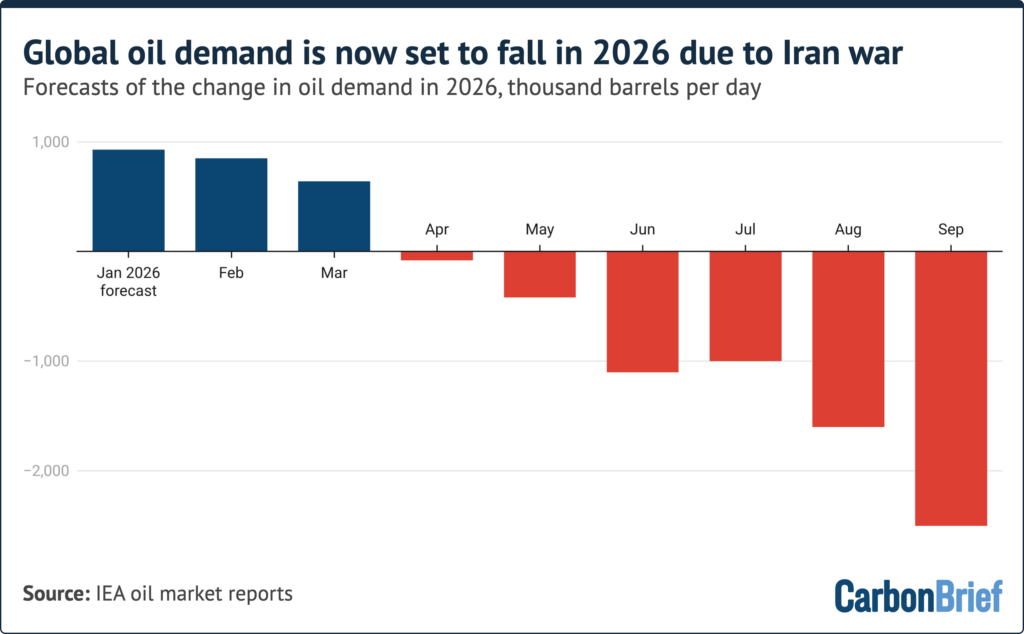
- January 2026: The IEA forecasted a steady rise in global oil demand, anticipating an increase of 930,000 barrels per day (bpd). At this stage, the conflict was nascent, and markets assumed a rapid stabilization.
- March–May 2026: As the war widened and the Strait of Hormuz became a primary theater of geopolitical instability, energy prices began a steep climb. Forecasts were revised downward for the first time as industrial demand softened.
- July 2026: A critical shift occurred. The IEA updated its outlook, forecasting a 0.6% drop in gas demand. The "wait and see" approach of the global market had turned into active demand destruction as prices reached unsustainable levels.
- September 2026: The full impact of the conflict became clear. The IEA estimated a staggering 2,500,000 bpd drop in oil demand—a 2.4% reduction from 2025 levels. Even as coal demand ticked upward, the collapse in oil usage—driven by both price-sensitive consumers and rapid adoption of alternatives—pushed global emissions downward.
Supporting Data: The Anatomy of the Decline
The divergence between coal, oil, and gas tells the story of an energy system under extreme duress.
The Coal "Comeback" Illusion
Media reports suggesting a full-scale retreat to coal have often ignored the limitations of the power sector. While gas-to-coal switching has occurred, it is physically constrained by grid infrastructure and the fact that few nations possess the latent capacity to pivot large-scale electricity generation instantly. Furthermore, much of the coal usage recorded this year is tied to external factors unrelated to the Hormuz crisis, such as El Niño, which has reduced hydropower availability, and inefficiencies in China’s solar and wind deployment that have led to increased temporary fossil-fuel usage.
The Oil Demand Destruction
The most significant factor in the emissions decline is the collapse of oil demand. Unlike previous crises, this one has coincided with a mature phase for electric vehicle (EV) technology. In nations across Europe, China, Thailand, and Indonesia, EV market shares have hit record highs. The surge in oil prices has made the total cost of ownership for internal combustion engines uncompetitive, triggering what experts call "permanent demand destruction." As consultancy DNV noted in August, the longer the conflict lasts, the higher the probability that these shifts become irreversible as consumer habits and industrial logistics settle into new, electrified patterns.
Official Responses and Strategic Pivots
The IEA’s outlook for 2027 remains cautious but suggests that the current volatility is fundamentally altering long-term projections. Previously, the agency expected global oil demand to peak closer to 2030; now, with demand effectively flat for two years, that peak may arrive much earlier.
Governments, particularly in developing Asia, are taking notice. The cost of importing Liquefied Natural Gas (LNG) has become a primary driver of trade deficits, forcing nations that had once pinned their energy security on LNG to reconsider their strategies. A move toward domestic renewable energy sources is no longer just an environmental goal; it has become an urgent matter of national security and economic survival. Several developing nations have already signaled a shift toward decentralizing their grids to favor domestic clean energy over the volatile and expensive global gas market.
Long-Term Implications: A Accelerated Transition?
The geopolitical crisis in the Middle East has effectively done what years of climate policy summits struggled to achieve: it has made the economic case for fossil-fuel independence absolute.
Economic Resilience vs. Energy Vulnerability
The "Hormuz effect" has created a new paradigm where energy independence is synonymous with energy security. The reliance on imported, trade-chokepoint-dependent fossil fuels is increasingly viewed as a systemic risk. This realization is likely to drive capital expenditure away from traditional hydrocarbon infrastructure and toward localized, resilient energy systems.
The "Peak Oil" Question
If oil demand continues to remain flat or decline, the industry faces a potential "stranded asset" scenario much sooner than anticipated. With major manufacturers and logistics firms rapidly scaling back reliance on oil in favor of alternatives to escape price volatility, the long-term demand curve for crude is shifting downward.
Environmental Collateral Benefit
While the reduction in emissions is a byproduct of conflict rather than a product of green policy, the result is the same: a cooling effect on the global carbon footprint. However, the sustainability of this trend depends on whether governments use this window to solidify their clean energy infrastructure. If the transition is locked in via policy, the 2026 emissions drop could be the precursor to a permanent downward trend. Conversely, if the shift is purely reactive, a resolution of the conflict could potentially see a short-term rebound in demand.
Conclusion: The Path Forward
The world currently finds itself in a strange, fragile equilibrium. The ongoing conflict has forced an unplanned experiment in rapid decarbonization. As the global economy balances the 1.2% rise in coal against the massive, structural collapse in oil and gas consumption, the data suggests that the world is moving toward a lower-carbon future, albeit through the chaos of war.
The lesson of 2026 is clear: the energy transition is no longer solely a moral imperative or a climate-driven necessity—it is an economic and strategic shield. As nations continue to navigate the ripples of the Hormuz crisis, the integration of renewables and the acceleration of electrification appear to be the only viable paths toward lasting stability. The 0.5% dip in emissions is a start, but the true measure of this crisis will be whether it serves as the final push that moves the global economy past the era of fossil-fuel dependence.


 Dwi Wanna
 Iffa Jayyana
 Raul Delapena Setiawan
 Muslim
 Nana Wu

 Rifan Muazin