
 Reynand Wu
By: Editorial Desk
The landscape of professional productivity is undergoing its most significant transformation in a generation. At Google I/O 2026, the technology giant unveiled a suite of groundbreaking updates to Google Workspace, fundamentally shifting the paradigm of how billions of users interact with their digital environments. With over 4 billion users relying on Gmail, Docs, and Drive, these enhancements—ranging from conversational voice interfaces to a sophisticated 24/7 personal AI agent—signal a future where the friction between thought and execution is all but eliminated.
The Core Transformation: Moving from Tools to Partners
For years, productivity software has functioned as a set of static tools: you type, you click, you format, and you organize. The new vision for Google Workspace, spearheaded by Yulie Kwon Kim, VP of Product, is to transition these applications into proactive partners. By integrating advanced generative AI models directly into the fabric of the user’s daily workflow, Google is moving toward an ecosystem that anticipates needs, synthesizes information, and executes complex tasks with minimal human intervention.
The latest announcements focus on four key pillars: conversational voice integration, high-fidelity visual generation, intelligent inbox management, and the debut of the autonomous "Gemini Spark" agent.
Chronology of Innovation: A Seamless Workflow
The integration of these features follows a deliberate strategy to embed AI at the point of need.
- Conversational Voice Integration: Rolling out this summer to Google AI Pro and Ultra subscribers, the new voice capabilities in Gmail, Docs, and Keep represent a departure from simple dictation. Users can now engage in natural, back-and-forth dialogue with their software. In Gmail, "Gmail Live" allows users to query their entire inbox via voice, asking questions like, "What do I need to bring to my meeting today?" and receiving synthesized answers.
- Google Pics: Designed to solve the frustration of iterative image creation, Google Pics—built on the proprietary Nano Banana model—offers granular creative control. Unlike traditional prompt-based generators that require a "reroll" for every minor adjustment, Pics allows users to move, resize, and edit elements within a generated image, maintaining consistency and style.
- AI Inbox Expansion: Building on the foundation laid earlier this year, AI Inbox is now expanding its reach to all Google AI Plus and Pro subscribers in the U.S. It serves as a triage center, automatically prioritizing tasks, summarizing threads, and suggesting actionable replies based on user context.
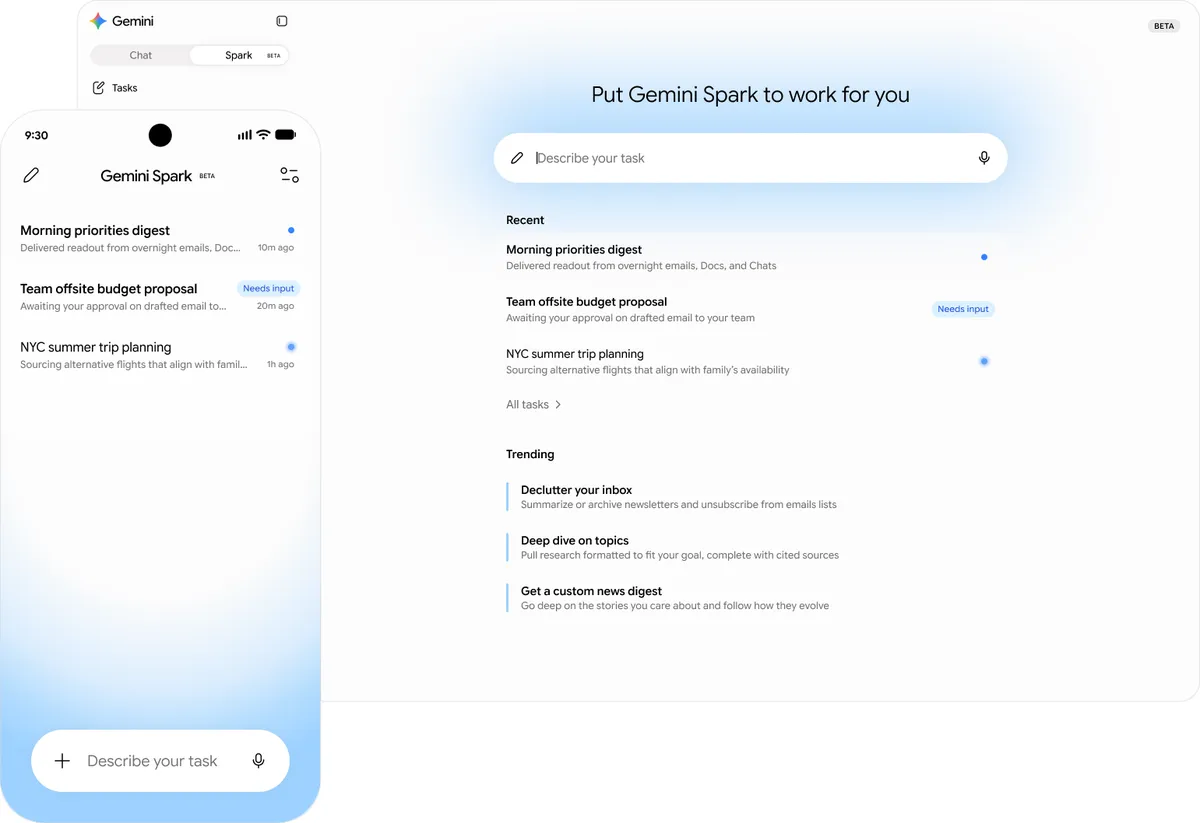
- Gemini Spark: The marquee announcement is undoubtedly Gemini Spark, an AI agent capable of navigating digital life on behalf of the user. Designed to operate as a 24/7 assistant, it moves beyond answering queries to executing actions—such as calendar scheduling or email dispatching—after obtaining user authorization.
Supporting Data: Scaling the AI Advantage
The sheer scale of these updates is intended to address the "productivity tax"—the time lost to administrative overhead. Internal data from Google suggests that by reducing the time spent searching for information or formatting documents, users can reclaim up to 30% of their daily operational time.
The adoption of these tools is segmented across user tiers:
- Google AI Pro/Ultra Subscribers: Receive immediate access to conversational voice features and Google Pics, with global rollouts slated for late summer.
- Workspace Business Customers: Provided with preview access to these tools, allowing enterprises to integrate AI-driven workflows into their corporate infrastructure under controlled conditions.
- Enterprise Plus: Serving as the primary testing ground for advanced features like AI Inbox, ensuring that the highest levels of security and compliance are maintained as these capabilities scale.
Official Perspectives: The Philosophy of Creative Control
In her keynote presentation, Yulie Kwon Kim emphasized that these tools are built on a philosophy of "creative direction, not a roll of the dice." The primary critique of early generative AI tools was the lack of precision; users often felt they were at the mercy of a black-box model.
"Creating with AI should feel like you are the director, not just a participant," Kim stated. "With tools like Google Pics, we are moving away from ‘prompt-and-pray’ workflows to a system where you can move an object, shift a light source, or change a font size with the same ease as using a traditional design suite."
Furthermore, the introduction of Gemini Spark addresses the growing demand for "agentic" AI. Unlike standard chatbots, Spark is designed to act as a proxy. Google has been careful to emphasize the "Human-in-the-Loop" architecture: the agent asks for confirmation before executing high-stakes actions, ensuring that the user maintains ultimate sovereignty over their digital interactions.
The Implications: A New Era for Professionalism
The shift toward agentic and conversational interfaces has profound implications for the future of work.
1. The Death of the "Blank Page" Syndrome
By allowing users to dictate complex outlines in Docs and have Gemini act as a thought partner, the barrier to starting a project is significantly lowered. The collaborative nature of these tools suggests a future where documents are co-authored by human intent and machine synthesis.

2. The Evolution of Search
"Gmail Live" transforms the inbox from a storage bin of chronologically ordered messages into a database of searchable intelligence. This shift recognizes that for most professionals, the most valuable information is trapped in the context of previous conversations, attachments, and threads.
3. The Democratization of Design
Google Pics lowers the barrier to entry for professional-grade visual content. By integrating these tools directly into Google Slides and other Workspace apps, the platform allows individuals without formal graphic design training to produce high-quality collateral, from marketing flyers to social media assets, in seconds.
4. Ethical and Security Considerations
As these AI agents gain more autonomy—particularly with the ability to read emails and schedule meetings—Google’s focus on data privacy remains paramount. All features are built on the foundation of existing Workspace security protocols, ensuring that data is not used to train models in a way that compromises enterprise confidentiality.
Future Outlook: The Road Ahead
As Google prepares to roll these features out globally, the tech community is watching closely. The success of these tools will depend not just on the efficacy of the underlying models, but on the intuitiveness of the interface.
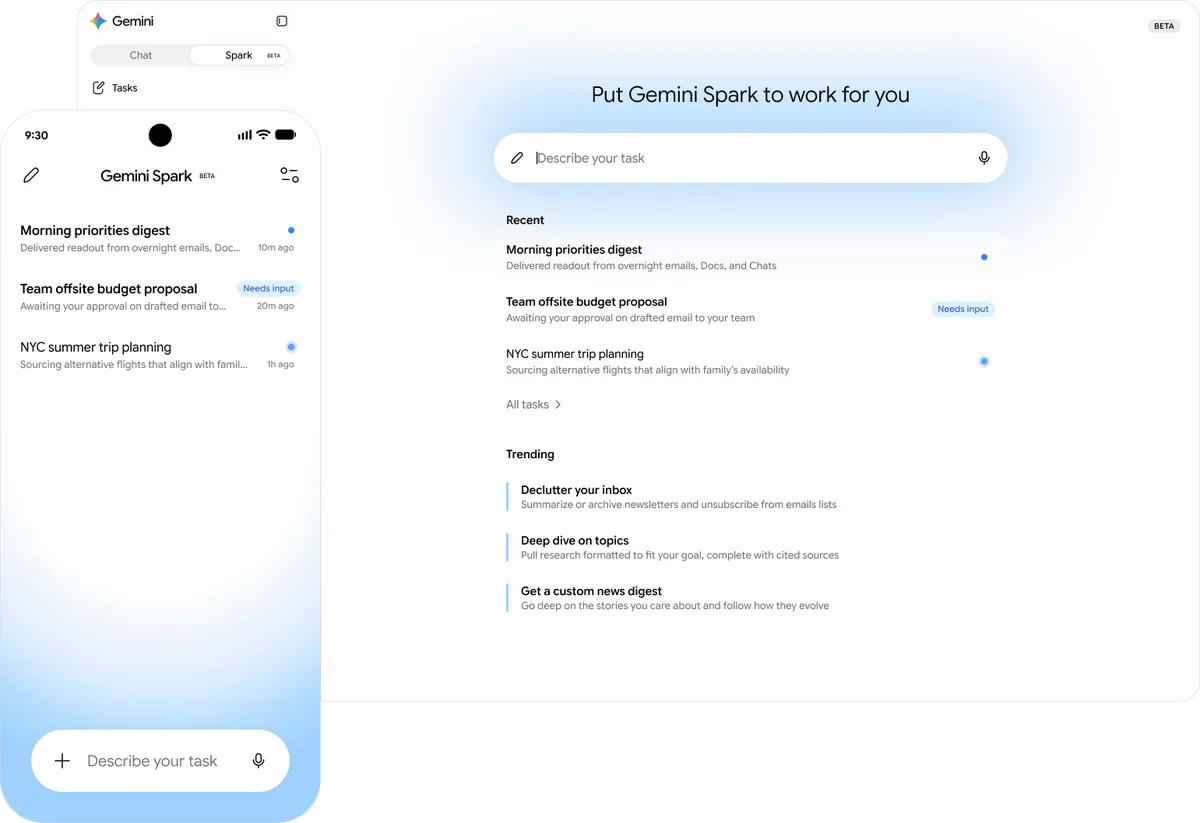
The integration of Gemini Spark into the broader Workspace ecosystem is expected to be the most disruptive. As it moves from preview to general availability, it will likely set a new industry standard for what an "assistant" can do. Will it become the standard-bearer for digital personal assistants? If the trajectory of Google’s AI development over the past 24 months is any indication, the answer is a resounding yes.
For the average professional, these updates represent a transition from being a manual operator of software to a high-level manager of AI-driven systems. The work of the future will be less about the mechanical tasks of typing and formatting, and more about the strategic application of intent and the curation of AI-generated output.
As the digital landscape evolves, Google Workspace is positioning itself not just as a suite of applications, but as the essential operating system for the modern, AI-augmented human experience. With the I/O 2026 announcements, that future is no longer a distant possibility—it is here, unfolding in real-time across the Gmail, Docs, and Keep windows of users worldwide.

 Neng Nana
 Rifan Muazin
 Iffa Jayyana

 Suro Senen

 Pevita Pearce
 Basiran
 Azzam Bilal Chamdy
 Nila Kartika Wati
