
 Neng Nana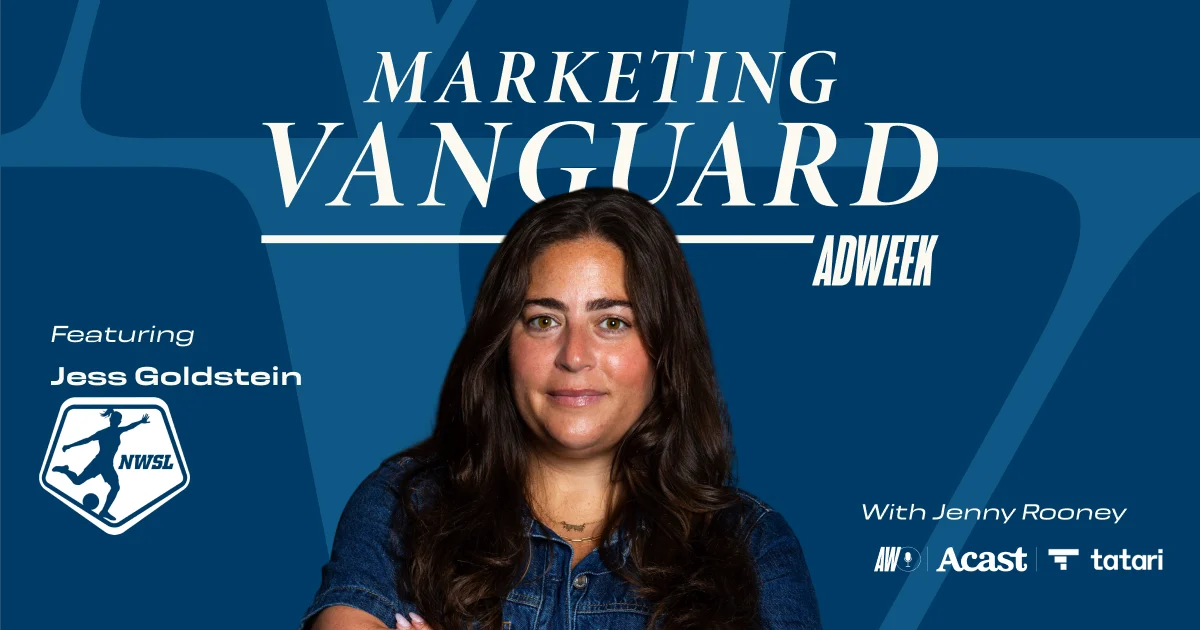
The traditional sponsorship model—a transactional exchange where a brand buys a suite of assets, activates during a high-profile game, and fades into the background—is officially a relic of the past. As the sports marketing landscape evolves, the focus is shifting from "buying reach" to "building platforms."
At Brandweek 2026, Jessica Goldstein, Vice President of Partnerships and Marketing Solutions at the National Women’s Soccer League (NWSL), took the Marketing Vanguard stage to argue that the most successful modern sports partnerships behave less like advertising billboards and more like organic, integrated ecosystems. In a wide-ranging conversation with Jenny Rooney, Goldstein unpacked a new philosophy for brand integration that prioritizes athlete storytelling, fan behavior, and a consistent, year-round presence.
The Evolution of the Sponsorship Model
For decades, the sports industry operated on a rigid "check-the-box" methodology. Brands would secure naming rights, field-side signage, or commercial spots during halftime, and call the strategy "activated." However, as digital fragmentation and shifting media consumption habits redefine how fans interact with sports, this static approach is losing its efficacy.
"The asset-list sponsorship is over," Goldstein stated during the session. She argues that today’s fans—particularly the younger, digitally-native demographics—do not engage with sports in a linear fashion. They move fluidly between highlights, social media commentary, player fashion, and lifestyle content. Consequently, brands that limit themselves to a menu of contracted assets fail to meet the consumer where they actually live. Instead, she advocates for 360-degree strategies that weave a brand into the fabric of the league’s ecosystem, ensuring they have a recognizable, valuable role that extends well beyond the final whistle.
A Career Built on Cultural Crossover
To understand why the NWSL is leading this shift, one must look at the architect of its partnership strategy. Jessica Goldstein brings over two decades of experience to the league, having witnessed the transformation of sports marketing from both the league and agency perspectives.
Beginning her career at the NBA in production and entertainment, Goldstein gained a foundational understanding of how to package sports as high-end entertainment. Her subsequent 11-year tenure on the agency side allowed her to sharpen her focus on the intersection of brand strategy and women’s sports. This dual perspective is the engine behind her current work at the NWSL, where she focuses on merging commercial partnership strategy with the nuance of cultural storytelling.
Chronology of the Shift: From Transactional to Transformational
The transition toward "platform-based" partnerships didn’t happen overnight. It was driven by a series of market shifts:
- Phase 1 (The Passive Era): Brands focused primarily on "logo slapping." If a brand’s logo appeared on a jersey or a stadium wall, the investment was deemed a success.
- Phase 2 (The Activation Era): Brands began to create "activations"—pop-up booths, contests, and game-day experiences. This was an improvement, but often remained tethered to specific event days.
- Phase 3 (The Platform Era): We are currently in the transition toward the Platform Era. Here, the partnership is not a series of events, but a continuous narrative thread that exists regardless of whether a match is being played.
Goldstein highlights Google’s strategy as the gold standard for this third phase. By prioritizing accessibility and discoverability—such as helping facilitate the movement of WNBA games onto major networks like ESPN and ABC—Google positioned itself as a partner that grows the pie, rather than just taking a slice of it.
The Power of Athlete Storytelling as a Growth Engine
One of the most significant pillars of the modern NWSL strategy is the elevation of the individual athlete. In the past, leagues were often marketed as monolithic brands. Today, the player is the primary entry point for the fan.
"Building the NWSL means building the athletes too," Goldstein explained. This strategy recognizes that modern fandom is personality-driven. When a fan connects with a player’s personal narrative—their interests, their advocacy, or their off-field style—that connection creates a gravitational pull that draws the fan toward the league.
This is a deliberate growth strategy. The NWSL does not expect a casual observer to immediately become a die-hard fan who watches every single match of the season. Instead, they aim to create "entry points." A fan might start by following a specific player on social media, then engage with content featuring that player, and eventually find themselves tuning into a broadcast. By the time they reach the match, they are already invested in the story.
Sports as a Cultural Intersection
Goldstein’s philosophy is deeply rooted in the belief that sports are no longer a siloed industry. They are a subset of culture. The boundaries between sports, music, fashion, and social justice are increasingly porous.
For the NWSL, this creates a vast "storytelling territory." Fans are interested in what players wear, the music they listen to, and the social issues they champion. By acknowledging that sports fandom is "bigger than the game," brands have more opportunities to enter the conversation. A brand that only talks about soccer misses the chance to engage with a fan who is interested in the lifestyle, fashion, and cultural influence of the athlete.
This, according to Goldstein, is where the "platform" concept truly shines. A brand that understands these intersections can build a presence that feels authentic to the fan, rather than an intrusive interruption.
Implications for the Industry
The shift toward platform-based partnerships has significant implications for both brands and rights holders.
For Brands:
- Demand Greater Integration: Brands must stop viewing sponsorships as media buys and start viewing them as content and experience partnerships.
- Long-term Consistency: The days of "big moment" activations are fading. Brands need to maintain a presence throughout the season to build true affinity.
- Invest in the Ecosystem: As seen with the Google example, the most successful brands will be those that solve structural problems for the league—such as accessibility, data, or fan engagement tools.
For Rights Holders:
- Prioritize Narrative: Leagues must provide partners with access to athlete stories and behind-the-scenes content that goes beyond the game footage.
- Facilitate Cross-Pollination: Leagues should actively encourage the crossover between their sport and other cultural sectors like fashion and music.
- Data-Driven Engagement: Understanding fan behavior across multiple touchpoints—social media, streaming, and in-person events—is essential to proving the ROI of these more complex, long-term partnerships.
Conclusion: The Path Forward
As the NWSL continues to experience rapid growth, the strategies outlined by Jessica Goldstein offer a blueprint for the future of sports business. The "old model" was built on the assumption that a brand’s presence at a game was enough to secure loyalty. The new model, however, is built on the understanding that loyalty is earned through consistent, meaningful engagement with the stories and culture that surround the sport.
By treating partnerships as platforms, the NWSL is not just selling space; they are building a community. And in an era where attention is the most valuable commodity, that is the most effective play in the book. As Brandweek 2026 highlights, the brands that win will be those that move past the asset list and start acting as active participants in the lives of the fans they hope to reach.


 Nana Wu
 Asep Darmawan
 Ali Ikhwan
 Raul Delapena Setiawan
 Nana
Nana
 Muslim

