
 Nana Muazin
For over two decades, the digital marketing playbook has remained remarkably consistent. SEO teams have focused their efforts on a "holy trinity" of metrics: search engine rankings, organic traffic volume, and conversion rates. The goal was simple—capture the top spot on a Google Search Results Page (SERP) and funnel that traffic to a landing page.
However, the landscape of information discovery is undergoing a tectonic shift. Today, potential buyers are increasingly bypassing traditional search engines, opting instead to consult AI-powered platforms like ChatGPT, Gemini, and Perplexity to research software, compare vendors, and identify industry leaders. This shift marks the rise of Answer Engine Optimization (AEO), a critical new discipline that every modern marketing organization must master to remain visible in the era of Generative AI.
The Paradigm Shift: From Search Results to Answer Engines
The fundamental difference between traditional SEO and AEO lies in the user experience. In a traditional search, a user enters a query, receives a list of blue links, and navigates to external websites to synthesize information. In an "answer engine" environment, the platform acts as a digital oracle. It consumes vast swaths of data, synthesizes the findings, and presents a comprehensive, conversational answer directly to the user.
When a buyer asks an AI to "compare the best CRM software for small businesses," they may never click on a website. If your brand is not mentioned in the AI’s synthesized response, you effectively do not exist in that user’s decision-making process.
This evolution requires a fundamental change in how marketing teams measure success. While traditional metrics are still vital for tracking website health, they fail to reveal a brand’s footprint within the black box of AI-generated responses. Marketing teams must now treat AEO as a vital, distinct layer of their digital strategy, integrating it alongside traditional SEO to ensure a 360-degree view of their brand’s digital visibility.

Establishing the Baseline: Tracking Your AI Footprint
Before an organization can "optimize" for AI, it must first understand its current standing. Unlike traditional search, which offers relatively transparent data through tools like Google Search Console, AI answer engines are inherently opaque. To bridge this gap, teams need sophisticated monitoring tools, such as HubSpot’s AEO suite, to create a baseline.
How to Conduct an AI Visibility Audit
- Identify Key Prompts: Define the exact questions your target audience asks when searching for your category. These should be a mix of broad informational queries and bottom-of-funnel comparison requests.
- Measure Brand Visibility: Track the percentage of analyzed answers across these prompts in which your brand is explicitly mentioned or cited.
- Analyze Competitive Standing: Compare your visibility score against primary competitors. Often, a brand may rank #1 on Google for a keyword but remain completely invisible in the AI-generated response for the same query.
- Audit Citation Sources: Determine which domains, social platforms, or industry publications the AI engines are pulling from. Understanding these "sources of truth" is the first step toward influencing future output.
This baseline serves as the "source of truth" that traditional analytics cannot provide. By running these prompts daily, teams can move past anecdotal observations and develop a data-driven understanding of how the AI landscape is shifting for their specific niche.
The Mechanics of Citations: Influencing the AI Knowledge Base
Once a baseline is established, the next phase of AEO is tactical content optimization. AI models do not "write" answers from thin air; they pull from a massive index of training data and real-time search results. To be featured, your content must be deemed a high-authority source by the algorithms powering these engines.
Identifying High-Impact Content Types
AI models prioritize content that is authoritative, factual, and easy to parse. Based on current trends, the most cited content types include:
- Owned Website Content: Highly structured technical documentation and clear product pages.
- Industry Publications: Trusted third-party reviews and thought-leadership articles.
- User-Generated Content (UGC): Reviews on platforms like G2, Capterra, or Reddit often serve as primary training data for AI models to gauge sentiment and reliability.
The Role of Centralized Citation Management
Manually tracking citations across ChatGPT, Gemini, and Perplexity is an exercise in futility. Modern AEO platforms centralize this data, allowing teams to compare their own citation rates with those of competitors. By leveraging tools like HubSpot’s Recommendations tab, teams can receive prioritized, actionable insights—such as specific pages that need updating, social posts that need to be published, or outreach campaigns that should be initiated to earn high-quality backlinks.

This is no longer just about "keywords"; it is about "information architecture." Your content must be structured in a way that allows AI to easily extract, summarize, and cite your brand as a solution.
Connecting AEO to the Bottom Line
The most frequent criticism of AEO is its perceived lack of attribution. Because users are not "clicking" in the traditional sense, how can a marketer prove that an AI mention led to a sale?
The answer lies in integrating AEO reporting with CRM data. HubSpot, for instance, categorizes visits from recognized AI platforms as "AI Referrals." By tagging these sources, companies can track the entire customer journey from the moment a user clicks through from an AI summary to the point where a deal is closed in the CRM.
The Business Impact: A Data-Driven Benchmark
Recent data indicates that companies actively investing in AEO are seeing tangible business results. HubSpot’s internal studies reveal that users of their AEO tools generate 2.6x more leads than those who do not. While a single citation is not direct proof of a sale, the correlation between increased AI visibility and pipeline growth is becoming undeniable.
Organizations should view AEO and traditional SEO as complementary datasets. AEO reports provide the "top-of-funnel" insight into brand awareness and authority, while CRM traffic-source properties provide the "bottom-of-funnel" proof of revenue attribution.

Implications for the Future of Marketing
The move toward AI-driven search is not a temporary trend; it is a permanent architectural change in the internet’s infrastructure. As these models become more sophisticated, the "answer" will increasingly become the final destination.
Why Early Adoption Matters
For marketing leadership, the question is no longer "Should we invest in AEO?" but rather "Why didn’t we start sooner?" The companies that establish themselves as primary sources of truth within AI training sets today will possess a significant competitive advantage tomorrow. As AI engines refine their citation logic, brands that are already embedded in those answers will be the ones that sustain long-term growth.
Summary of Strategic Priorities
- Move beyond the "Blue Link" mindset: Accept that traffic patterns are changing and prioritize brand presence in conversational answers.
- Invest in AEO Infrastructure: Use dedicated tools to track prompts, monitor visibility, and analyze citation patterns.
- Optimize for Authority, not just Keywords: Focus on creating high-quality, trustworthy, and structured content that AI models find easy to cite.
- Bridge the Gap to Revenue: Integrate AI-referral tracking into your CRM to prove the ROI of your AEO efforts.
As we look toward the future, the integration of AEO into the standard marketing practice will be the dividing line between brands that command attention in the new digital age and those that fade into the background of an AI-generated summary. By taking a proactive approach today, SEO teams can transform from content creators into architects of the AI-driven information ecosystem.


 Nana
Nana
 Lina Hope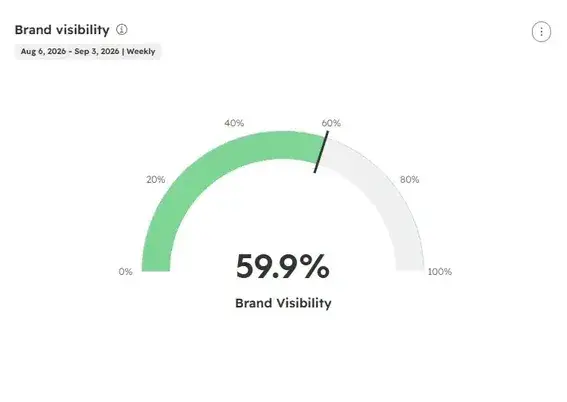
 Nana Wu
 Pevita Pearce
 Jia Lissa