
 Nana Wu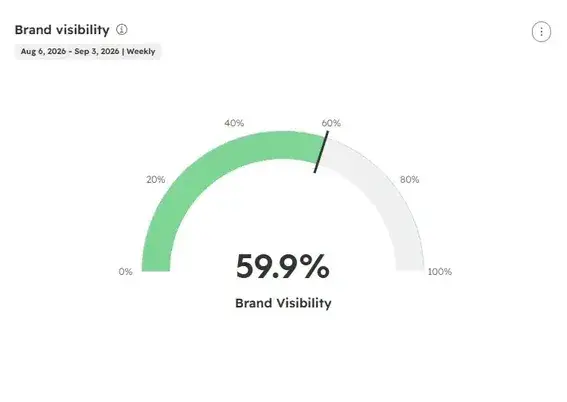
For decades, the fundamental objective of brand marketing has remained static: control the narrative. The goal has always been to ensure that the story a company tells about itself—its values, its value proposition, and its identity—is the precise story that reaches the ears of the target market. Traditionally, this was achieved through carefully crafted press releases, strategic advertising campaigns, and a consistent presence in editorial outlets. However, the rise of Artificial Intelligence and the proliferation of "Answer Engines" have fundamentally altered the landscape, making the task of maintaining brand integrity significantly more complex.
Today, the narrative is no longer solely in the hands of the brand. It is being synthesized in real-time by AI models that construct descriptions of businesses based on a vast, fragmented ecosystem of web data. When a user asks an AI-powered search tool a question about a product or service, the machine pulls from a cacophony of sources: user reviews, third-party comparison pages, obscure forum discussions, and diverse editorial coverage. The result is often an AI-generated brand profile that bears little resemblance to the carefully curated image the company has invested millions to project.
For brand teams, this represents a new, urgent imperative: proactive narrative management in the age of AI.
The Shift in Discovery: How Answer Engines Rewrite Your Brand
The mechanism by which consumers discover products has moved away from traditional search engine results pages (SERPs) toward synthesized, conversational answers. When an AI generates a summary of a brand, it functions as a digital curator. If that curator relies on outdated forum threads or biased third-party comparisons, the consumer is fed a distorted view of the brand before they ever reach the company’s website.
This "wait-and-see" approach—where brands react only after a stakeholder or customer points out an inaccuracy—is increasingly untenable. By the time a marketing team identifies a narrative gap, the damage to buyer perception has often already been done. To remain competitive, companies are now pivoting toward Answer Engine Optimization (AEO), a discipline that treats AI-generated descriptions as a primary marketing channel requiring active oversight.
Chronology of the AEO Evolution
The emergence of AEO did not happen overnight, but rather followed a clear, accelerating trajectory:

- Phase 1: The Era of Search Engine Optimization (SEO). Brands focused on keyword density and backlinks to rank on Google. The primary goal was traffic.
- Phase 2: The Proliferation of Social Proof. As review sites and forums (Reddit, G2, Trustpilot) grew in influence, brands had to engage in reputation management.
- Phase 3: The AI Synthesis Gap. With the launch of LLM-based search tools, these fragmented sources were aggregated into single, definitive answers. Brands suddenly lost the ability to control the "first impression" of their entity.
- Phase 4: The AEO Mandate (Current). Leading enterprises are now integrating specialized tooling to track, audit, and influence how AI models represent their corporate identity.
Monitoring the Digital Reflection: Visibility as a Strategy
The first step in modern brand management is visibility. If you cannot see what the AI is saying, you cannot correct it. Companies must now monitor how their brand is described across a variety of answer engines, identifying which competitors are cited alongside them and whether the language used by the AI aligns with current corporate positioning.
Tools such as HubSpot AEO have emerged to bridge this visibility gap. By providing a "Brand Visibility Dashboard," these platforms allow marketing teams to quantify their AI presence through metrics like an AI Visibility Score and share of voice.
Data from early adopters of these strategies is compelling. For instance, in recent trials, companies that actively optimized their content for AI ingestion saw rapid shifts in their representation. Within a single month, HubSpot’s own marketing team reported a dramatic increase in brand mention rates—moving from 0% to 33.5% in France and 17.1% in Germany. These figures underscore a critical truth: the AI ecosystem is fluid, and intentional effort leads to measurable shifts in how the model "thinks" about a brand.
Supporting Data: The Correlation Between Content and Citation
It is a common misconception that AI models generate content from thin air. In reality, they are highly dependent on authoritative, well-structured "source material." When a brand’s own content—its positioning pages, technical documentation, comparison guides, and category explainers—is optimized, it becomes the primary fuel for the AI’s narrative.
However, content written for human readers or traditional search engines is often ill-suited for AI citation. AI models favor clear, structured data and definitive, high-authority answers. To bridge the gap between intended narrative and AI-generated output, brands must implement a rigorous process for auditing and updating owned content.
Key areas of focus for content optimization include:

- Defining the Category: Clear, authoritative explainers that define the market category and the brand’s unique place within it.
- Structuring Comparison Data: Providing clear, table-based, or bulleted comparisons that help AI models differentiate the brand from competitors.
- Updating Stale Assets: Refreshing outdated product descriptions or legacy messaging that continues to propagate through AI summaries.
Official Responses and Industry Implications
Industry leaders are beginning to treat AEO with the same gravity as traditional public relations. Marketing departments are now hiring "AEO Specialists" or tasking their SEO teams with the additional burden of managing AI model citations.
"The narrative your brand has built over years is worth protecting in AI results," notes a spokesperson for HubSpot’s product team. "But protection requires visibility into what’s there. The infrastructure to monitor, respond, and improve is the same work brand teams already do—it just needs to be pointed at the right channels."
The implication for marketing leadership is clear: the budget for brand management must now account for AI infrastructure. If a brand is not actively shaping its AI narrative, it is effectively ceding control to the lowest common denominator of web chatter.
Measuring Success: From Awareness to Consideration
How does a company know if their AEO strategy is working? Historically, brand marketing has relied on lagging indicators: awareness surveys, share of voice in traditional media, and branded search volume. While these remain relevant, the AEO framework introduces a new, proactive signal: the AI Visibility Score.
By tracking this score alongside campaign metrics within a unified system (such as Marketing Hub), organizations can finally correlate brand investment with AI presence. If a marketing campaign focuses on a new product feature, the brand can now track whether that feature is being picked up by AI engines in the weeks following the launch.
This longitudinal view allows marketing teams to demonstrate the ROI of their efforts to the C-suite with unprecedented clarity. It connects the "invisible" work of AI optimization to the tangible, bottom-line results of increased market share and improved brand sentiment.

The Road Ahead: Why Proactivity is the Only Option
The digital landscape is currently undergoing its most significant shift since the advent of the World Wide Web. As AI-powered search becomes the standard for consumer discovery, the brands that thrive will be those that accept the new reality: the narrative is no longer a static asset to be guarded, but a dynamic, living entity to be cultivated.
The tools to manage this transformation exist, and the methodologies are beginning to solidify. However, the window of opportunity for brands to establish dominance in the AI-generated narrative is closing. Companies that fail to adapt their content strategies to satisfy the requirements of answer engines will find themselves increasingly invisible, or worse, misrepresented, in the very platforms where their future customers are making their most critical decisions.
By integrating monitoring, rigorous content optimization, and performance tracking into the core of their marketing operations, forward-thinking brands can ensure that when the AI speaks, it says exactly what the brand intends. In the competitive, automated future of commerce, this isn’t just an advantage—it is the baseline for survival.

 Nila Kartika Wati
 Pevita Pearce
 Sagoh
Sagoh
 Lina Irawan
 Reynand Wu
 Nana Muazin