
 Nana Wu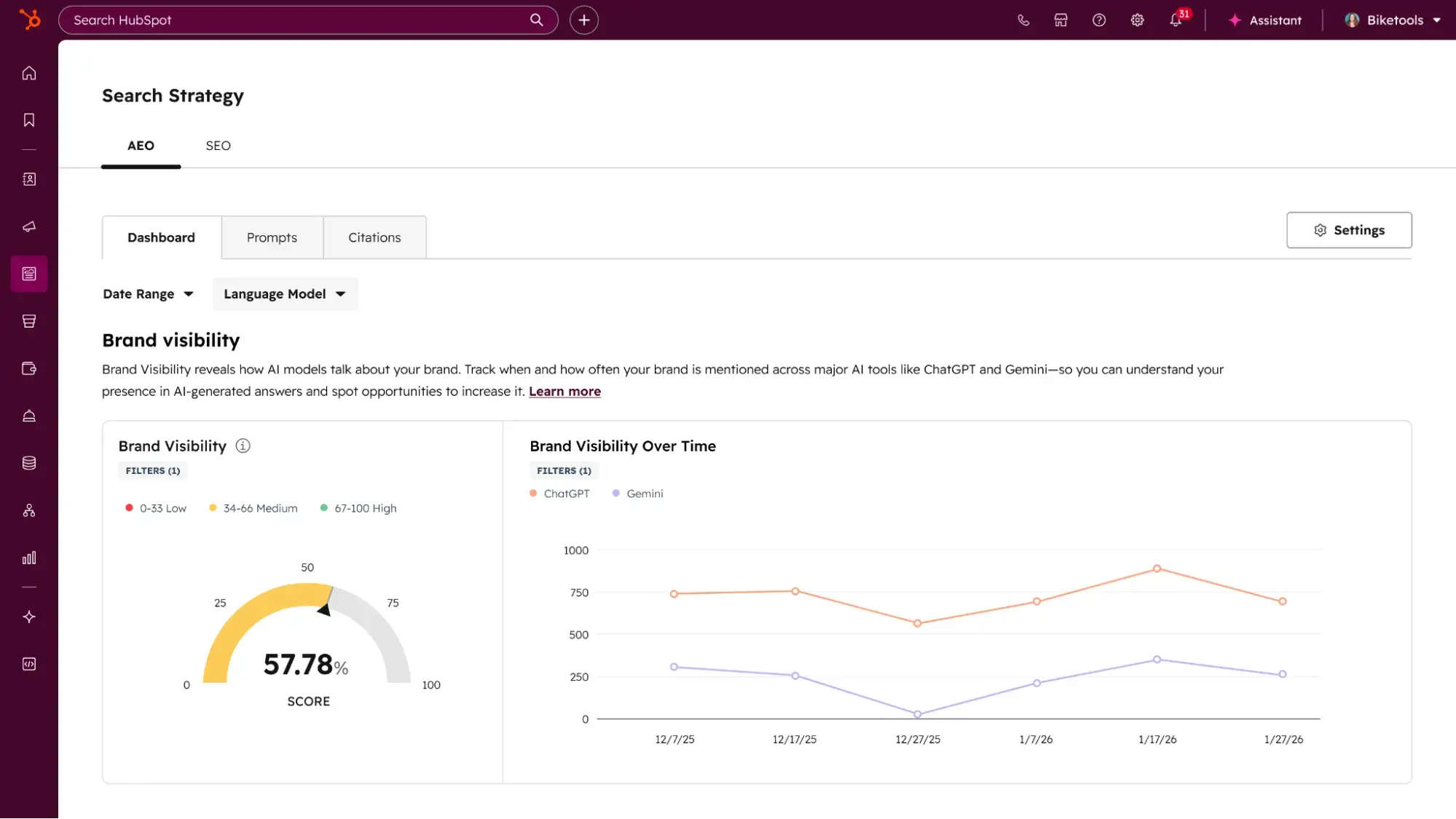
In the rapidly evolving landscape of digital discovery, a paradigm shift is underway. Traditional Search Engine Optimization (SEO)—long the bedrock of digital marketing—is undergoing a radical transformation as consumers move away from "ten blue links" and toward AI-powered conversational search. For enterprise-level organizations, this transition to Answer Engine Optimization (AEO) presents a unique, complex challenge that standard legacy tools were never designed to solve.
For a global brand managing dozens of product lines, navigating multiple linguistic regions, and contending with fragmented market-specific search behaviors, AEO is no longer a niche technical task. It is a fundamental requirement for maintaining market share. As enterprise teams struggle to move beyond siloed, manual workflows, the pressure to centralize, coordinate, and quantify AEO has reached a breaking point.
The Complexity of Enterprise AEO: A New Operational Reality
At its core, AEO is about ensuring that a brand is the primary source of truth for AI models and answer engines. Unlike traditional search, which favors page authority and backlink profiles, answer engines rely on sophisticated extraction models that prioritize factual accuracy, direct citations, and brand authority across a vast, heterogeneous digital footprint.
For an enterprise, this is a massive undertaking. A single global brand might operate in 30 different languages, each with its own unique "answer ecosystem." Furthermore, local answer engines—often customized versions of global AI models—frequently employ different citation patterns. When regional marketing teams, product groups, and corporate content teams work in isolation, the brand’s "AI presence" becomes fractured. A product might rank well in one region but be completely invisible in another, or worse, be mischaracterized by an AI due to inconsistent data across localized domains.
The Fragmentation Problem
When visibility is managed in silos, leadership loses the ability to see the "full picture." Without a centralized strategy, teams often find themselves optimizing for vanity metrics—such as keyword rankings—while missing the broader shift in how their audience is actually consuming information through generative AI.
Chronology of a Digital Shift: From Links to Answers
The trajectory of search over the last decade has been a steady march toward direct, immediate answers.

- 2015–2018 (The Featured Snippet Era): Google began prioritizing "Position Zero," introducing the Featured Snippet. SEO teams shifted focus from simple ranking to summary-style content.
- 2019–2022 (The Knowledge Graph Expansion): AI began moving beyond snippets into entity-based search. Google and Bing started pulling data directly from Knowledge Panels and structured data, making schema markup vital.
- 2023–Present (The Generative AI Revolution): With the integration of LLMs (Large Language Models) into search, the user experience has shifted from "finding a website" to "obtaining an answer." This is the era of AEO, where brands must act as the authoritative source that powers the AI’s responses.
This chronological shift underscores why legacy SEO tools are failing enterprise teams. Most existing platforms were built to track ranking fluctuations on a SERP (Search Engine Results Page). They were not built to measure "Share of Voice" within an AI’s conversational response or to audit the factual accuracy of an AI’s citation pattern across global markets.
Supporting Data: Why Centralization is No Longer Optional
The data regarding AEO’s impact on the bottom line is compelling. According to internal performance data from HubSpot, organizations that adopt a unified AEO strategy—specifically those utilizing centralized monitoring—generate 2.7x more Marketing Qualified Leads (MQLs) than those relying on decentralized, manual approaches.
This increase in efficiency is not merely a result of "better content." It is a result of operational visibility. By consolidating brand visibility scores, share-of-voice metrics, and citation frequency into a single dashboard, enterprises can identify where their "authority gap" exists.
The Cost of Disconnection
Without a unified source of truth, enterprises face:
- Duplicate Efforts: Regional teams often create similar content that competes against itself in AI training sets.
- Resource Misallocation: Marketing budget is often poured into high-traffic, low-intent keywords while high-intent, low-visibility "answer opportunities" go ignored.
- Inconsistent Brand Voice: AI models may pull conflicting information from different regional pages, causing the brand to appear unreliable to the AI, which lowers the probability of future citations.
Official Perspectives: The Role of Infrastructure
Industry experts and enterprise marketing leaders are increasingly pointing to "infrastructure-first" strategies. The challenge, they argue, is not just creating content—it is creating the right content that is optimized for machine ingestion.
"Enterprise AEO is a matrix, not a single number," explains a senior strategist at HubSpot. "Marketing teams need to understand how different product lines are cited, how visibility varies by region, and how the brand is positioned relative to competitors in each market. When that data lives in disconnected tools, enterprise AEO becomes impossible to scale."

The shift toward specialized platforms like HubSpot’s AEO tools reflects this reality. By integrating visibility dashboards with actual CRM data, the goal is to bridge the gap between "technical search performance" and "real-world revenue."
Strategic Implications for the Enterprise
For the modern CMO, the implications of this shift are threefold:
1. Monitoring: The "Single Pane of Glass" Mandate
Enterprises must move away from the "snapshot" approach to monitoring. A weekly report on search rankings is insufficient. Real-time monitoring of AI citations, share of voice across answer engines, and brand sentiment within AI responses is the new requirement. A centralized dashboard allows teams to segment data by product line, ensuring that the global strategy is executed consistently across all business units.
2. Coordination: Connecting Insights to Workflow
The biggest failure point in enterprise AEO is the "Recommendation-Action Gap." An AI tool might identify that a product page is missing a key technical specification required for an AI citation, but if that recommendation doesn’t reach the content team—or if it arrives without context—it will be ignored.
Effective AEO requires that insights are embedded directly into the content creation workflow. By using integrated content agents, writers can generate, edit, and optimize content based on real-time AEO recommendations without leaving their workspace. This creates a "feedback loop" where the content is optimized for the user and the machine simultaneously.
3. Attribution: Proving Value to Stakeholders
Perhaps the most significant challenge for enterprise AEO is justifying the budget to the CFO. Because AEO is a long-term brand-building exercise, it is often difficult to track against the short-term ROI of paid media.

However, by connecting AEO platforms directly to CRM data (such as HubSpot’s Marketing Hub), teams can finally draw a direct line between:
- Visibility metrics (e.g., increased share of voice in AI search).
- Engagement metrics (e.g., higher traffic to landing pages).
- Revenue metrics (e.g., increased MQL volume and pipeline acceleration).
Conclusion: Preparing for an AI-First Future
The move to AEO is not a temporary trend; it is the inevitable evolution of the internet as an information utility. As AI models become the primary interface through which customers discover products and services, the brands that win will be those that have successfully built the infrastructure to communicate clearly with those models.
Scaling AEO at the enterprise level requires a fundamental re-evaluation of how teams are structured, how tools are selected, and how success is measured. By centralizing visibility, automating the coordination of content teams, and rigorously tying AI-driven visibility to revenue, enterprises can transform the complexity of the "answer economy" into a significant competitive advantage.
The goal for the modern enterprise is clear: Stop fighting for the link, and start becoming the answer. Those who master this transition now will dictate the terms of digital engagement for the next decade.


 Evan Lee Salim
 Jia Lissa
 Basiran
 Neng Nana
 Iffa Jayyana
 Raul Delapena Setiawan
 Rifan Muazin
 Asro
Asro