
 Nila Kartika Wati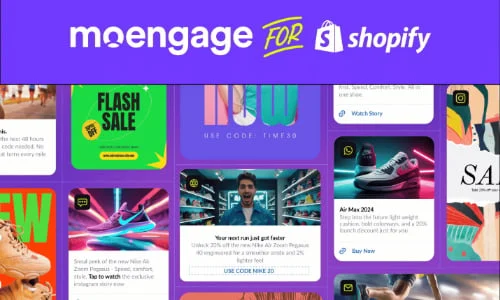
The landscape of ecommerce is undergoing a seismic shift. This week’s product releases from industry titans and agile startups alike signal a departure from passive, template-based selling toward "agentic commerce"—a paradigm where artificial intelligence doesn’t just assist with data entry but actively executes complex, multi-step business strategies. From Shopify’s new design surfaces to Amazon’s autonomous advertising suites, the tools available to merchants today are increasingly capable of making decisions, managing supply chains, and predicting consumer intent with unprecedented autonomy.
This report examines the latest wave of ecommerce innovations, analyzing how these tools are transforming store design, logistics, marketing, and the overall customer journey.
The Core Pillars of Modern Ecommerce Innovation
The rapid adoption of AI agents has moved beyond simple chatbots. The current trend focuses on agentic integration, where software platforms act as central command centers.
1. AI-Driven Storefronts and Design
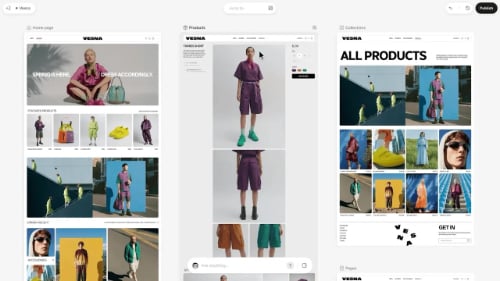
Shopify has taken a significant leap forward with the introduction of Canvas, a design surface that works in tandem with its AI agent, Sidekick. Unlike traditional drag-and-drop builders that require manual oversight for every pixel, Canvas allows merchants to interact with their storefront through conversational prompts. By combining high-level design vision with the ability to "zoom in" on technical details, merchants can now build, validate, and launch complex page layouts in a fraction of the time previously required.

2. The Rise of Agentic Advertising
Marketing departments are witnessing the automation of the entire sales funnel. Amazon has introduced its Ads Agent, a platform that unifies sponsored ads, video, audio, and display campaigns into a single, intelligent workflow. By allowing the AI to optimize campaigns autonomously while maintaining a "human-in-the-loop" oversight mechanism, Amazon is effectively reducing the cognitive load on advertisers while theoretically increasing ROAS (Return on Ad Spend). Similarly, TikTok is expanding its agentic commerce footprint with new tools for lead generation and in-app checkout, positioning itself as a closed-loop ecosystem for discovery and transaction.
Chronology of Weekly Releases
The following timeline captures the rapid-fire succession of product announcements from the past week:
- October 1: Swap Commerce acquires Vizby, signaling a move into AI-powered discovery; Commerce (the parent of BigCommerce and Feedonomics) launches automated product catalog enrichment.
- October 6: ShipStation unveils "Ship with Walmart," providing direct, discounted shipping rates and seller protections to marketplace participants.
- Ongoing/Pilot: The USPS and Amazon initiate a same-day delivery pilot in select regions, testing the efficiency of high-speed sorting between 12 p.m. and 8 p.m.
- Mid-Week: Contentstack launches "Canoe," a visibility tool that provides transparency into how AI search engines perceive and describe specific brands.
- Late-Week: UPS introduces "Secure Commerce," a comprehensive risk-mitigation suite designed to handle the complexities of global, high-value supply chains.
Supporting Data: The Efficiency Gap
The data driving these shifts is compelling. Merchants managing multichannel businesses report that manual catalog management, inventory synchronization, and return processing account for nearly 40% of their operational overhead.
The new suite of tools released this week addresses these inefficiencies directly:
- uParcel’s "Complete Marketplace Outsource Solutions" aims to consolidate storefront management across Shopee, Lazada, and TikTok, theoretically saving merchants hours per day in manual listing updates.
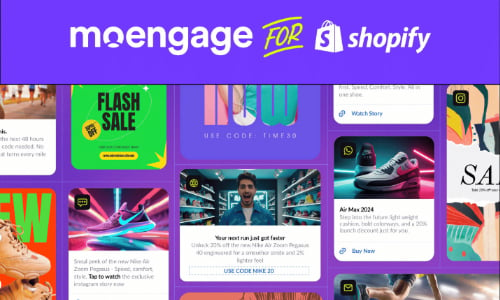
- MoEngage for Shopify bridges the gap between disparate data streams, allowing for unified customer engagement across email, SMS, and WhatsApp. By automating campaign drafting and performance reporting, these tools move the needle from "data monitoring" to "active revenue generation."
- Easyship’s expansion of export infrastructure for eBay U.K. sellers highlights the growing necessity of global reach. By automating customs documentation and compliance for 195 countries, it removes the technical barriers that often keep small-to-medium businesses from scaling internationally.
Official Responses and Strategic Rationales
Corporate statements accompanying these launches reflect a unified strategy: removing friction.
"We are moving toward a reality where the platform is the employee," notes a source familiar with the rollout of Shopify Canvas. "By allowing Sidekick to validate screenshots and design choices in real-time, we are reducing the feedback loop between ideation and deployment."
Amazon’s messaging regarding the Ads Agent highlights a similar philosophy. By integrating full-funnel capabilities, Amazon aims to eliminate the "silo effect" where video campaigns and search ads are managed in isolation. "Our goal is to help advertisers focus on strategy while the agent manages the tactical execution," an Amazon spokesperson remarked.
Meanwhile, the partnership between UPS and TikTok Shop regarding "no-box, no-label" returns addresses a persistent pain point in the customer experience. By streamlining the reverse logistics process, both companies are betting that easier returns will result in higher customer retention—a critical metric in the competitive creator-commerce sector.
Implications: The Future of the Merchant Role
As these tools become standard, the role of the "merchant" is evolving into that of a "curator" or "orchestrator."
Governance and Security Concerns
The shift toward agentic AI brings significant security risks. The introduction of the miniOrange Secure MCP Server for WordPress is a direct response to this. As AI agents gain the ability to manipulate website content and customer data, businesses require granular control over what these agents can do. The ability to apply role-based permissions and mandate human review before an agent executes a change is a critical safety rail for the industry.
The "Discovery" Arms Race
With tools like Contentstack Canoe and Swap’s acquisition of Vizby, it is clear that the next great battleground in ecommerce is "AI visibility." Brands are no longer just competing for Google search rankings; they are competing for inclusion in the "answers" provided by AI assistants. Understanding how these models describe a product is the new SEO. If an AI agent consistently describes a brand’s competitor as the "best option for price," that brand effectively loses the sale before the customer even reaches the checkout page.
The Human Element
Despite the surge in automation, the human element remains vital. Marketplaces like Nexa—which connects brands with human creators—suggest that while the logistics of ecommerce are becoming automated, the identity of the brand relies on human connection. The future of the industry will likely be defined by a hybrid model: AI handles the heavy lifting of logistics, data enrichment, and ad optimization, while humans focus on the creative storytelling and relationship-building that defines consumer loyalty.
Conclusion: Preparing for the Agentic Shift
The barrage of releases this week—from logistics partnerships and AI-powered design surfaces to advanced risk-mitigation suites—reveals a clear trend: the barrier to entry for professional-grade ecommerce is collapsing.
For the average merchant, the takeaway is clear: the platforms you use are becoming smarter, faster, and more integrated. The competitive advantage no longer lies in who has the most manual labor, but in who can best orchestrate these AI agents to serve the customer. As we look toward the end of the year, those who adopt these agentic workflows will likely find themselves with more time to focus on product innovation, while those who remain tethered to manual, legacy workflows may struggle to keep pace with the velocity of modern, AI-augmented commerce.
For those interested in contributing to future updates, please contact the editorial team at [email protected].


 Rifan Muazin
 Asro
Asro

 Raul Delapena Setiawan
 Dwi Wanna
 Muslim
 Nana Wu
