
 Basiran
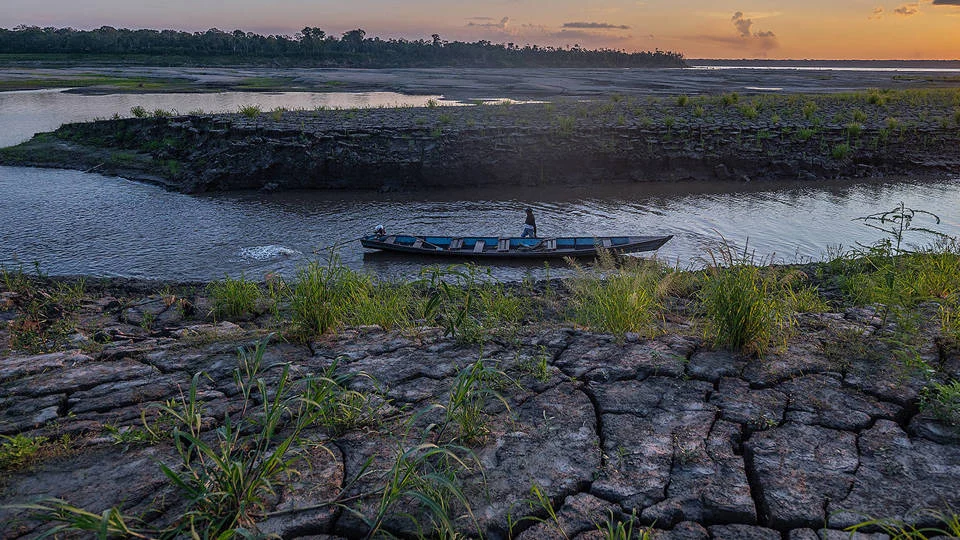
In an era defined by geopolitical volatility, the temptation for policymakers to view environmental protection as a luxury is palpable. With the wars in the Middle East and Ukraine dominating the global security agenda and fiscal belt-tightening becoming the norm for many nations, there is a mounting impulse to relegate the defense of nature to a "post-crisis" priority. However, economists and environmental scientists warn that this perception is not only flawed but dangerously shortsighted. As the world approaches critical UN biodiversity and climate-change summits, the message is clear: nature is the foundation of the global economy, and ignoring its degradation during times of conflict is a strategy for long-term ruin.
Main Facts: The Economic Backbone of the Planet
The global economy is not an autonomous machine operating independently of the Earth; it is a subset of the natural world. More than half of the world’s GDP—over $50 trillion—is moderately or highly dependent on nature and the services it provides. From the $9.5 trillion global food industry underpinned by healthy soil to the 1.5 billion livelihoods supported by forest ecosystems, the link between biological health and financial stability is absolute.
When ecosystems are treated as infinite resources to be exploited rather than assets to be managed, the cost of systemic collapse becomes astronomical. Scientific projections suggest that the partial collapse of key ecosystem services—such as pollination, water purification, and flood protection—could cost the global economy as much as $2.7 trillion annually. This reality forces a re-evaluation of the "security" agenda: defense is not merely about borders and weaponry; it is about the resilience of the water, food, and climate systems that keep nations functioning.
A Chronology of Crisis: From Conflict to Climate Failure
The intersection of geopolitical instability and environmental degradation is no longer a theoretical concern; it is a present-day reality. The following timeline illustrates how these forces have converged in recent years:
- 2022: The world adopts the Kunming-Montreal Global Biodiversity Framework, enshrining the "30×30" goal—the commitment to protect 30% of the Earth’s land and ocean by 2030.
- 2022–2024: Global food prices begin a steady climb, exacerbated by the war in Ukraine, which disrupts grain supply chains and sends energy prices soaring.
- 2025: Fertilizer prices, volatile since the start of the conflict in the Middle East and the resulting closures of the Strait of Hormuz, reach a 71% increase, crippling agricultural production in vulnerable regions.
- Summer 2026: A sweltering drought strikes Europe, leading to $2–3 billion in crop losses. This serves as a "double blow" to farmers already struggling with the supply chain shocks of the preceding years.
- Late 2026: FAO reports indicate that global food prices have reached their highest levels since 2022, confirming that the combination of conflict-driven market instability and climate-induced agricultural failure is creating a permanent "new normal" of scarcity.
Supporting Data: The 30×30 Disparity
The 30×30 target remains the most ambitious and vital environmental commitment of the decade. However, as we approach the four-year mark until 2030, the progress report is starkly divided between land and sea.
The Land Progress
Analysis by the Campaign for Nature reveals that 20% of land and inland waters are currently under some form of protection. If governments follow through on current, yet-to-be-implemented commitments, this figure could rise to 27% by 2030. While this falls short of the 30% goal, it represents a significant, if incomplete, stride toward conservation.
The Ocean Gap
The situation in the maritime domain is far more precarious. While 10% of the ocean is formally designated as "protected," the Ocean Protection Gap Report (2026) reveals a devastating truth: only 3.5% of the global ocean is actually effectively managed. In many areas designated as "off-limits," industrial fishing, mining, and other extractive activities continue unabated. The current trajectory suggests we will only reach 12% protection by 2030, a massive failure to meet our international obligations.
Official Responses and the Financing Gap
The primary obstacle to achieving the 30×30 goal is not a lack of scientific knowledge, but a lack of fiscal willpower. To successfully protect 30% of our planet, global spending on nature must increase from the current $24 billion annually to between $100 billion and $180 billion.
Many governments remain caught in a cycle of "performative environmentalism." As of May 2026, 116 countries had submitted national commitments to protect their land and water areas. Yet, the vast majority have failed to provide the necessary roadmaps—maps, cost analyses, and dedicated funding lines—to turn these pledges into physical reality.
International bodies are beginning to push back. The World Bank and other financial institutions have begun to frame nature-positive investments as a hedge against inflation and supply chain volatility. By investing in mangroves for storm protection or healthy forests for rainfall regulation, nations are effectively buying an "insurance policy" against the catastrophic costs of climate-related disasters.
Implications: The Multiplier Effect of Nature-Positive Economics
The transition to a nature-positive economy is not a zero-sum game. Far from being a drain on GDP, environmental restoration is a massive economic engine.
GDP and Job Creation
Research indicates that meeting the 30×30 targets could add up to $450 billion to annual global GDP by 2050. Furthermore, this transition is projected to support between 4 and 7 million jobs. These are not just "green jobs" in the abstract; they are roles in land management, sustainable agriculture, ecological engineering, and water infrastructure—all sectors that are highly resistant to outsourcing and automation.
Resilience as a Strategic Asset
The implications for national security are profound. A nation that protects its wetlands, for instance, reduces its long-term reliance on expensive, man-made flood defenses. A nation that invests in soil health reduces its dependence on imported, conflict-sensitive fertilizers. By securing these natural assets, governments provide their citizens with stability, public health, and food security—the very pillars upon which a stable society rests.
Conclusion: The Path Forward
The argument that we must prioritize "growth" over "nature" is a fallacy that ignores the source of all economic value. We are currently living through a period where the short-term pressures of war and fiscal austerity threaten to lock us into a trajectory of long-term environmental decline.
As world leaders convene for the upcoming biodiversity conferences, the narrative must shift. The 30×30 goal is not just an environmental target; it is a fundamental pillar of global economic policy. Implementing this goal requires more than just words; it requires the mobilization of $100–180 billion annually, the effective management of marine protected areas, and the political courage to prioritize the planet’s long-term health over the immediate, fleeting demands of the political cycle.
Nature is not "for the bees" alone; it is the infrastructure upon which our civilization is built. In a world of increasing uncertainty, protecting the natural systems that sustain us is the most reliable investment a government can make. We have four years to close the gap. The cost of failure—measured in lost growth, food insecurity, and climate-induced catastrophe—is a price the global economy cannot afford to pay.


 Asro
 Muslim

 Iffa Jayyana

 Suro Senen
 Pevita Pearce


 Azzam Bilal Chamdy

 Nila Kartika Wati
