
 Iffa Jayyana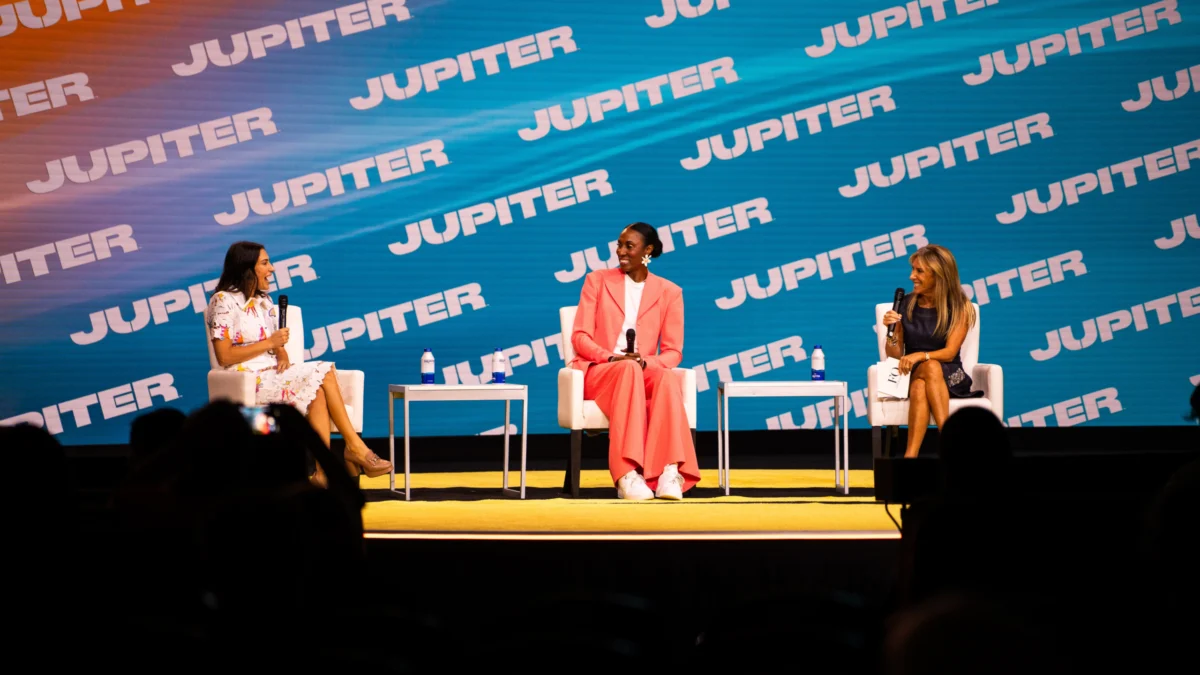
Introduction: A New Player in the Conference Circuit
Miami Beach, a city synonymous with sun, sand, and high-octane networking, played host this week to a fresh entrant in the global conference landscape: the Jupiter Festival. Co-founded by Cannes Lions veteran William Mellis and former Fox Sports Media Group CMO Eric Markgraf, the inaugural event aims to bridge the widening chasm between traditional media giants, sports franchises, and the burgeoning creator economy.
In an industry landscape currently saturated with tentpole events—from the storied halls of Cannes to the tech-centric corridors of CES—the Jupiter Festival arrives with a distinct mandate: to decode the "attention economy." Over four intensive days, the festival utilized three distinct stages to facilitate high-level discourse on the seismic shifts currently reshaping how audiences consume content, how brands capture loyalty, and how artificial intelligence is rewriting the playbook for creative discovery.
Main Facts: The Architecture of an Ambition
The Jupiter Festival is not a grassroots experiment; it is a meticulously engineered venture designed to capture the attention of the C-suite. With a capital structure that includes a significant 20% equity stake from MCH Group—the parent company behind the global Art Basel franchise—the event signals a long-term commitment to the Miami market.
The programming was structured to move beyond the superficial trends often found at industry gatherings, focusing instead on the intersection of three critical pillars:
- The Creator-Brand Synergy: Exploring how the creator economy has evolved from a niche influencer marketing tactic into a fundamental pillar of modern media.
- The Sports Rights Revolution: Examining how streaming platforms, legacy broadcasters, and sports leagues are renegotiating the value of live fandom in a fragmented media environment.
- The AI Paradigm Shift: A deep dive into how generative AI is democratizing creative production while simultaneously disrupting the traditional discovery channels that have sustained publishers for decades.
Chronology: Four Days of Industry Synthesis
The festival’s schedule was designed to mirror the velocity of the industries it serves, with each day focusing on a specific thematic arc.
Day 1: The Foundations of Fandom
The opening day focused heavily on the sociology of modern media. Keynotes from veteran sports media executives centered on the "fragmented fan." The narrative was clear: the days of monolithic broadcast audiences are gone, replaced by hyper-engaged, niche communities that require brands to be more authentic and interactive than ever before.
Day 2: The Attention Economy and the Creator Class
Mid-week saw a shift toward the "Attention Economy," a term that has become the industry’s North Star. Speakers from leading social platforms and creator agencies debated the cost of human attention. The consensus was that in an era of infinite content, the value proposition has shifted from "reach" to "resonance."
Day 3: The AI Transformation
The third day was arguably the most contentious. Discussions focused on the ethical and practical implications of artificial intelligence. From the impact of AI-generated creative on the labor market to the use of predictive algorithms in content discovery, the discourse underscored a sense of urgency. Executives acknowledged that the "wait and see" approach to AI is no longer a viable strategy for survival in the media landscape.
Day 4: Future-Proofing the Business Model
The final day focused on synthesis and strategy. Workshops and roundtable sessions allowed attendees to apply the week’s insights to their own organizational structures, focusing on how to integrate AI tools and creator partnerships into legacy business models without losing brand equity.
Supporting Data: An Ecosystem of Influence
The credibility of the Jupiter Festival is underpinned by its powerful coalition of backers. Beyond the MCH Group, the event secured partnerships with industry heavyweights, including YouTube, the Boston Consulting Group (BCG), and the Interactive Advertising Bureau (IAB).
- Market Positioning: The involvement of BCG suggests a focus on high-level strategic consulting, providing attendees with data-driven frameworks rather than mere anecdotal trends.
- Audience Reach: By aligning with the IAB, the festival tapped into the pulse of digital advertising, ensuring that the content remained rooted in the realities of ad-spend allocation and ROI metrics.
- The MCH Factor: The 20% stake from MCH Group provides the event with institutional stability and a blueprint for international expansion, leveraging the same operational excellence that has made Art Basel a global brand.
Official Responses and Industry Sentiment
In interviews conducted during the event, co-founders William Mellis and Eric Markgraf emphasized that the festival was born out of a perceived vacuum in the current event ecosystem.
"We didn’t want to build another ‘talk shop,’" said Mellis during a closing-day briefing. "The goal was to create a laboratory. When you bring the CMO of a global sports league into a room with a creator who has 50 million subscribers and an AI developer from Silicon Valley, the friction is intentional. That friction is where the new business models are being built."
Industry leaders attending the event were largely optimistic about the format. "Most conferences have become too broad," remarked one senior media executive from a top-tier agency. "Jupiter is specific. It acknowledges that media, sports, and tech are no longer separate silos. If you aren’t talking about all three simultaneously, you’re missing the point."
However, some attendees noted that the market is "crowded." The challenge for the Jupiter Festival will be maintaining its relevance in the face of established giants like Cannes Lions. The founders seem aware of this, banking on the idea that Miami offers a more agile, tech-forward environment compared to the traditional European circuit.
Implications: What This Means for the Future of Media
The emergence of the Jupiter Festival carries several implications for the broader industry:
The Shift Toward Vertical Integration
The festival highlights a growing trend of vertical integration within media. Traditional publishers are increasingly adopting creator-led models, while sports leagues are becoming media houses in their own right. The Jupiter Festival provides a necessary, centralized venue for these formerly distinct sectors to align their strategies.
AI as the Great Disruptor
The discussions on AI revealed a clear divide between those who view AI as a threat to human creativity and those who view it as an essential force multiplier. The implication is that the next five years will be defined by an "arms race" in creative technology. Companies that fail to integrate these tools into their workflows—from content creation to audience targeting—risk obsolescence.
The Re-Evaluation of "Attention"
For years, the industry measured success by impressions and clicks. The Jupiter Festival’s focus on the "attention economy" suggests a move toward deeper, more qualitative metrics. The industry is beginning to recognize that in a world of AI-generated spam, "human-verified" attention is becoming a luxury good.
The Role of Miami as a Media Hub
Finally, the choice of Miami as a host city is significant. As tech hubs migrate away from the high-tax, high-cost environments of the West Coast, Miami has positioned itself as the capital of the "new media" world. The success of the Jupiter Festival could solidify Miami’s status as a critical node in the global media network, potentially drawing even more capital and talent away from traditional media centers like New York and Los Angeles.
Conclusion: A High-Stakes Future
The Jupiter Festival has successfully staked its claim in a crowded marketplace by focusing on the friction points between media, sports, and technology. Its inaugural year has set a high bar for content quality and industry participation.
However, the true test will be its sustainability. In an industry defined by rapid evolution, the festival must continue to reinvent itself to stay ahead of the very trends it seeks to analyze. For Mellis and Markgraf, the challenge moving forward is to translate the excitement of these four days into long-term industry impact. If the initial turnout and the caliber of discourse are any indication, the Jupiter Festival has already begun to shift the conversation, signaling that the future of media will be built at the intersection of human fandom and machine-led innovation.
As the industry looks toward the next cycle, the Jupiter Festival stands as a testament to the fact that while technology changes, the core pursuit—capturing the attention of a distracted world—remains the most valuable currency in business.


 Nana Wu
 Suro Senen
 Raul Delapena Setiawan
 Dwi Wanna
 Muslim


 Rifan Muazin