
 Layla Zulfa
You have meticulously navigated the treacherous waters of modern digital marketing. You have spent hours A/B testing subject lines to secure that elusive open. You have refined your brand voice until your copy sounds less like a corporate bulletin and more like a conversation between friends. You have optimized your automation sequences and timed your send schedule to perfection.
Then, you hit "Send"—and your campaign vanishes into the digital abyss of the spam folder.
It is a scenario that haunts even the most seasoned ecommerce founders. The failure is rarely due to a lackluster offer or poor design. Instead, it is an invisible, algorithmic gatekeeper—the email service provider (ESP) spam filter—deciding your message is not worthy of an audience. Email deliverability is the silent arbiter of your business’s revenue, and in an era where inbox real estate is more competitive than ever, understanding the mechanics behind it is no longer optional.
The Core Problem: Deliverability vs. Delivery
To master your email marketing, you must first distinguish between delivery and deliverability.
Delivery is a binary state. When an email is "delivered," it simply means it did not bounce. It arrived at the recipient’s mail server without being rejected by the SMTP protocol. However, that is only half the battle.
Deliverability is the far more complex hurdle. It refers to your actual placement within the inbox. When your email reaches the server, the provider (Gmail, Outlook, Yahoo, etc.) runs a split-second assessment of your sender reputation, content, and authentication status. Based on these variables, it decides where the message lands: the primary inbox, the promotions tab, or the dreaded spam folder.
For the modern ecommerce founder, this is a bottom-line issue. If 20% of your emails are shunted to spam, you have effectively incinerated 20% of your potential revenue. Because this loss is invisible—you aren’t getting bounce reports, just silence—it often goes unnoticed until the cumulative effect manifests as a sharp, unexplainable decline in your quarterly conversion metrics.
The Hierarchy of Reputation: A Chronological Framework
Building a strong sender reputation is not a sprint; it is a long-term investment that follows a distinct developmental trajectory.
Phase 1: The Foundation (Authentication)
Before you send a single promotional email, your domain must be authenticated. Think of SPF (Sender Policy Framework), DKIM (DomainKeys Identified Mail), and DMARC (Domain-based Message Authentication, Reporting, and Conformance) as your business’s digital ID card.
- SPF: A DNS record that lists the IP addresses authorized to send emails on behalf of your domain.
- DKIM: A cryptographic signature that proves the email content has not been altered in transit.
- DMARC: A policy layer that tells the receiving server what to do if an email fails SPF or DKIM checks.
Without these, you are essentially a "nobody" in the eyes of the major ISPs.
Phase 2: The Warm-Up (Sending Habits)
If you start sending 50,000 emails from a brand-new domain on day one, you will trigger an immediate red flag. ISPs view sudden spikes in volume from unknown sources as a classic hallmark of malicious activity. A responsible sender "warms up" their IP address by gradually increasing volume over several weeks, allowing ISPs to establish a baseline for your behavior.
Phase 3: The Maintenance (Engagement and Hygiene)
Once your domain is established, the long-term game begins. This is where your day-to-day choices—how often you prune your list and how much value you provide—determine whether you stay in the inbox or get pushed to the junk pile.
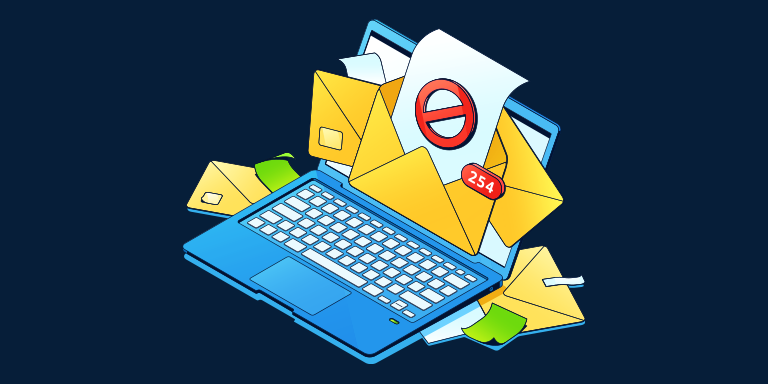
Supporting Data: Why Engagement Is the Ultimate Metric
Data from industry-leading email service providers consistently confirms one truth: Engagement is the primary signal for deliverability.
When a recipient opens your email, clicks a link, or moves your message from the "Promotions" tab to their "Primary" inbox, they are providing a positive feedback signal to the ISP. These signals effectively "whitelist" your future correspondence in the eyes of the algorithm.
Conversely, negative signals are catastrophic. A high volume of spam complaints is the fastest way to get your domain blacklisted. Even worse is the "ignored email"—the message that sits in the inbox unread. If you have a high percentage of subscribers who never open your emails, you are signaling to ISPs that your content is irrelevant. ISPs are now aggressive in their efforts to declutter their users’ inboxes. If you are not providing value, they will eventually stop delivering your emails entirely to protect their users’ experience.
Official Stance: What the Gatekeepers Want
Major providers like Google and Yahoo have recently tightened their requirements for bulk senders. Their stance is clear: Authentication and ease of unsubscription are no longer suggestions.
Under new, stricter guidelines, senders who send more than 5,000 emails per day must:
- Enforce strong authentication: SPF, DKIM, and DMARC are now mandatory.
- Enable one-click unsubscribe: If a user finds it difficult to leave your list, they will report you as spam rather than finding the link. Making the exit easy actually protects your deliverability by keeping your list populated only by interested, engaged users.
- Maintain a low spam rate: A spam rate threshold of 0.3% is now the standard. If your complaint rate exceeds this, your emails will face significant filtering.
The Unsexy Work: Strategic List Hygiene
List hygiene is the most neglected aspect of email marketing, yet it is the single most effective tool for preventing deliverability issues. Over time, every list accumulates "dead weight"—abandoned email addresses, burner accounts, and users who have lost interest.
To maintain a healthy reputation, you must treat your list as a living asset.
- The Re-engagement Campaign: Periodically reach out to contacts who haven’t opened an email in 90 to 180 days. Offer them a clear "yes/no" choice: do they want to stay on the list? If they don’t respond, remove them.
- Hard Bounce Suppression: Ensure your ESP automatically removes hard bounces (invalid addresses) immediately. Sending to a list full of dead addresses is a clear indicator of low-quality, potentially spammy practices.
- Double Opt-In: While it may result in a slower list growth rate, requiring a confirmation click upon signup ensures that every subscriber is legitimate and genuinely interested in your brand.
Content Patterns: Habits That Trigger Filters
Spam filters have evolved beyond simple keyword detection (like flagging the word "Free"). Modern AI-driven filters analyze the entire composition of your email. To ensure your messages reach the inbox, avoid these common pitfalls:
- Excessive HTML Bloat: Complex, image-heavy emails with very little text can trigger filters. Always aim for a healthy text-to-image ratio.
- Broken Links and Redirects: Using URL shorteners that obscure the destination can look suspicious to security filters.
- Inconsistent Branding: Sending from "[email protected]" one day and "[email protected]" the next creates confusion. Use a consistent "from" name and address to build trust with both your subscribers and the ISPs.
- Over-reliance on Sales Language: Using excessive capitalization, aggressive "BUY NOW" buttons, or high-pressure scarcity tactics can be interpreted as spam behavior.
Implications for the Modern Founder
The implications for your business are profound. If you are relying on email to drive revenue, you are effectively operating on rented land. You must respect the rules of the ISPs, or risk being evicted from the inboxes of your best customers.
Deliverability is not a "set it and forget it" task. It is a fundamental operational pillar that requires constant vigilance. By focusing on authentication, maintaining a clean list, and prioritizing content that your audience actually wants to engage with, you move from a position of vulnerability to one of stability.
For those looking to automate this complex process, platforms like Omnisend provide the infrastructure necessary to navigate these hurdles. By integrating deliverability monitoring, automated list health tools, and smart sending protocols, such platforms allow founders to focus on growth rather than the technical minutiae of SPF records and bounce rates.
In the end, email remains the most direct line of communication between a brand and its customers. Protect that line by treating your deliverability as the precious asset it is. The brands that win in the long term are the ones that respect the inbox, provide consistent value, and maintain the hygiene of their digital communities.

 Muslim
 Lina Hope
 Raul Delapena Setiawan
 Dwi Wanna

 Nana Wu

 Rifan Muazin