
 Jia Lissa
You can possess the most polished, high-performance website on the internet, complete with a seamless user experience and world-class content. Yet, despite your best efforts, you might remain entirely invisible to the algorithms that govern modern discovery.
In the era of Google’s Knowledge Graph and generative AI search engines like ChatGPT, Claude, and Perplexity, your website is no longer the sole arbiter of your brand’s reputation. Search engines and AI models are shifting from analyzing individual pages to evaluating "entities." They are asking a fundamental question: What does the rest of the world say about this brand?
Every time a credible publication, a niche community, or a recognized industry expert mentions your brand, it builds a layer of digital trust. This guide explores the evolving landscape of brand mentions, why they are currently the most critical lever for visibility, and the actionable strategies to secure them.
What Are Brand Mentions?
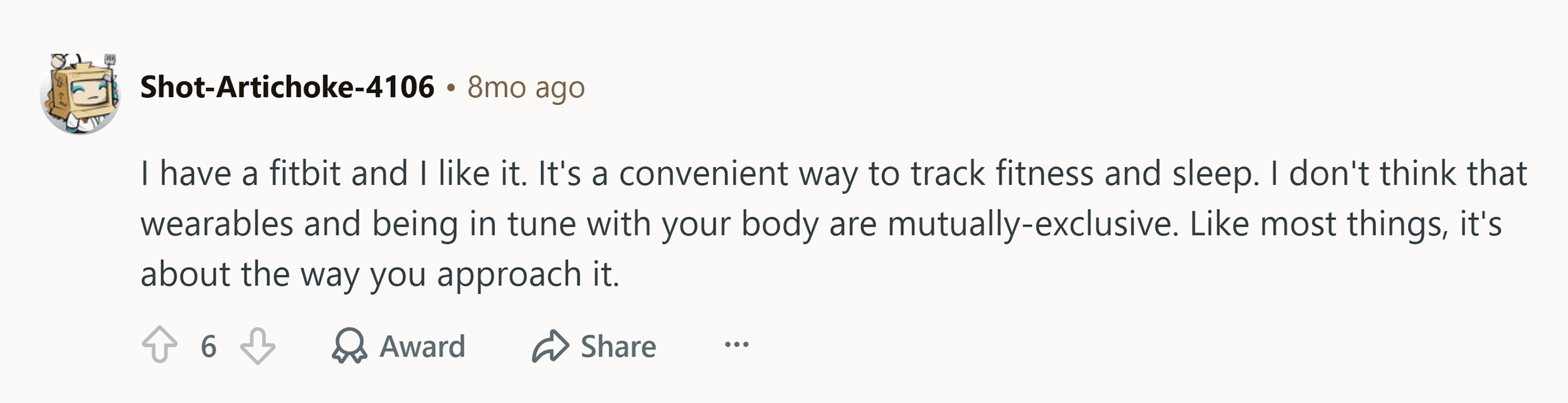
At its core, a brand mention is any third-party reference to your business. These can occur in a variety of digital spaces: editorial articles, Reddit threads, YouTube videos, podcast transcripts, or social media commentary.
Mentions generally fall into two categories:
- Linked Mentions: These contain a clickable hyperlink to your domain. They are the "gold standard" because they provide direct referral traffic and pass SEO authority (link equity).
- Unlinked Mentions: These reference your brand name without a link. While they don’t provide a direct path for a user to click through, they are vital for search engines and AI to build "brand context." They confirm your existence, your industry, and your relevance.
Web vs. LLM Brand Mentions
A common point of confusion is the difference between traditional web mentions and AI-native mentions.
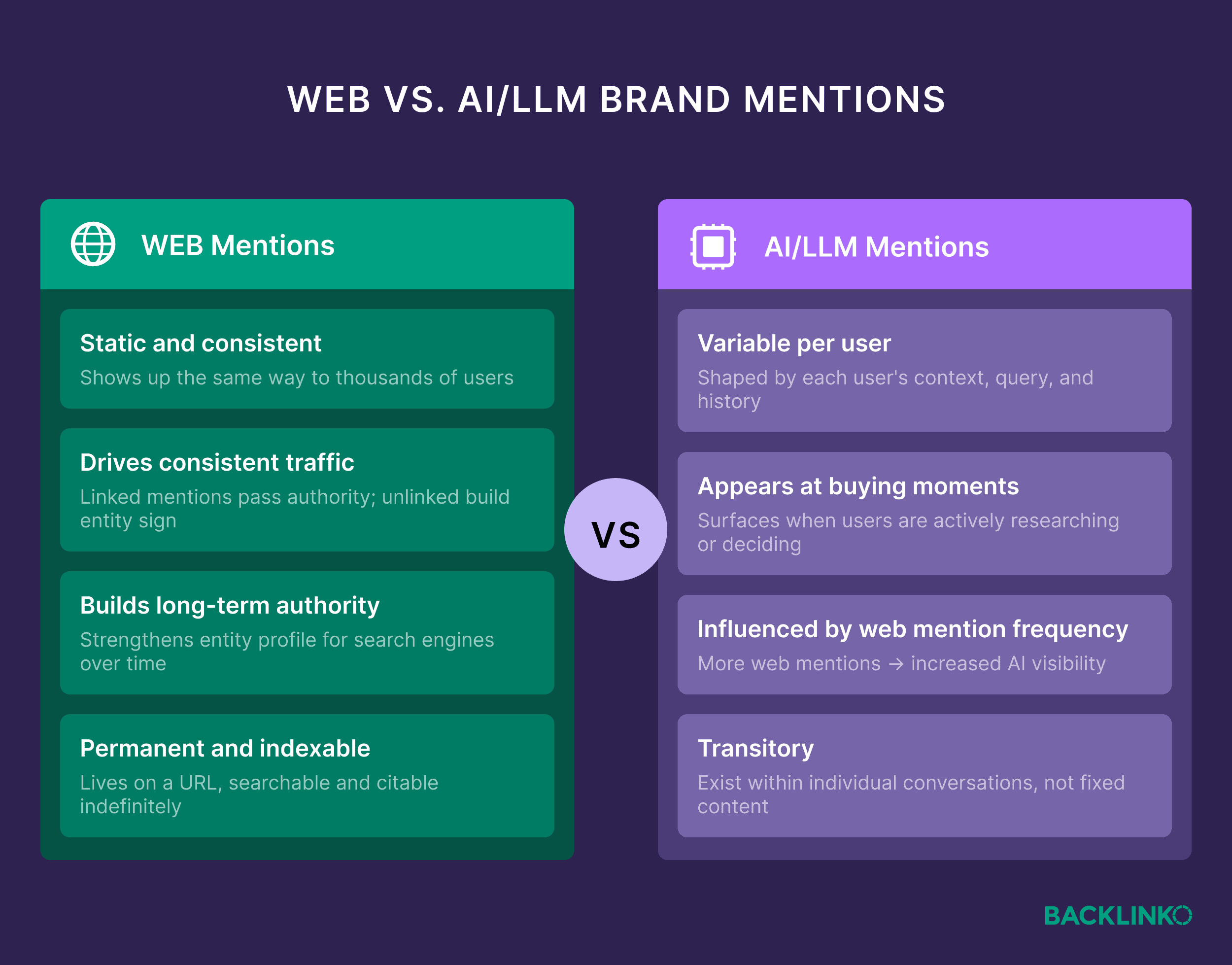
A web mention is static; it resides on a server and appears the same to everyone who visits that page. In contrast, an AI mention—where a model like ChatGPT recommends your brand in a response—is dynamic. These are tailored to the user’s specific query and context.
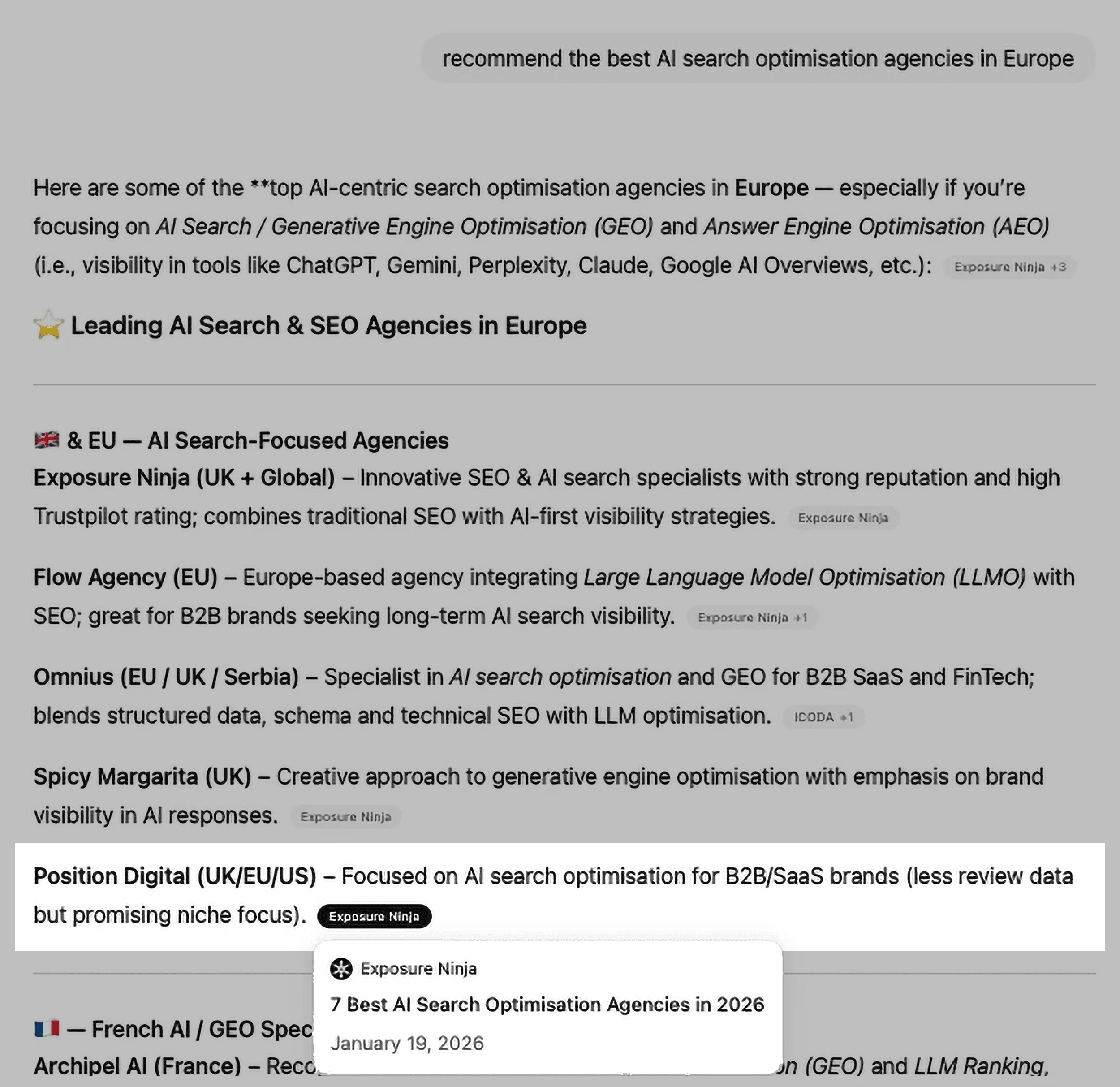
Crucially, you cannot "link-build" your way into an AI response directly. Instead, you must build a massive, consistent footprint of web mentions. Large Language Models (LLMs) are trained on the vast corpus of the internet. The more frequently and consistently you are mentioned in trusted, topical contexts across the web, the higher the probability that an AI model will cite you as an authority.
Why Brand Mentions Matter Now More Than Ever
1. They Signal Authority to Search Engines
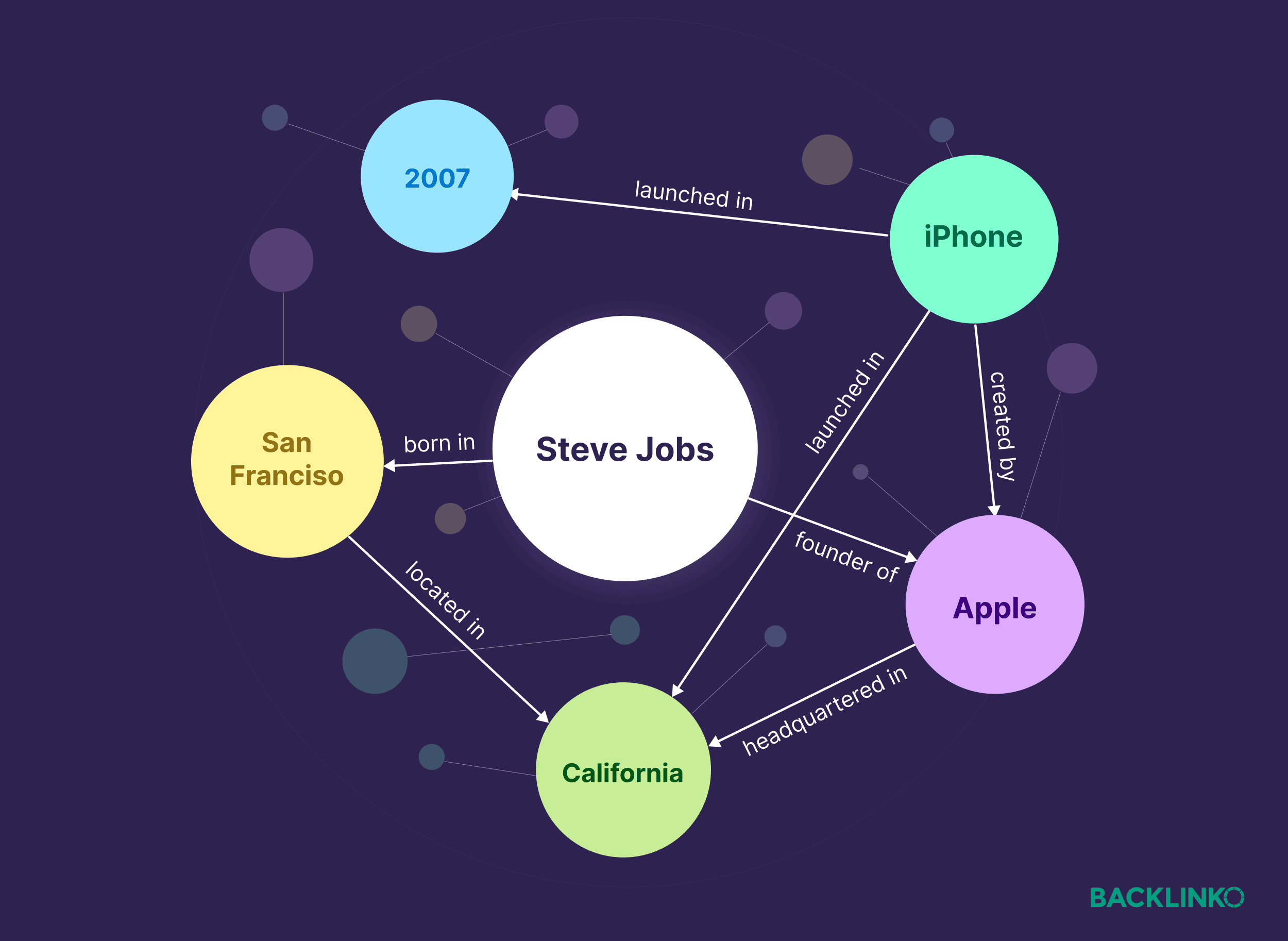
Google’s algorithm is fundamentally a reputation-tracking system. Through its Knowledge Graph, Google maps the relationships between entities—people, companies, and concepts. When reputable sources consistently mention your brand alongside relevant keywords, you solidify your status as a "known entity" in that space.
2. They Expand Visibility to New Audiences
Brand mentions serve as a discovery engine. When a YouTuber or a community influencer mentions your product, they are often reaching an audience that is not actively searching for your specific solution.
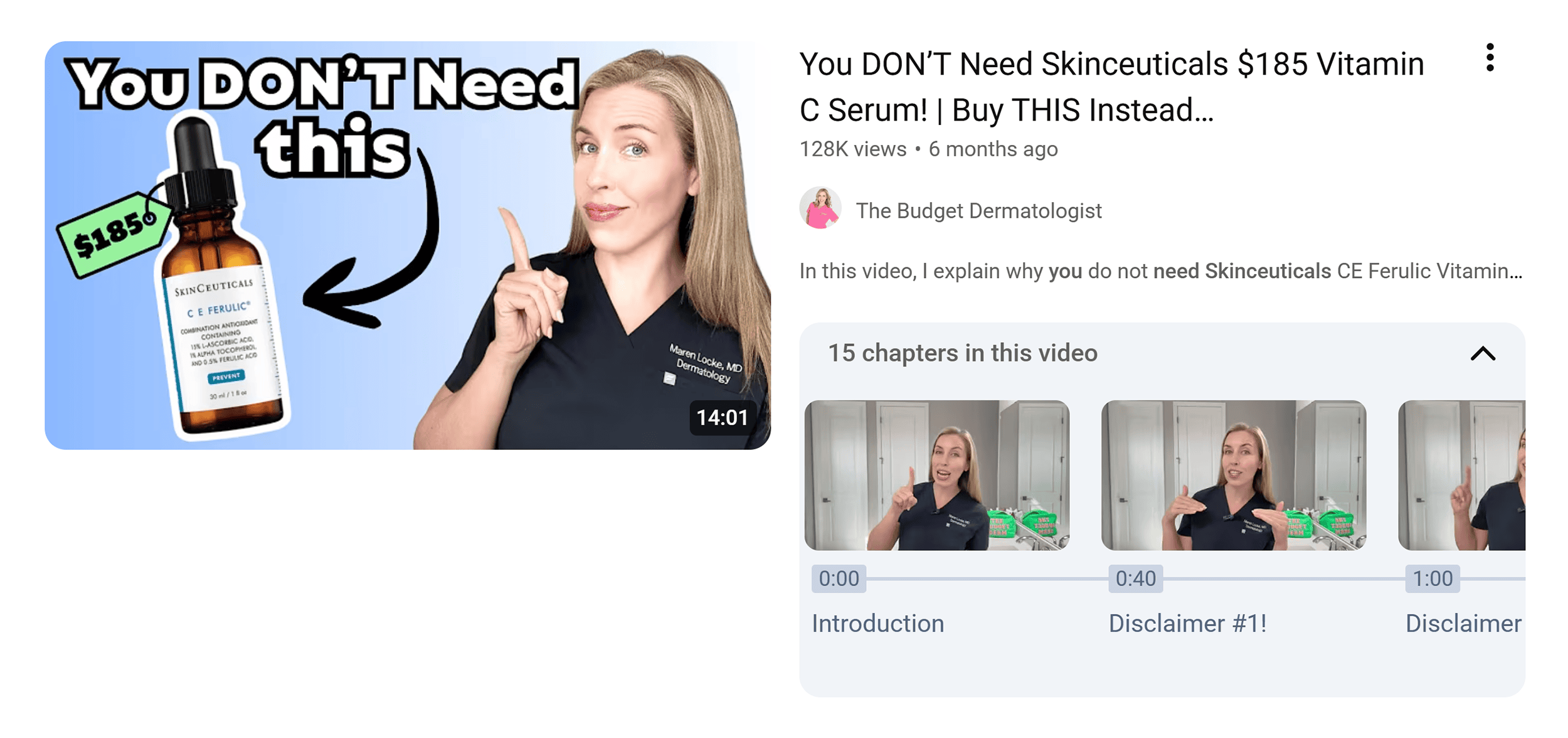
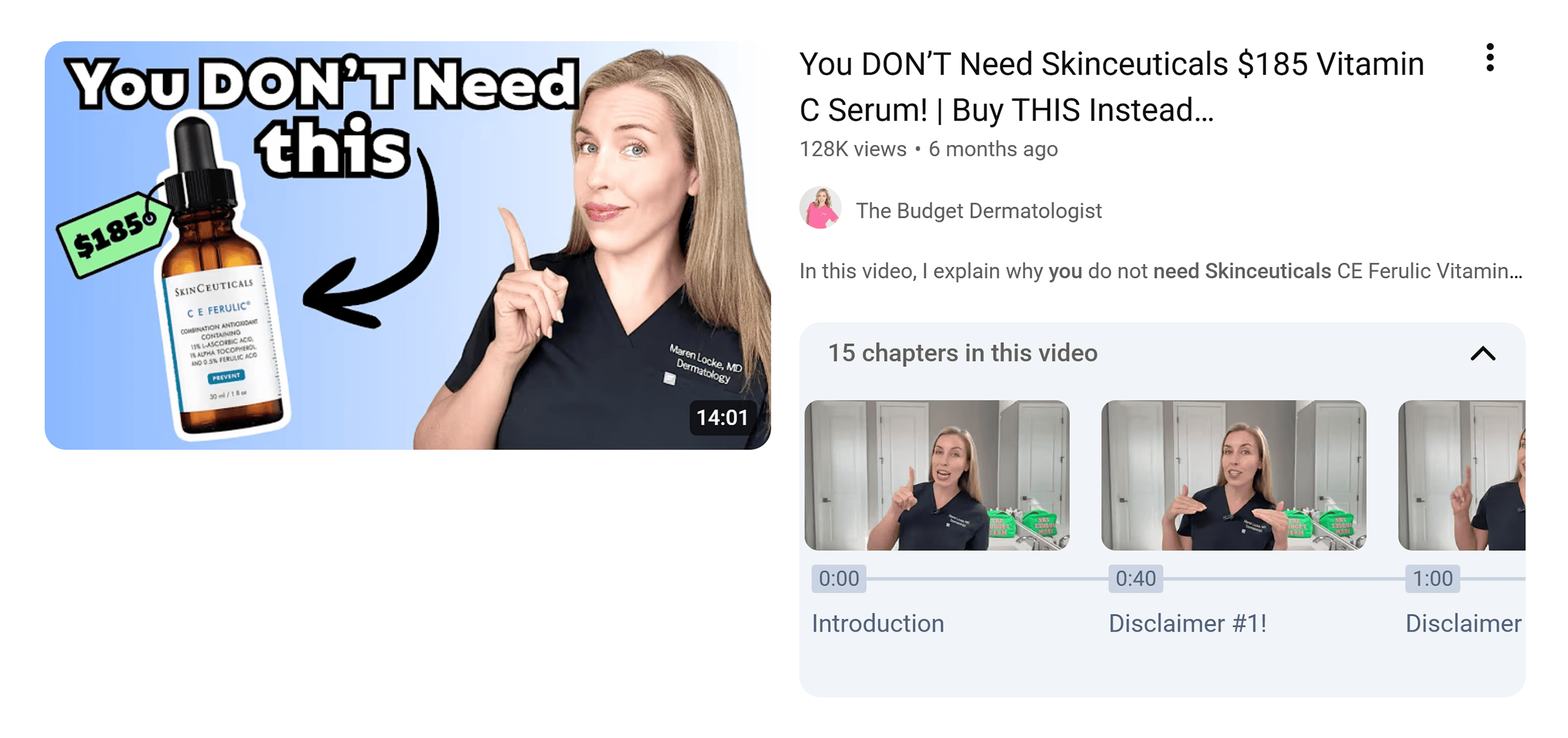
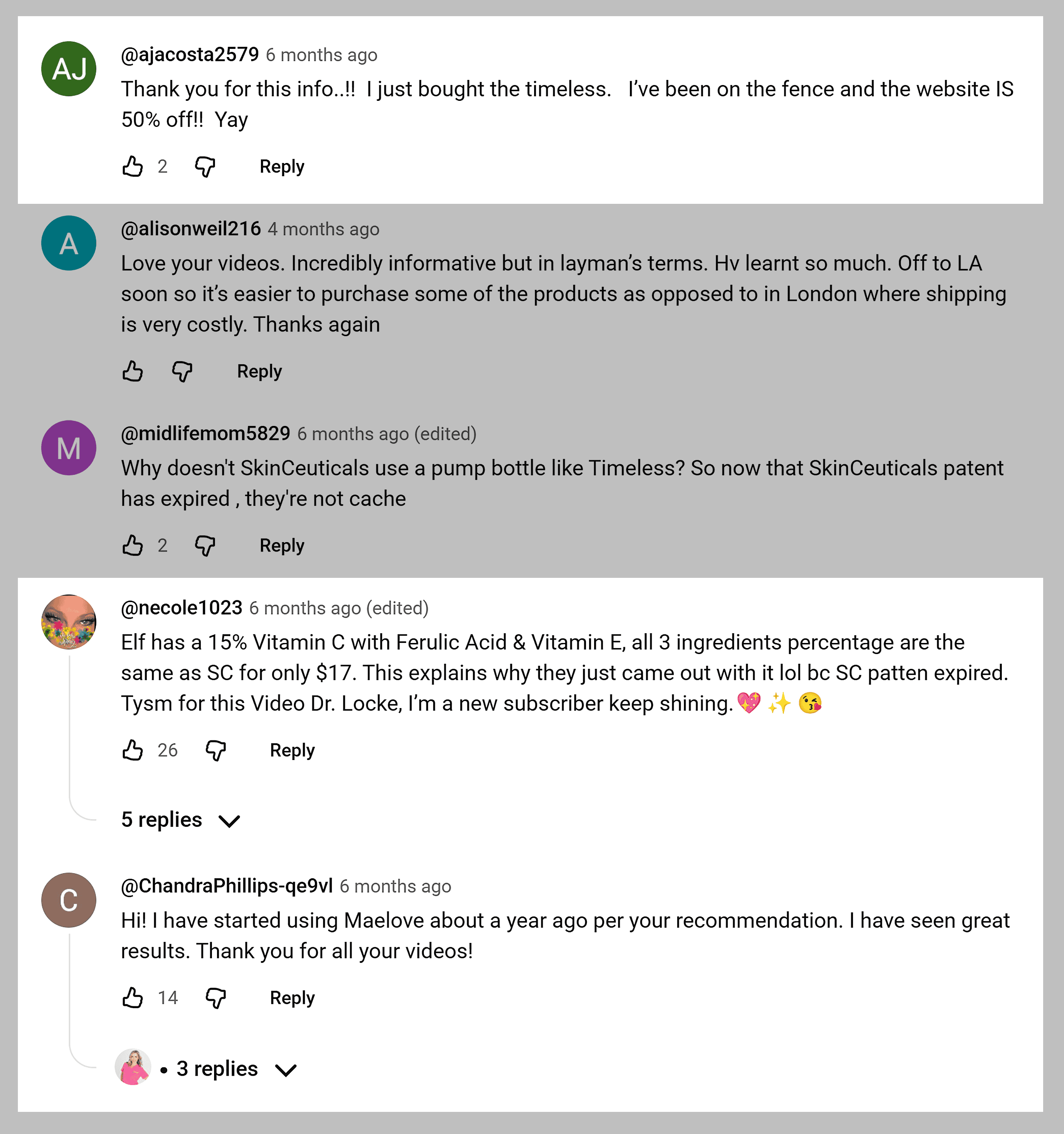
Take the case of "The Budget Dermatologist" on YouTube. By recommending specific, cost-effective skincare alternatives, the channel drives thousands of consumers to brands like Timeless. These mentions are not just SEO signals; they are high-intent marketing touchpoints that lead to immediate conversions.
3. They Train the AI
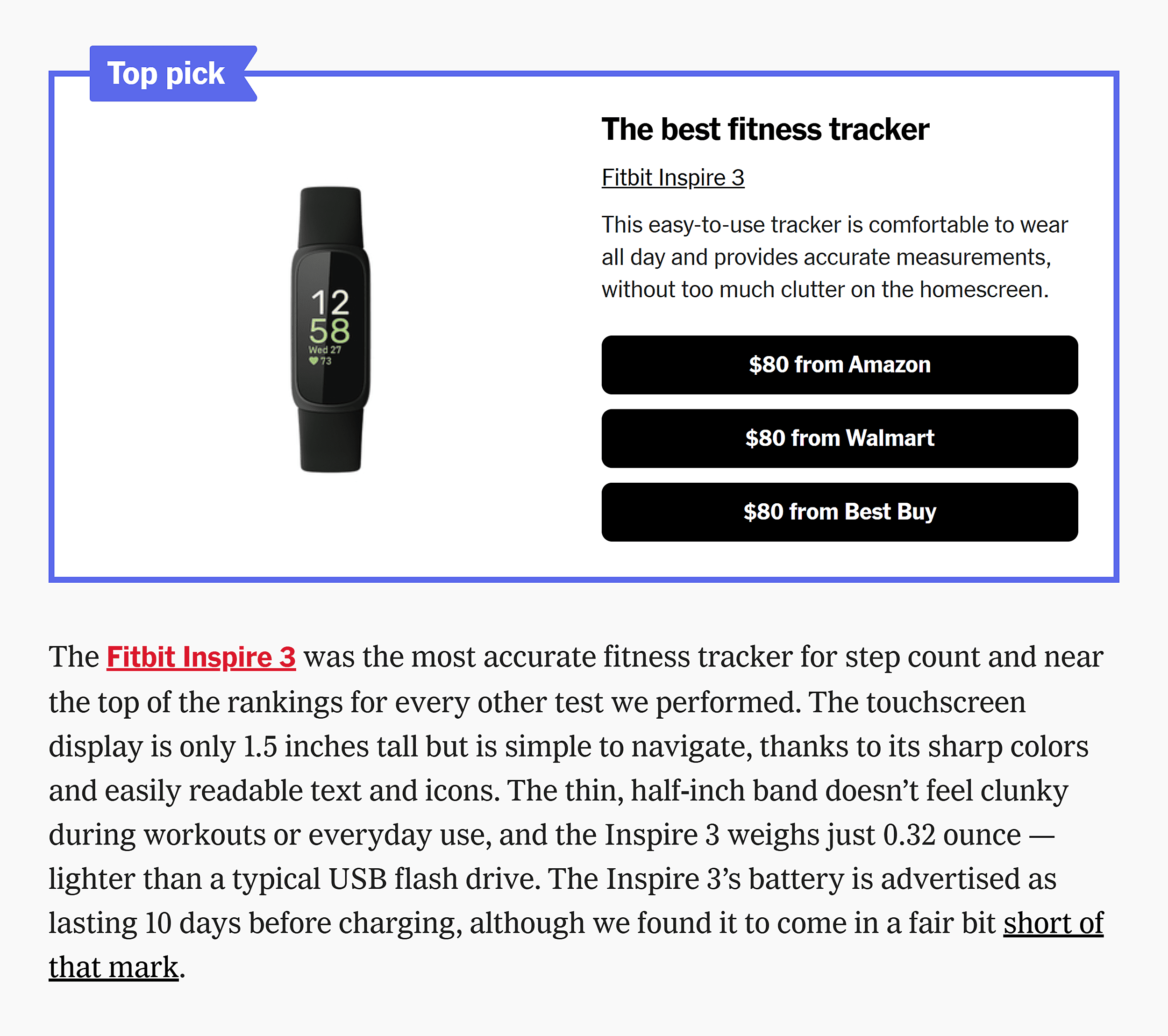
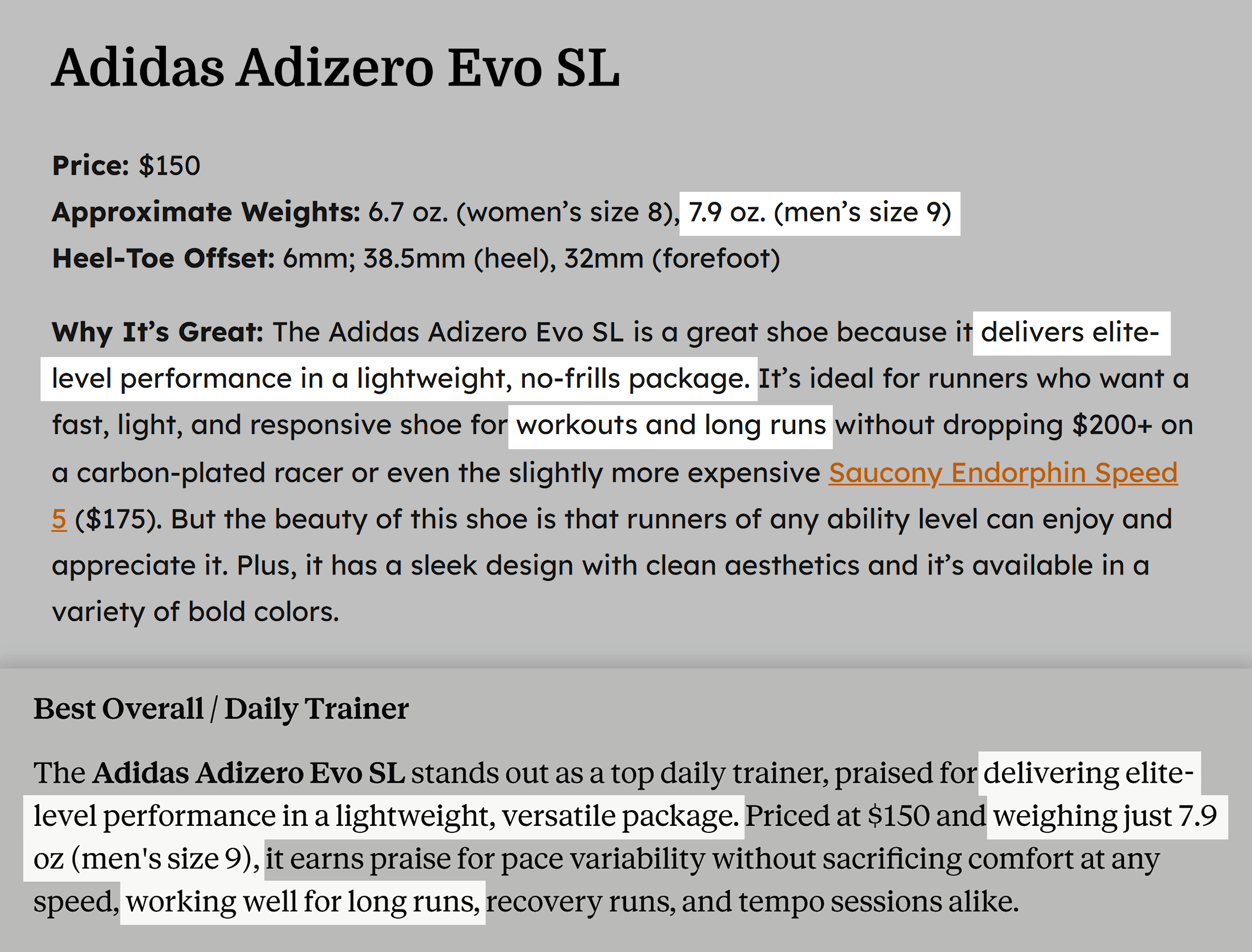
LLMs act as aggregators of human consensus. If a running blog describes a shoe as "elite-level performance in a lightweight, no-frills package," and that sentiment is echoed across five other major fitness sites, the AI "learns" this description. When a user asks an AI for a lightweight running shoe, the model pulls that exact sentiment and language from its training data. By controlling your brand mentions, you are essentially training the AI on how to describe and sell your product.
The Anatomy of a High-Quality Mention
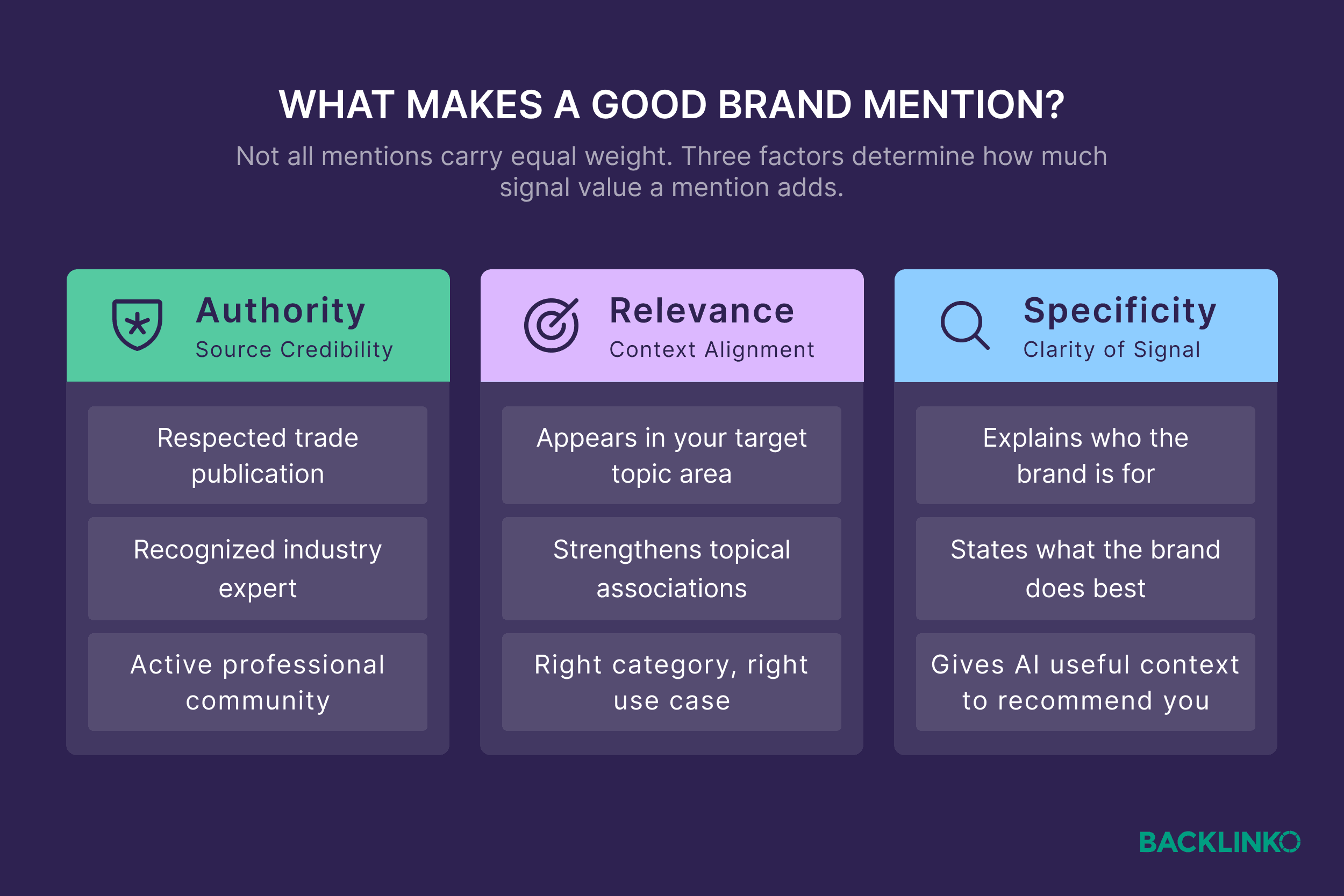
Not all mentions are created equal. Search engines weigh them based on three primary factors:
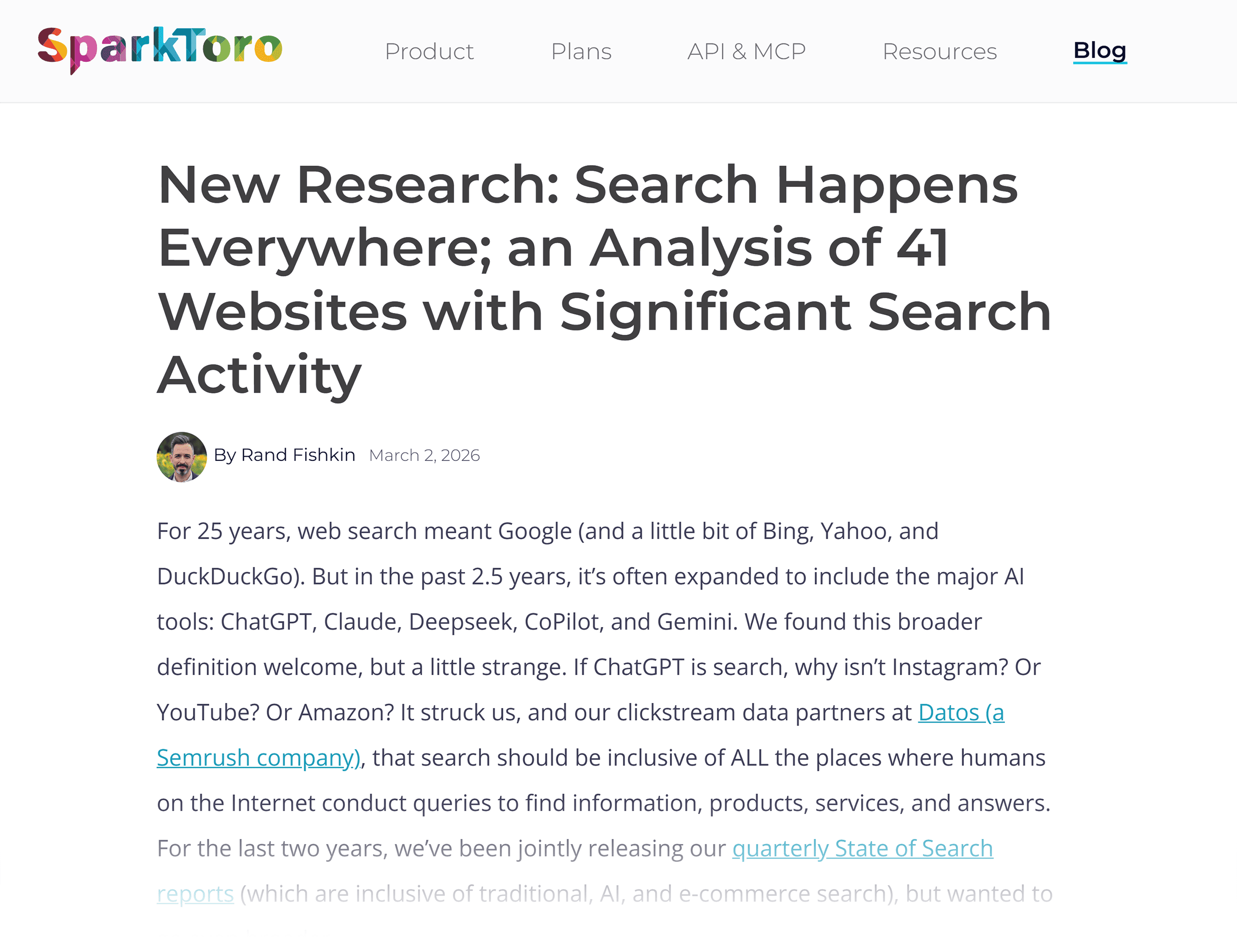
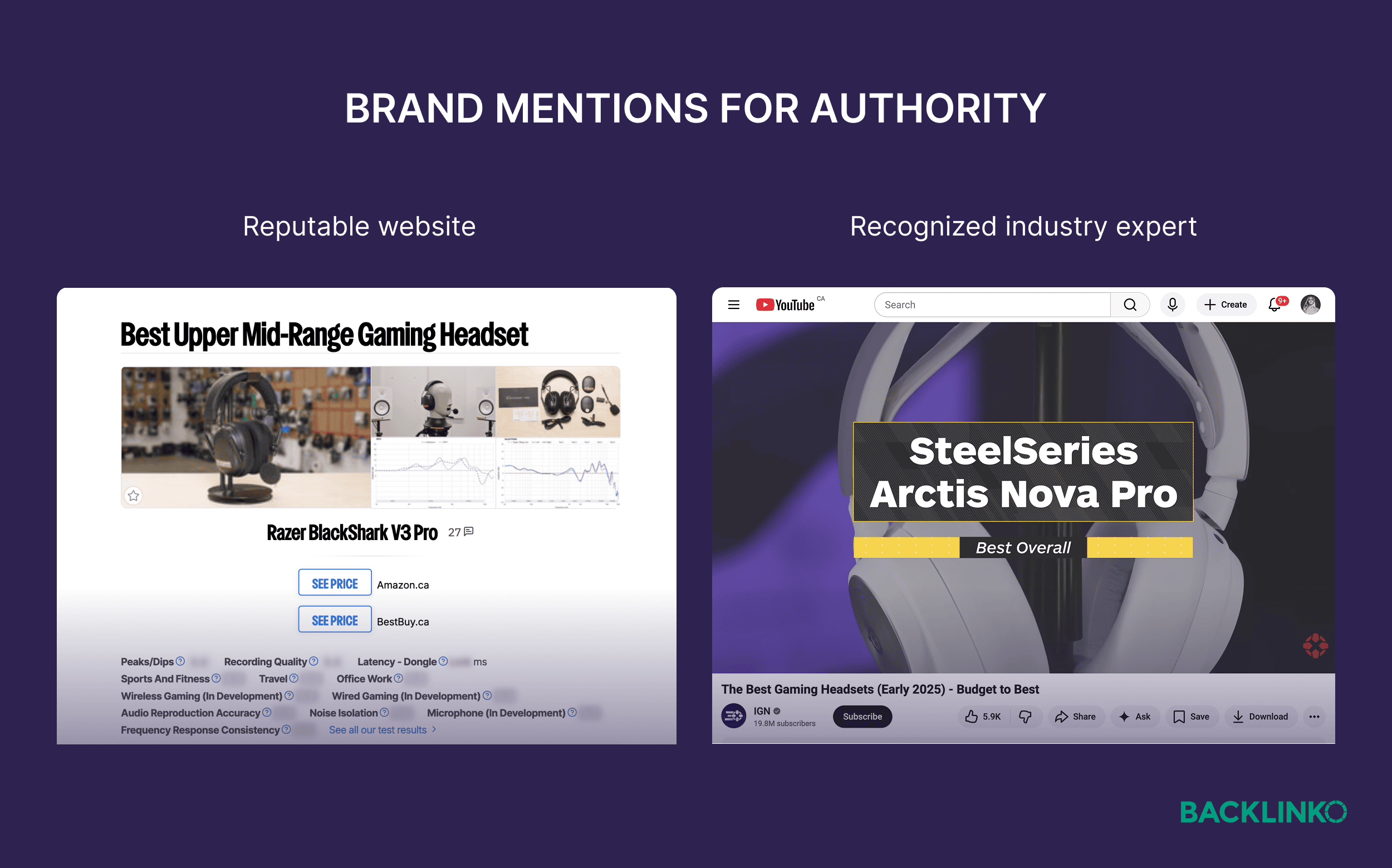
- Authority: A mention from a top-tier publication (e.g., The New York Times) carries significantly more weight than a mention on an obscure, low-traffic blog. Authority signals to the algorithm that your brand is vetted by the "gatekeepers" of the web.
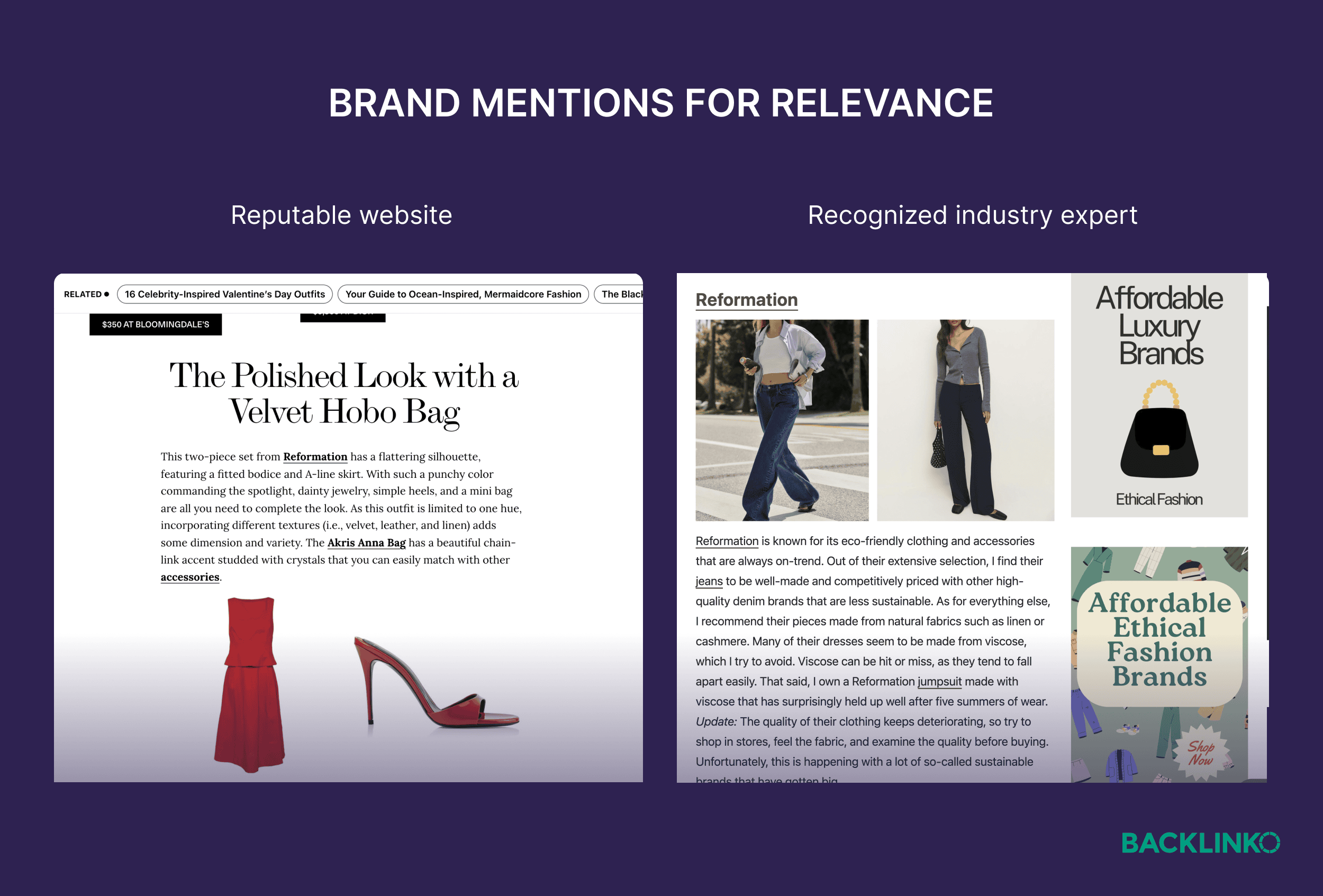
- Relevance: Context is king. If you are a fashion brand, a mention in a sustainability report or a style guide is powerful. A mention on an unrelated site about automotive parts is essentially "noise" to the algorithm.
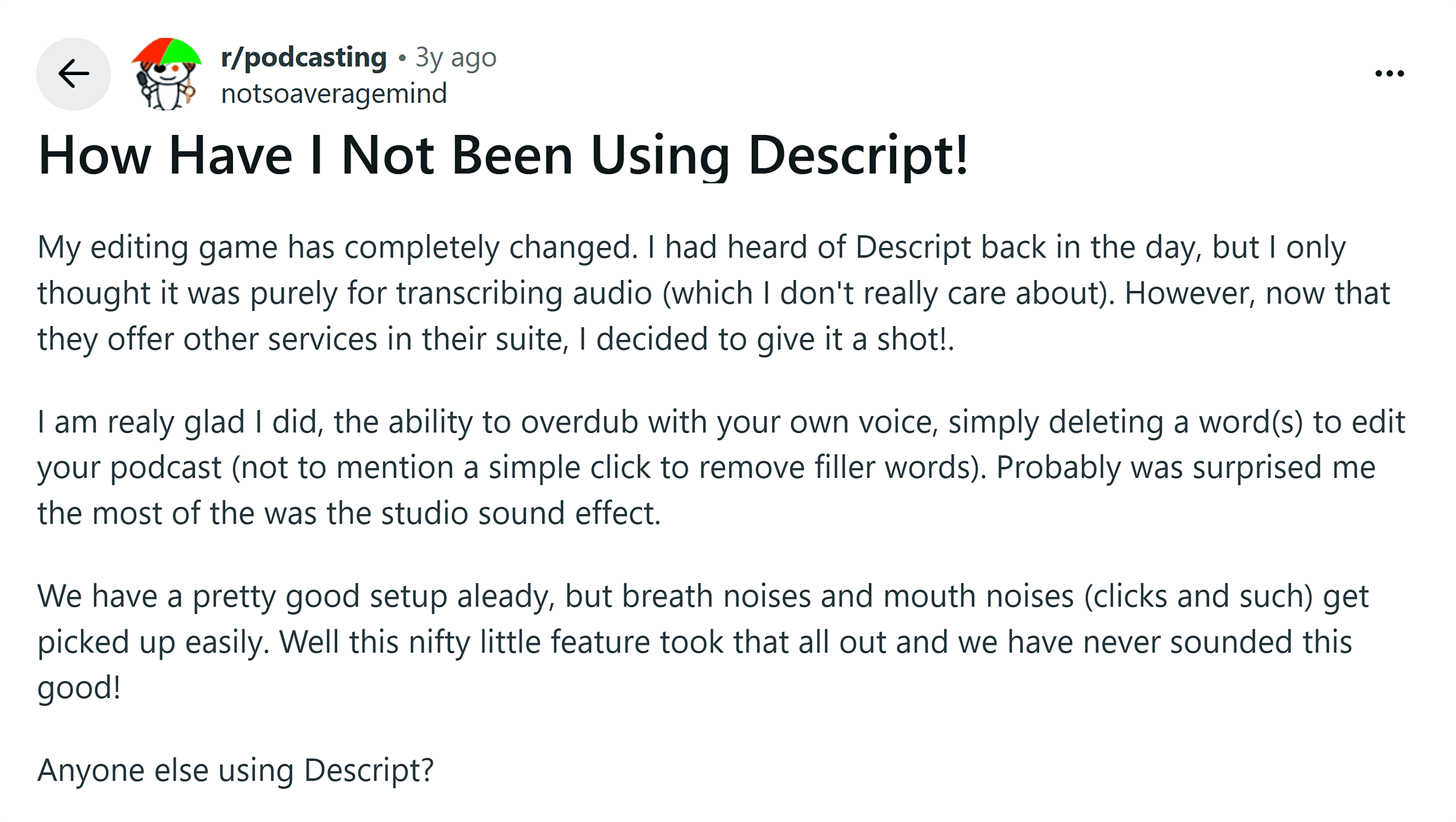
- Specificity: The best mentions are descriptive. A mention that says "Descript is a great video editor" is okay. A mention that says "Descript’s AI-powered transcript editing saved me three hours on my last documentary project" is transformative. It gives the AI specific use cases to associate with your brand.
4 Tactics to Earn Valuable Brand Mentions
1. Create Data-Driven, Citable Content
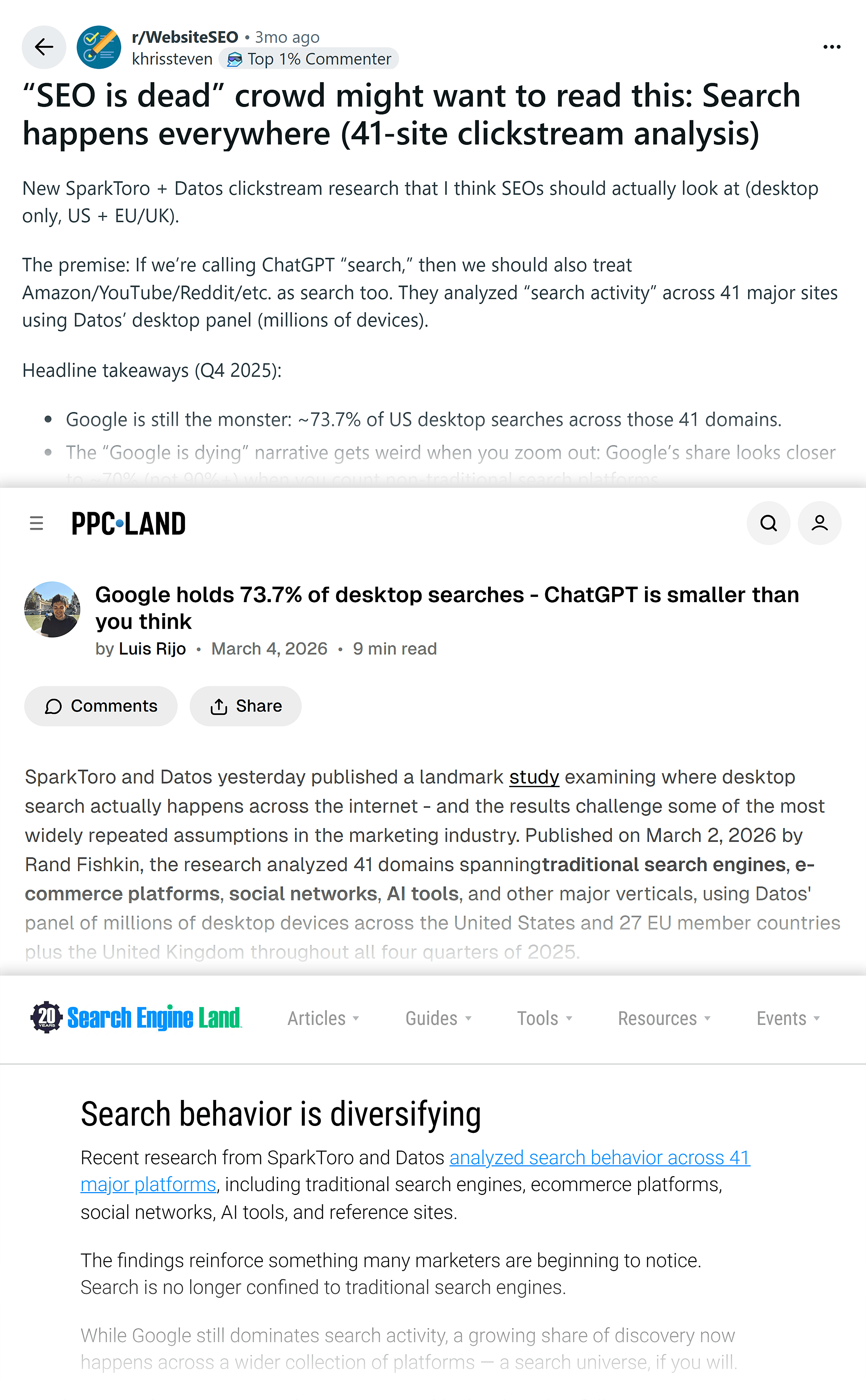
Original research is the most reliable way to force the web to cite your brand. When you publish a report that answers a burning industry question—one that currently lacks empirical data—you become the primary source.
Strategy:
- Identify the gap: Use Reddit and Slack communities to find questions people are debating but failing to answer with data.
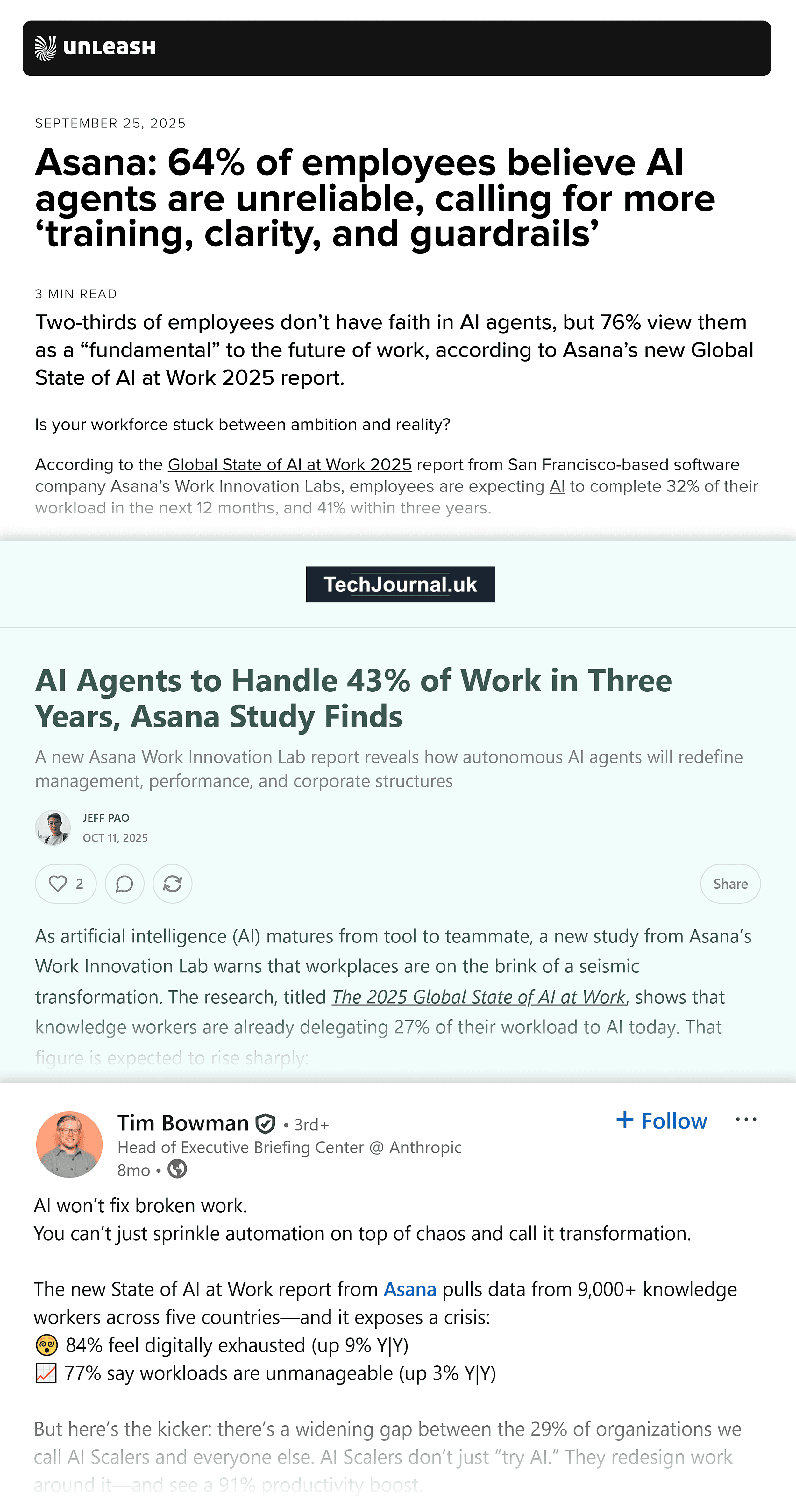
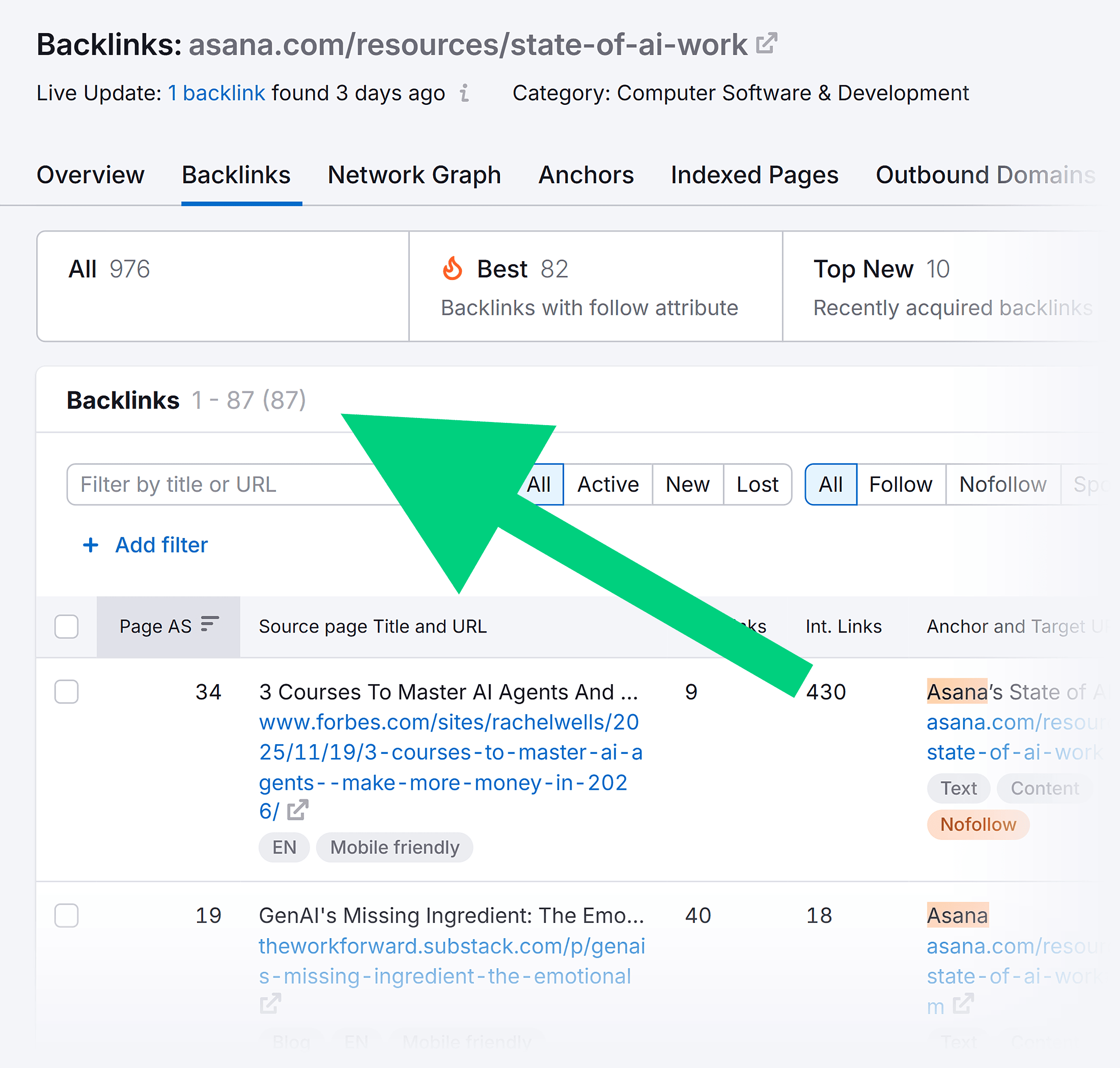
- Package it well: Asana’s "State of AI at Work" report is a masterclass in this. They used clear visuals, executive summaries, and downloadable PDFs, making it effortless for journalists to grab a chart or a stat and link back to the source.
2. Partner with Complementary Brands
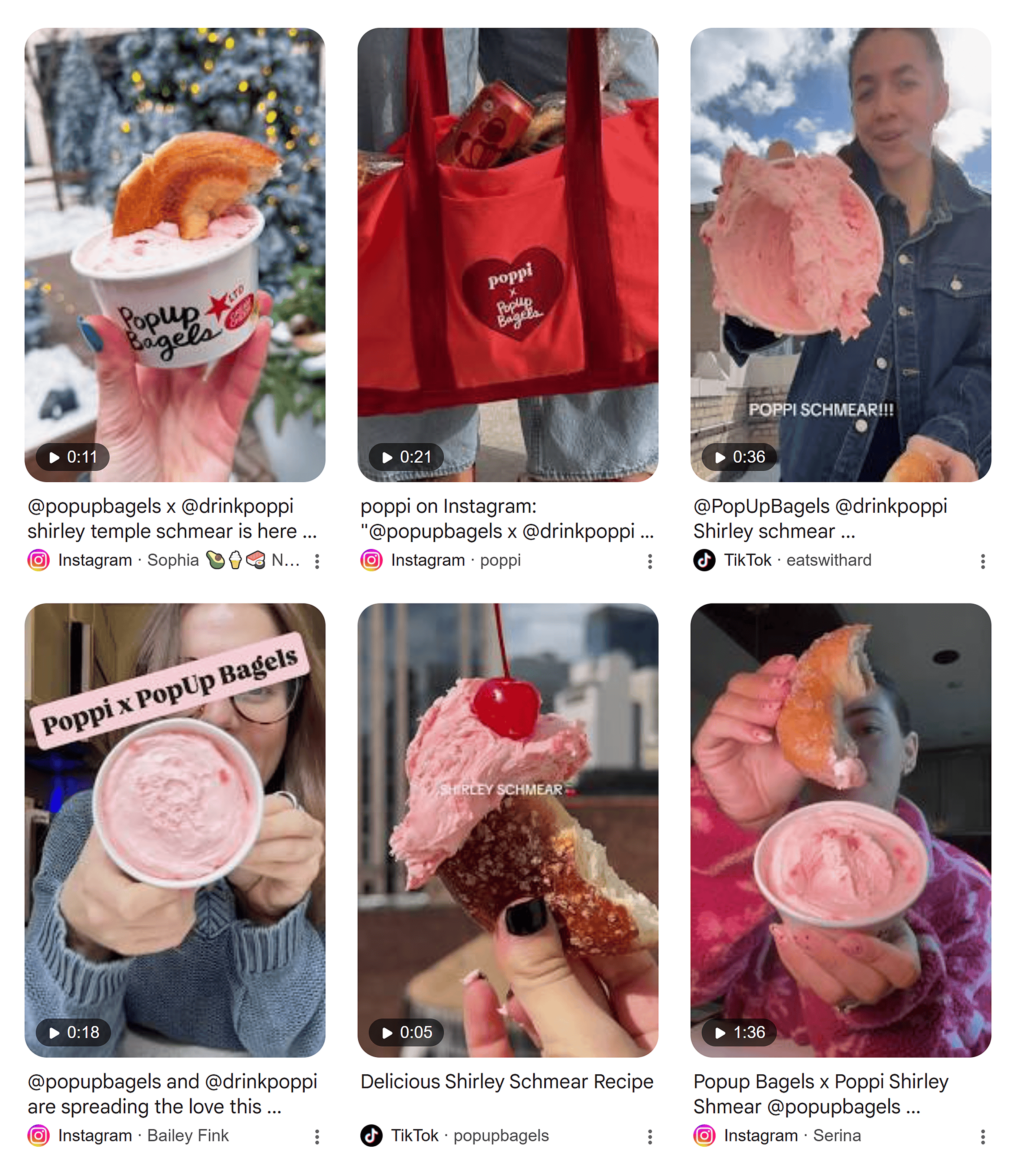
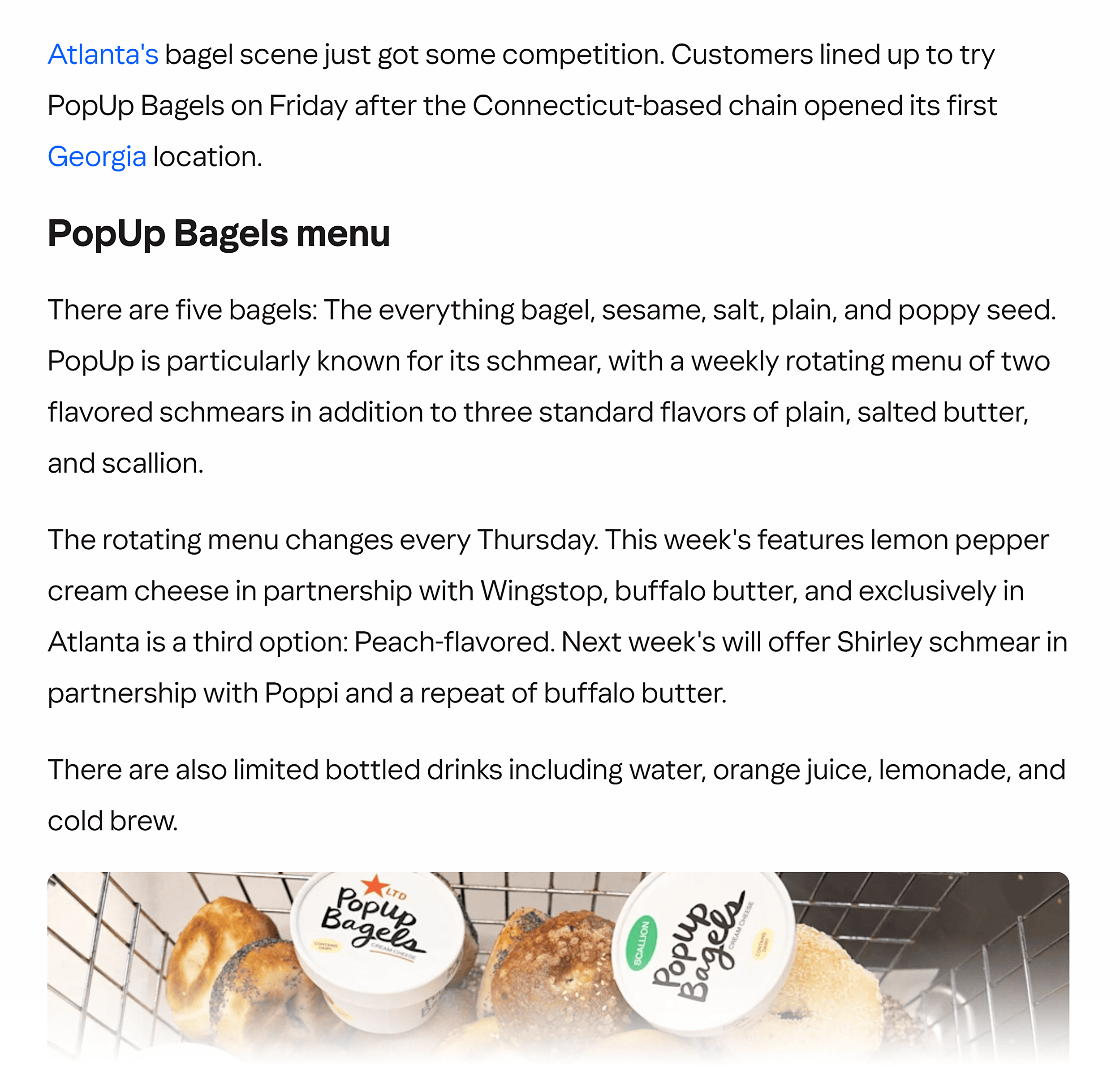
Co-branded campaigns create "co-occurrence." When your brand is consistently mentioned in the same sentence as another trusted, relevant brand, the AI begins to associate you with that brand’s authority.
Strategy:
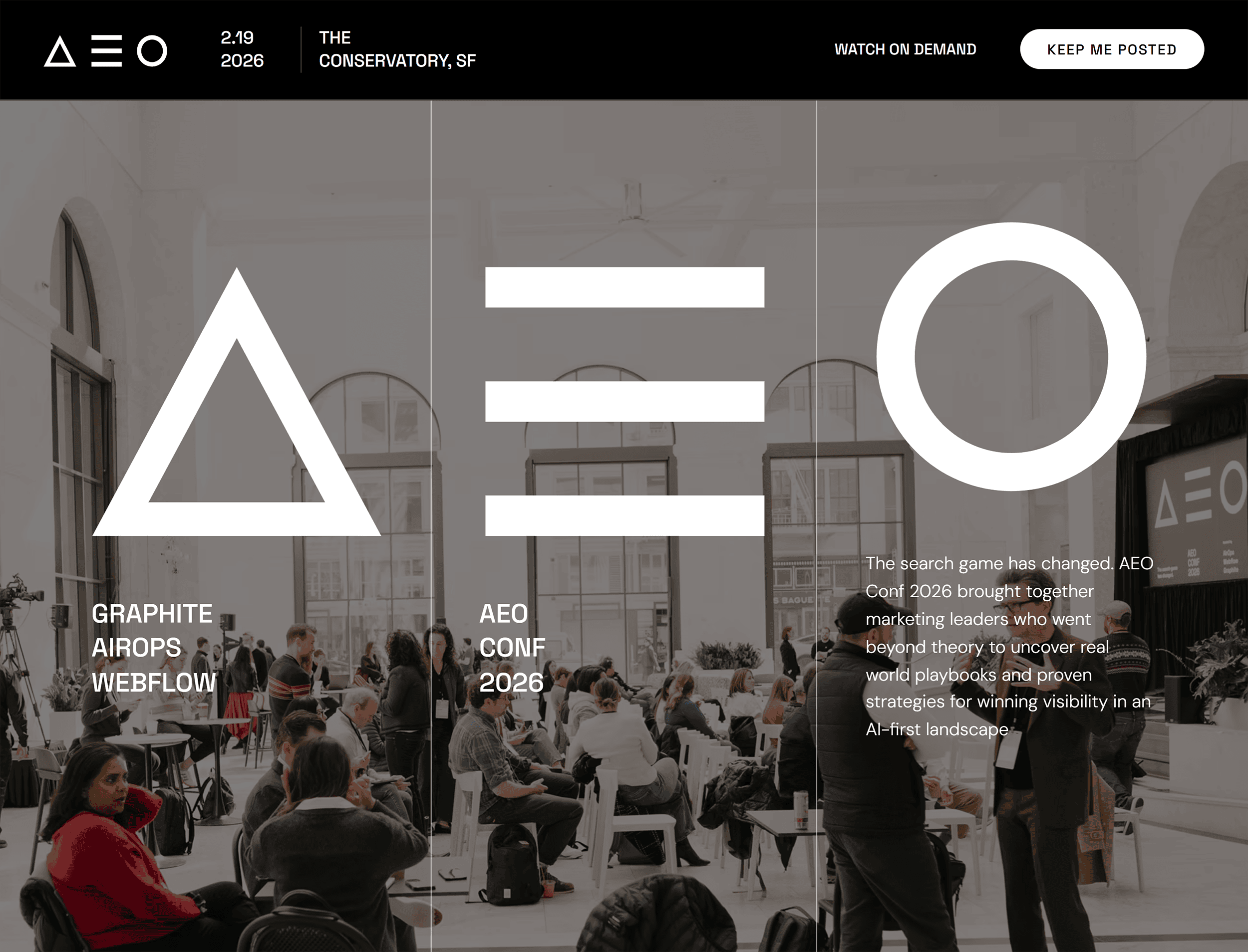
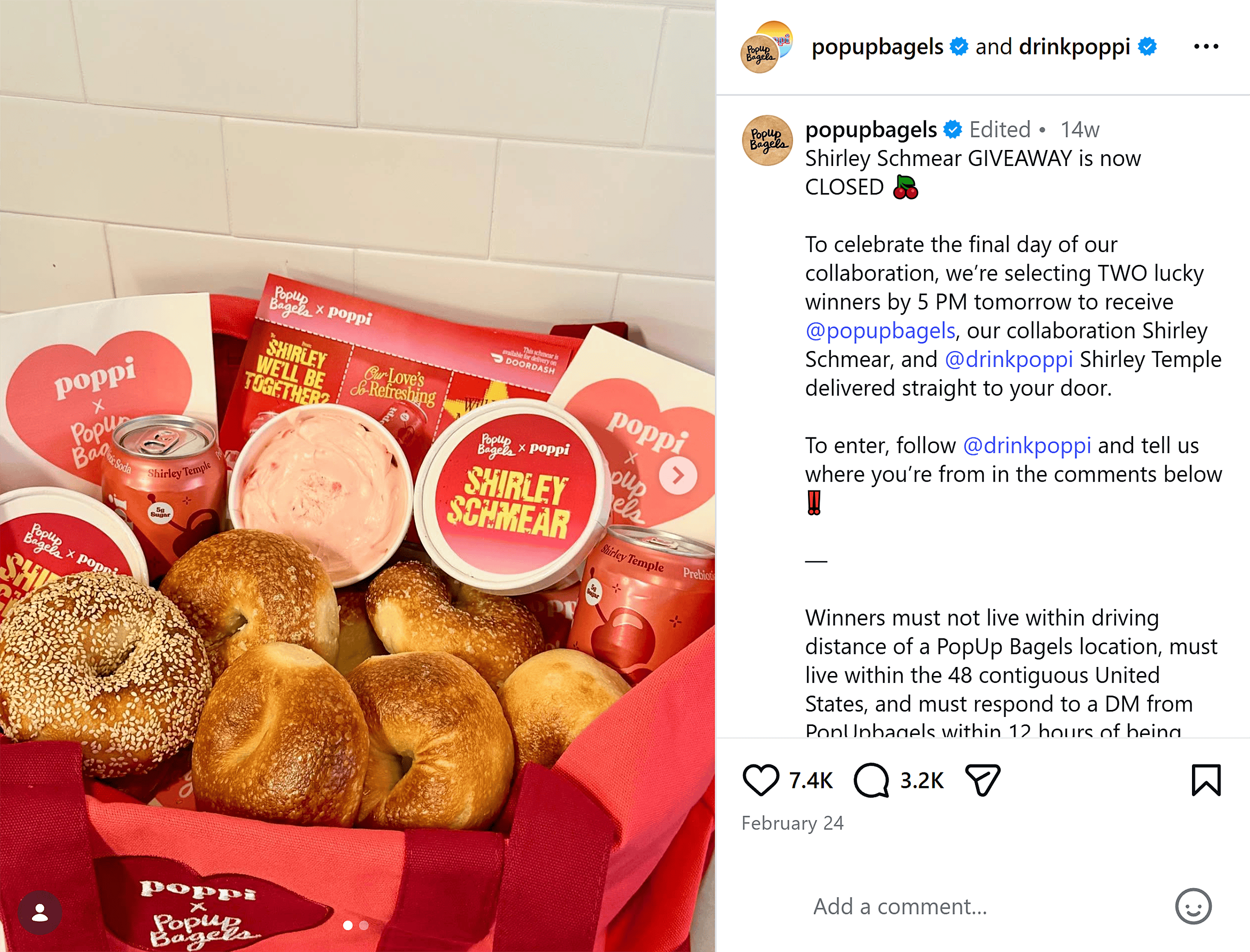
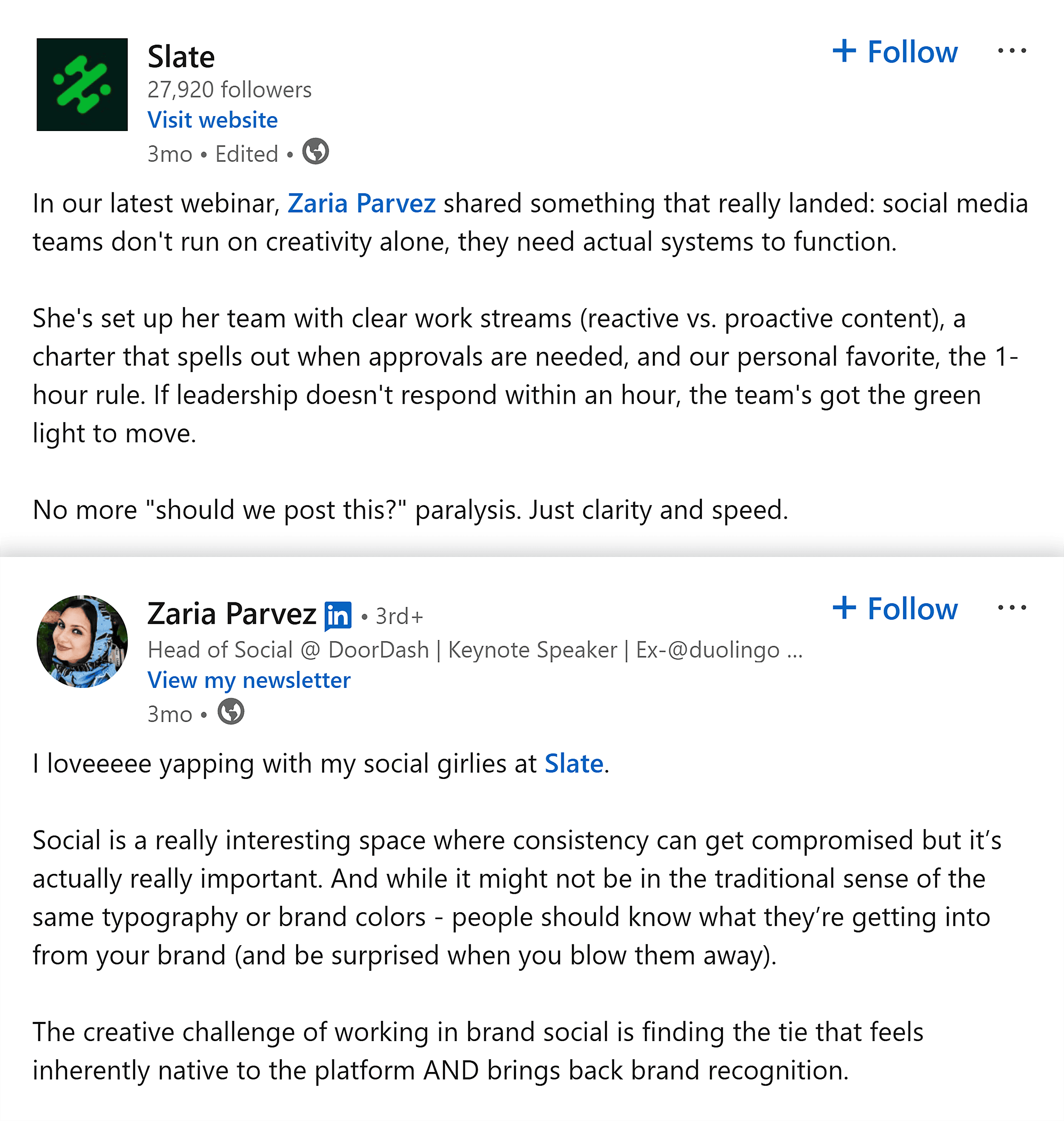
- Co-created assets: Host webinars, write white papers, or run giveaways with partners who serve your audience but aren’t direct competitors.
- The "Tag" Effect: By co-hosting a giveaway, you ensure that every social media post tags both brands, multiplying your reach and creating a dense web of social signals.
3. Feature Experts in Your Content
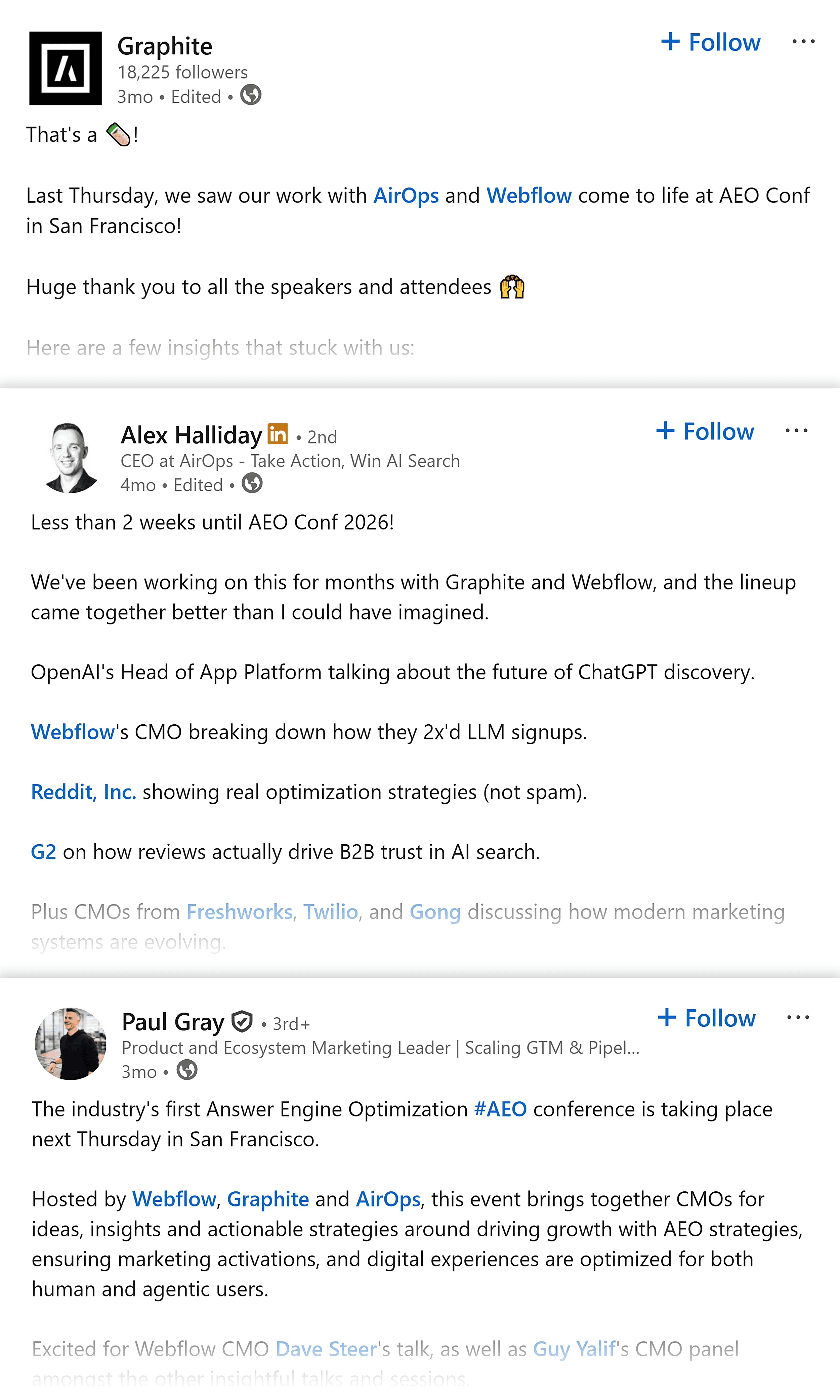
When you build a piece of content around an expert—such as an interview or an expert roundup—that person has a vested interest in sharing it.
Strategy:
- Go beyond the quote: Don’t just ask for a one-line blurb. Interview them in a way that allows them to showcase their expertise. When they share your content with their followers, you are effectively "borrowing" their reputation.
- Podcast guesting: Podcasts like Klue’s "Coffee and Compete" feature guests who are experts in their own right. By framing the episode around the guest’s expertise, the guest inevitably shares the content, providing a high-value mention for the host brand.
4. Contribute Expertise via Digital PR
Don’t just wait for people to find you; go where your audience already is.
Strategy:
- Identify the "watercoolers": Map out the podcasts, newsletters, and YouTube channels your target audience consumes.
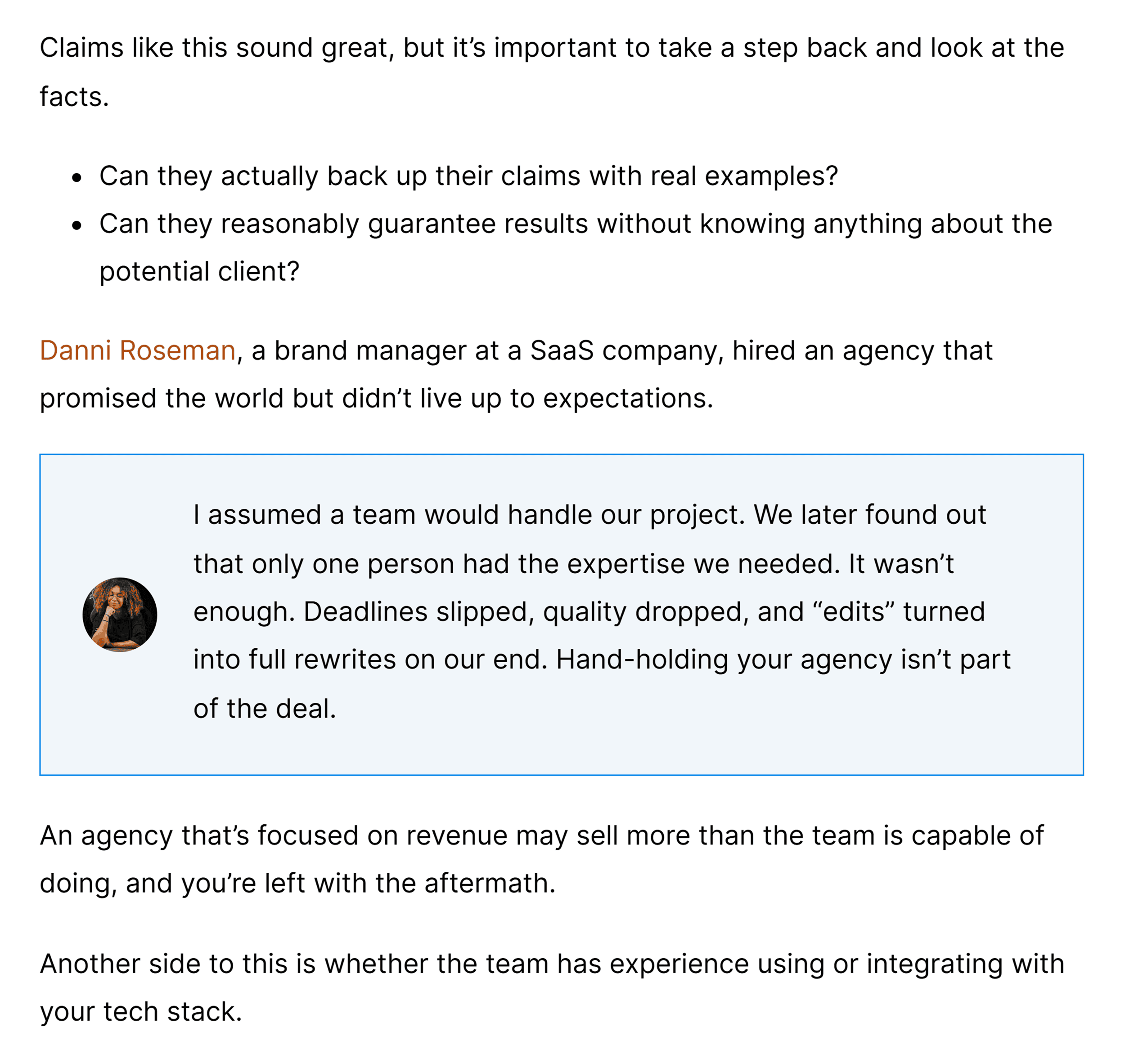
- Pitch value, not product: When reaching out to a host or editor, offer a "practitioner playbook." If you are a SaaS CEO, don’t pitch your software; pitch a specific, actionable lesson on how you solved a scaling problem. This type of high-level expertise is highly sought after by editors and makes a brand mention feel organic rather than promotional.
How to Track and Report on Brand Mentions
To demonstrate ROI to your leadership team, you must move beyond vanity metrics.
Tracking Tools
- Google Alerts: Free and simple. Use it for your brand name and key executives. It’s best for tracking immediate mentions.
- Social Listening (Semrush/Brandwatch): These tools provide sentiment analysis. Reporting that your brand is mentioned 500 times is good; reporting that it is mentioned 500 times with a 90% positive sentiment is a business-critical insight.
- Backlink Analytics: Use these to filter for your brand name in anchor text. This helps you understand which external sites are explicitly connecting their audience to your product.
Reporting for Leadership
When reporting to stakeholders, avoid dumping raw data. Instead, tell a story:
- Focus on Trends: "Our brand mentions grew 15% this quarter, largely driven by our new data report on X."
- Highlight Authority: "We secured a mention in Forbes, which has a monthly reach of 10 million, effectively putting our brand in front of our core demographic."
- Connect to Sentiment: "Our sentiment analysis shows that the recent influencer campaign has shifted public perception of our product from ‘expensive’ to ‘premium.’"
Conclusion: The Long Game
In the modern search environment, you are only as big as your digital footprint. By systematically earning brand mentions through research, partnerships, and expert-led PR, you aren’t just improving your SEO rankings—you are building an entity that search engines and AI models are programmed to trust. Start small, focus on the sources your audience actually respects, and turn your brand into an entity that is simply impossible to ignore.


 Ammar Sabilarrohman
 Sagoh

 Reynand Wu
 Iffa Jayyana

 Azzam Bilal Chamdy
 Suro Senen
