Raul Delapena Setiawan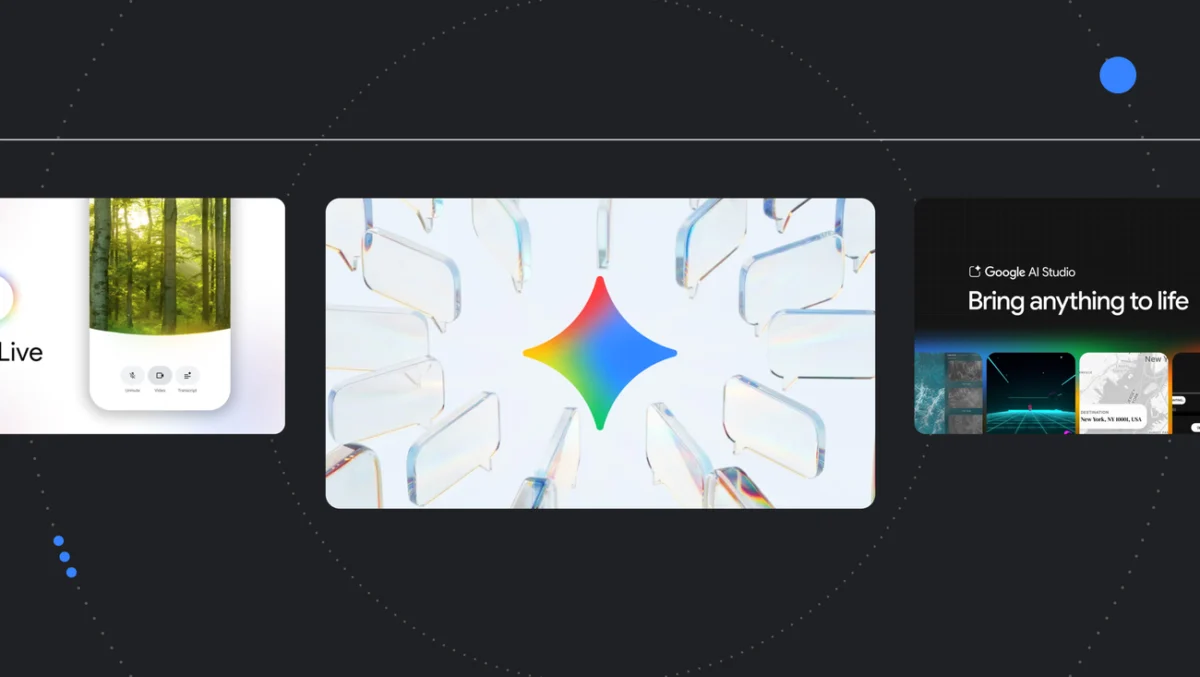
For over two decades, Google has been at the vanguard of machine learning and artificial intelligence research. By investing heavily in foundational infrastructure, the company has consistently sought to translate abstract computational power into tangible, everyday utility. As of March 2026, that mission has entered a new phase: moving from AI as an experimental tool to AI as a proactive, deeply integrated partner in human productivity, creativity, and well-being.
This article provides an in-depth analysis of the major breakthroughs announced by Google throughout March 2026, examining the technological leaps in model efficiency, the expansion of user-facing features, and the broader implications for the digital landscape.
Main Facts: The New Proactive Paradigm
The central theme of Google’s March announcements was "contextual intelligence." The objective is no longer just for AI to answer queries, but to understand the user’s environment, history, and intent. By leveraging personal context—ranging from travel schedules and work projects to individual shopping preferences—Google’s Gemini ecosystem is evolving into a proactive helper.

Key highlights include:
- Global Expansion of Search Live: Now available in over 200 countries, enabling real-time, multi-modal interaction.
- Gemini Workspace Integration: Advanced synthesis of data across Docs, Sheets, Slides, and Drive for enterprise and Pro users.
- Personal Intelligence: A secure, opt-in layer that bridges the gap between private data (Gmail, Photos) and AI reasoning.
- Infrastructure Efficiency: The introduction of Gemini 3.1 Flash-Lite, designed for high-performance, cost-effective scaling.
Chronology of Innovation: A Month in Review
Early March: Search and Creative Workspaces
The month began with a significant push to make "Search" a more dynamic, hands-on environment. The global rollout of Search Live in over 200 territories marked a major milestone, allowing users to tap the "Live" icon to initiate fluid, back-and-forth dialogue using voice or camera feeds.
Simultaneously, the "Canvas" feature in AI Mode was expanded across the United States. By providing a dedicated workspace for long-term project organization, Google signaled a shift away from ephemeral chat-based interactions toward persistent, project-based AI collaboration. Whether users were drafting creative documents or debugging complex code, the environment was designed to handle sustained workflows.

Mid-March: Personalization and Migration
By the second week of the month, the focus shifted to "Personal Intelligence." Google addressed a critical friction point for users: the barrier to entry. New tools were introduced to allow users to migrate their chat histories and context from other AI platforms directly into Gemini. This "portability of intelligence" ensures that a user’s accumulated preferences and historical context are not lost when switching to a more capable assistant, effectively lowering the cost of switching for power users.
Late March: Health, Hardware, and Scientific Legacy
The latter half of the month was characterized by the "Check Up 2026" event. Google announced a $10 million funding initiative aimed at clinical education in the AI era. This was coupled with significant updates to the Fitbit ecosystem, which now includes a personal health coach in Public Preview, capable of synthesizing medical records, sleep patterns, and real-time physical metrics to provide personalized wellness advice.
Finally, the company closed the month by looking back at the 10th anniversary of AlphaGo. This retrospective served as a reminder that today’s consumer AI is built upon a decade of breakthroughs in reinforcement learning, which originally solved the "protein folding" problem via AlphaFold and is now foundational to the latest Gemini iterations.

Supporting Data and Technical Breakthroughs
The Gemini 3.1 Architecture
A critical piece of the March news cycle was the debut of the Gemini 3.1 model family. The release of Gemini 3.1 Flash-Lite represents a shift toward "frugal intelligence." By optimizing the model to handle heavy workloads with lower latency and higher cost-efficiency, Google is enabling developers to build real-time, responsive applications that were previously prohibitively expensive to run at scale.
Conversely, Gemini 3.1 Flash Live stands as the company’s most advanced audio-processing model. By minimizing lag and increasing precision, this model serves as the engine for Search Live and Gemini Live, creating a conversational experience that feels increasingly indistinguishable from human-to-human interaction.
Google AI Studio and "Vibe Coding"
For developers, the launch of the "Google Antigravity" coding agent within Google AI Studio has been the most transformative update. This agent allows for "full-stack vibe coding," where users can build multiplayer experiences, connect to databases, and integrate external services simply by describing them. By securely managing API keys and maintaining a deep understanding of project state, the agent allows for rapid iteration that drastically reduces the "time-to-app" for developers.

Official Responses and Strategic Vision
In various briefings throughout the month, Google executives emphasized that the focus is on "responsible helpfulness." Regarding the expansion of Personal Intelligence, the company reiterated that data privacy remains a cornerstone of the design. Users are given explicit control over which apps—such as Gmail, Drive, or Photos—are connected to their AI, with the ability to revoke permissions at any time.
Regarding the healthcare initiatives, Google stated: "Our goal is not to replace the clinician, but to provide them with a digital co-pilot that can synthesize thousands of pages of medical literature and patient history in seconds, allowing the doctor to focus on the human element of care."
Implications: The Shift to a Proactive Future
The March 2026 updates signify a fundamental shift in the relationship between humans and their devices.

1. The Death of the "Passive Search"
With the integration of Search Live and the new Maps features (such as Ask Maps, which can handle complex, multi-layered queries), the concept of a "search engine" as a list of links is effectively obsolete. Users now expect an AI to act as a concierge that not only retrieves information but takes action—such as booking a reservation or navigating a complex route with real-world imagery.
2. Productivity as a Synthesis Engine
The updates to Docs, Sheets, and Slides show that the future of productivity lies in cross-application synthesis. By allowing Gemini to "connect the dots" across a user’s entire digital footprint, Google is moving away from the era of manual data entry and toward an era of automated insight generation.
3. The Democratization of Development
The "vibe coding" experience in AI Studio has profound implications for the software industry. By lowering the barrier to entry for building production-ready apps, Google is inviting a new wave of creators who may not have formal computer science backgrounds but possess the domain expertise to solve specific problems.

4. Scientific Acceleration
The reflection on the 10-year anniversary of AlphaGo serves as a bridge to the future. As AI models become more capable of navigating the complexities of the physical world—as seen in the latest health-tracking tools and protein-folding research—the potential for AI to solve "hard" problems in medicine, climate, and energy is expanding exponentially.
Conclusion
March 2026 will likely be remembered as the month Google solidified the "Proactive Partner" model of AI. By integrating these tools into the fabric of the browser, the smartphone, the wearable, and the development environment, the company has created an ecosystem where AI is no longer a destination, but a ubiquitous, helpful layer of the digital experience. As these technologies continue to evolve, the challenge for both Google and its users will be to balance this newfound convenience with the ongoing necessity of privacy, security, and human-centric design.

 Lina Hope
 Reynand Wu
 Nila Kartika Wati
 Jia Lissa
 Basiran
 Sagoh
Sagoh