Lina Hope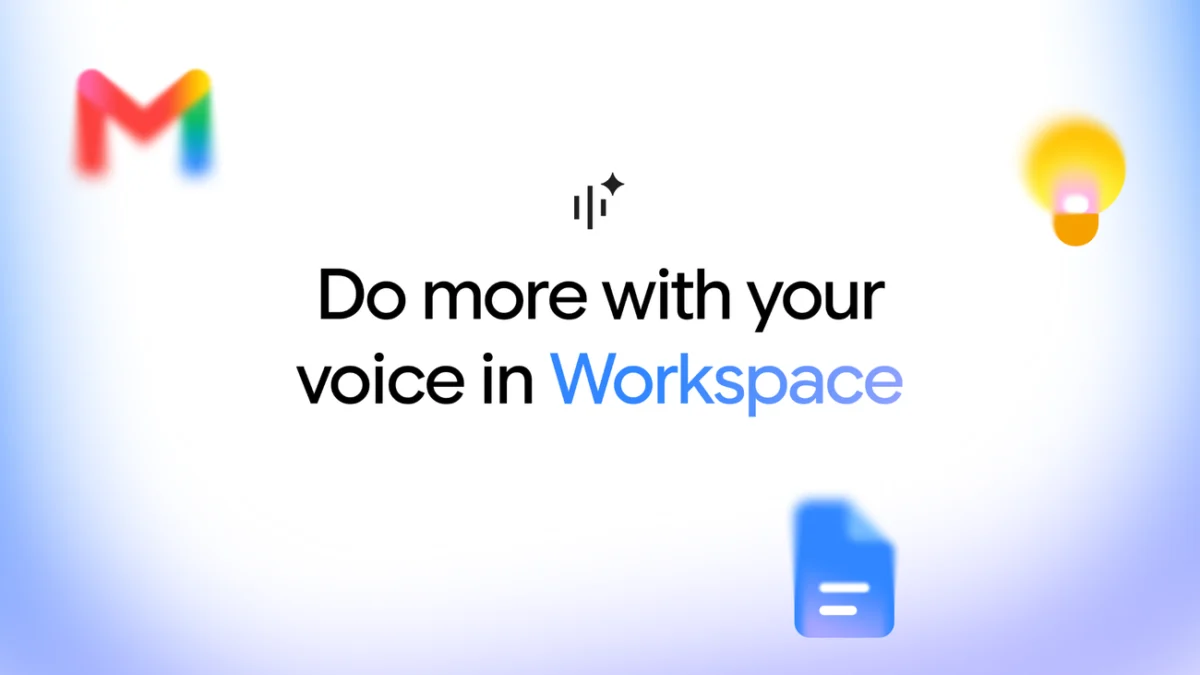
As the digital landscape pivots toward more intuitive human-computer interaction, Google has announced a significant leap forward in its productivity suite. The tech giant is officially rolling out advanced Gemini-powered voice capabilities across Gmail, Google Docs, and Google Keep. This integration, which builds upon technology first teased at the Google I/O developer conference, marks a definitive shift from traditional manual input to conversational, hands-free workflows. By leveraging sophisticated audio models, Google aims to reduce the friction of daily administrative tasks, allowing users to interact with their digital environments as naturally as they would with a human assistant.
The Evolution of Productivity: Main Facts and Functionality
The core of this update lies in the "Live" suite of features: Gmail Live, Docs Live, and Keep Live. These tools are designed to move beyond simple dictation, which has long been a staple of mobile technology, and enter the realm of context-aware, generative collaboration.
Gmail Live: The End of Inbox Fatigue
For most professionals, the inbox is a graveyard of unread threads and buried information. Gmail Live addresses this by transforming the inbox into a query-based database. Users can ask natural-language questions—such as "What is my flight’s gate number?" or "What are the key takeaways from the meeting materials sent by the project manager yesterday?"—and the system will parse through emails, attachments, and threads to provide an immediate, synthesized answer. This eliminates the need for manual keyword searches and repetitive scrolling.
Docs Live: Your AI-Driven Co-Author
Docs Live is arguably the most transformative of the three, positioning itself as a "thought partner." Rather than staring at a blank cursor, users can initiate a brainstorming session via voice. The AI captures the user’s stream of consciousness, structures it into logical outlines, and—with explicit user permission—integrates data from across the Workspace ecosystem, including Drive, Chat, and even real-time web research. It is designed to refine tone, organize complex arguments, and generate initial drafts, effectively collapsing the time between the "idea" phase and the "execution" phase.
Keep Live: Transforming Brain Dumps into Action
Google Keep has historically been a repository for fragmented notes. Keep Live elevates this utility by acting as an intelligent organizer. Users can dictate "brain dumps"—rambling thoughts, grocery lists, or meeting reminders—and the model will automatically categorize, format, and structure these inputs into actionable lists or organized notes, removing the need for post-dictation editing.
A Chronology of Integration: From Concept to Rollout
The trajectory of this technology highlights Google’s strategic emphasis on generative AI as the backbone of its software ecosystem.
- Early 2024 (Pre-I/O): Google internal teams focused on optimizing Gemini’s audio latency, ensuring that the time between a user’s spoken command and the AI’s response is near-instantaneous.
- Google I/O Conference: Google provided the first public preview of Gemini Audio models within the Workspace environment. The demonstration focused on the ability of the model to maintain context across multiple turns of a conversation.
- Mid-2024 (Beta Testing): A closed circle of power users and enterprise partners tested the voice-activated features, focusing on privacy, noise cancellation in varied environments, and accuracy across diverse dialects and accents.
- September 2024 (Current Launch): The official rollout begins for Google AI Plus, Pro, and Ultra subscribers. This phased approach allows Google to scale infrastructure while gathering performance data.
- Late 2024 (Projected): Expansion to all Google Workspace business customers is scheduled, ensuring that organizations of all sizes can leverage these productivity tools.
The Data Behind the Voice: Why Context Matters
The power of these new tools is not just in speech-to-text accuracy—which has been a solved problem for years—but in contextual grounding. According to industry research, the average knowledge worker spends nearly 20% of their week searching for internal information or tracking down status updates.
By integrating Gemini, which has a massive "context window," Google is allowing these tools to look at the "big picture" of a user’s digital footprint. In a test environment, Docs Live demonstrated a 40% reduction in the time required to create a project brief, simply by being able to pull relevant data from a user’s previous emails and Drive documents without the user having to switch tabs or copy-paste information. The model doesn’t just "hear" the words; it "understands" the intent behind the request, connecting disparate data points into a coherent output.
Official Perspectives: The Vision from the Top
Yulie Kwon Kim, Vice President of Product for Google Workspace, has been the primary architect behind this transition. In a recent statement, she emphasized that the goal is to make technology feel less like a tool and more like an extension of the user’s cognitive process.

"We aren’t just adding a voice button to these apps," Kim noted. "We are reimagining the interface. The most efficient way to communicate is through conversation. By bringing Gemini’s reasoning capabilities into the audio layer, we are allowing people to focus on the ‘what’ of their work rather than the ‘how’ of navigating menus and search bars."
Google’s engineering team has also emphasized the security implications of these features. Because voice data is being processed through Gemini, Google has implemented rigorous data-privacy standards, ensuring that voice snippets are handled in accordance with the broader Google Workspace privacy policies, allowing users to opt out of training programs and ensuring that sensitive enterprise data is never leaked or used to train public-facing models.
Implications for the Future of Work
The introduction of voice-activated, generative productivity tools has far-reaching implications for both the individual user and the enterprise environment.
Accessibility and Inclusivity
Perhaps the most significant, though often overlooked, implication is the accessibility boost. For users with motor impairments or those who find traditional typing cumbersome, these tools provide an unprecedented level of agency. By removing the barrier of the keyboard, Google is making high-level document creation and data management accessible to a broader range of people.
The Shift in Professional Skillsets
As voice-activated AI becomes a standard fixture in the workplace, the professional skill set is evolving. The ability to articulate clear, structured instructions—effectively, "prompt engineering through voice"—is becoming a new form of literacy. Professionals who can master the art of directing an AI through conversational dialogue will likely see a significant productivity advantage over those who remain tethered to manual input methods.
The Challenge of "Voice-First" Environments
While the technology is impressive, it poses cultural challenges. Open-plan offices and shared workspaces may not be conducive to a "voice-first" workflow. Organizations will need to develop new etiquette for voice-activated computing, perhaps relying on noise-canceling peripherals or designated "quiet zones" where voice-driven brainstorming can occur without disrupting colleagues.
Long-Term Strategic Outlook
For Google, this is a defensive and offensive play. As competitors like Microsoft (with Copilot) and startups (like Notion or Perplexity) race to integrate AI into the daily stack, Google is doubling down on the "Workspace ecosystem" advantage. By keeping the AI within the suite, Google creates a "walled garden" of efficiency where the user never needs to leave the browser to get work done.
Conclusion
The rollout of Gemini-powered audio features in Gmail, Docs, and Keep is more than just a convenient upgrade—it is a fundamental shift in how we approach our digital labor. By successfully integrating real-time, context-aware audio processing into the tools we use every day, Google is setting a new benchmark for what it means to be a "digital assistant." As these tools move from early adoption to widespread business integration, the way we draft, search, and organize will likely never be the same. The future of work is not just mobile; it is conversational, intuitive, and, most importantly, hands-free.

 Reynand Wu
 Basiran
 Nila Kartika Wati
 Jia Lissa

 Sagoh
Sagoh