
 Nana Muazin
In the history of innovation, there is a recurring psychological pattern: when a disruptive technology emerges, the collective response is rarely one of curiosity, but rather one of skepticism rooted in the constraints of the present. We are a species that judges the future by the limitations of the "now," a cognitive bias that has led industry titans, seasoned engineers, and casual observers alike to dismiss paradigm-shifting advancements before they have even had the chance to mature.
From the skeptics at Netflix who once doubted the viability of mobile cinema to the retail giants who insisted that high-ticket items would never be sold on small screens, the history of tech is littered with the ghosts of "impossible" predictions. As we stand at the precipice of the Artificial Intelligence revolution, the same patterns of denial are surfacing. To understand where we are going, we must first examine the chronic blindness that has defined our technological journey for the past four decades.
The Chronology of Skepticism: A History of "It Will Never Work"
The history of computing is essentially a timeline of people underestimating the trajectory of hardware and software capabilities.
The Era of Scarcity (1980s)
In the 1980s, the Commodore 64—a marvel of its time—was restricted by a mere 64 kilobytes of memory. Booting up programs was an exercise in patience, often requiring several minutes of anticipation. Adjusting for inflation, a functional personal computer system in that era could cost upwards of $4,000. Critics of the time frequently argued that the interface was too cumbersome and the hardware too weak to ever become a staple of professional work. They failed to account for Moore’s Law and the relentless march of semiconductor efficiency, which would eventually render today’s laptops infinitely more powerful for a fraction of the cost.
The Dial-Up Constraint (1990s)
When the early Web arrived, it was defined by the screech of dial-up modems and a "Web-safe" palette limited to 256 colors. Designers were forced to build page layouts using clunky table tags and font hacks. The prevailing wisdom among many "experts" was that the internet would remain a text-heavy, static medium—a glorified digital encyclopedia. They could not conceive of the high-definition streaming, interactive gaming, and real-time collaborative applications that now define our digital existence.
The Mobile Paradigm Shift (2000s)
The launch of the original iPhone is perhaps the most salient example of this bias. At its debut, the device was crippled by today’s standards: it operated on slow 2G networks, lacked copy-and-paste functionality, and offered no third-party app ecosystem. Critics famously mocked its lack of a physical keyboard and its "toy-like" constraints. Yet, within less than two decades, the mobile device has become the primary portal through which the human race experiences reality, rendering desktop-only thinking an obsolete relic of the past.
Supporting Data: The Velocity of Progress
The disconnect between current perception and future capability is almost always a failure to understand the exponential nature of technological growth.
The Visualization of Change
Looking at the evolution of hardware—specifically screen pixel density—the disparity between the original iPhone and the modern iPhone 18 Pro Max is staggering. This isn’t just an incremental improvement; it is a fundamental transformation of the medium. When we look at software, the trajectory is even steeper.
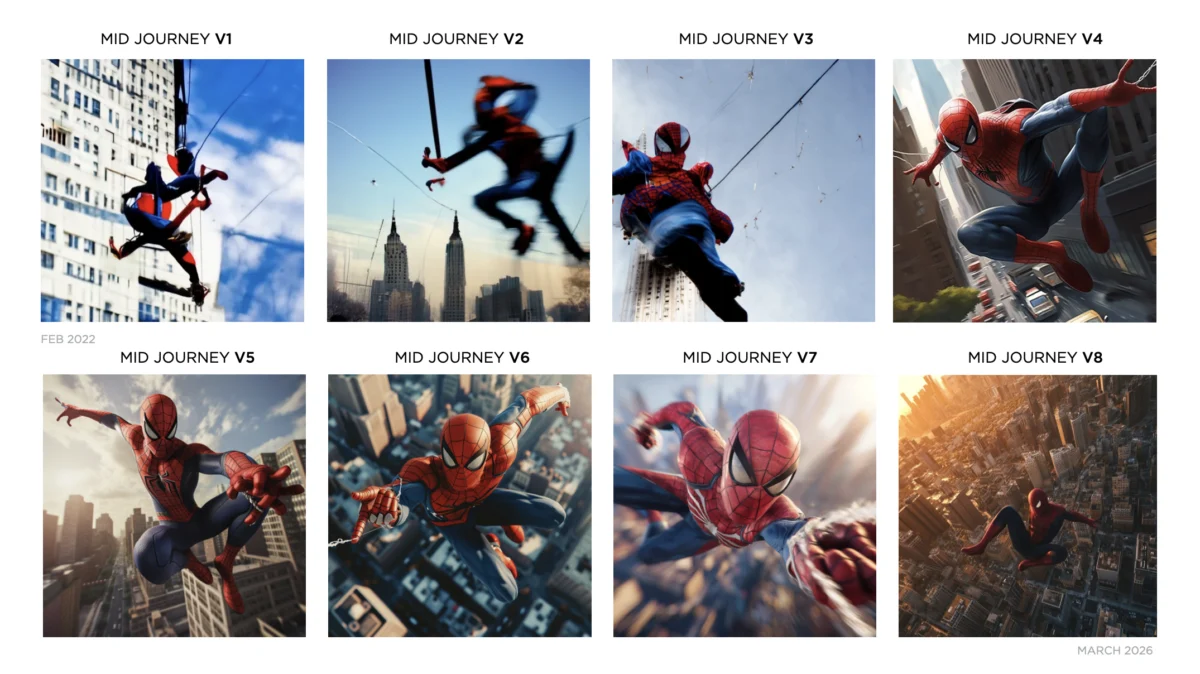
Consider the recent data from image generation models like Midjourney. In just four years, the capability of these models has shifted from generating grainy, incoherent approximations of human subjects to creating photorealistic, high-fidelity imagery that often passes the Turing test for artistic expression. This velocity of improvement is not a linear trend; it is a curve that steepens with every passing month.
Economic and Infrastructure Shifts
The infrastructure that supports these technologies—fiber optics, 5G/6G, cloud computing, and GPU acceleration—has consistently outpaced the requirements of the software being built upon it. The "bottleneck" is rarely the technology itself; the bottleneck is the human imagination, which remains anchored to the constraints of the hardware from three to five years ago.

Official Responses and Industry Sentiment
The internal discourse within tech giants reveals a profound shift in tone. Years ago, when designers gave talks at companies like Netflix and eBay, the "official" stance was one of rigid protectionism. Executives argued that consumer behavior was fixed—that people had a "preferred" screen size or a "preferred" way of shopping that could not be disrupted by mobile interfaces.
Today, those same companies have completely pivoted. Netflix is now a mobile-first streaming powerhouse, and eBay has rebuilt its entire architecture around the mobile app experience. The "official" skepticism has been replaced by an aggressive scramble for integration.
However, a new wave of skepticism has emerged regarding Artificial Intelligence. Many industry leaders in the creative sectors—writers, illustrators, and developers—have spent the last two years vocalizing why AI "cannot" replace them. They point to the "hallucinations" of LLMs, the lack of "soul" in generative art, and the legal quagmires of copyright. While these are valid technical and ethical hurdles, they are essentially the same arguments used against the early internet and the first smartphones. They are temporary friction points, not fundamental roadblocks.
Implications: The High Cost of Denial
The danger of fixating on the current limitations of AI is that it breeds professional complacency. By focusing on what a model cannot do today, individuals and corporations fail to prepare for what it will be able to do tomorrow.
The Vulnerability of the Professional Class
Designers, writers, and developers who actively bet against the advancement of AI find themselves in a precarious position. The history of the last forty years suggests that when a technology crosses the threshold of "competent," it very quickly reaches the threshold of "transformative."
The implication is clear: we are facing a period of significant job disruption. Those who view AI as a static tool—a toy to be played with—will find their workflows bypassed by those who view AI as a foundational layer of their professional infrastructure.
Strategic Planning for an Exponential Future
If history is a reliable guide, the following principles should inform our strategy moving forward:
- Assume the "Impossible" is Temporary: If a task is currently impossible due to a technological limitation, treat it as a problem that will be solved in the near future.
- Focus on Capability, Not Current Constraints: Don’t build for the hardware or software of today. Build for the capabilities that will be standard in three years.
- Embrace the Shift in Value: As automation handles the "how" (the execution), the value of the human professional will shift entirely to the "why" (the strategy, the ethics, and the vision).
- Avoid the "Fixed Human Behavior" Trap: Never assume that consumer habits are immutable. Technology changes behavior far more effectively than behavior influences the trajectory of technology.
Conclusion: Planning for the Inevitable
The transition from the Commodore 64 to the MacBook Neo, from the 2G iPhone to the modern smartphone, and from the early Web to the era of AI, all share one common thread: the technological ceiling is constantly rising, while our predictions about that ceiling remain stubbornly low.
The skeptics who once argued that people wouldn’t watch movies on a phone were not "wrong" in the short term—they were simply short-sighted. They were looking at a snapshot in time rather than a moving picture. As we grapple with the implications of AI, we must learn from these past errors. Technology is not a static environment; it is an evolutionary force. If the last forty years are any indication, the only guarantee is that our current limitations are temporary. It is time to stop looking at the flaws of the present and start preparing for the capabilities of the future. The era of denial is over; the era of adaptation has already begun.


 Iffa Jayyana

 Ali Ikhwan

 Suro Senen

 Azzam Bilal Chamdy
 Asep Darmawan
 Nana Wu

 Nana

 Muslim
