
 Azzam Bilal Chamdy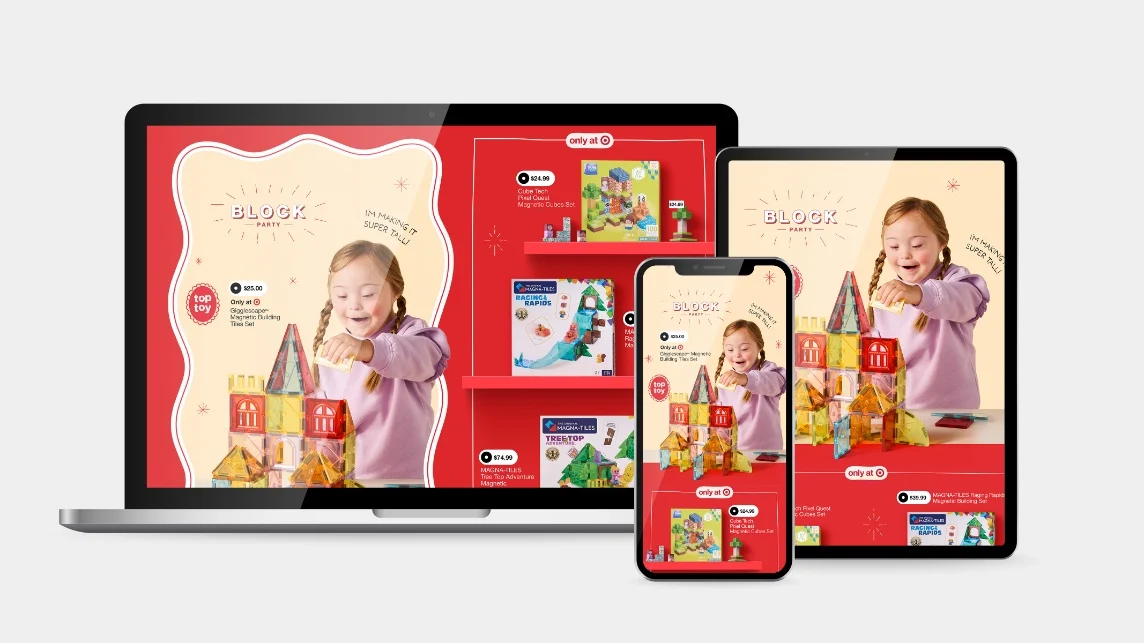
As the calendar turns toward the final quarter of the year, the battle for holiday dominance between the nation’s two most formidable retail titans—Target and Amazon—has officially commenced. On October 5, both retailers launched their respective holiday toy catalogs, signaling a strategic pivot toward hyper-personalized, tech-integrated shopping experiences. While both companies are vying for the same demographic of time-strapped parents and tech-savvy children, their approaches highlight a widening divide in how major retailers are leveraging artificial intelligence and digital interactivity to capture market share.
The Main Facts: A New Era of Interactive Gifting
Target’s strategy this year centers on its new interactive "Holiday Kids Catalog," a platform designed to bridge the gap between traditional print-based discovery and the speed of e-commerce. Available through Target’s website and mobile app, the digital catalog features nearly 500 toys, games, and gifts.
Unlike a static product grid, Target has transformed the catalog into a shoppable content platform. Users can interact with video demonstrations and influencer-style reviews, immediately adding items to their digital carts or wish lists. A standout feature for the 2026 season is the "list scanner," which allows parents to scan handwritten wish lists—traditionally the domain of the printed catalog—and instantly convert them into a digital shopping list within the Target app. This fusion of analog nostalgia and digital efficiency is a clear attempt to make the shopping process more collaborative for families.
Conversely, Amazon’s "Holiday Kids Gift Book" returns for its ninth consecutive year. With a selection exceeding 600 items, Amazon is doubling down on its ecosystem dominance by integrating its "Forest Friends" characters with Alexa-enabled devices. Through a partnership with Readyland, children can engage in a "choose-your-own-adventure" audio experience, turning the catalog into an interactive entertainment hub rather than a mere transactional tool.
Chronology of the 2026 Holiday Kickoff
The simultaneous release on October 5 was no coincidence. It marks the traditional "early bird" window for holiday retail, which has seen a shift in recent years toward earlier promotions to avoid supply chain bottlenecks and capitalize on early consumer spending.
- Pre-October 5: Both retailers spent the late summer months refining their AI-driven inventory management and logistics, ensuring that the "Fun101" category at Target and the "Top Toys" list at Amazon were primed for high-velocity shipping.
- October 5 (The Launch): Target unveiled its digital-first interactive catalog, while Amazon simultaneously dropped its gift book. Both releases were accompanied by aggressive marketing pushes across social media and influencer channels.
- Mid-October to Early November: Both companies are expected to roll out additional "Early Holiday" sales events, leveraging the data gathered from the initial interaction rates of their catalogs.
- Late November (Black Friday/Cyber Monday): The final conversion phase, where the "wish lists" created during the early October launch period are expected to be fulfilled at scale.
Supporting Data: E-commerce Performance and Market Positioning
The competition between Target (ranked No. 5 in Digital Commerce 360’s Top 1000 Database) and Amazon (ranked No. 1) is underpinned by significant financial momentum.
Target’s recent fiscal Q2 2026 performance serves as a testament to its digital growth. Online sales surged by 8.7% year-over-year, handily outpacing the company’s total comparable sales growth of 3.8%. A critical component of this success was the growth of same-day delivery services, which saw a 25% increase, while the volume of same- and next-day fulfilled units rose by approximately 30%.
Target’s "Fun101" category—encompassing toys, sporting goods, and entertainment—was the retailer’s star performer, reporting double-digit comparable sales growth. This success provides the financial mandate for the company’s heavy investment in the digital catalog experience.
Amazon, while maintaining its No. 1 ranking in the Top 1000, is utilizing a different data strategy. By leveraging AI-powered shopping tools, Amazon is focusing on "conversational commerce." Parents can use Alexa to ask, "What are the best holiday gifts for a 10-year-old interested in robotics?" This utilizes Amazon’s massive data lake of consumer behavior to offer highly personalized recommendations that bypass the need to scroll through a catalog altogether.
Official Responses and Strategic Vision
"This year’s digital experience helps families discover toys together, create and share wish lists, and find gifts they’ll be excited about all season long," said Cassandra Jones, senior vice president of Fun101 at Target. Jones’s statement highlights Target’s focus on the social and relational aspects of gift-giving. By making the wish list shareable, Target is effectively turning every user into a marketing conduit, encouraging family members to share lists via social platforms.
Amazon, however, remains focused on the frictionless aspect of the experience. Their strategy is rooted in "Alexa for Shopping" and "Amazon Lens." By allowing a user to scan a product seen on social media or in real life and immediately find it on the Amazon marketplace, the company is attempting to capture "impulse discovery" wherever the consumer happens to be.
Implications: The Future of Retail Engagement
The 2026 holiday season represents a inflection point for omnichannel retail. We are seeing a shift away from the "catalog as a pamphlet" model toward the "catalog as a portal."
1. The Rise of "Phygital" Shopping
Target’s QR codes on every page of its physical catalog, combined with the list-scanning feature, exemplify the "phygital" trend. Retailers are acknowledging that shoppers value the tactile experience of a physical book—especially for children—but demand the instant gratification of digital checkout. By creating a bridge between the two, Target is reducing the friction that often leads to cart abandonment.
2. AI as the New Concierge
Amazon’s integration of AI is transforming the role of the retail assistant. By moving beyond search bars to conversational AI, Amazon is catering to a demographic that values time over browsing. The implication for the industry is clear: if you cannot provide a personalized, conversational shopping experience, you are at a disadvantage compared to platforms that can anticipate consumer needs based on past behavior.
3. The Battle for the "Holiday Mindshare"
The fact that both retailers released their catalogs on the same day suggests a "race to the top of mind." Retailers know that if they can get a child to build a wish list on their platform in early October, the likelihood of that parent returning to that same platform for the final purchase in December increases exponentially. The wish list has become the ultimate "hook" for customer retention.
4. Economic Headwinds and Consumer Behavior
While both retailers are showing strong growth, the backdrop of the 2026 economy remains a factor. Target’s Q2 report noted a $1 billion boost from tariff refunds, which, while beneficial to the bottom line, masks some of the underlying volatility in consumer spending. As inflation and supply chain costs remain concerns, the emphasis on "curated" gift lists is also a way for retailers to push inventory that is higher-margin or better-positioned in the logistics chain.
Conclusion: A Divergent Path to Success
As we look toward the height of the 2026 holiday season, the strategies of Target and Amazon offer a fascinating study in retail philosophy. Target is betting on the emotional, shared experience of the family unit, using technology to enhance the traditional joy of "making a list." Amazon is betting on the power of the ecosystem, using AI to turn the shopping experience into an invisible, hyper-efficient utility.
Whether the consumer prefers the interactive, content-rich engagement of Target’s app or the AI-powered, conversational efficiency of Amazon’s Alexa-integrated marketplace, one thing is certain: the era of the static paper catalog is officially over. In its place, we find a new, tech-forward landscape where the lines between play, discovery, and purchase are increasingly blurred. For the retail industry, the lesson of 2026 is that digital transformation is no longer about just having an app—it is about creating an experience that integrates seamlessly into the daily, and often chaotic, lives of the modern family.


 Rifan Muazin
 Asro
Asro
 Raul Delapena Setiawan
 Dwi Wanna
 Muslim
 Nana Wu
