
 Nila Kartika Wati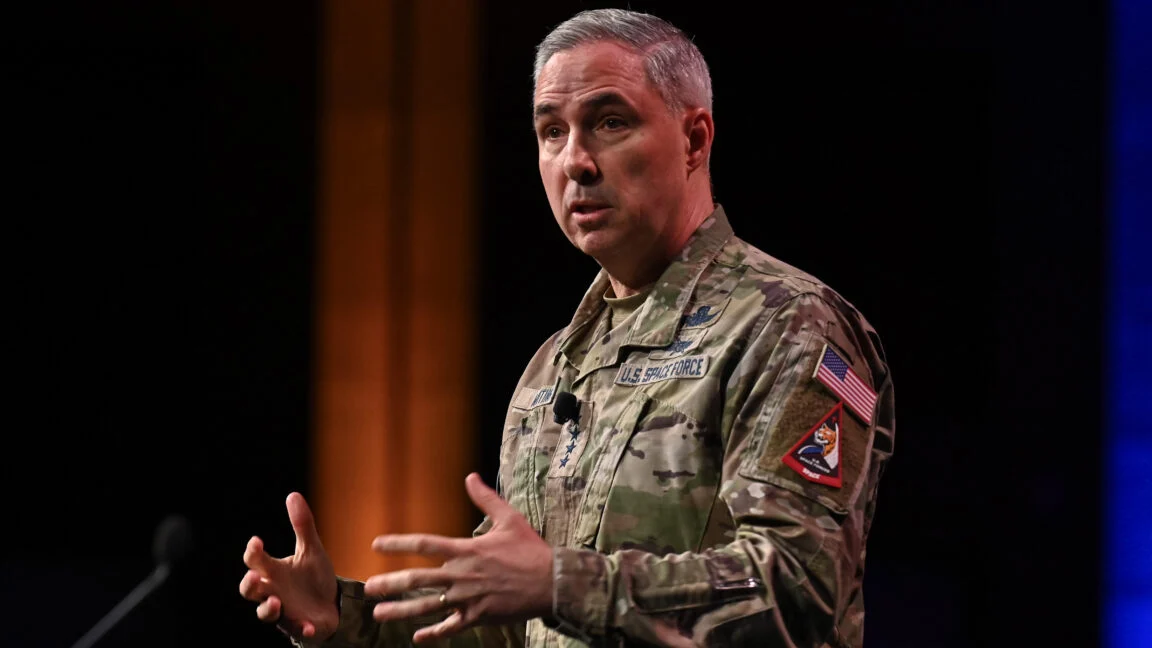
In an era where the divide between civilian innovation and military necessity is rapidly dissolving, the United States Space Command (USSPACECOM) has launched a sophisticated, classified wargaming series dubbed "Apollo Insight." This initiative marks a pivotal shift in how the U.S. military prepares for the "worst-case scenario" of modern warfare: the detonation of a nuclear weapon in low-Earth orbit (LEO).
As global tensions rise and the reliance on satellite infrastructure for everything from global banking to precision-guided munitions grows, the vulnerability of space has become a primary national security concern. By integrating commercial expertise with military strategy, the Pentagon is attempting to fortify its resilience against an adversary that could, with a single act of nuclear brinkmanship, render the most critical orbital planes of our planet useless for months, or even years.
The Genesis of Apollo Insight: A New Paradigm for Space Defense
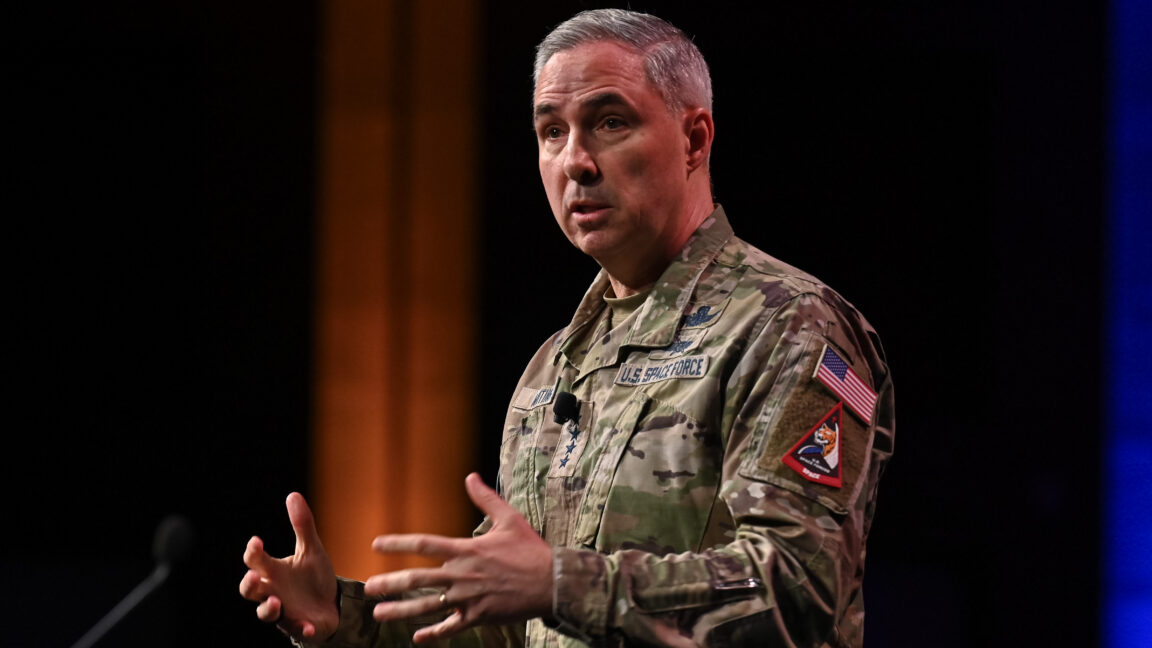
The Apollo Insight series is not merely a military exercise; it is an unprecedented collaborative effort. Gen. Stephen Whiting, the commander of U.S. Space Command, recently detailed the program during a keynote at the Spacepower Conference in Orlando. The series consists of four "tabletop exercises" scheduled throughout the current year, each designed to stress-test the synergy between military command structures and the rapidly evolving commercial space sector.
The first iteration of the wargame centered on a nightmare scenario: a hostile state actor detonating a nuclear payload in orbit. This is not a hypothetical concern pulled from science fiction; it is a direct response to intelligence reports suggesting that major adversaries are exploring the feasibility of orbital weapons of mass destruction (WMDs).
"We brought 60-something companies together at the classified level to share insights into what such a detonation might do," Gen. Whiting explained. The goal was to bridge the gap between military tactical planning and the technical realities understood by the engineers who build and maintain the satellite constellations that undergird modern civilization. By involving allies from Australia, Canada, New Zealand, and the United Kingdom, the U.S. is signaling that the defense of space is a collective, multinational responsibility.
Chronology of a Growing Threat
The shadow of orbital nuclear warfare has been looming over the Pentagon for years, but public acknowledgment of the threat has only recently moved to the forefront of national discourse.
- 2024: Rep. Mike Turner (R-Ohio), Chair of the House Intelligence Committee, issued a stark, public warning regarding Russian efforts to develop nuclear capabilities in space. This intelligence, while initially guarded, prompted a flurry of high-level diplomatic and military activity.
- Late 2024–Early 2025: The Biden administration and intelligence officials confirmed that Russia had moved beyond theoretical interest and was actively considering the deployment of WMDs into orbit—a clear violation of the 1967 Outer Space Treaty.
- Mid-2025: The realization that conventional anti-satellite (ASAT) weapons were being "operationalized" by Russia, including the deployment of "shadowing" satellites that maneuver close to U.S. assets, forced a re-evaluation of current space defense postures.
- 2026: The launch of the Apollo Insight series marks the current phase of the response, where theoretical threats are being simulated through high-fidelity wargaming to develop actionable "day-after" response strategies.
The Catastrophic Mechanics of a Nuclear Detonation
To understand why the Pentagon is so preoccupied with this specific threat, one must look at the physics of a nuclear explosion in a vacuum. Unlike atmospheric nuclear tests, where blast waves and heat are the primary destroyers, an orbital detonation is a silent, electromagnetic killer.
A nuclear weapon detonated in LEO would release a massive burst of high-energy radiation and charged particles. These particles would become trapped in the Earth’s magnetic field, creating an artificial, intense radiation belt. Any satellite passing through this belt—which would likely span a significant portion of the most valuable orbital altitudes—would be subjected to massive electrical surges and radiation damage.
The result would be the near-instantaneous destruction or degradation of thousands of satellites. This includes the GPS constellations required for global navigation, the Starlink-style networks that provide battlefield communication, and the sensitive spy satellites that provide intelligence on conventional ground wars. Experts have warned that this would effectively "blind" the world. As one former defense official described it, such an act would not be a localized strike against the U.S. military, but an "attack on the world" that would disrupt global trade, emergency services, and international security for up to a year.
Official Responses and the Strategic Shift
The Pentagon’s reliance on commercial space companies is the defining characteristic of this new strategy. In the past, the military operated in a "stovepipe" environment, relying on specialized, government-built hardware. Today, the agility and innovation of the private sector are viewed as a "massive advantage."

Gen. Whiting emphasized that the commercial space industry—which now provides everything from high-resolution imagery to orbital refueling—is at the vanguard of the modern battlefield. "Just look at the investment levels, the innovation, the speed at which they’re delivering capability," Whiting noted. "We absolutely have to be able to leverage that."
However, this partnership brings its own challenges. Commercial companies are currently operating in a "gray zone" of conflict. Since the invasion of Ukraine, private satellite firms have faced persistent jamming and cyberattacks. A major point of debate within the U.S. government is whether these companies require formal "indemnification" or new contractual protections to cover the risks they assume when their services become essential to national security. The Office of the Secretary of Defense is currently reviewing these issues, treating them as national-level policy imperatives.
Implications for Future Warfare: Beyond the Nuclear Scenario
While the nuclear scenario serves as the "worst-case" benchmark for Apollo Insight, the wargame series is designed to prepare the U.S. for a variety of emerging threats:
- Orbital Maneuver Warfare: The next phase of the wargames will focus on the reality that satellites are no longer static assets. Adversaries are developing craft that can perform high-velocity maneuvers to change orbits, dodge interceptors, or shadow friendly assets. The ability to track and characterize these "high delta-V" movements is now a primary mission for Space Command.
- Proliferated Constellations: As the military moves toward using thousands of small, low-cost satellites, the challenge becomes one of "domain awareness." How does one defend a network that is too large to protect individually?
- Missile Warning and Defense: The integration of orbital sensors into terrestrial missile defense systems remains a critical priority, ensuring that a launch anywhere on Earth can be detected, tracked, and neutralized before it reaches its target.
Conclusion: A Resilient Future
The Apollo Insight series is a sobering reminder that the "final frontier" has become the latest arena for great power competition. By inviting commercial partners to the table, the U.S. military is acknowledging that the traditional lines between civilian, commercial, and military domains have permanently blurred.
The threat of a nuclear detonation in orbit remains the most severe, yet unlikely, scenario. However, by preparing for the worst, the Pentagon is building a more resilient, adaptive, and technologically diverse space infrastructure. In this new, contested environment, the ability to survive, adapt, and operate in the face of sudden, catastrophic loss is no longer just a strategic luxury—it is the bedrock of national sovereignty in the 21st century. As Gen. Whiting and his colleagues continue to refine these exercises, the message to global adversaries is clear: the United States is not merely watching the skies; it is actively preparing to defend the infrastructure upon which the modern world relies.


 Reynand Wu
 Sagoh
Sagoh
 Raul Delapena Setiawan

 Azzam Bilal Chamdy
 Ali Ikhwan