
 Dwi Wanna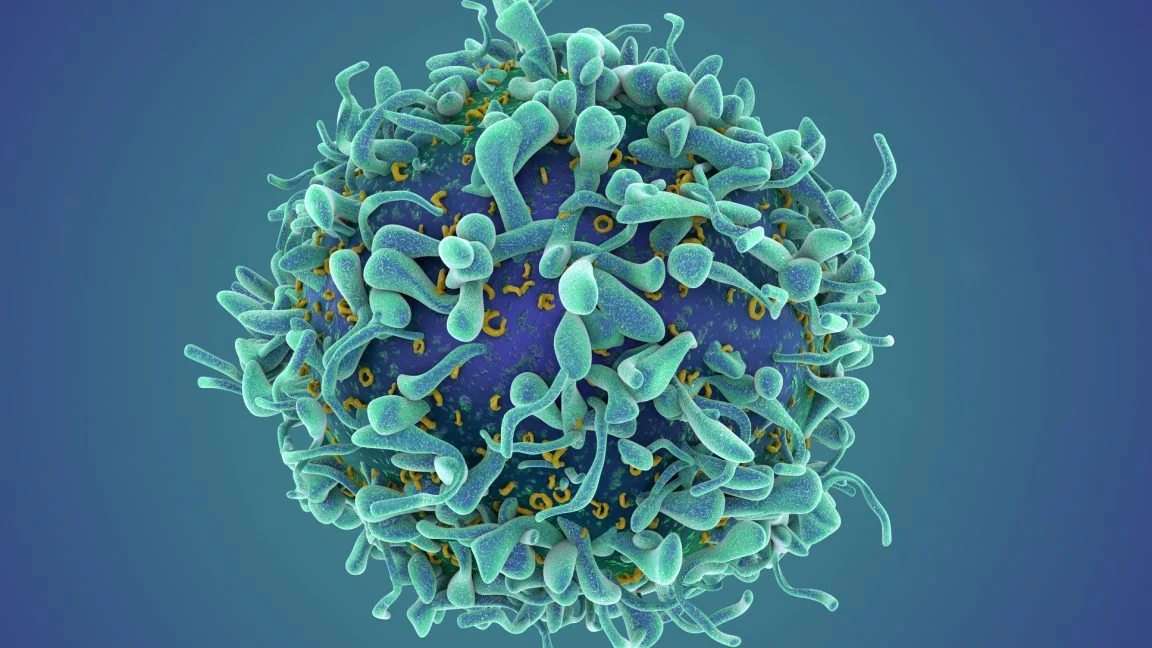
For 49-year-old Jan Janisch-Hanzlik, the progression of multiple sclerosis (MS) was a slow, systematic dismantling of her autonomy. Once a vibrant, active nurse, she found herself forced into a desk-bound role as her coordination faltered. The simple joy of holding her grandchildren became a source of anxiety, marred by the constant threat of a debilitating fall. Faced with a future that seemed destined for a wheelchair and unimpressed by the ceiling of current pharmacological interventions, Janisch-Hanzlik sought a radical path forward.
In June 2025, she became the first patient at the University of Nebraska Medical Center in Omaha to undergo CAR T cell therapy—a pioneering treatment traditionally reserved for blood cancers, now being re-engineered to reset the human immune system.
The Genesis of a Medical Paradigm Shift
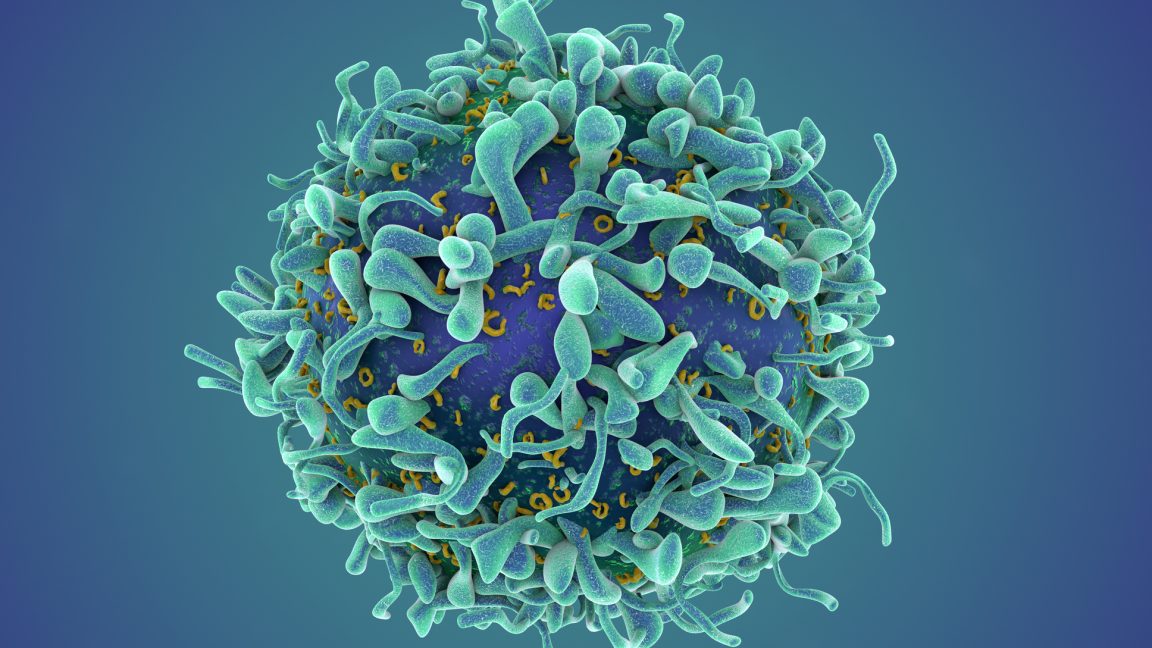
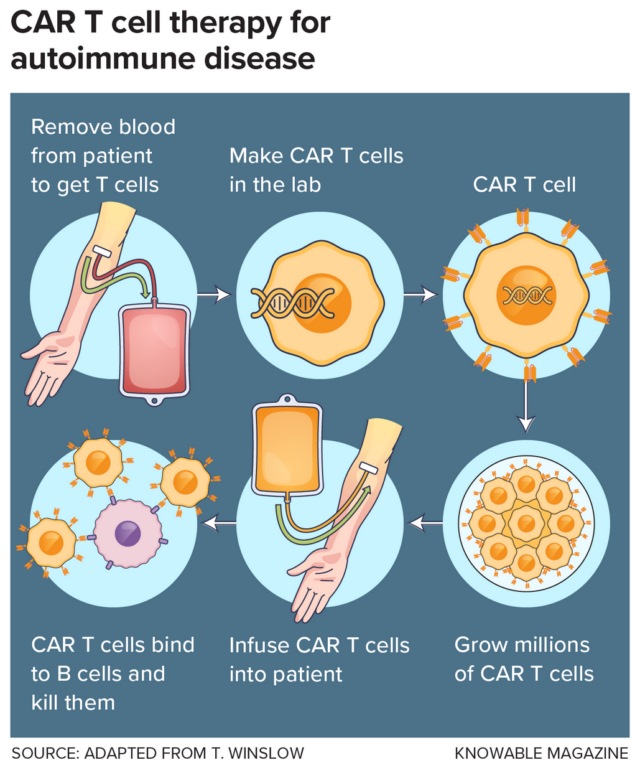
CAR T (Chimeric Antigen Receptor T-cell) therapy first captured global attention in 2017, when the FDA approved the technology to treat aggressive leukemia. The core mechanism is a feat of modern bioengineering: scientists extract a patient’s own T cells—the "soldiers" of the immune system—and genetically modify them in a laboratory. By inserting DNA instructions for a chimeric antigen receptor, these cells are programmed to recognize and latch onto specific molecular markers on malignant cells, triggering a lethal strike.
In oncology, this has resulted in long-term remission for thousands who had exhausted all other options. However, the success of this "living drug" in destroying B cells—the immune players that produce antibodies—opened a door to a new, broader frontier. In many autoimmune diseases, such as lupus, MS, vasculitis, and Graves’ disease, B cells act as saboteurs, mistakenly identifying healthy tissues as foreign invaders. Researchers theorized that if CAR T could eliminate cancerous B cells, it could theoretically "reboot" the immune system by wiping out the faulty B cell population entirely.
A Chronology of Clinical Transformation
The movement from oncology to immunology began in earnest in 2021, when a German research team successfully treated a patient with severe systemic lupus erythematosus. The results were not just positive; they were transformative, suggesting that the immune system could be "reset" to a state of health that predated the onset of the autoimmune disorder.
Following this breakthrough, the clinical landscape accelerated rapidly:
- December 2025: Kyverna Therapeutics released preliminary data from a 26-patient trial targeting stiff-person syndrome. The results were startling. Before treatment, nearly half of the participants required mobility aids like walkers or canes. Within 16 weeks, the majority showed significantly improved gaits, and eight patients discarded their assistive devices entirely.
- April 2026: Further analysis confirmed that all 26 participants in the Kyverna trial had successfully ceased all other forms of immunosuppressive therapy, a milestone rarely seen in chronic autoimmune management.
- June 2025 – Present: Jan Janisch-Hanzlik’s ongoing recovery serves as a bellwether for the procedure’s efficacy in MS. Nearly a year post-treatment, she has reclaimed her mobility, reporting that she no longer requires daily naps and has regained the ability to navigate her home without a cane.
Supporting Data: The Efficacy and the Risks
While the clinical successes are profound, the medical community remains cautious, balancing excitement with the stark reality of the procedure’s risks. The primary challenge lies in the "cytokine storm"—a life-threatening inflammatory response that can occur as the modified T cells attack their targets. Symptoms include high fevers, hypotension, and in some cases, neurological distress such as confusion or drowsiness.
"We have gained a decade of experience in managing these side effects," notes Dr. Emily Littlejohn, a rheumatologist at the Cleveland Clinic. "In most cases, they are reversible and do not lead to long-term damage."
Furthermore, there is the issue of temporary immunosuppression. To make room for the newly engineered cells, patients often undergo lymphodepletion—a chemotherapy regimen that clears out existing immune cells. This leaves the patient vulnerable to infections, necessitating prophylactic antibiotics and antivirals. Surprisingly, however, research has shown that patients often retain antibodies to diseases they were previously vaccinated against, suggesting that the "reset" is not a total erasure of immune memory.
The Spectre of Long-Term Toxicity
The FDA, while optimistic about the technology’s potential, issued a cautionary stance in early 2026 regarding "unpredictable long-term toxicity." The agency highlighted concerns that bioengineered T cells could theoretically turn malignant themselves, causing secondary cancers.
"Causing a secondary cancer may be an acceptable risk when treating a terminal leukemia, but the risk-benefit profile is vastly different for an autoimmune patient," says Dr. Matt Lunning, medical director for gene and cellular therapy at Nebraska Medicine. The field is now grappling with how to quantify these long-term risks against the chronic, progressive nature of autoimmune diseases.
Innovations in Safety: The Second Generation
To mitigate these dangers, researchers are moving toward "second-generation" CAR T technologies. A notable approach comes from Cartesian Therapeutics, which utilizes mRNA to encode the CAR receptor. Because mRNA is short-lived, the engineered T cells only hunt B cells for a limited window of time before reverting to their original state.
"This removes the need for the cells to persist in the body indefinitely," explains Dr. James Howard of the University of North Carolina. By eliminating the long-term presence of genetically modified cells, the risk of secondary malignancies is theoretically eliminated. In recent trials involving 15 patients, this mRNA-based approach showed significant clinical improvement with zero long-term serious side effects.
The Economics of a "Living Drug"
Perhaps the most significant hurdle to widespread adoption is the prohibitive cost. Current CAR T protocols require personalized lab engineering for each patient, driving costs into the hundreds of thousands of dollars.
To bridge this gap, scientists are exploring "off-the-shelf" CAR T therapies. By using healthy donor T cells and employing further genetic modifications to prevent the patient’s body from rejecting them, researchers like Dr. Bing Du of East China Normal University estimate that a single donor’s blood could treat over 1,000 patients. This democratization of the technology would shift CAR T from a bespoke, high-cost therapy to a scalable, clinical standard.

Implications for the Future of Medicine
For patients like Janisch-Hanzlik, the scientific debate over mechanisms and market costs is secondary to the immediate, tangible improvement in their quality of life. Her experience—a transition from needing a wheelchair to walking freely and traveling to the Grand Canyon—is the strongest argument for the continued pursuit of this therapy.
Yet, the questions remain. As Janisch-Hanzlik notes, her doctors are navigating uncharted waters: "I have been told so many times, ‘We don’t know, you’re the first. We’re just going to have to wait and see.’"
The implications of CAR T extend far beyond the current cohort of patients. If the research holds, we are standing on the precipice of a new era in immunology where chronic diseases—once considered life-long sentences—might be cured with a single, sophisticated intervention. As the field matures, the challenge for medicine will be to refine these tools so that the "cure" is as safe as it is transformative, ensuring that the next generation of patients can trade their fear of the future for the freedom of a reclaimed life.


 Reynand Wu
 Sagoh
Sagoh
 Raul Delapena Setiawan

 Azzam Bilal Chamdy
 Ali Ikhwan