
 Nana Wu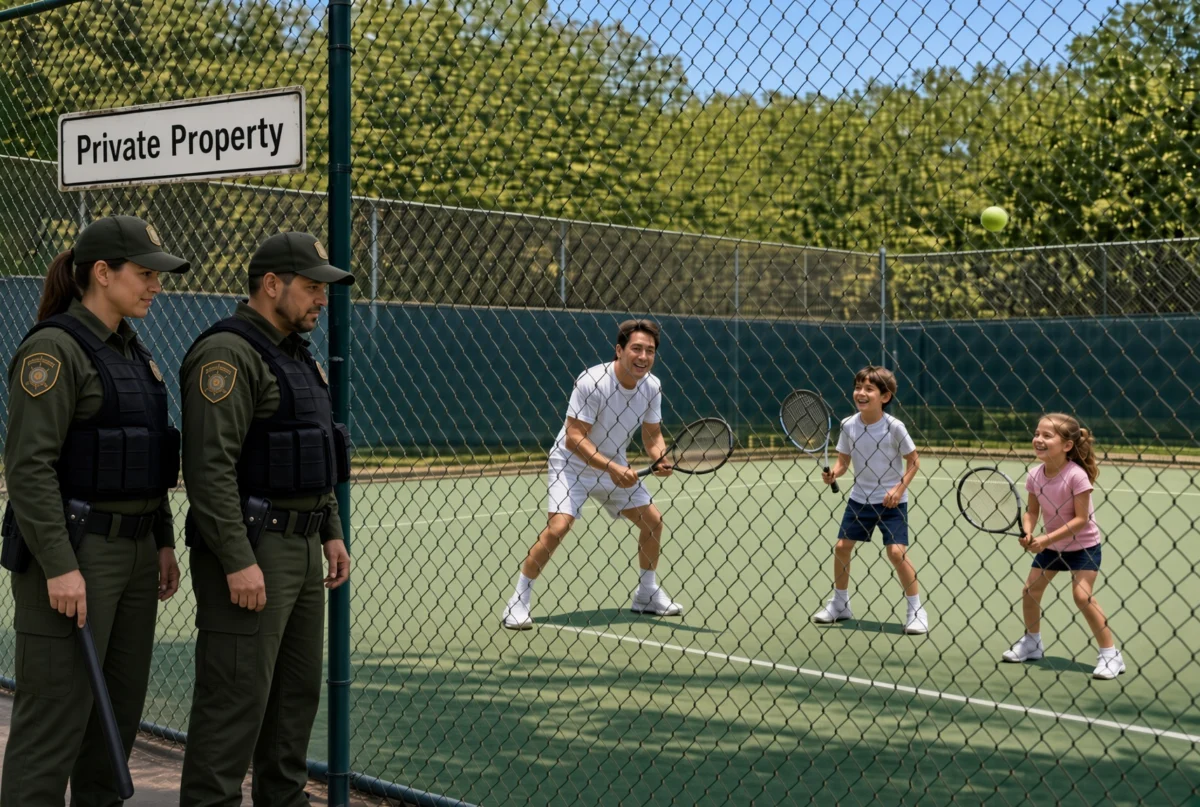
In April 2026, I made a decisive move to trim the fat from our household budget. Amidst a volatile stock market shaken by geopolitical instability in the Middle East and the persistent sting of inflation, I canceled my private sports club membership. At the time, it felt like the prudent, rational choice for a father acting as the primary financial steward for a family of four.
The membership, which cost $185 in monthly dues—supplemented by $25 guest fees for each of my two children during every visit—had become a line item that felt increasingly discretionary. Alongside my decision to cut cable, which saved roughly $70 a month and reclaimed hours of daily screen time, I was attempting to widen the gap between our income and our surging living expenses. In the world of FIRE (Financial Independence, Retire Early), particularly for dual-unemployed parents (DUPs), protecting one’s portfolio is an exercise in constant vigilance. However, what began as a quest for austerity soon evolved into a profound reflection on the true value of money and the social climate of modern urban living.
The Chronology of a Cut: From Austerity to Realization
When I first severed ties with the club, the rationale was sound. The facility was located 20 miles away, demanding a 30 to 40-minute drive in each direction. When factoring in the "activation energy" required to pack up the children, drive, participate in sports, and drive back, a simple outing was consuming nearly an entire day. We pivoted toward public parks, local recreation, and the simplicity of home life.
For a time, the math held up. The S&P 500, which had bottomed out at 6,368 in late March 2026, began a robust recovery, climbing past 7,600 by mid-year. As an investor whose livelihood depends on the performance of his assets rather than a steady salary, this market turnaround provided a necessary buffer. My financial models, run through tools like Empower and Boldin, suggested that we had the fiscal breathing room to reinstate certain luxuries.
However, the decision to return to the club was not initially based on the market’s recovery, but on a jarring encounter that shifted my perspective on "public" versus "private" spaces.
The Catalyst: A Confrontation in the Public Square
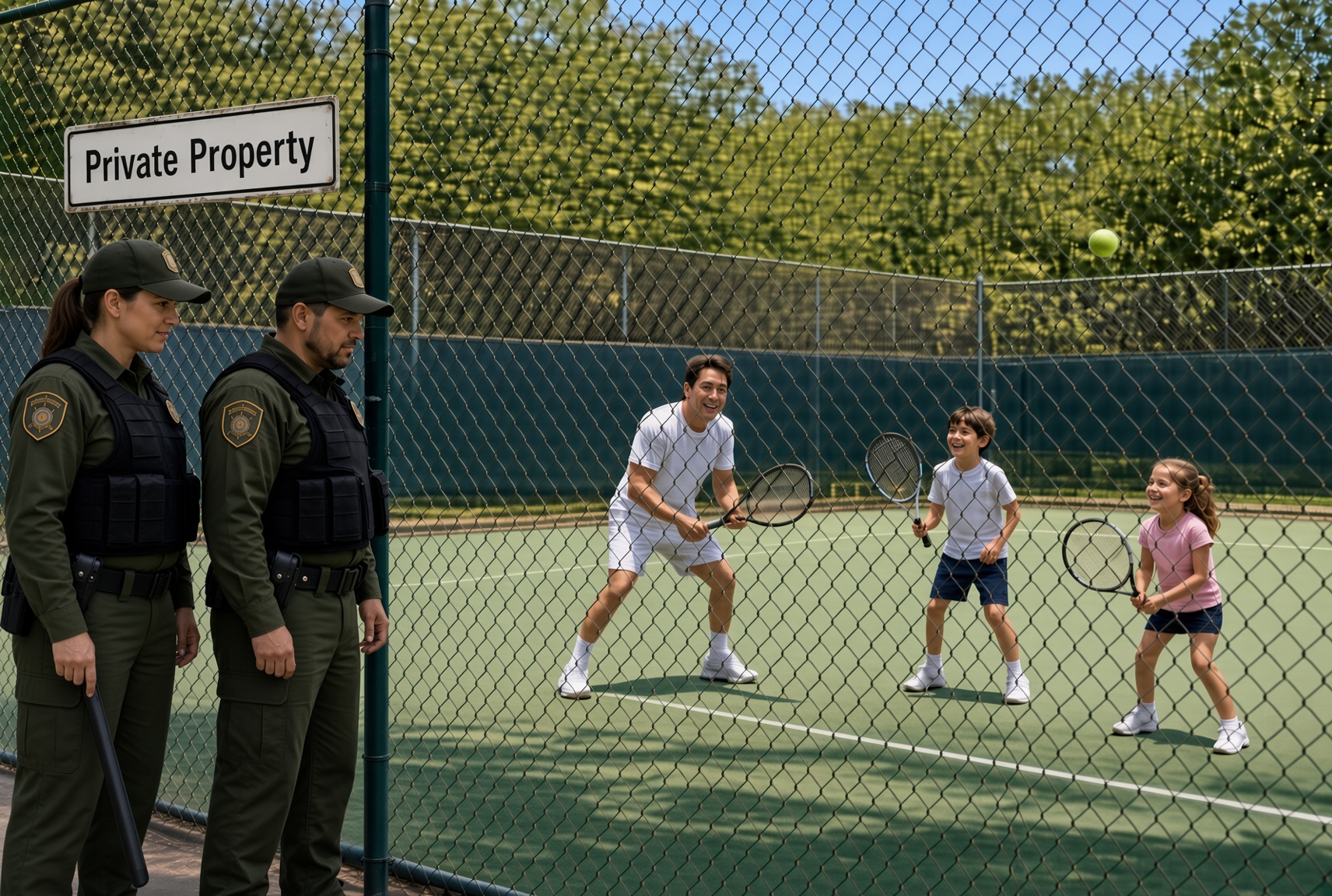
In August 2026, while teaching my six-year-old and nine-year-old to play tennis on a local public court at 3:15 p.m. on a Thursday, my family was approached by two park rangers. They were uniformed, equipped with batons and bulletproof vests, and their demeanor was not that of civil servants offering assistance. They were stern, unwelcoming, and demanded that I prove my fatherhood.
The encounter lasted only a few minutes, but it lingered for weeks. It raised a fundamental question: Why does a citizen, who contributes significantly to the tax base that funds these very parks, feel like an interloper in his own neighborhood?
For 25 years, I have navigated San Francisco—a city that prides itself on being a melting pot. But for the first time, I felt like a guest. Having moved to the United States in 1995, I grew up accustomed to the "weather" of low-grade prejudice. You learn to endure it, to conserve your energy, and to adapt. But after two and a half decades, the realization hit me: I was paying a massive premium to live in one of the most expensive cities in the world, and part of that transaction should be a sense of belonging and safety. When that feeling of security was stripped away, the public park no longer felt like a benefit; it felt like a liability.
Supporting Data: The Hidden Costs of Exclusivity
When I initially calculated the cost of my club membership, I focused only on the $185 monthly dues. I had neglected the "real" cost. Between guest fees for two children, twice per visit, four Sundays a month, the total was actually closer to $385 per month, or $4,620 annually.
Upon deciding to return to the club, I discovered that the guest fee had been hiked to $100 per person. To bring my children as guests would now cost me $200 per visit, or $800 a month. Combined with my dues, the annual cost would have ballooned to nearly $11,820.
By restructuring our membership to include the children as junior members, I brought the total cost down to $450 a month, or $5,400 annually. It is a steep price, but it eliminates the administrative headache of calculating guest fees and, more importantly, it buys us a controlled environment. The club operates behind a membership desk; it is a space where the risk of being hassled by armed strangers for simply playing tennis is effectively mitigated.
Implications: What Does Money Actually Buy?
This experience has forced me to redefine the purpose of wealth. In my earlier years, frugality was a necessity—a tool to build the "f-you money" required to leave the corporate grind. Today, at 49, my priorities have shifted. Money is no longer just about survival or status; it is about the ability to choose one’s environment.
1. The Protection Premium
We often discuss wealth in terms of assets—real estate, stocks, and retirement accounts. We rarely discuss it in terms of "protection." Whether it is choosing a safer car, opting for private education, or joining a private club, we are paying a premium to insulate our children from unnecessary stress or danger. If I have the means to prevent a negative experience for my children, and I fail to do so, that is not frugality—it is a failure of responsibility.
2. The "Golden Window"
Childhood is fleeting. The "golden window" where children actually want to spend their Sundays with their parents is remarkably small—perhaps 12 years at most. My nine-year-old is already beginning to drift toward his own social sphere. Investing in a space where we can interact, exercise, and bond without external interference is an investment in the quality of those remaining years.
3. The Tribal Shift
There is an undeniable sadness to this conclusion. When private institutions become the only way to find peace, we witness the beginning of tribalism. Those who can afford the "entry fee" retreat behind locked doors, while those who cannot are left to navigate the increasingly hostile public sphere. As a taxpayer, I find this systemic failure deeply concerning, yet as a father, I cannot sacrifice my children’s peace of mind to make a point about public policy.
Conclusion: The Ultimate Insurance Policy
Ultimately, my decision to rejoin the club was a decision to prioritize mental clarity and physical safety over a rigid spreadsheet. I still believe in the importance of public infrastructure, and I continue to utilize public courts with my peers. However, when it comes to the safety and well-being of my children, I have chosen to exercise my optionality.
Money can buy a membership, a car, or a neighborhood, but it cannot buy back the time you lose to anxiety or the moments you fail to protect. If you are struggling to find the motivation to grow your wealth, look beyond the numbers. Consider the peace of mind that comes with knowing you have the power to curate your family’s environment.
And, for those risks that even a membership cannot mitigate, ensure you are covered. Life insurance is the final piece of the puzzle—a way to ensure that even if I am not around, the environment I’ve built for my children remains intact. Do not put off the decisions that offer you and your family the security you deserve. Optionality is a luxury, but on the day you need it, it becomes a necessity.

 Sagoh
Sagoh
 Raul Delapena Setiawan
 Reynand Wu


 Azzam Bilal Chamdy
 Ali Ikhwan