
 Basiran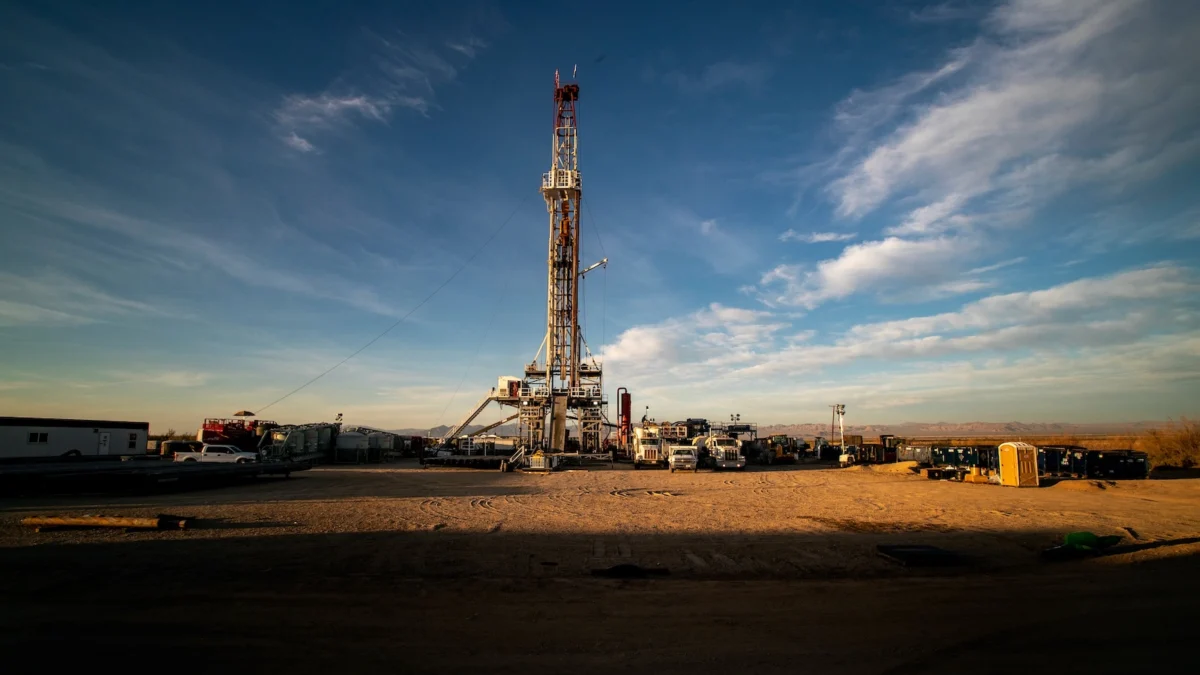
When the NASDAQ bell rings on Wednesday morning, a new ticker symbol—FRVO—will officially enter the financial lexicon. Fervo Energy, a pioneering force in the next-generation geothermal electricity sector, is set to debut on the public markets with an initial public offering (IPO) aimed at raising $1.8 billion. This valuation, expected to reach approximately $7.4 billion, represents one of the most significant moments for renewable energy on Wall Street in U.S. history.
As the clean technology sector navigates a complex political and economic landscape, Fervo’s market entry serves as a litmus test for investor appetite. It is not merely a company going public; it is a signal that geothermal power—long considered a niche, geographically constrained energy source—is ready to scale as a reliable, baseload power provider.
The Mechanics of a Green Revolution
At its core, geothermal energy is the ultimate "always-on" renewable. While solar and wind rely on the whims of weather, geothermal harnesses the consistent, intense heat emanating from the Earth’s core. Historically, this required finding specific geological conditions—volcanic hot spots or natural steam vents—where the heat was accessible near the surface.
Fervo Energy has disrupted this limitation by applying advanced methodologies borrowed from the oil and gas industry. By utilizing horizontal drilling and high-fidelity fiber-optic sensing, Fervo can reach previously inaccessible heat reservoirs. This approach, often called Enhanced Geothermal Systems (EGS), allows the company to turn a wider variety of geological sites into productive power plants.
Zainab Gilani, a geothermal analyst with the Cleantech Group, emphasizes the scalability of this innovation. "Innovation is allowing these technologies to cover a wider variety of sites," she noted. "Fervo is effectively borrowing the drilling efficiency of the fossil fuel industry to lower costs. Their goal is to drive the price of geothermal generation from $7,000 down to $3,000 per kilowatt as they scale operations."
Chronology: From Nevada Pilot to Utah Powerhouse
Fervo’s journey to the NASDAQ was not an overnight success but a calculated progression of technological verification and infrastructure development.
- Proof of Concept (Nevada): Fervo successfully deployed its proprietary technology in Nevada, demonstrating that it could reliably produce clean energy. The site now provides enough electricity to power approximately 2,600 homes, serving as a critical proof-of-concept for skeptical investors.
- The Scaling Phase (Cape Station): Building on its Nevada success, the company broke ground on "Cape Station" in Utah. This facility is massive in scale, projected to produce over 100 times the electricity of the Nevada site. Cape Station is scheduled to go online later this year, a milestone that has significantly bolstered investor confidence.
- Institutional Backing: Before the IPO, Fervo cultivated a "who’s who" list of backers. Bill Gates’ Breakthrough Energy Ventures provided early support, while corporate giants like Alphabet (Google) secured long-term contracts to purchase Fervo’s power to support their energy-hungry data centers.
- The IPO Upsize: When Fervo first announced its intention to go public, it aimed to sell 55.6 million shares at $21–$24. However, due to intense market interest, the company increased its target to 70 million shares at $25–$26, reflecting a valuation of $7.4 billion.
Supporting Data: The Insatiable Demand for Power
The timing of Fervo’s IPO is no accident. The U.S. electrical grid is currently undergoing its most significant stress test in decades. Driven by the rapid proliferation of artificial intelligence, massive data centers are demanding unprecedented amounts of consistent, "firm" power.
Traditional renewables like solar and wind have struggled to meet this 24/7 demand without massive investments in battery storage. Geothermal, however, functions as baseload power—it runs 24 hours a day, 365 days a year.
According to market analysts, the demand for this "reliable" clean energy has become, in the words of observers, "insatiable." Geopolitical instability, including the conflict in Iran, has contributed to volatile energy prices, further incentivizing a domestic shift toward independent, reliable, and sustainable power sources. The robust demand for Fervo shares suggests that institutional investors are betting heavily on this convergence of AI-driven demand and energy independence.
Official Perspectives and Expert Analysis
The reaction from the investment and academic communities has been largely optimistic, though tempered by the reality of infrastructure timelines.
The Investor View
Jigar Shah, a former senior official at the Department of Energy, views the IPO as a definitive turning point. "There is a level of confidence coming to our sector," Shah remarked. "For a long time, our space has acted as if we’re ‘alternative’ energy. But when you’re 90 percent of everything that gets added to the grid every year, you’re no longer alternative. You are the grid."
The Economic View
Gernot Wagner, a climate economist at Columbia Business School, views the $7.4 billion valuation as a clear signal of market maturity. "This is a very, very big deal," Wagner said. "Money speaks. If Fervo demonstrates that there is money to be made for investors, that is going to draw a lot of attention well beyond just the narrow advanced geothermal community."
The Practical View
Conversely, some analysts urge caution regarding the timeline. Rob Gramlich, president of Grid Strategies, notes that while the technology is promising, the transition to mass adoption is not instantaneous. "They’re just not here yet on any large scale," Gramlich stated. "They are great 2040 and 2050 options." He cautions that while Fervo is a leader, the broader infrastructure requirements of the U.S. grid remain a bottleneck that capital alone cannot solve.
Implications: A Bellwether for Clean Tech
The success of Fervo’s IPO carries broader implications for the clean energy industry, especially following a tumultuous period of political whiplash.
The U.S. policy environment has shifted dramatically in recent years. While the 2022 Inflation Reduction Act provided a historic influx of capital into wind, solar, and geothermal projects, subsequent shifts in the White House and Congress have led to the dismantling of many of those protections. Numerous green energy projects were placed on hold or canceled as the new administration prioritized fossil fuel expansion.
Yet, despite this unfavorable political wind, companies like Fervo and the nuclear developer X-Energy—which recently raised $1 billion in its own public offering—have thrived. The resilience of these companies suggests that the clean energy transition has shifted from a policy-driven movement to a market-driven necessity.
Why This Matters
- Market Resilience: Fervo’s ability to secure massive private and public funding despite regulatory uncertainty proves that the "clean tech" sector has developed a life of its own, separate from political favor.
- Technological Validation: The successful deployment of EGS technology validates the potential for "clean drilling," potentially opening a path for traditional energy workers to transition their skills into the geothermal sector.
- The AI Connection: The link between Fervo and major tech companies like Google highlights a critical trend: the tech sector is no longer just buying "green credits"; they are buying physical, localized power to keep their infrastructure running.
Conclusion
As FRVO begins its journey on the NASDAQ, the eyes of both Wall Street and the climate community will be watching. If Fervo can meet its production milestones at Cape Station and continue to drive down the cost per kilowatt, it may well prove to be the blueprint for the next generation of energy companies.
While the road to a fully decarbonized grid remains fraught with technical and regulatory hurdles, the sheer financial appetite for Fervo’s IPO demonstrates that the market is no longer waiting for a green light from Washington. Instead, investors are betting that the future of power lies not in the clouds or the wind, but in the heat waiting just beneath our feet. For the clean energy industry, the message from the markets is clear: the era of "alternative" energy is over; the era of utility-scale, high-tech, reliable renewables has arrived.


 Raul Delapena Setiawan
 Laily UPN
 Reynand Wu
 Sagoh
Sagoh

 Azzam Bilal Chamdy
 Ali Ikhwan