
 Suro Senen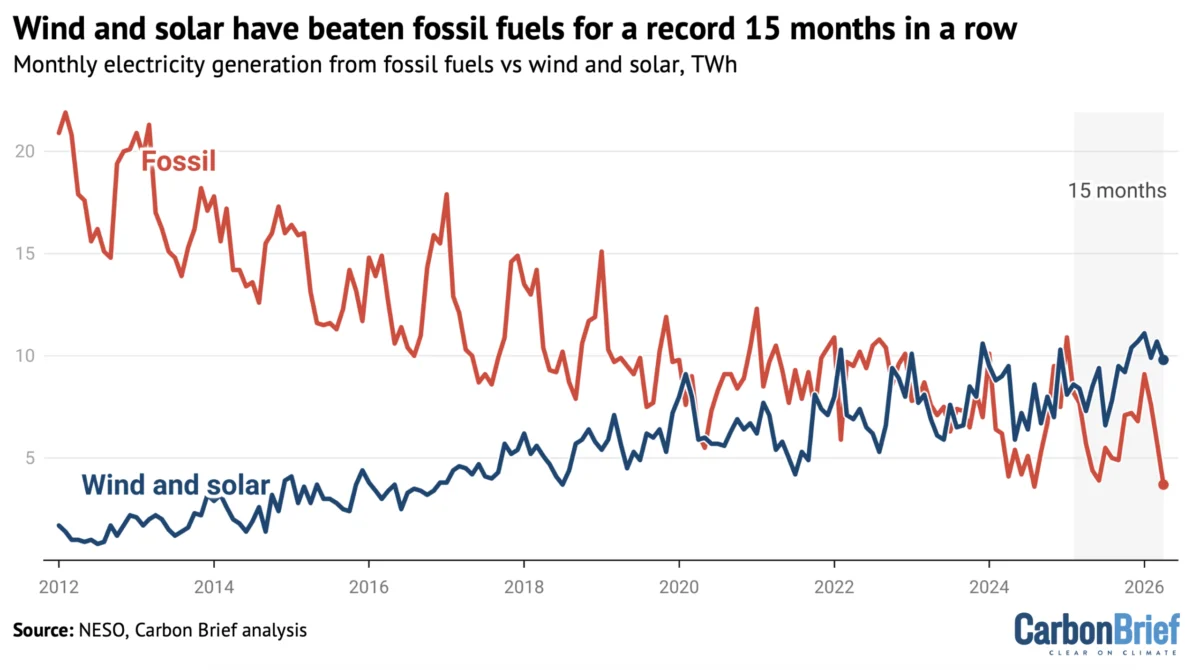
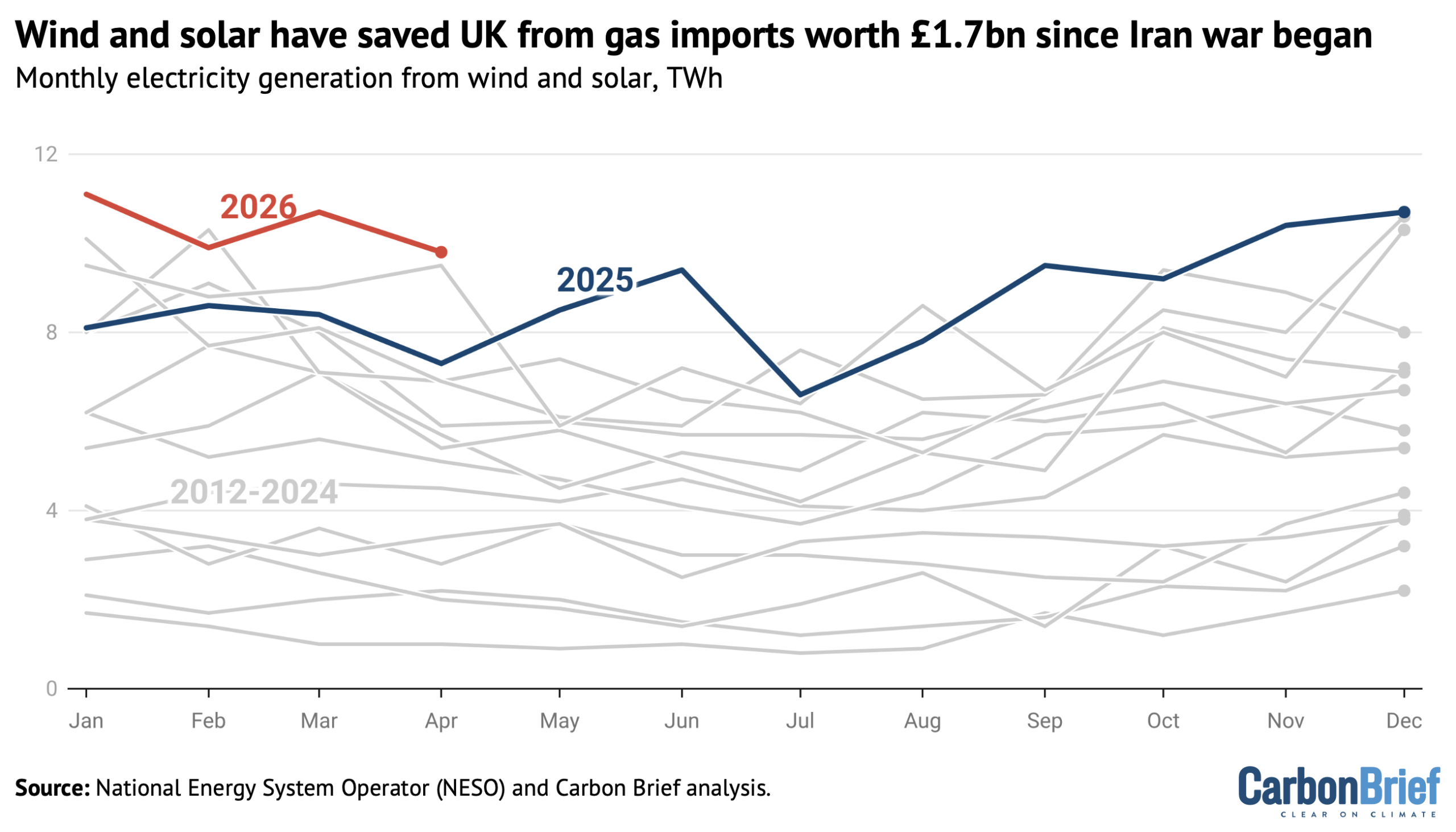
The United Kingdom’s energy landscape has undergone a profound transformation in the shadow of global instability. New analysis from Carbon Brief reveals that since the outbreak of conflict involving Iran in late February 2026, the surge in wind and solar electricity generation has served as a critical economic buffer for the nation. By dramatically reducing reliance on natural gas, renewable energy sources have saved the UK an estimated £1.7 billion in potential import costs, shielding consumers and the national economy from the volatile price spikes typically associated with global fossil-fuel crises.
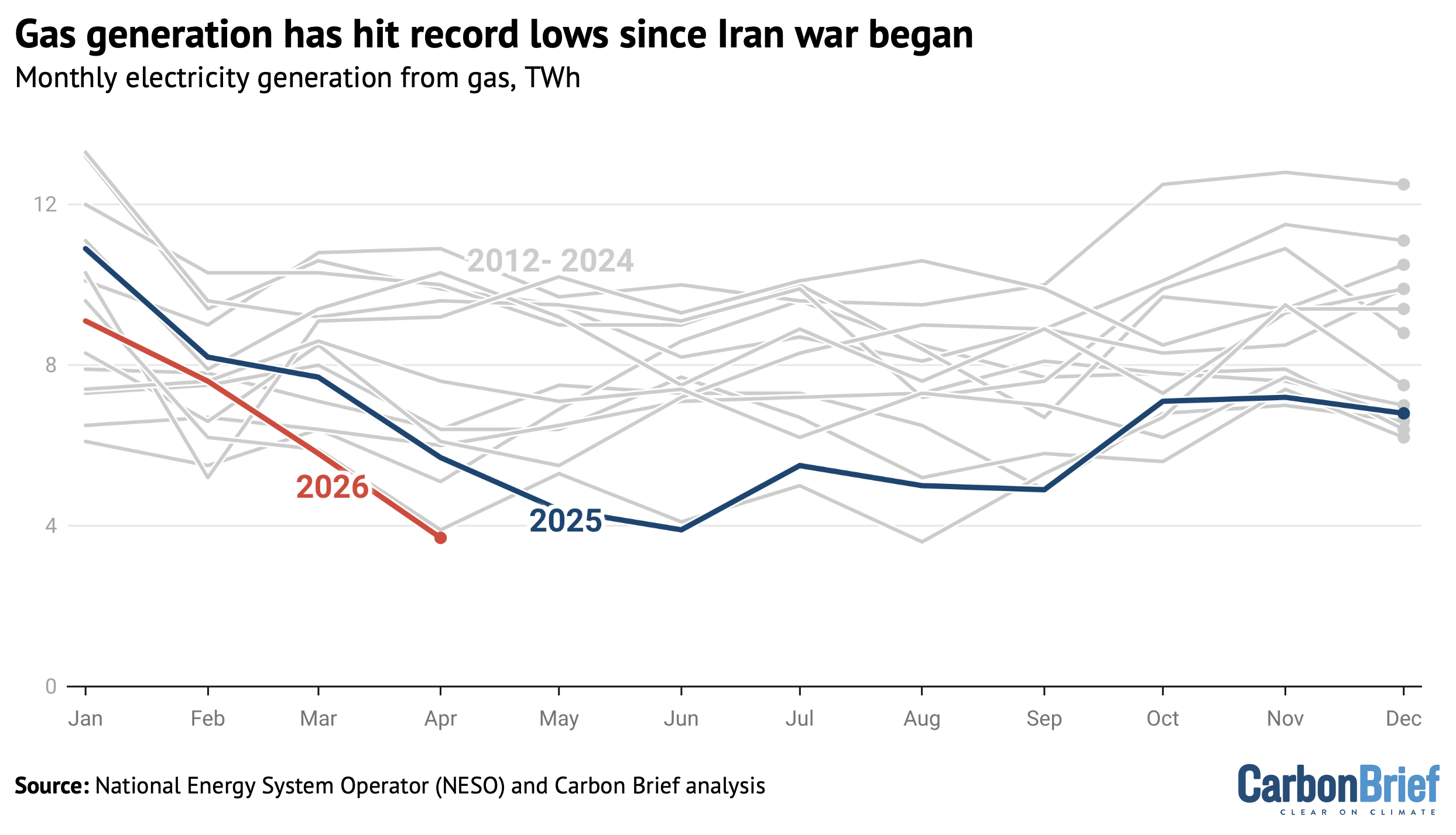
This shift represents more than just a marginal environmental success; it marks a structural pivot in how Great Britain powers its homes and industries. As gas-fired generation plummeted to record lows in March and April 2026, the resilience of the UK’s transition to clean energy was put to its most significant test to date—and the results suggest the system is becoming increasingly immune to the shocks of global supply chain disruptions.
The Core Facts: A £1.7 Billion Dividend
The numbers underscore the sheer scale of this shift. Since the onset of the Iran conflict in late February 2026, wind and solar assets on the island of Great Britain have generated a record 21 terawatt-hours (TWh) of electricity. This massive influx of clean energy effectively displaced the need for 41 TWh of natural gas—a volume equivalent to roughly 34 tankers of liquified natural gas (LNG).
In a period defined by extreme market volatility, the ability to bypass the LNG market has been a decisive factor in national economic stability. Had the UK been forced to import those 34 tankers to meet domestic demand during the price surge triggered by the conflict, the national bill would have swollen by an estimated £1.7 billion. By generating power through the wind and sun, the UK has essentially converted a potential economic liability into a sovereign energy asset.
Chronology: From Conflict to Carbon-Neutral Milestones
The timeline of this transition highlights how quickly the UK’s energy mix has evolved under pressure.
- Late February 2026: The onset of the Iran war triggers immediate concerns regarding global gas supply chains and maritime transport routes.
- March 2026: In response to surging global gas prices, the UK power system registers a record-breaking month of renewable output. Gas-fired generation hits an all-time low for the month.
- 25 March 2026: Wind generation reaches a new historic peak of 23.9 gigawatts (GW), demonstrating the massive capacity of the offshore and onshore fleet.
- April 2026: The trend continues as gas generation drops again to historic lows for the month, proving the trend is not an anomaly but a sustained displacement.
- 22 April 2026: In a landmark moment for the grid, the National Energy System Operator (NESO) records that 98.8% of the electricity feeding into the main transmission grid came from zero-carbon sources during a 30-minute window.
- 23 April 2026: Solar energy infrastructure hits a new all-time high of 15.4 GW, proving that solar is a powerhouse during the spring months.
Supporting Data: The Flipped Energy Hierarchy
The most striking statistic is that wind and solar have generated more than twice as much electricity as fossil fuels combined since the start of the Iran conflict. This represents a complete inversion of the UK’s energy hierarchy. Just a decade ago, fossil fuels were generating more than four times as much electricity as wind and solar.
This is the 15th consecutive month in which renewables have outpaced fossil fuels—a streak that includes the 2025-2026 winter season. Traditionally, winter has been the "make or break" period for the UK grid, where low wind and short daylight hours forced a reliance on gas. The successful navigation of the past winter suggests that the integration of battery storage, grid management, and increased renewable capacity has fundamentally solved the seasonality of the UK’s green transition.
Furthermore, the influence of gas on the electricity price is waning. Gas-fired power stations often set the wholesale price of electricity because they are the "marginal" source required to meet peak demand. However, in both March and April 2026, gas was setting the price approximately 25% less often than it did in 2022, during the height of the energy crisis following Russia’s invasion of Ukraine. This decoupling of electricity prices from gas prices is the "holy grail" of energy policy, providing a pathway to more stable long-term energy costs for businesses and households.
Official Responses and Strategic Implications
The National Energy System Operator (NESO) has been vocal about the technical achievement these figures represent. Officials have noted that the grid’s ability to handle such high penetration of variable renewables—while maintaining system stability—is a testament to years of infrastructure investment and advanced digital grid management.
Energy analysts, including those at Carbon Brief, have noted that the implications of this shift are profound. The ability to avoid fossil fuel imports is no longer a matter of environmental policy alone; it is a matter of national security. By reducing the "import dependency" of the UK, the government is insulating the economy from the political machinations of autocratic regimes and the volatility of global shipping.
"The shift we are seeing is permanent," says one independent energy consultant. "We have moved past the point where renewable energy is a ‘supplementary’ source. It is now the backbone of our system. Every gigawatt of wind or solar added is a direct insurance policy against the next geopolitical shock."
The Path Forward: Challenges and Opportunities
While the progress is undeniable, experts caution against complacency. The record-breaking performance of March and April 2026 highlights a new challenge: what to do when supply exceeds demand. The integration of "green hydrogen" and larger-scale energy storage remains the next frontier. As the grid becomes increasingly dominated by intermittent sources, the challenge shifts from "how to generate enough" to "how to store what we generate."
Furthermore, the rapid retirement of gas assets requires careful planning to ensure that "firm" capacity—power that can be turned on when the wind isn’t blowing and the sun isn’t shining—remains sufficient during extreme, prolonged weather events.
However, the economic evidence is now insurmountable. The £1.7 billion saved in just two months since the start of the Iran war provides a compelling case for the accelerated deployment of wind and solar. As the UK looks to the future, the integration of these renewables is no longer a choice between climate action and economic pragmatism—it is a unified strategy that achieves both.
By breaking the tether to global gas markets, the United Kingdom is demonstrating to the rest of the world that the energy transition is the most effective tool for maintaining national sovereignty in an increasingly fragmented and dangerous geopolitical landscape. The wind and the sun are not just powering the nation; they are protecting it.


 Raul Delapena Setiawan
 Laily UPN
 Reynand Wu
 Sagoh
Sagoh

 Azzam Bilal Chamdy
 Ali Ikhwan