
 Azzam Bilal Chamdy
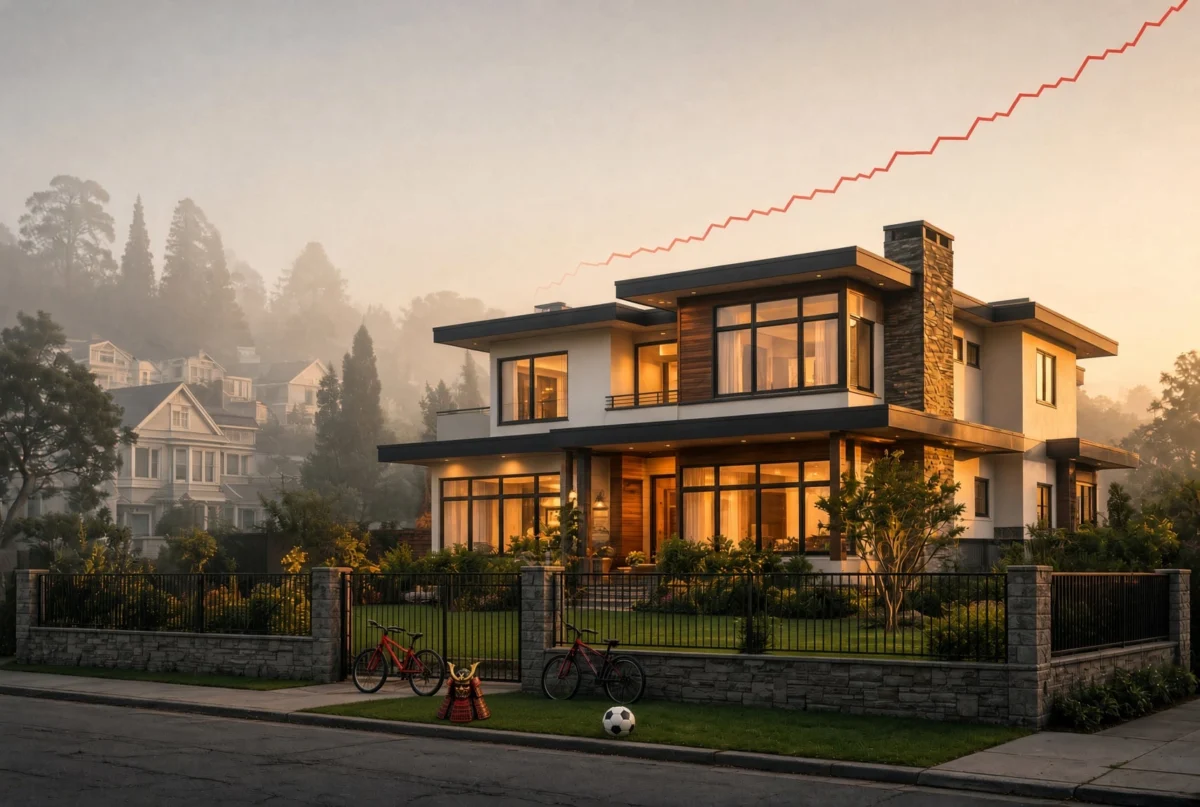
Late in 2023, my family and I made a decision that defied traditional financial optimization: we upgraded to a larger, more expensive home that, by all objective metrics, we did not strictly need. Three years have passed since we moved into our current residence in San Francisco, and the dust has finally settled. As I look back, the question of whether this "lifestyle creep" was worth the significant capital outlay remains a central theme of my financial journey.
In a world obsessed with maximizing returns and hoarding liquid assets, choosing to sink capital into a primary residence—an illiquid, maintenance-heavy asset—can feel like heresy. Yet, as I share these reflections, I hope to provide a framework for those standing at the crossroads of a similar decision, helping you distinguish between a house that becomes a burden and a home that becomes a foundation for a better life.
The Case for the Home as a Primary Investment
We often view homes through the lens of pure real estate speculation. However, for the average person, the home is the single most significant investment they will ever make, not just in terms of dollars, but in terms of utility. Statistics indicate that the average individual spends over 14 hours a day at home. Unlike clothing, watches, or luxury vehicles—which depreciate or serve as intermittent status symbols—the home is a high-frequency-use asset.
While fine watches and jewelry may offer aesthetic value and potential appreciation, they fail to provide the same daily utility. You cannot live inside a vintage Patek Philippe. When we prioritize the home as our primary "luxury," we are choosing to integrate our wealth into our daily lived experience rather than sequestering it in a brokerage account that we only visit on a screen.
Chronology: The Journey to "The Last House"
The decision to move was not made in a vacuum. For two decades, from 2003 to 2023, I was caught in the cyclical loop of the property ladder—constantly buying, renovating, and selling in a bid to optimize my living situation. It was an addiction to the "next rung."
My wife was initially hesitant to uproot our lives. It took a significant amount of persuasion to reach a consensus. The tipping point, and the promise that eventually secured her buy-in, was a vow that this would be our final move—a definitive end to the "climbing" phase of our lives.
A New Chapter in San Francisco
The move itself was executed during a period of shifting market dynamics in San Francisco. We sought a property that offered not just square footage, but a specific type of functionality: an enclosed, safe yard for our children. For us, the value of this space became immediately apparent. Seeing our children play outdoors without the constant, gnawing anxiety of traffic or safety concerns provided an immediate "psychological dividend" that no stock portfolio could match.
Furthermore, we observed a tangible impact on our son’s development. The ability to burn off energy in a large, usable lot proved to be a catalyst for his focus during study hours. This realization—that a home’s physical footprint directly influences the quality of childhood—is something we had failed to quantify during our initial search.
Supporting Data: The Opportunity Cost of the Upgrade
From a purely quantitative standpoint, the purchase was an expensive endeavor. By liquidating significant positions in stocks and Treasury bonds to fund the purchase, we incurred a substantial opportunity cost.
Since our move, the S&P 500 has surged over 80%. When I calculate the total "cost" of our home, including the missed market gains, I estimate that I have left over $1 million on the table. It is a sobering realization. I have spoken with other investors who sold high-growth assets like Salesforce or Tesla shares to fund their own home upgrades; they, too, have seen their former portfolios outperform their property gains by a factor of 10x or 20x.
However, the San Francisco market has remained remarkably resilient, buoyed by the artificial intelligence boom. Our property value has appreciated, narrowing the gap somewhat. We are currently in a "boom loop" where the scarcity of high-quality, large-lot properties in the city makes our home significantly more valuable than it was when we purchased it. If the home were to hit the market today, I am not certain we could afford to buy it back.
The Myth of High Maintenance Costs
A common deterrent against buying a "nicer" home is the 1% rule of thumb, which suggests setting aside 1% of the home’s value annually for maintenance. After three years, our data suggests this is a conservative overestimate.
Our total maintenance expenditure over the past 36 months has been approximately $4,700, or roughly $1,567 per year. This is a fraction of what traditional financial planning models might predict. We attribute this success to two factors:
- The Three-Month Escrow: We were relentless during the due diligence phase. We leveraged the inspection report to force the seller to address structural and cosmetic defects before the keys were handed over.
- Buying at the Top of the Cycle: The house had undergone a full gut-renovation and professional landscaping immediately prior to our purchase. By buying a home that had been "reset," we effectively bypassed years of deferred maintenance.
Strategic Guidelines: The 30/30/3-5 Rule
If you are contemplating a similar upgrade, do not move forward without a rigorous financial framework. I recommend the following checklist:
- Alignment of Purpose: Ensure your spouse is not just "okay" with the move, but genuinely enthusiastic. A home is a collaborative asset; if one partner feels coerced, the home becomes a source of tension rather than a sanctuary.
- The 30/30/3-5 Rule:
- 30% Down: Have at least 20% for the down payment and 10% as a liquid buffer.
- 30% Monthly Debt-to-Income: Keep your mortgage payments under 30% of your gross income.
- 3-5x Income: Limit the total purchase price to 3 to 5 times your annual gross income.
- Stress Test Your Life: Model a scenario where one income stream vanishes for six months. If this exercise induces a panic attack, the house is too expensive.
- Leverage the Escrow: Do not rush the closing. Use the inspection period as a negotiation tool to ensure the seller pays for the "hidden" costs of ownership.
Implications: The Psychology of "Settling"
Perhaps the most profound takeaway from this three-year experiment is the psychological shift away from the "property ladder" mentality. For twenty years, I felt the constant itch to upgrade, a perpetual state of "wanting."
By reaching the top rung of what we could comfortably afford, that desire has vanished. There is a profound sense of peace in knowing that the search is over. We have stopped looking at real estate listings, stopped comparing our home to others, and started simply living.
Final Verdict
Was it worth the $1 million in lost opportunity cost? From an analytical standpoint, the answer is mixed. From a human standpoint, the answer is a resounding "yes."
We have optimized for our life, not just our balance sheet. We have provided our children with a stable, secure environment and reclaimed the mental bandwidth previously spent on the "next" real estate deal. For those who find themselves in a position to upgrade, my advice is simple: follow the math to ensure you don’t go broke, but follow your heart to ensure you don’t look back with regret. Money is a tool for living, and there is no better use for it than the roof over your family’s head.


 Muslim

 Rifan Muazin

 Nila Kartika Wati

 Lina Hope


 Asep Darmawan


 Basiran
