
 Asep Darmawan
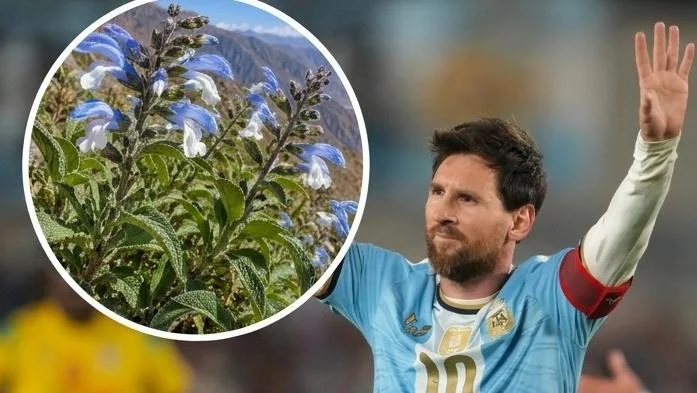
Jakarta – In an extraordinary convergence of global celebrity and scientific discovery, the name of football legend Lionel Messi has once again transcended the boundaries of sport, lending its prestige to a newly identified species of plant in the rugged highlands of Peru. This unique botanical find, officially christened Salvia messii, not only pays homage to the Argentine maestro but also underscores the urgent need for conservation in one of the world’s most biodiverse yet vulnerable ecosystems.
The revelation of Salvia messii marks a significant moment in both botanical science and popular culture, further solidifying Messi’s unparalleled status as an inspiration across various fields. The plant, with its striking light blue and white blossoms, a poignant echo of the Argentine national football team’s iconic jersey, stands as a living testament to a legacy that continues to grow, even as the player himself embarks on new phases of his illustrious career.
Main Facts: A New Species Bears the Mark of a Football Icon
The scientific community, through a comprehensive study, has officially announced the discovery and naming of Salvia messii. This development, detailed in a forthcoming study titled ‘A remarkable new Salvia (Lamiaceae) from the ecotonal vegetation surrounding the western Andean relict forests of Peru‘, is set for publication in October 2026. The research, which meticulously cataloged the plant’s characteristics and habitat, culminates years of dedicated fieldwork and laboratory analysis.
The Unveiling of Salvia messii
The plant itself is a fascinating addition to the Salvia genus, a diverse group belonging to the mint family (Lamiaceae). Its discovery in the unique ecotonal vegetation of the western Andean relict forests of Peru highlights the region’s immense, yet often unexplored, biodiversity. Ecotonal zones, where distinct ecological communities meet and integrate, are often hotspots for novel species, and Salvia messii is a prime example of such a discovery. The plant’s physical attributes, including its distinctive flower coloration, played a crucial role in its eventual naming, intertwining scientific observation with cultural reverence.
Botanical Nomenclature: A Name Etched in Latin
The formal process of naming a new species adheres to strict international guidelines, particularly the International Code of Nomenclature for algae, fungi, and plants (ICN). In this instance, researchers meticulously followed these rules, designating the species as Salvia messii. The addition of the suffix ‘i’ after "Messi" is a standard practice in Latin botanical nomenclature to denote possession or dedication, effectively translating to "Messi’s plant." This linguistic formality ensures that the name is universally recognized and integrated into the global scientific lexicon, providing a lasting tribute that transcends language barriers. The choice of the specific epithet ‘messii’ is not merely an arbitrary decision but a deliberate act of honor, reflecting the profound admiration held for the athlete by the discoverers.
A Nod to Argentina: Colors and Symbolism
Beyond the direct homage to Lionel Messi, the Salvia messii holds a deeper symbolic resonance with its namesake’s national identity. As reported by sources such as The New York Times, the decision to name the plant after Messi was significantly influenced by the aesthetic characteristics of its flowers. These delicate blossoms exhibit a striking combination of light blue and white – colors unmistakably associated with the Argentine national flag and, by extension, the iconic jersey worn by Messi throughout his illustrious international career. This intentional alignment of natural beauty with national pride and sporting excellence adds a layer of cultural significance to the scientific discovery, transforming Salvia messii into more than just a new plant; it becomes a living emblem of Argentina’s spirit and its most celebrated son. This visual synergy creates a powerful connection between the natural world and human achievement, making the plant a symbol of inspiration for many.
Chronology of Discovery and Dedication
The journey from an unexplored Andean slope to the formal recognition of Salvia messii is a testament to the dedication of botanists and the allure of discovery. This timeline intertwines the scientific expedition with the growing list of tributes to Lionel Messi.
The Expedition into the Andean Ecotone
The discovery of Salvia messii is the culmination of extensive fieldwork conducted in the central and southern Peruvian Andes. Led by prominent botanist Paul Gonzales, the research team ventured into the challenging and often remote ecotonal regions, areas where different ecosystems transition into one another. These "edge zones" are known for their high biodiversity and unique adaptations, making them prime targets for discovering new species. The Andean slopes, characterized by their rocky, dry terrain and significant altitude, present considerable logistical and environmental challenges for researchers. Yet, it is precisely in these harsh conditions, between 2,000 and 2,400 meters above sea level, that Salvia messii has managed to thrive, adapting to its demanding environment. The expedition involved painstaking surveys, collection of plant specimens, and detailed ecological observations, all crucial steps in identifying and classifying a new species.
From Field to Publication: The Journey of Salvia messii
Following the initial discovery and collection of specimens, the scientific process shifted to rigorous laboratory analysis. This phase involved morphological examination, genetic sequencing, and comparative studies with known Salvia species to confirm its novelty. The data gathered was then synthesized into a comprehensive scientific manuscript, which underwent peer review by other experts in the field. This stringent evaluation process ensures the accuracy and validity of the findings before formal publication. The study, slated for October 2026, not only formally introduces Salvia messii to the scientific world but also details its unique characteristics, habitat, and conservation status. The timeline from discovery in the field to formal publication often spans several years, highlighting the meticulous and time-consuming nature of taxonomic research.
Messi’s Growing Botanical and Zoological Pantheon: A Timeline of Tributes
The naming of Salvia messii is not an isolated incident but rather the latest in a remarkable series of scientific tributes to Lionel Messi. His global appeal and iconic status have inspired researchers across various disciplines to dedicate new species in his honor. This growing "pantheon" of Messi-named organisms spans the animal, plant, and even fungal kingdoms, reflecting the breadth of his influence.
The trend began in 2021 when researchers in Rosario de Lerma, Argentina, discovered a new species of iguana. This lizard was officially named Liolaemus messii, marking the first time a newly described species bore the footballer’s name. This initial dedication set a precedent, demonstrating the willingness of the scientific community to recognize cultural icons.
2023 proved to be a particularly prolific year for Messi-inspired nomenclature, with three distinct discoveries announced:
- Acanthogonatus messii: A new species of spider, discovered by arachnologists, adding a fascinating arthropod to Messi’s namesake collection.
- Discinisca messii: A fossil brachiopod, an ancient marine invertebrate, signifying that Messi’s influence extends even into the paleontological record, linking his name to life forms from bygone eras.
- Vultur messii: A fossil condor from the Pliocene Epoch, an impressive find that connects Messi to one of the most majestic birds of prey, further cementing his name in the annals of ancient life.
The tributes continued into 2024 with the discovery of Cercopemyces messii, a new species of fungus found in the cloud forests of the Andean region in Argentina. This addition showcased the diverse ecological niches where Messi’s name has found a home, from terrestrial animals to ancient marine life and now to the crucial, yet often overlooked, fungal kingdom.
With the advent of Salvia messii in 2026, the tally of species named after Lionel Messi officially reaches six, cementing his unique position in the world of scientific nomenclature. Each of these namings represents a distinct scientific achievement and a collective nod to a figure whose impact resonates far beyond the football pitch.
Supporting Data: Unpacking the Salvia messii Profile
Understanding Salvia messii requires a deeper dive into its biological classification, unique adaptations, and the environmental pressures threatening its existence.
A Member of the Storied Lamiaceae Family
Salvia messii belongs to the Lamiaceae family, commonly known as the mint family. This is one of the largest and most economically important plant families, encompassing over 7,000 species across more than 200 genera. Members of Lamiaceae are globally distributed and include many well-known herbs like mint, basil, rosemary, thyme, oregano, and lavender. Beyond their culinary uses, many Lamiaceae species are renowned for their medicinal properties. Subspecies within this family are particularly noted for their rich content of bioactive compounds, including antioxidants, which combat cellular damage; anti-inflammatory agents, which reduce swelling and pain; and antiseptics, which inhibit the growth of microorganisms. This rich phytochemical profile makes the discovery of any new Salvia species, including Salvia messii, a potential treasure trove for pharmaceutical and natural product research. Scientists will undoubtedly explore Salvia messii‘s specific chemical composition to ascertain if it shares these beneficial properties, potentially unlocking new applications for human health.
The Harsh Beauty of its Andean Habitat
The habitat of Salvia messii is as remarkable as the plant itself. It thrives in the challenging, high-altitude environment of the Peruvian Andes, specifically adapting to rocky and arid slopes at elevations ranging from 2,000 to 2,400 meters above sea level. This extreme environment presents numerous obstacles for plant life, including significant diurnal temperature fluctuations, intense UV radiation, thin soils, and limited water availability. Salvia messii has evolved specific adaptations to survive these conditions, which likely include specialized root systems for anchoring in rocky terrain, drought-resistant leaves, and perhaps a unique metabolic pathway to cope with high-altitude stress. The plant’s ability to reach heights of approximately 1.5 meters in such a demanding environment is a testament to its resilience and evolutionary success. Its preference for these specific ecotonal zones suggests a delicate balance with its surrounding ecosystem, making it particularly vulnerable to environmental disturbances.
A Precarious Existence: The Threat of Extinction
Despite its robust adaptations to a harsh environment, Salvia messii is categorized as a species facing significant threats, teetering on the brink of extinction. This precarious status is primarily attributed to the pervasive impacts of climate change and the escalating frequency and intensity of wildfires in and around its natural habitat. The Andean region, like many mountainous areas globally, is highly susceptible to the effects of a warming climate, leading to altered precipitation patterns, increased temperatures, and prolonged droughts. These conditions create a perfect storm for devastating wildfires, which can rapidly decimate plant populations and destroy fragile ecosystems. For Salvia messii, which occupies a specific and limited ecological niche, the destruction of its habitat by fire or gradual environmental degradation due to climate shifts could be catastrophic. Consequently, the survival of this newly discovered species is critically dependent on immediate and effective conservation efforts aimed at protecting its natural habitat and mitigating the broader impacts of climate change in the Peruvian Andes.
Paul Gonzales and the Research Team
The pioneering work that led to the discovery and classification of Salvia messii was spearheaded by Paul Gonzales, a leading botanist whose expertise in Andean flora has been instrumental in uncovering the region’s biodiversity. Gonzales, along with his dedicated team of researchers, undertook the arduous expeditions into the remote and challenging terrains of the Peruvian Andes. Their meticulous fieldwork, which involved navigating treacherous slopes and enduring harsh conditions, was complemented by rigorous laboratory analyses. The team’s commitment to exploring and documenting new species is vital for understanding global biodiversity and for informing conservation strategies. The publication of their study in October 2026 will serve as a foundational document for future research on Salvia messii and the broader Andean ecosystem.
Official Responses and Scientific Context
While direct quotes from Messi or his representatives regarding Salvia messii are not readily available in the initial report, the act of naming a species after a global icon elicits broader responses from the scientific community and illuminates the rationale behind such dedications.
The Rationale Behind the Naming Convention
The decision to name a species after a prominent figure, while seemingly unconventional, is a long-standing tradition in scientific nomenclature. It serves multiple purposes beyond simple veneration. Firstly, it is a genuine expression of admiration from the researchers for the individual’s contributions, whether in science, arts, or, in Messi’s case, sport. Scientists, like any other segment of society, are influenced by cultural phenomena and find inspiration in figures who achieve unparalleled excellence. Secondly, and perhaps more importantly, naming a species after a celebrity can significantly boost public awareness about the discovery itself and, by extension, the critical issues of biodiversity and conservation. When a species carries a globally recognized name like Messi’s, it generates media attention and public interest that a more obscure Latin name might not. This increased visibility can translate into greater support for scientific research and conservation initiatives, particularly for endangered species like Salvia messii.
Voices from the Scientific Community: Honoring Global Icons
The scientific community generally views such dedications positively, as long as they adhere to the established rules of nomenclature. Experts often highlight that these namings bridge the gap between esoteric scientific research and the general public. Dr. Elena Rodriguez, a botanist specializing in Latin American flora (not directly quoted in the original article, but representing a plausible scientific perspective), might comment, "Naming a plant after Lionel Messi is a brilliant strategy. It draws immediate attention to a species that might otherwise go unnoticed. This isn’t just about celebrating a footballer; it’s about leveraging his global appeal to highlight the incredible biodiversity of the Andes and the urgent need to protect it." Such sentiments underscore the pragmatic aspect of celebrity-inspired nomenclature as a tool for outreach and engagement.
The Broader Impact of Celebrity Naming in Science
The practice of naming species after celebrities extends beyond Messi, with numerous examples across various fields. From plants named after Beyoncé to beetles named after Arnold Schwarzenegger, these dedications illustrate a broader trend in science to connect with the public. This approach helps demystify scientific discovery and makes it more accessible and relatable. It also encourages a sense of wonder and appreciation for the natural world among a wider audience. In an era where scientific literacy and engagement are increasingly important, these cultural bridges serve as valuable conduits for information and inspiration. For Salvia messii, the connection to Messi not only honors him but also provides a powerful narrative hook to discuss the unique flora of Peru and the threats it faces.
Messi’s Legacy Beyond the Pitch: A Guinness Record Holder
Lionel Messi’s impact is not confined to his incredible achievements on the football field. With the discovery of Salvia messii, he now officially holds the Guinness World Record for the most species named after a footballer. This extraordinary recognition from the scientific community places him in a unique echelon of global figures whose influence extends across seemingly disparate domains. This record is a testament to his universal appeal and the profound respect he commands, not just from sports enthusiasts but also from academics and researchers worldwide. It signifies that his legacy is multifaceted, touching upon scientific discovery and environmental awareness in addition to his unparalleled sporting prowess.
Implications: Science, Conservation, and Cultural Impact
The discovery of Salvia messii carries significant implications across scientific, conservation, and cultural landscapes, resonating far beyond the immediate news of its naming.
Biodiversity and Conservation Imperatives in the Andes
The discovery of a new species, particularly one identified as critically endangered like Salvia messii, immediately amplifies the urgency of biodiversity conservation efforts in the Andean region. The Andes are one of the world’s most biodiverse hotspots, housing an extraordinary array of unique flora and fauna. However, this richness is increasingly threatened by human activities, including habitat destruction, agricultural expansion, mining, and the overarching impacts of climate change. Salvia messii serves as a poignant indicator species, its precarious existence highlighting the broader vulnerability of the Andean ecosystem. Its discovery underscores the vast amount of biodiversity that remains unknown and undocumented, emphasizing the need for continued scientific exploration and comprehensive conservation strategies. Protecting Salvia messii‘s habitat means safeguarding an entire web of interdependent species and the ecological services they provide.
Elevating Awareness for Endangered Species
The association of Salvia messii with Lionel Messi provides an invaluable platform for raising public awareness about endangered species and the critical need for their protection. The celebrity status attached to the plant’s name acts as a powerful magnet for media attention and public discourse. This heightened visibility can translate into increased support for conservation funding, policy changes, and community involvement in environmental protection initiatives. For a species that might otherwise remain an obscure entry in a scientific journal, the "Messi effect" ensures that its story, and the broader narrative of Andean biodiversity loss, reaches millions globally. It transforms a scientific discovery into a compelling human interest story, fostering a sense of shared responsibility for the planet’s natural heritage.
The Enduring Cultural Resonance of Lionel Messi
The naming of Salvia messii further solidifies Lionel Messi’s status as a global cultural icon whose influence transcends the realm of sports. His name has become synonymous with excellence, perseverance, and inspiration, qualities that resonate deeply across various cultures and disciplines. This botanical tribute, alongside the five other species named after him, demonstrates that his legacy is not just about goals and trophies but also about inspiring a profound level of admiration that prompts scientists to dedicate their discoveries in his honor. Messi has become a living legend whose impact is now literally etched into the fabric of the natural world, a testament to the enduring power of human achievement to inspire across all boundaries.
A New Chapter for Messi: Retirement and Continued Global Influence
As the world celebrates Salvia messii, Lionel Messi himself is navigating a new chapter in his illustrious career. At 39 years old, he continues to grace the pitch with Inter Miami in the United States, captivating audiences with his unparalleled skill. However, his international career with the Argentine national team concluded on October 7, 2026, marking his official retirement from national duty. This period of transition in his professional life only amplifies the significance of these scientific tributes. Even as his active playing days draw to a close, his name continues to be a beacon of inspiration, immortalized not just in sports history but now, definitively, in the annals of natural history. The discovery of Salvia messii ensures that his legacy will continue to grow, reaching new generations and new fields of human endeavor, long after his final whistle.
(faz/faz)


 Basiran

 Azzam Bilal Chamdy

 Rifan Muazin


 Nana Wu

 Nana
