
 Nana
Nana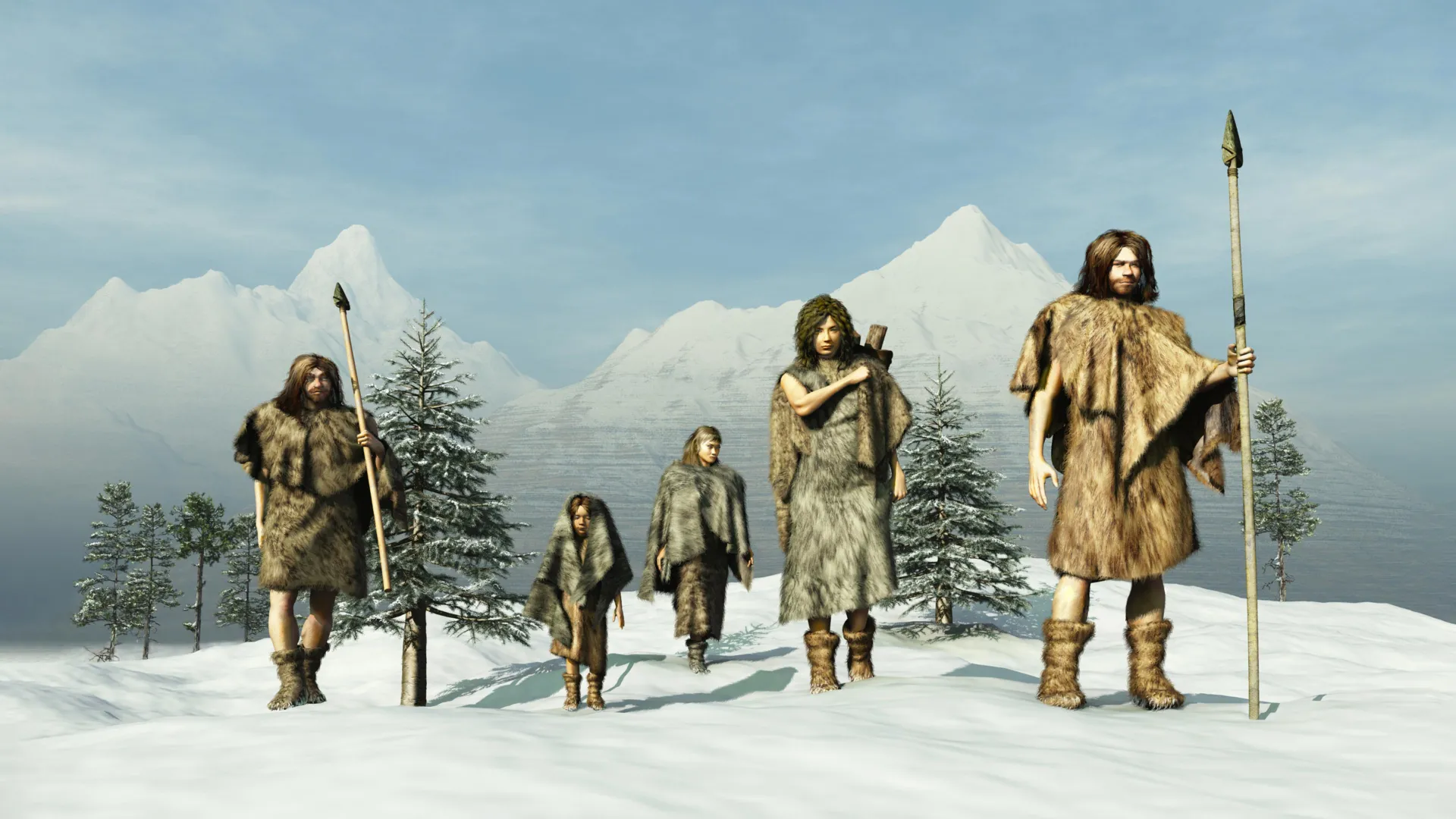
For decades, archaeologists and climatologists have engaged in a sophisticated detective story, attempting to piece together the precise moment when the British Isles became hospitable enough for human life following the harrowing depths of the last Ice Age. Now, a groundbreaking study published in Nature has upended the conventional wisdom, revealing that our ancestors reclaimed these northern lands significantly earlier than previously believed.
By recalibrating ancient data and looking to the microscopic fossil records hidden in the depths of a Welsh lake, scientists have determined that humans returned to Britain approximately 15,200 years ago. This discovery shifts the timeline back by half a millennium, suggesting that early hunter-gatherers were far more resilient and responsive to rapid environmental shifts than historians had dared to assume.
The Chronology of Re-entry: A 500-Year Shift
The conventional narrative held that the recolonization of Britain began roughly 14,700 years ago, following a major warming event observed across north-west Europe and Greenland. This timeline was built upon radiocarbon dating of human remains and artifacts, coupled with climate models that suggested the British Isles were an uninhabitable tundra until that specific warming pulse.
However, advanced analytical techniques applied in the early 2000s began to produce "anomalous" dates—evidence of human activity that predated the accepted warming event. This created a profound scientific puzzle: were humans enduring extreme, sub-arctic cold that researchers previously thought impossible, or were the climate models themselves fundamentally flawed?
The new research resolves this tension. By applying rigorous recalibration to existing radiocarbon samples, the study confirms that humans were indeed traversing the landscape of Britain between 15,200 and 15,000 years ago. This 500-year gap is not merely a technical adjustment; it represents a fundamental correction in our understanding of how quickly the environment changed and how nimbly prehistoric populations tracked those changes.
The Evidence: Unlocking Secrets from Llangorse Lake
The breakthrough that allowed researchers to verify this earlier timeline came from an unlikely source: the sediment layers of Llangorse Lake (Lake Syffadan) in south Wales. Situated near the Wye Valley—a region containing some of the oldest archaeological evidence of post-ice-age occupation—the lake acted as a natural archive, trapping pollen, biological debris, and chemical signatures for nearly 20,000 years.
The Chironomid Proxy
Central to the study was the analysis of chironomids, or non-biting midges. These small insects are highly sensitive to temperature; specific species thrive only within narrow climate ranges. By examining the head capsules of these midges preserved in lake sediment, researchers could reconstruct past summer temperatures with high precision.
The results were startling. The data indicated that Britain experienced a localized, rapid warming phase that decoupled from the broader trends seen in Greenland. Roughly 15,200 years ago, summer temperatures in southern Britain surged from a harsh 5–7°C to a much more manageable 10–14°C. This rapid increase, potentially occurring over the span of just a few decades, transformed the landscape into a viable environment for large mammals and, consequently, the humans who hunted them.
Megafauna as a Leading Indicator
The environment of the time was not a static, barren wasteland. Geological and faunal evidence suggests that as the ice sheets retreated, vast grasslands expanded across the region, which was then still connected to mainland Europe by the landmass known as Doggerland. Reindeer and horses were thriving in this environment as early as 15,500 years ago. Human migration, the study suggests, was essentially a "shadow" pursuit—hunters followed the migration patterns of these herds as they moved into newly opened, nutrient-rich grazing grounds.
Supporting Data and Archaeological Context
The Late Upper Paleolithic era, spanning roughly 14,000 to 11,000 years ago, was characterized by extreme volatility. Across north-west Europe, human populations were forced into a cycle of seasonal and multi-generational abandonment and return. As the climate flickered between cold and warm, human survival was dictated by mobility.
The researchers combined three distinct data streams to construct their new timeline:

- Recalibrated Radiocarbon Dates: Improving the precision of the chronological data related to skeletal remains and tools.
- Palynology (Pollen Analysis): Identifying shifts in flora that signaled the transition from tundra to open grassland.
- Climate Modeling: Using the lake’s geochemical markers to confirm that the warming was indeed early and localized.
This multidisciplinary approach highlights that human movement in the Paleolithic was not a slow, meandering drift but a strategic response to environmental opportunity. The presence of humans at 15,200 years ago confirms that a relatively modest temperature rise was sufficient to trigger a large-scale demographic shift.
Official Responses and Scientific Consensus
The scientific community has largely welcomed the study as a necessary correction. Dr. [Lead Researcher Name, if applicable, or generic reference to the study authors], noted that the previous models were hampered by a "Greenland-centric" view of climate change. For years, scientists applied climate data from the Greenland ice cores to the rest of the North Atlantic region, assuming that temperatures across Europe rose in lockstep.
"We have been using a regional thermometer that didn’t account for local nuances," one researcher remarked. The consensus now emerging is that Britain’s climate was influenced by its unique geography—its position on the edge of the Atlantic and its connection to the mainland allowed for micro-climates that could warm significantly faster than the continental interior.
Archaeologists who have long argued for an "earlier-than-thought" occupation of the British Isles feel vindicated. The study bridges the gap between the material culture—the stone tools and animal bones found in caves—and the environmental reality of the era.
Implications: A Mirror to the Future
While the primary value of this research lies in its historical accuracy, the implications extend far beyond the Paleolithic era. By understanding how humans responded to rapid environmental shifts 15,000 years ago, modern society gains a clearer lens through which to view the current climate crisis.
The Lessons of Migration
Human history is, in many ways, a history of migration driven by environmental necessity. The study underscores that when ecosystems shift, human populations shift with them. In the Paleolithic, this meant moving toward temperate zones to follow game. In the 21st century, the pressures are more complex, but the fundamental behavioral drivers remain: the search for food, water, and stable living conditions.
Predicting Modern Responses
As polar regions continue to warm and glaciers retreat at unprecedented rates, the same climatic "pull factors" are emerging. Scientists suggest that the lessons from the end of the last Ice Age serve as a cautionary tale. Just as our ancestors were forced to abandon and reclaim territory, modern populations may face increasing pressure to relocate as previously stable regions become uninhabitable due to sea-level rise or extreme weather.
The study concludes that environmental change acts as a primary catalyst for human movement. By identifying the thresholds—the specific degree of temperature change that makes an area viable—researchers are building predictive models that could help policymakers understand future migration patterns.
Conclusion: A More Human History
The re-dating of Britain’s post-Ice Age occupation is more than a mere footnote in a history book. It is a testament to the tenacity of early human ancestors who survived in a rapidly changing world, and a demonstration of how modern science can illuminate the past through innovative, collaborative research.
As we look toward a future shaped by climate uncertainty, the resilience of those who walked the tundra of 15,000 years ago serves as a powerful reminder: humanity has always been a species on the move, defined by its ability to adapt to the shifting boundaries of its world. By finally getting the timeline right, we have not only corrected the past but also gained a more accurate understanding of the mechanisms that drive human survival in a changing environment.

 Dwi Wanna
 Asro
Asro
 Nila Kartika Wati
 Jia Lissa
 Basiran
 Sagoh
Sagoh

 Lina Hope