
 Suro Senen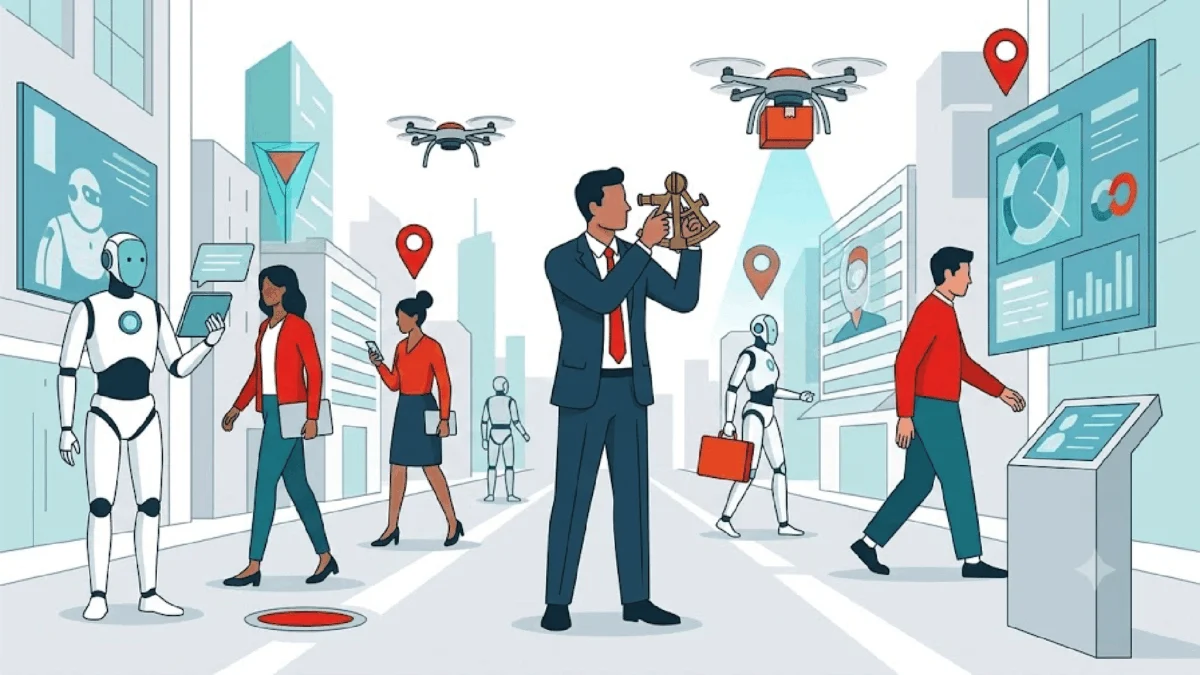
For decades, the marketing profession has operated on a foundational set of assumptions: buyers search for information on Google, they engage with content to move through a sales funnel, and humans make the final decisions. These pillars have supported everything from SEO strategies to multi-million dollar lead-generation campaigns. However, according to new research, these long-standing best practices are not just evolving—they are actively decaying.
A seminal paper by Prof. Rajan Varadarajan of the Mays Business School at Texas A&M University, published in the Marketing Strategy Journal, argues that the integration of Artificial Intelligence (AI) into the marketplace is forcing a radical, uncomfortable reassessment of how companies connect with customers. As AI agents begin to handle everything from initial vendor research to final product recommendations, the traditional "marketing playbook" is becoming increasingly disconnected from the reality of modern consumer behavior.
The Phenomenon of Knowledge Decay
At the heart of Prof. Varadarajan’s research is the concept of "knowledge decay." In marketing, this occurs when established wisdom becomes obsolete because the environmental conditions that once validated it have fundamentally shifted.

For years, the "buying journey" was viewed as a linear, human-centric process. A prospect would identify a need, search for a solution, evaluate vendors, and eventually interact with a sales representative. Today, AI is rewriting the rules of engagement. As AI systems take over the burden of research and comparison, the information flow—and the way it is evaluated—is being filtered through algorithms rather than human cognition. When a brand’s strategy is predicated on a human browsing a website or downloading a whitepaper, it is operating on a map that no longer matches the territory.
Chronology of the Shift: From Search to Synthesis
The transition from human-led discovery to AI-assisted procurement did not happen overnight, but its acceleration is unprecedented.
- The Early Internet Era: Initially, the web served as a massive library where marketers could "place" information for users to find via organic search. The primary goal was visibility.
- The Social & E-commerce Surge: As social media and e-commerce matured, the focus shifted to engagement and conversion. Marketers began optimizing for behavioral triggers and personalized ad targeting.
- The AI Disruption (Current): We are now in an era where information is not just found; it is synthesized. AI agents now perform the heavy lifting of summarizing product benefits, comparing technical specifications, and even filtering out "marketing noise."
This shift represents a departure from the "information retrieval" model to an "information synthesis" model. Where a marketer once competed for a user’s attention on a Search Engine Results Page (SERP), they are now competing for the attention of an AI’s Large Language Model (LLM) or an autonomous procurement agent.

The Distinction: Principles vs. Playbooks
One of the most vital takeaways from Prof. Varadarajan’s work is the distinction between conceptual knowledge and instrumental knowledge.
The Enduring Principles
Conceptual knowledge refers to the core tenets of marketing that remain largely immune to technological shifts. These include the psychological needs of the customer, the necessity of brand differentiation, and the fundamental requirement of trust. Regardless of whether a human or an AI is making a purchase decision, these principles hold firm. Humans still seek solutions to pain points, and brands still need to articulate why they are the superior choice.
The Fragile Playbooks
Instrumental knowledge, conversely, is the "how-to" manual—the tactics that marketers employ to capitalize on those principles. This is where the "knowledge decay" is most apparent. SEO, for instance, has evolved from a game of keyword stuffing and backlink building to a complex challenge of ensuring an AI model understands and accurately cites a brand’s value proposition. If your strategy is to drive clicks to a landing page, but the buyer receives a complete summary of your product from an AI assistant without ever visiting your site, your "playbook" is failing, even if your underlying marketing principles remain sound.

The Stress Test: Four Questions for Modern Marketers
To combat knowledge decay, the research suggests that marketing leaders must subject their existing strategies to a rigorous "stress test." These questions are designed to expose the gap between outdated assumptions and current realities:
- Who is actually gathering the information? If you are writing content for a human, but an AI agent is performing the research, is your content structured to be "machine-readable" and prioritized by algorithmic retrieval systems?
- Who is evaluating the options? If your lead-gen funnel assumes a human is comparing three vendors, but an AI is pre-selecting a shortlist based on data points, how does your value proposition stand out in a machine-driven selection process?
- Who is making the final decision? Are you still optimizing for human-centric emotional triggers, or is the decision-making process shifting toward objective, AI-driven performance metrics?
- Are our KPIs still meaningful? If a core metric is "website traffic" but the buying process now happens elsewhere, are you tracking the right success indicators?
Implications for Corporate Strategy
The implications for businesses are profound. Marketing departments that continue to double down on legacy tactics—such as traditional gated content or manual lead-nurturing sequences—may find themselves investing in processes that have diminishing returns.
The research suggests that the next wave of competitive advantage will not come from adopting the latest generative AI tool for the sake of efficiency. Instead, it will come from a shift in organizational mindset. Companies that successfully navigate this era will be those that prioritize "AI-ready" strategies. This involves moving away from the assumption that the customer is the primary point of contact and recognizing that, increasingly, the customer’s proxy (the AI agent) is the primary audience.

Furthermore, this shift demands a more transparent, data-rich digital footprint. If AI agents cannot easily access, interpret, and trust the information on your site, you are effectively invisible to a growing segment of the market.
The Road Ahead: Skepticism as a Competitive Advantage
For the modern marketer, the lesson is clear: skepticism is now a professional requirement. Decades of "best practices" were built for an environment where the internet was a human-to-human interface. Today, that environment is increasingly machine-mediated.
The goal is not to discard the entirety of your marketing education, but to recognize that the "shelf life" of specific playbooks has shortened dramatically. The most successful marketers of the coming decade will be those who can identify when a tactic is no longer serving its purpose and have the courage to abandon it in favor of new approaches that reflect the reality of an AI-integrated marketplace.

As noted in the paper, “Dawn of the AI era in marketing strategy and twilight of the conglomerates era in corporate strategy,” the transition is inevitable. The "knowledge relevance lifespan" is shrinking, and the organizations that survive will be those that pivot from being curators of static content to being architects of information ecosystems.
In short: your strategy—the "why" behind your brand—is likely still as relevant as ever. But your playbook—the "how" of your execution—must be rebuilt from the ground up to accommodate the silent, high-speed, and algorithmic partners now guiding your customers toward their next purchase.
Summary of Key Findings
- AI as a Gatekeeper: AI is no longer just a tool for content creation; it is becoming a filter through which purchasing decisions are made.
- Knowledge Decay: Established marketing playbooks are losing their effectiveness because they are built on assumptions of human-only research and decision-making.
- Conceptual vs. Instrumental: While marketing principles remain constant, marketing tactics require constant re-evaluation.
- Redefining Success: Organizations must audit their current funnels to ensure they align with an AI-mediated buying journey.
For those interested in the full academic analysis, the paper “Dawn of the AI era in marketing strategy and twilight of the conglomerates era in corporate strategy” by Prof. Rajan Varadarajan is available via ScienceDirect. It serves as a necessary wake-up call for CMOs and marketing strategists currently navigating the complexities of the digital-first, AI-driven landscape.


 Ammar Sabilarrohman
 Sagoh
Sagoh
 Raul Delapena Setiawan
 Reynand Wu


 Azzam Bilal Chamdy
 Ali Ikhwan