
 Nana
Nana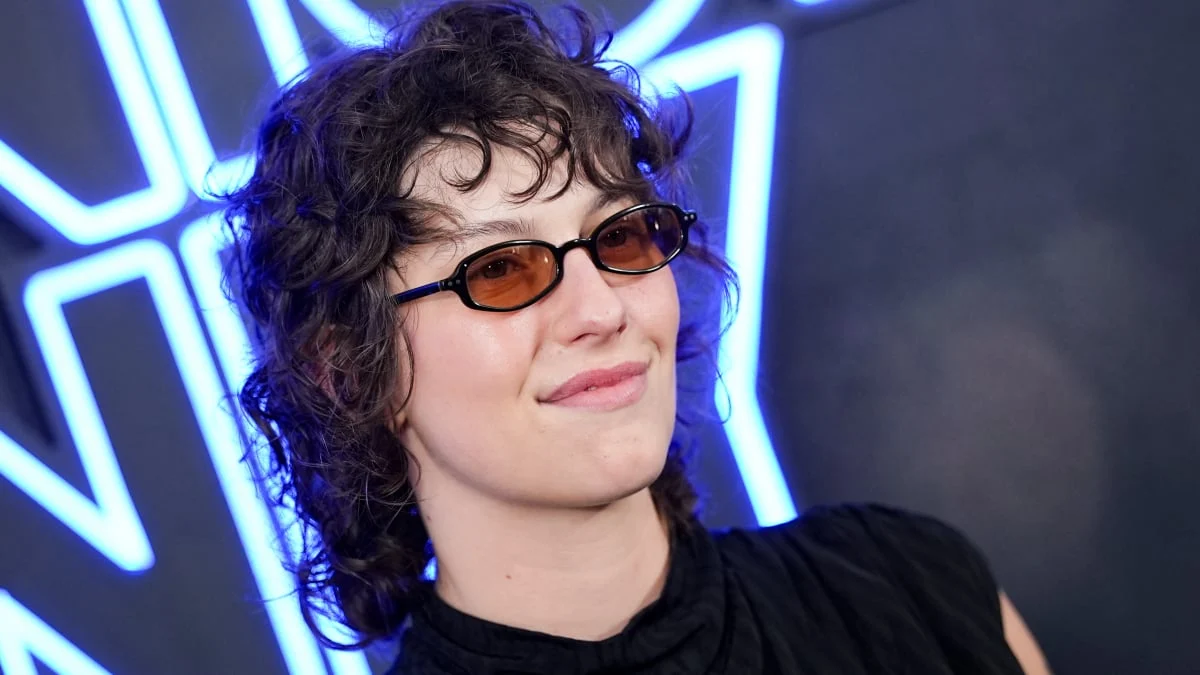
As Bisexual Visibility Month concludes, a firestorm of digital discourse has erupted, centering on a seemingly casual remark made by singer-songwriter King Princess. The controversy, which has migrated from podcast clips to the furthest corners of Reddit and TikTok, highlights an enduring tension within the LGBTQ+ community: the policing of identity labels and the persistent, often uncomfortable, overlap between sexual behavior and self-identification.
At the heart of the matter is an interview from November 2024, resurfaced on social media this month, in which the artist—who identifies as a lesbian—remarked, "I’ve taken a lot of dick." She continued, "Sometimes you get bored, and you’re just like, ‘I’m just gonna ride a cock.’ People get really shook when I say that… I’m not bi, but why would I exclude myself?"
While the singer has since attempted to clarify her position, the internet’s reaction has been swift, polarizing, and deeply reflective of the evolving, often contradictory, expectations placed upon queer icons in the 21st century.
A Chronology of the Controversy
The incident began when a clip from the podcast Celebrity Book Club with Steven & Lily gained viral traction on X (formerly Twitter) and TikTok. In the segment, King Princess candidly discussed her sexual history, explicitly stating that she had engaged in sexual activity with men, yet firmly rejecting the label of "bisexual."
The response was immediate. Within 48 hours, the singer’s name became a focal point of intense scrutiny across various digital platforms. Subreddits such as r/lesbiangang and r/lesbianactually became repositories for long-form critiques. Commentators characterized the situation as a form of "bisexual cosphaying," where users argued that the singer was encroaching on the lesbian identity while engaging in behaviors traditionally associated with heterosexuality or bisexuality.
As the backlash intensified, the artist took to TikTok to address the criticism. In a series of now-deleted videos, she clarified that she had never pursued romantic relationships with men, nor had she ever been "in love" with one. She framed her sexual encounters with men as purely transactional or born of curiosity, arguing that her primary sexual and emotional orientation remains exclusively focused on women. She explicitly pushed back against the concept of the "gold star lesbian"—a colloquial term used to describe a woman who has never had sexual contact with a man—arguing that such gatekeeping is exclusionary and counterproductive.
However, the firestorm was further ignited when the singer made additional comments suggesting that other, unnamed pop stars were "actively lying about being gay" while maintaining "fully committed relationships with men on the DL." This allegation sparked a "witch hunt" across social media, with fans and amateur sleuths attempting to identify which celebrities she might have been referencing, effectively shifting the conversation from a debate about labels to one of industry integrity.
The Intersection of Behavior and Identity
The core of this controversy lies in a fundamental disagreement: Does sexual behavior define one’s identity, or is identity an internal state that transcends specific sexual acts?
For many in the lesbian community, the term "lesbian" serves as a vital anchor—a descriptor of exclusive attraction to women. To see a prominent figure identify as a lesbian while simultaneously describing sexual encounters with men is, to many, a dilution of the label. It is not merely about sexual history; it is about the sanctity of a word that has historically provided community, refuge, and a specific political and social framework for women who do not interact with men.
Conversely, the artist’s perspective represents a modern, more fluid approach to identity. She argues that the degree of her interest in men is so negligible that "bisexual" feels like a misnomer—a label that would imply a level of attraction she simply does not feel. This creates a logical impasse: If a person is 99 percent attracted to one gender and one percent to another, does the "bisexual" label become a mandatory requirement, or is the individual entitled to the label that best reflects their primary lived experience?
Supporting Data: The Landscape of Queer Identity
The friction around this topic is not happening in a vacuum. Recent research from organizations like Pew Research Center underscores the shifting demographics of the LGBTQ+ community, where a significant majority of queer individuals in the United States now identify as bisexual or pansexual. This "gray area" of sexuality is, statistically, the norm, yet our cultural lexicon remains tethered to the binary of "gay" or "straight."
The anxiety surrounding labels is compounded by the harsh social stigma that still plagues the bisexual community. According to recent data from YouGov, the prejudice against bisexual individuals remains alarmingly high. Two-thirds of straight women report that they are unwilling to date a bisexual man, citing fears of infidelity or the persistent, baseless stereotype that bisexuals are inherently indecisive or "not actually queer."
Perhaps more startling is the data regarding internal community prejudice: one in five lesbians report an unwillingness to date a bisexual woman. When probed for reasons, respondents often cite "preferences" or, more explicitly, the fear that a bisexual partner is "not committed" to the queer experience. These statistics paint a picture of a community that is deeply divided, where labels are used as shields to protect oneself from the perceived "messiness" of bisexuality.
The "Gold Star" Dilemma and Public Perception
The term "gold star" carries immense weight in these debates. It acts as a gold standard of purity, suggesting that to be a "real" lesbian, one must have never deviated from the path of exclusive female attraction. Critics of this term, including King Princess, argue that it is a patriarchal tool that centers men in lesbian history—if a woman’s identity is defined by whom she hasn’t slept with, her identity remains inherently tied to the male experience.
However, the "gold star" status is also a symbol of resilience for many women who have spent their lives navigating a world that constantly tries to push them toward men. For these individuals, the label is not about purity, but about a definitive, non-negotiable rejection of the heteronormative status quo. When a public figure, who is held up as a role model, conflates these categories, it is understandable that a segment of the population feels their own identity is being erased or misrepresented.
Implications for the Future of Queer Discourse
The controversy surrounding King Princess suggests that in 2026, we are entering a new phase of identity politics. The internet has democratized the ability to label oneself, but it has also created a panopticon where every celebrity’s past and present are constantly audited by fans.
The implications for the broader LGBTQ+ movement are significant:
- The Fragility of Labels: As more celebrities like JoJo Siwa and Renéé Rapp share their journeys with evolving identities, we are seeing a move away from static labels. This is liberating for some, but it creates "identity whiplash" for others who rely on these labels for community structure.
- The Need for Nuance: The industry-wide "witch hunt" sparked by the singer’s comments highlights the dangers of performative purity. When we begin to police who is "gay enough" or who is "lying," we risk cannibalizing our own movements, creating an environment of paranoia rather than one of inclusion.
- The Persistence of Stigma: As long as society treats "bisexual" as a negative, "annoying," or untrustworthy label, individuals will continue to shy away from it, even when their experiences might technically align with it. If we want to move past these controversies, the focus must shift from policing individual word choice to dismantling the systemic prejudices that make certain labels seem undesirable.
Conclusion: Who Owns an Identity?
Ultimately, the question of whether King Princess is "bisexual" or "lesbian" is one that she alone has the authority to answer. However, the intensity of the public reaction proves that labels are never just about the individual—they are about the communities that coalesce around them.
The discomfort felt by many is a reflection of a deeper anxiety: in a world where everything is subject to "hot takes" and viral clips, how do we maintain the integrity of our identities without falling into the trap of gatekeeping? The answer likely lies in recognizing that human desire is vast, complicated, and rarely fits neatly into the boxes we have constructed for it.
As we look toward the future, the challenge will be to foster a culture where we can be "loud" about our truths without requiring everyone else to adhere to our specific interpretation of those truths. Until then, the debate will continue, likely resurfacing every September, as we collectively grapple with the tension between who we are and how the world demands we label ourselves.

 Suro Senen
 Raul Delapena Setiawan
 Laily UPN
 Iffa Jayyana
 Rifan Muazin
 Lina Hope
 Lina Irawan