
 Iffa Jayyana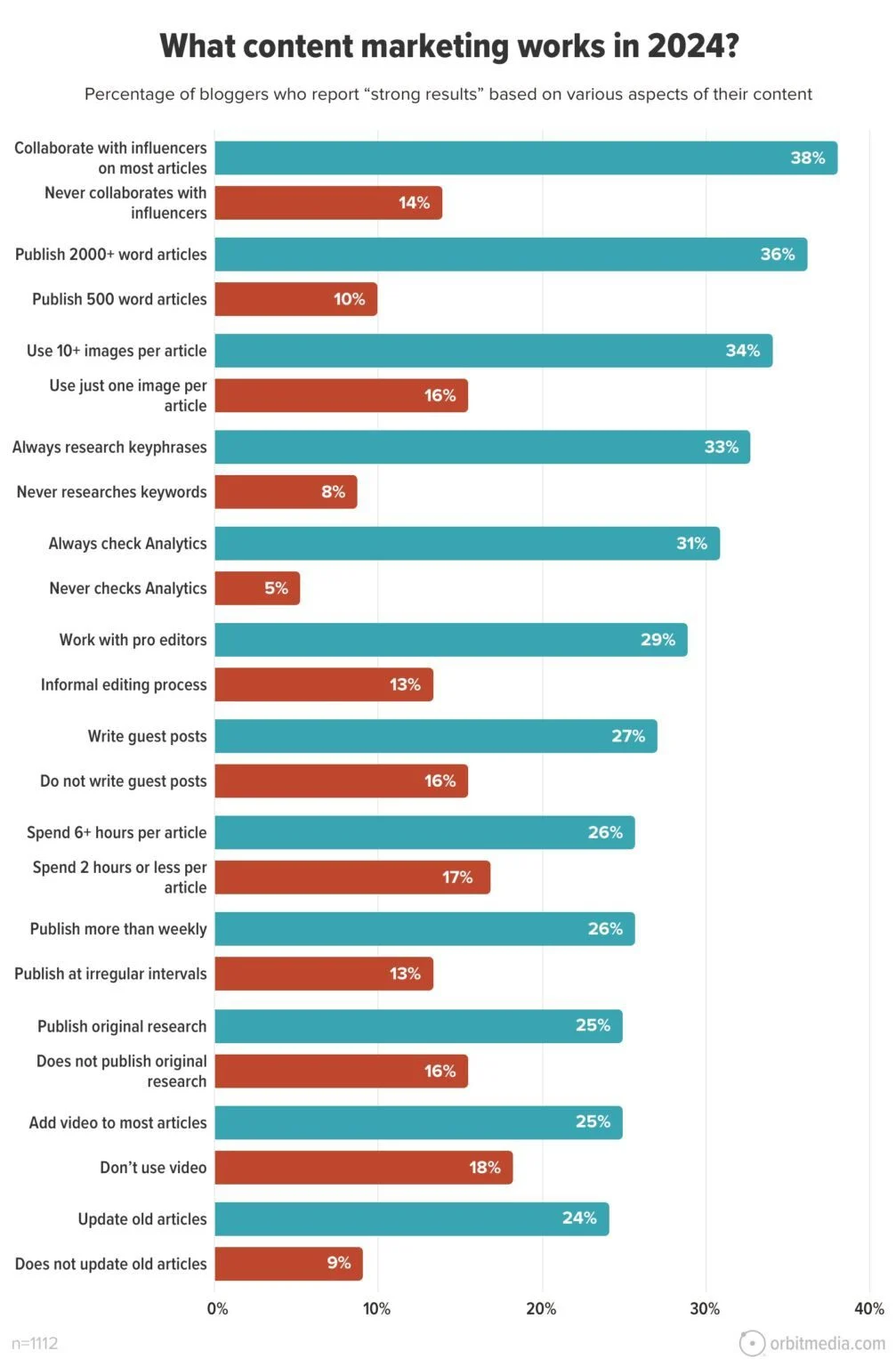
For over a decade, the business blog has been the cornerstone of digital marketing. It is the primary engine for search engine optimization (SEO), the home base for thought leadership, and the most reliable way to provide value to potential customers. However, as the digital landscape undergoes a radical transformation driven by generative AI and shifting search algorithms, the "business as usual" approach to blogging is hitting a wall.
To understand how high-performing brands are navigating this volatility, we turn to the 11th Annual Blogger Survey conducted by Orbit Media. This authoritative research, which aggregates data from over a thousand content professionals, offers a sobering yet optimistic roadmap for marketers who are willing to move beyond legacy tactics.
The State of the Industry: The "Four-Hour" Reality
One of the most persistent myths in modern content marketing is that generative AI has ushered in an era of effortless, instantaneous content creation. Logic would dictate that with tools like ChatGPT, Claude, and Jasper at our disposal, the time required to produce a high-quality blog post should be plummeting.

The data, however, tells a different story.
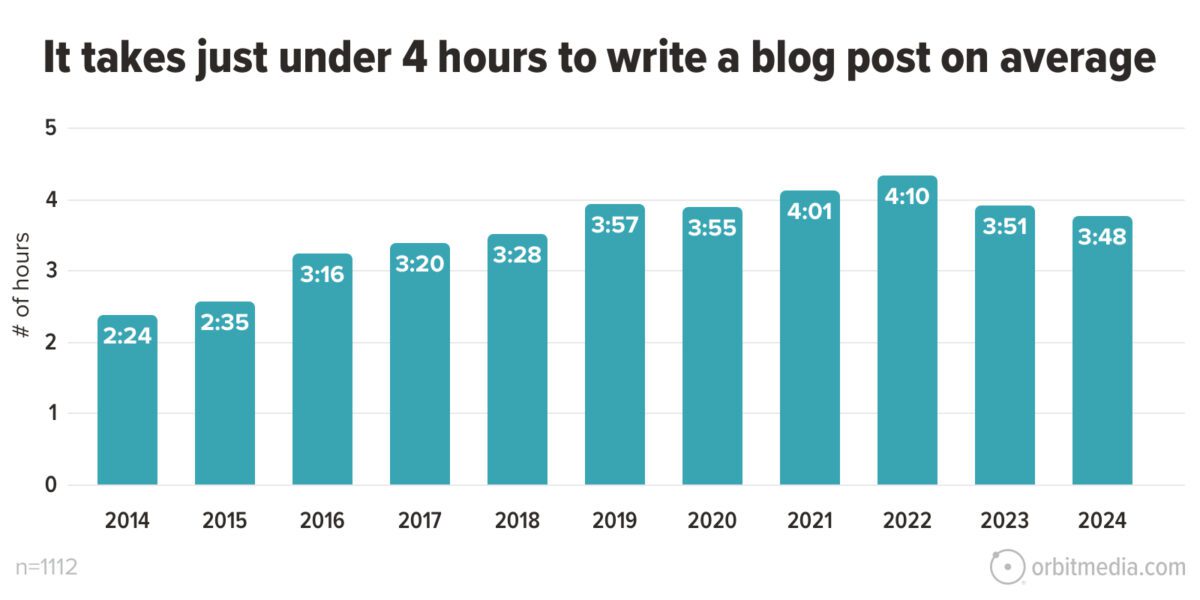
According to the 11th Annual Blogger Survey, the average blog post takes three hours and 48 minutes to write. This figure represents a decrease of a mere three minutes from the previous year. Despite the mass adoption of AI—which has surged from nearly 0% in 2022 to 80% in 2024—the "human tax" on content remains high.
Why has the time-to-publish not dropped? The answer lies in the nature of "quality." While AI can handle the heavy lifting of drafting, the market has become increasingly saturated with mediocre, automated content. To cut through the noise, marketers are spending more time on strategic direction, fact-checking, human-centric storytelling, and original research. Efficiency in drafting has been replaced by an increased need for editorial oversight.
Chronology of Change: From Traffic to Trust
The history of blogging over the last decade can be divided into three distinct eras:
- The SEO Gold Rush (2014–2018): During this period, blogging was largely a volume game. Brands that produced consistent, keyword-rich content were rewarded with exponential growth in organic search traffic.
- The Saturation Point (2019–2022): As competition intensified, the "skyscraper technique" (creating content better than what already ranked) became the standard. Marketers began focusing on word counts and technical optimization.
- The Era of Intent and Authority (2023–Present): Today, we are seeing a decline in traditional organic traffic. Search engines are moving toward "zero-click" results, where users find answers directly on the search engine results page (SERP) without ever visiting the website. This shift has forced a fundamental rethink of what "success" looks like for a content program.
Supporting Data: Why "More" Isn’t Always "Better"
The Orbit Media research provides a clear contrast between low-effort and high-effort content programs. The findings suggest that the correlation between effort and outcome is not linear—it is exponential.
- The 2,000-Word Threshold: Bloggers who consistently publish articles exceeding 2,000 words are significantly more likely to report "strong results." Long-form content provides the depth necessary to establish true topical authority.
- The Frequency Myth: While quality is paramount, the data suggests that a bi-weekly posting cadence is the minimum requirement for maintaining audience engagement. Users have developed high expectations; they will not tolerate long periods of radio silence, nor will they engage with thin, superficial content.
- The "Social" Shift: Perhaps the most compelling takeaway is that successful blogs are increasingly managed like social media streams. Top-performing blogs incorporate interactive elements, visual storytelling, and community-building features that were once reserved for platforms like LinkedIn or X.
Expert Q&A: Insights from Andy Crestodina
To contextualize these findings, we spoke with Andy Crestodina, CMO and Co-Founder of Orbit Media, whose expertise in website optimization and analytics is unparalleled in the marketing industry.

Q: The data shows a steady decline in "strong results" over the last nine years. What is the primary driver of this trend?
Crestodina: "For many marketers, ‘results’ have been synonymous with ‘traffic.’ When traffic was easy to get, it was a fine metric. But with the rise of zero-click searches and the general volatility of search algorithms, relying on traffic as your primary KPI is a losing game. The most visible metrics—pageviews, sessions, and traffic—are often the least important. They are vanity metrics that don’t necessarily reflect business health."
Q: How should marketers define success in an environment where search traffic is harder to secure?

Crestodina: "We need to look deeper into the funnel. We should be measuring lead quality, email sign-ups, and, most importantly, the ‘invisible’ outcomes: word-of-mouth, brand affinity, and top-of-mind awareness. These are the hardest to track, but they are the only ones that actually grow a business. Every article you write should be viewed as an opportunity to build a long-term relationship, not just a one-off attempt to rank for a keyword."
Q: You’ve famously advocated for LinkedIn newsletters, even though they exist on ‘rented land.’ Why take that risk?
Crestodina: "It’s about going where the audience is. If you want to reach professionals, LinkedIn is the digital town square. We saw traffic to our own domain dipping, so we pivoted. We started publishing directly to the LinkedIn newsletter platform, and the engagement we’ve seen is orders of magnitude higher than a standard blog link. It’s not about abandoning your website; it’s about using social platforms to pull the audience back into your ecosystem."

The Strategic Implications for 2025
For content marketing leaders, the implications of this research are clear. The era of churning out generic, AI-assisted content is over. To thrive in the coming year, teams must adopt a more sophisticated, multi-channel strategy.
1. Realign Your Metrics
Stop measuring your success solely by traffic. Start tracking "Conversion-to-Content" ratios. How many people read an article and then signed up for a demo? How many newsletter subscribers did a specific piece of research generate? Shift your focus from the top of the funnel (awareness) to the middle and bottom (consideration and decision).
2. Embrace the "Human-in-the-Loop" Model
AI is a tool for productivity, not a replacement for strategy. Use AI to brainstorm, structure, and optimize, but reserve the human creative budget for original research, interviews with subject matter experts, and the unique brand voice that AI cannot replicate. If your content sounds like it could have been written by a generic bot, it won’t rank—and it won’t convert.

3. Treat Your Blog Like a Media Property
The days of the "company diary" are over. Your blog should function like a specialized media publication. This means investing in design, interactive data visualizations, and professional editing. The data confirms that collaborative content—such as expert roundups, interviews, and co-branded research—consistently outperforms solo efforts.
4. Build Your Own "Rented" Audience
While the core of your content should live on your website, don’t be afraid to meet your audience where they live. Whether it’s a LinkedIn newsletter, a private Slack community, or a curated email series, the goal is to build an audience that you can reach without relying on the whims of search engine algorithms.
Conclusion: The Path Forward
The 11th Annual Blogger Survey serves as a necessary wake-up call. The internet is becoming louder, and the barrier to entry is lower than ever. However, the barrier to success has never been higher.

The brands that will win in 2025 are those that recognize that blogging is not a "set it and forget it" SEO tactic. It is a commitment to depth, a dedication to original insight, and a willingness to adapt to the changing habits of the modern consumer. As Andy Crestodina notes, the biggest risk isn’t the changing algorithm; it’s the temptation to continue with low-effort, low-impact content programs.
By increasing your investment in the content that truly matters—and by measuring it through the lens of business value rather than simple traffic—you can ensure your brand remains a trusted authority in an increasingly automated world.


 Nana
Nana
 Dwi Wanna
 Nila Kartika Wati
 Jia Lissa
 Basiran
 Sagoh
Sagoh

 Lina Hope