 Pevita Pearce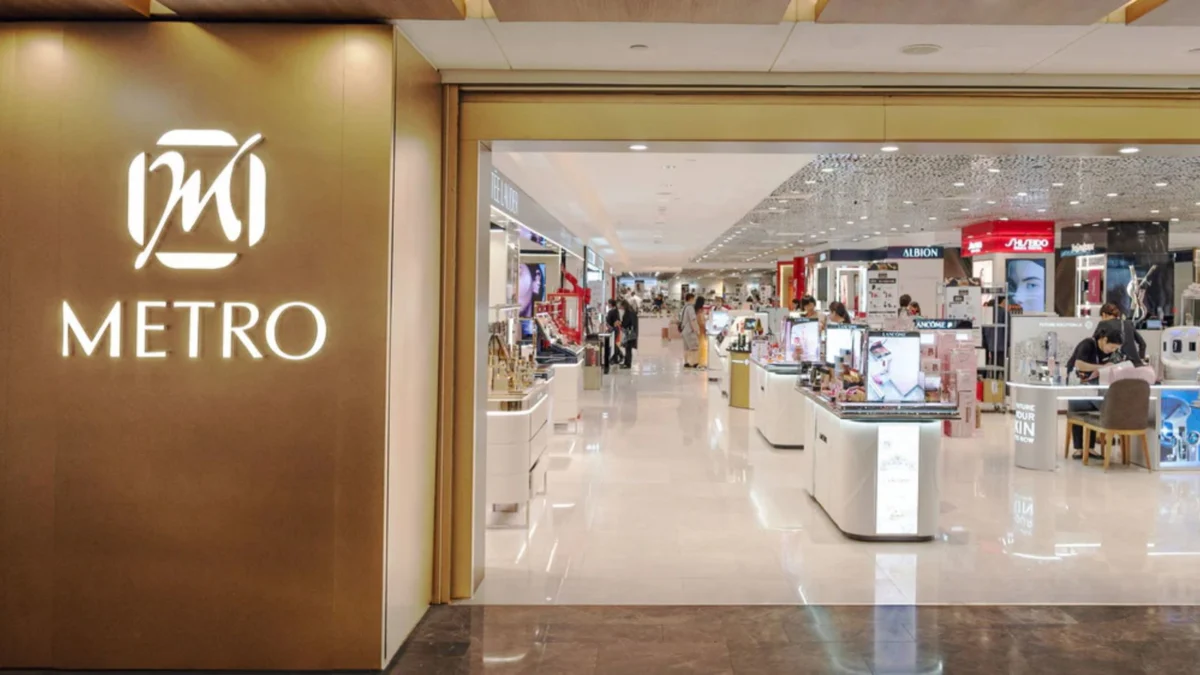
Singapore – In a move that signals a seismic shift in the city-state’s retail landscape, Metro Holdings has announced it will not renew its leases for its two flagship large-format department stores at Metro Paragon and Metro Causeway Point. The decision, revealed in a recent strategic review, marks the beginning of a transition away from the traditional department store model that has defined the brand for decades, in favor of an agile, multi-concept retail strategy designed to survive a volatile post-pandemic economy.
I. Main Facts: The Deconstruction of the Department Store Model
Metro Holdings, a name synonymous with Singapore’s shopping heritage since the 1950s, is officially moving to "reposition" its retail business. The group confirmed that as existing lease arrangements for its anchor locations at Paragon (Orchard Road) and Causeway Point (Woodlands) conclude, the shutters will come down on the expansive, multi-floor formats that have served as regional landmarks.
However, the group was quick to clarify that this is not an exit from the market, but rather a metamorphosis. The "New Metro" will focus on four key pillars:
- Smaller-Format Stores: Moving away from 100,000-square-foot behemoths to boutique-style outlets.
- Multi-Specialty Concept Stores: Highly curated spaces focusing on specific categories like wellness, home, or high-end fashion rather than a "one-stop-shop" for everything.
- Pop-Up Initiatives: Utilizing temporary spaces to test new brands and engage with younger, trend-conscious demographics.
- Brand Partnerships: Leveraging its joint venture, Grand Brands Asia, to manage international retail brands and immersive concept stores.
The move reflects a broader global trend where the "department store" is being reimagined. With the rise of e-commerce and direct-to-consumer (DTC) brands, the utility of a massive physical space housing hundreds of disparate brands has diminished. Metro’s leadership believes that by shrinking its footprint, it can increase its operational efficiency and respond more rapidly to shifting market trends.
II. Chronology: From High-Street Icon to Agile Competitor
To understand Metro’s current pivot, one must look at the timeline of its evolution within the context of Singapore’s retail history.
- 1957: Metro was founded by Mr. Ong Tjoe Kim, opening its first store at High Street. For decades, it expanded aggressively, becoming a staple of Orchard Road.
- The 1990s and 2000s: Metro established itself as a premier middle-to-upper-market retailer, anchoring major malls like Paragon and Ngee Ann City. It successfully navigated the 1997 Asian Financial Crisis and the 2003 SARS outbreak by maintaining a loyal customer base.
- 2019: In a precursor to the current announcement, Metro closed its five-story flagship at The Centrepoint after five years of operation. This was the first major sign that the "large-format" model was struggling to generate the necessary footfall in the face of rising rents and digital competition.
- 2020-2022: The COVID-19 pandemic accelerated the shift toward online shopping. Metro, like many retailers, had to bolster its digital presence, but the physical overhead of its massive Paragon and Causeway Point stores remained a heavy weight on the balance sheet.
- 2024 (The Strategic Review): Metro Holdings conducted a comprehensive internal audit of its retail operations. The review concluded that the long-term sustainability of the group depended on a "flexible retail approach."
- Late 2024: The official announcement of the non-renewal of leases at Paragon and Causeway Point was made via an SGX (Singapore Exchange) filing, outlining the transition toward 2027.
III. Supporting Data: The Economics of the Retail Pivot
The decision to exit large-format spaces is backed by sobering data regarding the Singaporean retail climate. According to market analysts, several factors have converged to make the traditional department store model nearly untenable:
1. Rising Operational Costs
Rental costs in prime locations like Orchard Road (Paragon) remain among the highest in the world. When coupled with a persistent labor shortage in the retail sector and rising electricity costs, the "revenue-per-square-foot" metric for department stores has been under significant pressure. By shifting to smaller formats, Metro can significantly reduce its fixed overheads.
2. Changing Consumer Habits
Data from the Singapore Department of Statistics (SingStat) consistently shows that while physical retail is recovering, the "Department Store" category often lags behind "Supermarkets" and "Specialty Stores." Consumers today prefer "curated" experiences. They no longer want to browse through ten aisles of kitchenware; they want a curated selection of the top three trending brands in a lifestyle-oriented setting.
3. The Digital Integration
Metro’s shift toward Grand Brands Asia and immersive concept stores aligns with the "omnichannel" reality. Modern shoppers often "showroom"—they visit a physical store to touch and feel a product but complete the purchase online. A smaller, more experiential store serves as a high-impact marketing touchpoint without the inventory costs of a massive department store.
4. Financial Outlook
In its filing to the SGX, Metro Holdings noted that it is currently assessing the full financial implications. However, based on current projections, the Board does not expect these changes to materially affect the Group’s consolidated net tangible assets or earnings per share for the financial year ending March 31, 2027. This suggests that the cost-saving measures of closing the large stores are expected to offset the initial capital expenditure of launching new formats.
IV. Official Responses: Leadership on the "Refreshed" Strategy
The leadership at Metro Group has framed this transition not as a downsizing, but as a modernization. Yip Hoong Mun, Chief Executive Officer and Executive Director of Metro Group, provided a clear rationale for the move:
"Consumer expectations today are fundamentally different. Amidst the challenging operating environment, our refreshed retail strategy is designed to meet customers’ evolving expectations while having greater flexibility to introduce new concepts, brands and partnerships."
The emphasis on "flexibility" is key. In the traditional model, a department store is locked into long-term leases and rigid floor plans. The new strategy allows Metro to "plug and play" different retail concepts depending on what is trending in the market.
When approached by Human Resources Online (HRO) for further clarification on the timeline, a spokesperson for Metro Group added:
"The Group is currently evaluating the implementation timeline and scope of its retail strategy as part of its ongoing transition towards a more flexible retail approach. The Company is also assessing the financial implications of the proposed transition. Further updates will be provided as and when there are material developments."
V. Implications: What This Means for the Future
The repercussions of Metro’s decision will be felt across several sectors: real estate, labor, and the consumer experience.
1. Real Estate: The "Anchor" Vacuum
The departure of Metro from Paragon and Causeway Point leaves significant gaps for landlords. For Paragon, a premier luxury mall owned by Paragon REIT, losing a cornerstone tenant like Metro offers an opportunity to subdivide the space into higher-yielding specialty boutiques or international flagship stores. However, it also poses a risk if a suitable "anchor" cannot be found to drive footfall to the upper floors.
2. Labor and Manpower: The HR Challenge
From a human resources perspective, the transition from large-format stores to smaller, multi-concept outlets poses a significant challenge. Large department stores employ hundreds of floor staff, cashiers, and warehouse personnel. While Metro has not officially commented on potential layoffs, the "smaller format" strategy inherently requires a smaller, but perhaps more specialized, workforce.
HR experts suggest that Metro will likely focus on "upskilling" its current staff to handle more personalized customer service roles in the new "curated" stores. The shift from "sales assistant" to "brand ambassador" or "lifestyle consultant" will be a critical part of the company’s internal transformation.
3. The Consumer Experience: A More "Niche" Metro
For the loyal Metro shopper, the experience will change drastically. The nostalgia of the sprawling department store will be replaced by high-concept, tech-integrated spaces. We can expect to see more "store-in-store" concepts and perhaps a greater focus on Grand Brands Asia’s portfolio, which targets a younger, more affluent demographic.
4. Competitive Pressure
Metro’s move puts pressure on other remaining department stores in Singapore, such as Tangs and Takashimaya. While Takashimaya remains a powerhouse due to its unique Japanese "depachika" (basement food hall) and high-end positioning, other retailers will be watching Metro’s transition closely. If Metro successfully pivots to a leaner, more profitable model, it may provide a blueprint for the survival of legacy retail brands in the 21st century.
Conclusion
Metro Holdings’ decision to shutter its iconic large-format stores at Paragon and Causeway Point is more than just a business headline; it is a reflection of the "New Normal" in global retail. By choosing agility over scale and curation over volume, Metro is betting that the future of shopping lies in the quality of the engagement, not the square footage of the floor.
As the company moves toward its 2027 targets, the retail industry will be watching to see if this venerable Singaporean institution can successfully reinvent itself for a digital-first, experience-hungry generation of shoppers. The "Department Store" as we knew it may be fading, but Metro is determined to ensure that its brand remains a permanent fixture of the Singaporean identity, albeit in a smaller, sleeker, and more specialized form.

 Layla Zulfa
 Reynand Wu

 Iffa Jayyana
 Ammar Sabilarrohman
 Jia Lissa