
 Ammar Sabilarrohman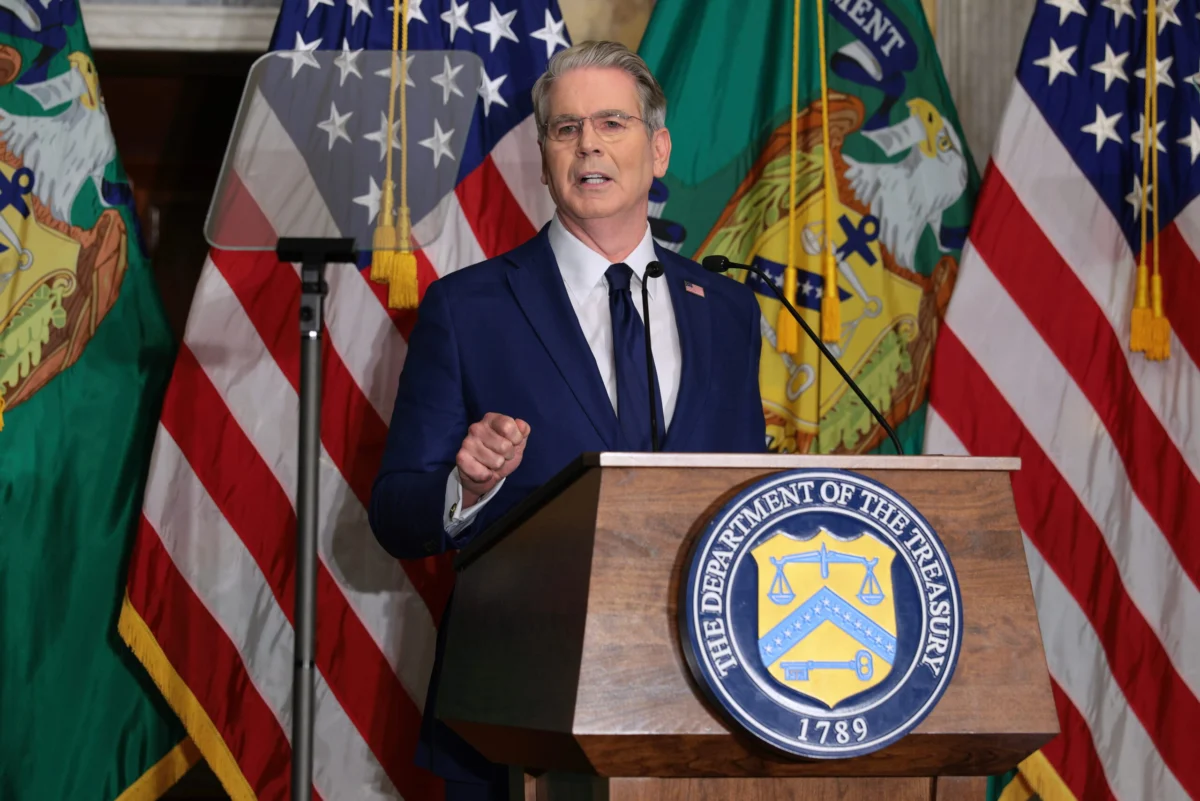
WASHINGTON, D.C. — In a dramatic escalation of the ongoing hostilities between the United States and Iran, the U.S. Treasury Department on Monday unveiled a sweeping new package of sanctions targeting individuals linked to Tehran’s state-sponsored cyber-espionage apparatus. The move, which Treasury Secretary Scott Bessent characterized as an "economic D-Day," signals a pivot toward total financial isolation of the Iranian regime as the conflict between the two nations enters its sixth month.
The sanctions specifically target four Iranian nationals identified as central figures in a campaign of cyber-theft and critical infrastructure infiltration. These designations follow closely on the heels of a federal indictment unsealed last week against actors affiliated with the Mabna Institute, a Tehran-based entity long accused by Western intelligence of functioning as a front for the Ministry of Intelligence and Security (MOIS).
The Core Allegations: Targeting the Digital Frontline
The Treasury Department’s latest action is not merely symbolic; it identifies specific individuals accused of orchestrating, executing, and profiting from illegal cyber activities. The designated individuals—Keyvan Fayyaz Ghareh Blagh, Saber Shahbazi Balujeh, Mohammad Reza Kadkhoda’i, and Mojtaba Ghaleh-Kuhi—are accused of systematic digital intrusion.
According to the official Treasury release, the group has been active since at least late 2023. Their operations have focused on the exfiltration of proprietary data from a broad spectrum of U.S. sectors. The list of victims reads like a map of American economic stability: energy providers, defense contractors, healthcare networks, financial institutions, and major information technology firms.
The inclusion of Mojtaba Ghaleh-Kuhi is particularly significant, as he is identified as a leader within the MOIS-directed hierarchy. His designation brings renewed attention to the persistent threat posed by the Mabna Institute, a group that has faced U.S. sanctions dating back to 2018, when operative Behzad Mesri was first flagged by federal authorities. Furthermore, the Treasury added Arman Kahzadian to the sanctions list, citing his role in laundering and utilizing sensitive business information obtained through these illicit cyber-enabled means.
Chronology of Escalation: From Indictment to "Economic D-Day"
To understand the current tension, one must look at the rapid-fire sequence of events that have defined U.S.-Iran relations since early 2026.
- February 2026: The United States and Israel launch a coordinated military and strategic campaign against Iran, effectively initiating a state of war that has disrupted regional stability and global trade.
- Early August 2026: The Department of Justice unseals a significant indictment against members of the Mabna Institute, providing a legal basis for the subsequent Treasury actions.
- August 23, 2026: Secretary Scott Bessent publishes an opinion piece in the Financial Times, warning that the U.S. is preparing "the single greatest financial offensive ever" to cripple the Iranian economy.
- August 24, 2026: Secretary Bessent officially announces the new sanctions package in the Cash Room of the Treasury Department, framing the policy as a modern-day "D-Day" campaign.
- August 25-26, 2026: The international community reacts to the widening scope of secondary sanctions, which now encompass digital assets, aviation, and shipping sectors.
The Financial "Economic D-Day" Strategy
Secretary Bessent’s rhetoric is deliberate. By invoking the memory of the Normandy landings, the Treasury Secretary is attempting to frame the current financial offensive as an existential necessity. "In the Second World War, D-Day marked the historic beginning of a campaign with our allies to target and drive the enemy from its positions," Bessent said during his briefing. "Today, in that same spirit, we are launching an economic onslaught against Iran’s financial connections around the globe."
The strategy is twofold. First, it aims to degrade the operational capabilities of the MOIS by cutting off the funding streams that support their cyber-warfare divisions. Second, the Treasury is expanding the reach of secondary sanctions, effectively warning any global entity—be it a bank in a neutral country or a technology firm—that doing business with Iran now carries the risk of total exclusion from the U.S. financial system.
By targeting five specific sectors—digital assets, technology, gold, aviation, and shipping—the U.S. is attempting to plug the holes in existing embargoes that the Iranian regime has exploited to bypass traditional financial restrictions.
Internal Rot: Greed Over Ideology
A fascinating and perhaps destabilizing element of the government’s report is the revelation regarding the internal motivations of the Iranian hackers. While the MOIS clearly directs these individuals to target foreign adversaries, the Treasury Department notes that the group is increasingly driven by "personal enrichment and greed."
This internal friction has reportedly led some operatives to target Iranian companies and domestic assets for profit, rather than focusing entirely on the state’s geopolitical objectives. This suggests a degradation of discipline within the state-sponsored cyber-ecosystem, potentially making these hackers more vulnerable to intelligence-gathering operations and internal betrayal. If the regime cannot keep its own cyber-mercenaries focused on the state’s agenda, the efficacy of the entire program may be in decline.
Implications for Critical Infrastructure
The timing of these sanctions coincides with heightened anxiety regarding the security of U.S. infrastructure. In recent months, there have been a series of concerning incidents involving U.S. water facilities and industrial control systems. While President Trump has previously denied reports of Iranian culpability in specific domestic water-sector hacks, the intelligence community remains concerned about the intersection of state-directed cyber-espionage and the potential for "pre-positioning"—the act of placing malware inside critical networks to be triggered during a future conflict.
The Treasury Department, when pressed on whether the newly sanctioned individuals were responsible for these specific infrastructure breaches, declined to provide immediate comment. Similarly, the National Security Agency (NSA) has remained tight-lipped regarding the specific attribution of recent alerts regarding Siemens programmable logic controllers (PLCs), which are essential for industrial operations.
Global Reactions and the Path Forward
The Iranian government has already vowed "consequences" for the latest round of sanctions. In Tehran, officials view these measures not as a response to cyber-crimes, but as a continuation of an illegal war of aggression. The effectiveness of these sanctions remains a subject of intense debate among geopolitical analysts.
Critics of the policy argue that history has shown that sanctions rarely alter the behavior of a regime that views itself as being in an existential struggle. Instead, they suggest that such extreme measures may force Iran to further integrate its economy with other sanctioned powers, such as Russia or North Korea, creating a "sanctions-proof" bloc that operates entirely outside the Western-dominated financial system.
Conversely, proponents argue that the "economic D-Day" is the only remaining lever short of full-scale total war. By targeting the specific lifelines of the regime—its ability to trade in gold, move digital currency, and maintain its aviation fleet—the U.S. is betting that the cumulative weight of these restrictions will eventually force a domestic crisis that the Iranian leadership cannot ignore.
Conclusion
As the sun sets on the fifth month of the U.S.-Iran conflict, the battlefield has moved far beyond the physical geography of the Middle East. It now resides in the code of critical infrastructure, the digital ledgers of global banks, and the shadowy world of international finance. The designation of these four Iranian hackers is a tactical move in a much larger, high-stakes game of attrition.
Whether this "economic D-Day" will succeed in forcing Tehran to the negotiating table or simply further entrench the regime’s resolve remains to be seen. What is clear, however, is that the digital front has become the primary theater for modern conflict, and the U.S. is determined to make the cost of such warfare unsustainable for its adversaries. For now, the world watches as the Treasury Department tightens the noose, waiting to see if the regime will buckle under the pressure or if the conflict will spiral into an even more dangerous, and unpredictable, phase.

 Basiran
 Iffa Jayyana
 Raul Delapena Setiawan
 Reynand Wu
 Sagoh
Sagoh

 Azzam Bilal Chamdy
 Ali Ikhwan