
 Azzam Bilal Chamdy
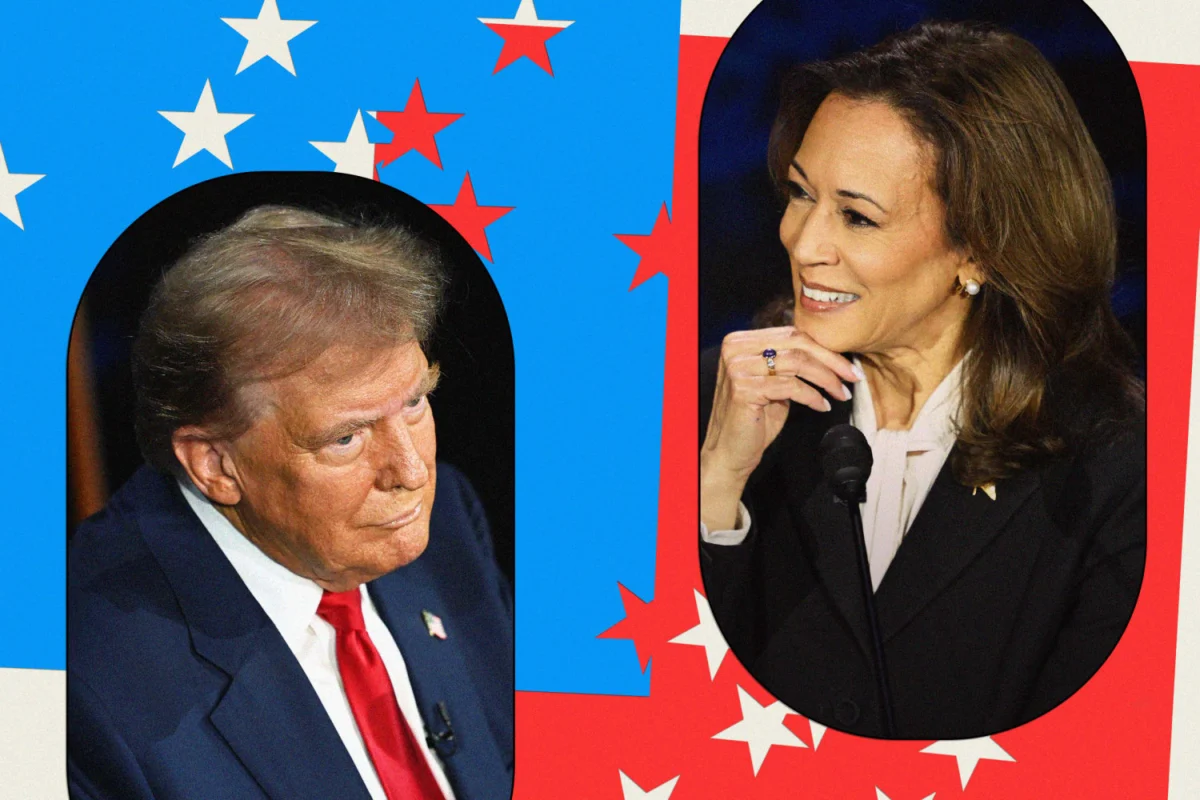
As the United States barrels toward another high-stakes election cycle, the national discourse has become increasingly saturated with hyperbolic claims regarding the economy. For the average citizen, it is easy to become ensnared in the polarized battle between the Democratic platform and the Republican agenda. However, seasoned financial observers—often referred to as "Mustachians"—understand that while the ballot box is a critical tool for civic engagement, obsessing over daily political maneuvers is a distraction from one’s actual "circle of control."
When we strip away the campaign slogans and the televised debates, we are left with a fundamental disconnect: the reality of the U.S. economy versus the narrative presented by those seeking power. As we examine the current state of the nation’s wealth, it becomes clear that many of the core arguments being peddled by candidates on both sides of the aisle are not merely exaggerated—they are fundamentally disconnected from economic fact.
The Disconnect: Why the Economy Feels "Bad" Despite Strong Data
The current paradox of the American economy is perhaps its most fascinating feature: the data points toward historic prosperity, yet public sentiment remains stubbornly negative. By nearly every traditional metric—unemployment rates, GDP growth, and labor market participation—the U.S. economy is performing at an elite level.
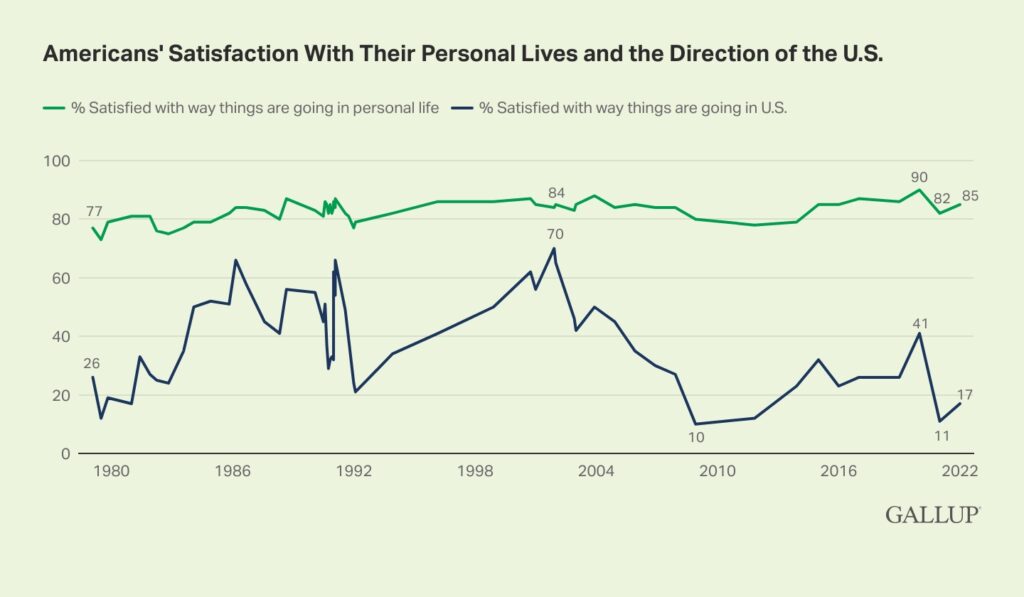
Despite this, recent Gallup polling reveals a jarring contradiction. While approximately 85% of Americans report that they are doing well personally, only 17% believe the national economy is in good health. This mathematical impossibility—where the aggregate of "doing well" individuals does not result in a "good" national economy—suggests that our collective perception is being warped. This distortion correlates strongly with the rise of social media misinformation and the tendency of political campaigns to weaponize irrational emotions over sound fiscal analysis.

Chronology of Misinformation: The Politicization of Economics
The politicization of economic health is not a new phenomenon, but the intensity has accelerated in the modern era.
- The Post-2020 Recovery: Following the global disruption of the COVID-19 pandemic, the world faced supply chain bottlenecks and a surge in demand. This created a period of high inflation, a natural reaction to a system under extreme stress.
- The Interest Rate Pivot: To combat rising prices, the Federal Reserve acted with precision, raising interest rates to cool the economy. These "brakes" worked, bringing inflation back down to a manageable 2.4%.
- The Rhetorical Gap: Despite the successful navigation of these macro-challenges, political candidates have continued to describe the current era as a period of economic failure, promising to "fix" a system that, by most objective measures, has already corrected itself.
Supporting Data: Debunking the Top Political Myths
To navigate the current election season with a clear head, it is essential to dismantle the specific myths that candidates rely on to manipulate undecided voters.
1. The Myth of Presidential Economic Control
Politicians have a vested interest in claiming credit for bull markets and blaming their predecessors for recessions. However, the U.S. economy is a vast, $27 trillion engine that dwarfs the influence of any single executive. While the U.S. represents roughly 26% of the global economy, it remains inextricably linked to the remaining 74% of international activity. Short-term economic cycles are typically driven by the natural human oscillation between greed and fear, not by executive orders.
2. The Fallacy of Interest Rate Manipulation
Candidates often promise to "fight" to lower interest rates, ignoring the fact that the Federal Reserve operates as an independent body for a reason. Monetary policy is a delicate instrument; if left to the whims of political election cycles, it could lead to the kind of catastrophic hyperinflation seen in nations that lack central bank autonomy.
3. The Wage-Inflation Narrative
A common refrain is that inflation has made life unbearable for the average American. The data suggests otherwise. Since 2019, while consumer prices have risen by roughly 19%, average wages have grown by 21%. In real terms, the American worker is better off than they were five years ago. Yet, the political narrative persists that we are in a period of decline.
4. The Housing Crisis and Zoning Reform
Housing affordability is perhaps the most legitimate pain point for Americans. However, proposed solutions—such as federal subsidies for homebuyers—often exacerbate the problem by fueling demand without addressing the root cause: supply. The path to affordable housing lies in the radical simplification of building codes, the elimination of restrictive suburban zoning, and the removal of the "NIMBY" (Not In My Backyard) roadblocks that prevent the construction of new housing units.
5. The Obsolescence of Gasoline
The ongoing political obsession with gas prices remains a vestige of the 20th century. With the rise of electric vehicles (EVs), the volatility of oil prices is becoming increasingly irrelevant to the savvy consumer. When one considers that the average household spends only a small fraction of their disposable income on fuel, and that the total cost of ownership for an EV is now competitive with—or cheaper than—gas-powered vehicles, the political focus on gas prices is akin to debating the cost of typewriter ribbons in a digital age.
Official Responses and Independent Analysis
Independent observers and non-partisan organizations, such as USA Facts—a project championed by former Microsoft CEO Steve Ballmer—have stepped in to fill the void left by political campaigns. Their mission is simple: provide the raw data without the partisan spin. These independent analyses consistently show that the U.S. is not a nation in freefall, but a resilient, evolving economic power.
Conversely, when pressed, official political responses tend to pivot toward "corporate greed" or "foreign interference" to explain economic conditions. However, empirical studies, including recent analysis from outlets like NPR, show that there is little evidence of systemic "greedflation" in major sectors like the grocery industry. Instead, these price fluctuations are the result of standard market dynamics.
Implications: The Path Toward "Enough"
The ultimate implication of this economic debate is that we are focusing on the wrong metrics. We have reached a point in history where the American middle class possesses a level of wealth and comfort that would have been unimaginable a century ago. The political preoccupation with "more" ignores the psychological reality of human satisfaction.
Once a society reaches the point of "Enough," additional material accumulation yields diminishing returns in happiness. The true challenge for the American voter is not to choose the candidate who promises to make them the wealthiest, but to recognize the economic reality and focus on the personal principles of financial independence.
Summary for the Modern Voter
- Acknowledge the Machine: Understand that the economy is a global, self-regulating machine, not a dashboard under the control of the White House.
- Prioritize Facts: Look for non-partisan sources like USA Facts rather than relying on campaign advertisements or social media snippets.
- Control the Controllable: The most effective way to secure your financial future is to focus on your own savings, skill acquisition, and debt reduction rather than waiting for federal policy to "save" the economy.
As we head to the polls, the most radical act one can perform is to vote based on logic rather than the emotional bait of political campaigns. By tuning out the noise and focusing on the fundamentals of economic reality, citizens can reclaim their time and their wealth, leaving the political theater for those who have yet to realize that the keys to their own prosperity lie firmly within their own hands.


 Nana Wu
 Sagoh

 Nila Kartika Wati

 Nana Muazin

 Layla Zulfa

 Jia Lissa

 Nana
 Rifan Muazin
