
 Rifan Muazin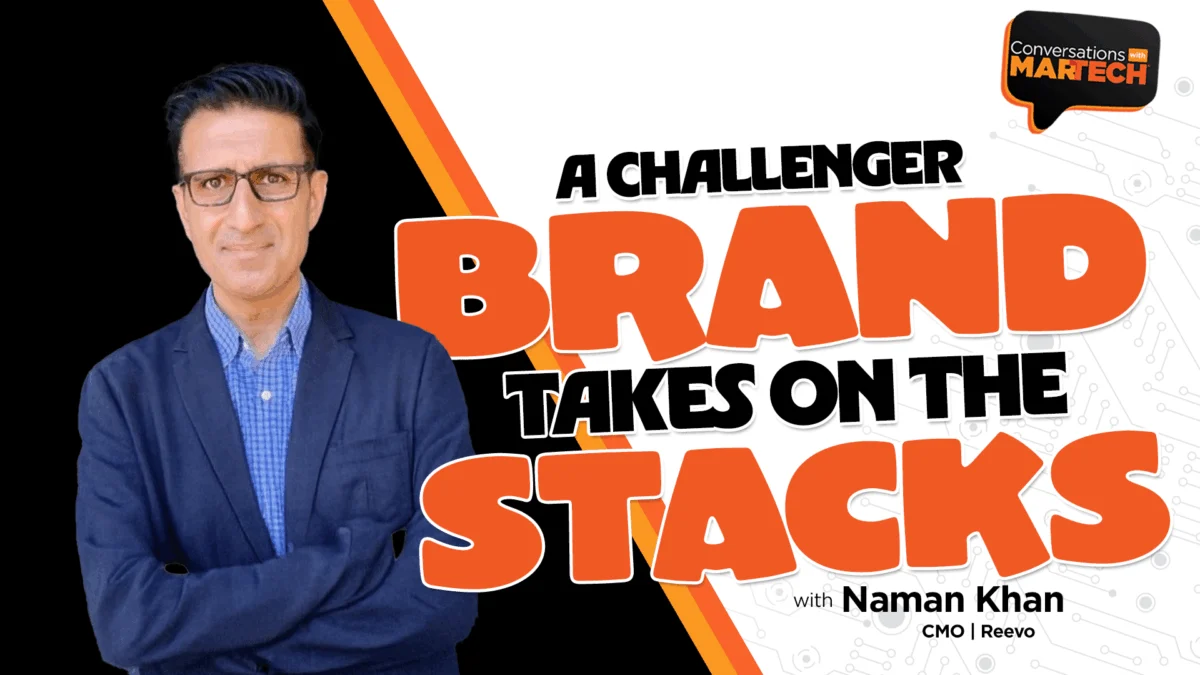
Published: May 13, 2026
For the better part of a decade, the gold standard for marketing and revenue operations has been the “best-of-breed” tech stack. CMOs and CTOs alike sought to build agile environments by selecting the most specialized tool for every niche function—a CRM for sales, a separate automation platform for email, a distinct analytics suite for attribution, and a plethora of point solutions for social media, content, and customer success.
However, a new narrative is taking hold. As the complexity of these fragmented ecosystems grows, so does the "integration tax"—the hidden, often crippling cost of maintaining brittle APIs, managing cross-platform data silos, and suffering the inevitable data loss that occurs when information is shuttled between disconnected systems.
In the latest episode of Conversations with MarTech, Naman Khan, CMO at Reevo and a veteran of industry giants like Salesforce and Dropbox, joins host Mike Pastore to argue that the industry is at a breaking point. The future, he suggests, does not lie in more plugins, but in the rise of unified, AI-native operating systems.

The Reality of the "Integration Tax"
The "integration tax" is no longer just a technical nuisance; it has become a primary drag on revenue growth. Every time a business adds a new "best-of-breed" tool to its stack, it adds a layer of technical debt.
"We have spent years building fragile bridges between islands of data," says Khan. "When you rely on third-party APIs to connect your lead generation software to your CRM, and your CRM to your marketing automation, you are essentially gambling on the stability of those connections. When an API updates or a sync fails, the data that falls through the cracks is often the difference between a converted lead and a missed opportunity."
This fragmentation has created a paradox: while companies have more data than ever, they are increasingly unable to see the "whole customer." When sales and marketing teams operate on disparate, un-synchronized platforms, the result is disjointed messaging, inaccurate attribution, and a "vibe" that feels robotic and detached to the end customer.
Chronology of the Stack Shift: From Monoliths to Modular Chaos
To understand where we are going, we must look at how we arrived here:

- 2012–2016: The Rise of the Cloud Suite. Businesses moved away from on-premise solutions, favoring early-generation cloud platforms like Salesforce and Marketo. These systems were powerful but rigid.
- 2017–2021: The "Best-of-Breed" Explosion. The MarTech landscape grew from hundreds of vendors to thousands. Companies began "stacking" tools, prioritizing feature-specific performance over platform interoperability. This era saw the birth of the "Ops" professional—someone whose sole job was to hold the stack together.
- 2022–2024: The AI Gold Rush. Generative AI entered the scene, often bolted onto existing stacks. This led to a "patchwork" AI approach, where different tools had different, competing AI models, further muddying data governance.
- 2025–Present: The Push for AI-Native Unity. We are now witnessing a consolidation trend. Organizations are beginning to swap out their "Franken-stacks" for unified, AI-native operating systems that treat data, intelligence, and execution as a single, cohesive entity rather than separate layers.
Vibe Coding and the New Paradigm of Marketing
One of the most provocative topics discussed by Khan is the emergence of "vibe coding"—a trend where marketing teams use LLMs and natural language to influence product development and customer experience, rather than relying strictly on rigid, hard-coded logic.
"Vibe coding is changing the nature of how we build," Khan explains. "Instead of spending months waiting for a developer to build an integration, marketers are using AI to create dynamic workflows that adapt in real-time. But this requires a system that is AI-native from the ground up, not one where AI is just a chat interface added as an afterthought."
This shift challenges the traditional view of marketing as a purely data-driven, analytical exercise. Khan posits that modern marketing is a "craft." While data provides the map, the "vibe"—the human element, the brand voice, and the emotional connection—is what drives long-term loyalty. When a tech stack is too focused on the "plumbing" of integrations, the brand loses the ability to be truly creative.
Reevo’s Challenger Philosophy
As a challenger brand, Reevo is positioning itself not just as another tool, but as a replacement for the legacy architectures that Khan once helped manage. Their approach to marketing is centered on the idea that the "stack" should be invisible.

Khan’s philosophy centers on three pillars:
- Humanizing the Identity: In a world of AI-generated content, the brands that win will be those that double down on human storytelling.
- Radical Simplification: If a tool doesn’t contribute to the core revenue workflow, it’s cut. The focus is on depth of utility rather than breadth of features.
- Unified Intelligence: By embedding the AI directly into the operating system, the system learns from the data in real-time, eliminating the need for manual syncing or data cleansing.
"Our customers don’t want more tools," Khan says. "They want to know why their customers are buying, and they want to be able to act on that without toggling between six different browser tabs. They want a platform that feels like an extension of their own brain."
Implications: The Future of the CMO Role
The shift toward unified platforms will have profound implications for the structure of marketing departments:
1. The Death of the "Marketing Technologist"
As systems become more unified and AI-driven, the role of the "marketing technologist" will evolve. Instead of focusing on API management and tool maintenance, these individuals will pivot toward AI orchestration—ensuring that the underlying models are aligned with company values and business objectives.

2. From "Data-Driven" to "Insight-Led"
Data-driven marketing has often meant "staring at spreadsheets." Insight-led marketing will mean interacting with AI systems that provide actionable intelligence, allowing teams to spend less time on data entry and more time on high-impact, strategic work.
3. The Consolidation of Spend
CFOs are increasingly looking at the "integration tax" as an operational waste. We should expect to see a wave of budget consolidation, where companies cut dozens of point solutions in favor of a single, enterprise-grade AI-native operating system.
Conclusion: A Call for Craftsmanship
The transition from fragmented, brittle stacks to unified, AI-native systems is not merely a technical upgrade; it is a fundamental shift in how we think about the craft of marketing. By reducing the reliance on manual integrations and complex, error-prone data flows, organizations can reclaim their focus.
As Naman Khan suggests, the future belongs to the brands that can cut through the noise of the "tech-heavy" era and return to the basics of human connection. The tools of the future should not stand in the way of that connection; they should be the engine that powers it.

For those currently managing a legacy stack, the message is clear: the integration tax is a choice. You can continue to pay it, or you can begin the transition to a more unified, intelligent, and human-centric way of working.
Key Takeaways from the Conversation
- The Integration Tax: It is a hidden, recurring cost that kills speed and accuracy in revenue teams.
- AI-Native vs. AI-Added: There is a fundamental difference between a platform designed for AI and a platform that simply has an AI button.
- The Human Edge: Technology should free up time for creativity, not replace it.
- Challenger Strategy: Winning in a crowded market requires a clear, simplified value proposition that addresses the pain of complexity.
For more insights into the evolving landscape of MarTech, listen to the full episode of "Conversations with MarTech" on the official website or your preferred podcast platform.


 Ammar Sabilarrohman
 Sagoh
Sagoh
 Raul Delapena Setiawan
 Reynand Wu


 Azzam Bilal Chamdy
 Ali Ikhwan