
 Layla Zulfa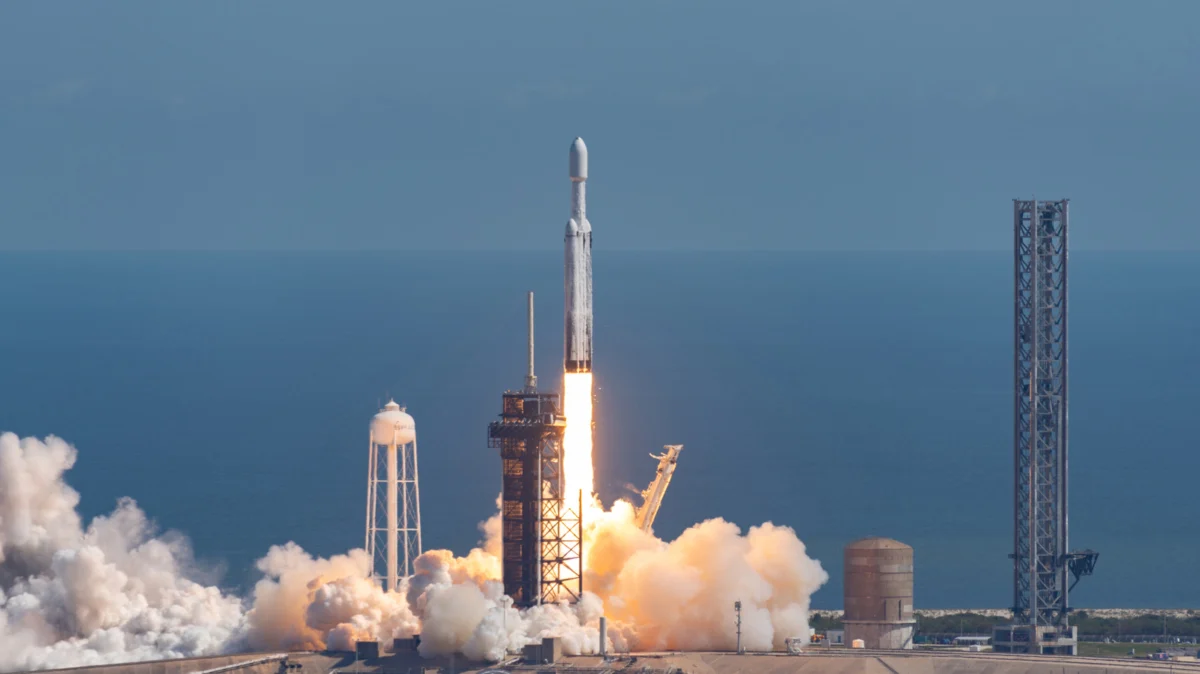
The long-rumored transition of Elon Musk’s aerospace juggernaut from a private entity to a publicly traded titan is officially underway. In a landmark filing with the U.S. Securities and Exchange Commission (SEC), SpaceX has confirmed its intent to list on the Nasdaq exchange under the ticker symbol SPCX. The move, which follows a period of confidential regulatory engagement, marks what analysts are already calling the most significant initial public offering in the history of the modern technology sector.
The S-1 filing, now public, provides an unprecedented glimpse into the financial architecture of Elon Musk’s interconnected business empire. While SpaceX has long been synonymous with the democratization of space travel, the filing reveals that the company is evolving into a diversified conglomerate spanning advanced aerospace, artificial intelligence, and high-speed global connectivity.
Main Facts: The Road to SPCX
The public disclosure confirms that SpaceX has moved past the preparatory phases of its IPO. The S-1 document—the bedrock of any company’s journey to the public markets—details the company’s capital structure, governance, and the massive scale of its future operations.
Key takeaways from the filing include:
- Listing Venue: The company will be listed on the Nasdaq.
- Ticker Symbol: SPCX.
- Scope of Business: The filing categorizes the company not just as a launch provider, but as a "multi-planetary infrastructure and data services firm."
- Strategic Partnerships: A significant portion of the revenue outlook is tied to a massive $1.25 billion-per-month service agreement with AI firm Anthropic, which will utilize SpaceX’s proprietary data center infrastructure.
The filing underscores a strategic pivot: SpaceX is no longer merely a vehicle for NASA’s cargo or private satellite deployments. It is positioning itself as the primary utility provider for the next generation of AI-driven, orbit-based computing.
Chronology: From Private Vision to Public Ledger
The path to the Nasdaq was paved with years of iterative engineering and calculated financial maneuvering.
- 2002–2010: The Foundation. SpaceX begins as a lean, venture-backed startup focused on the Falcon 1 and the development of the Merlin engine, aiming to lower the cost of orbital access.
- 2015–2020: The Starlink Pivot. The company begins the rapid deployment of its low-Earth orbit (LEO) satellite constellation. This transition transformed SpaceX from a service provider into a global telecommunications operator.
- 2023: Integration of xAI. The partnership between Musk’s AI venture, xAI, and SpaceX’s hardware capabilities began to signal a shift toward "orbital data centers."
- Early 2025: The Confidential Filing. SpaceX initiated the formal SEC review process under the Jumpstart Our Business Startups (JOBS) Act, allowing it to keep its financials private during the initial regulatory assessment.
- Present Day: The Public S-1. With the S-1 filing now public, the company enters the "roadshow" phase, where management will pitch the firm’s valuation to institutional investors before setting a final price for the IPO.
Supporting Data: The Anthropic Deal and Orbital Compute
The most startling revelation in the S-1 filing is the sheer scale of the financial commitment from Anthropic. According to the document, Anthropic has committed to paying SpaceX $1.25 billion monthly through May 2029. This capital infusion is earmarked for the use of xAI’s data centers, which are increasingly being hosted on—or integrated with—SpaceX’s orbital infrastructure.
This deal signals a massive shift in how AI training is conducted. By leveraging SpaceX’s unique position in space, the companies intend to build high-capacity, low-latency compute facilities that exist above the terrestrial regulatory and cooling limitations of Earth-based data centers.
However, the filing is clear about the ambition:
"Our plans to deploy large-scale orbital infrastructure, including orbital AI compute systems, will require the operation of very large satellite constellations, potentially numbering up to one million satellites."
To put this into perspective, the current Starlink constellation consists of a few thousand satellites. A million-satellite network would represent an order-of-magnitude increase in space traffic, prompting the company to acknowledge significant "risk factors" related to orbital debris, spectrum management, and international regulatory approval.
Official Responses and Market Sentiment
While Elon Musk has historically been wary of the quarterly pressure that comes with public markets—famously noting his desire to keep Tesla private in the past—the move to take SpaceX public is seen by market analysts as a necessity for the capital-intensive nature of the Starship program and the proposed orbital data centers.
Investors have greeted the news with cautious optimism. Financial analysts at major investment banks are currently analyzing the "risk factors" outlined in the S-1. These include:
- Regulatory Hurdles: The company admits that securing spectrum authorizations and debris mitigation approvals from international bodies is not guaranteed.
- Geopolitical Sensitivity: Given that SpaceX is a primary contractor for the U.S. government, the company faces unique risks regarding foreign ownership and national security restrictions.
- Technological Execution: The reliance on the successful, consistent, and safe operation of the Starship vehicle remains the single point of failure for the entire business model.
In a brief internal memo leaked shortly after the filing, SpaceX’s leadership team emphasized that the transition to a public company would not change the firm’s mission-first culture, but would instead provide the "liquidity required to accelerate our multi-planetary ambitions."
Implications: The Birth of the Orbital Economy
The implications of the SPCX IPO extend far beyond Wall Street.
The Regulatory Landscape
The SEC’s acceptance of this filing marks a shift in how the government views space-based assets. For years, the legal framework for "orbital data centers" was theoretical. By filing an S-1 that lists these as core revenue drivers, SpaceX is forcing the Federal Communications Commission (FCC) and international bodies like the ITU to develop a formal framework for space-based commerce.
Impact on Global Tech
If SpaceX succeeds in moving large-scale compute to orbit, it could fundamentally disrupt the terrestrial cloud computing giants—Amazon (AWS), Microsoft (Azure), and Google Cloud. The ability to process data in space, away from the cooling and power constraints of terrestrial data centers, could offer a competitive edge in AI model training that is currently impossible to match.
Risk to Earth’s Environment
The S-1 filing does not shy away from the ecological concerns. It openly addresses the potential for "orbital debris accumulation" and the light pollution impact of a one-million-satellite constellation. For environmentalists and astronomers, this is a clarion call. The IPO will likely trigger intense debates in the U.S. Congress regarding the "right to the sky" and the long-term sustainability of the low-Earth orbit environment.
Conclusion: A New Frontier for Investors
As the S-1 filing moves through the SEC review process, the global financial community is watching with bated breath. The IPO of SPCX is not just an opportunity for investors to own a piece of a rocket company; it is an invitation to participate in the construction of a new industrial civilization.
Whether SpaceX can navigate the minefield of international regulations and the daunting physics of its own ambitions remains to be seen. However, one thing is certain: the era of the private, secretive aerospace firm is coming to an end. In its place, a publicly traded, hyper-connected, and orbit-dependent entity is rising. As the ticker SPCX prepares to flash on the Nasdaq screens, the world is reminded that the future of technology is increasingly tethered to the stars.
Developing…


 Suro Senen
 Jia Lissa
 Lina Irawan
 Ammar Sabilarrohman
 Nana Wu