
 Rifan Muazin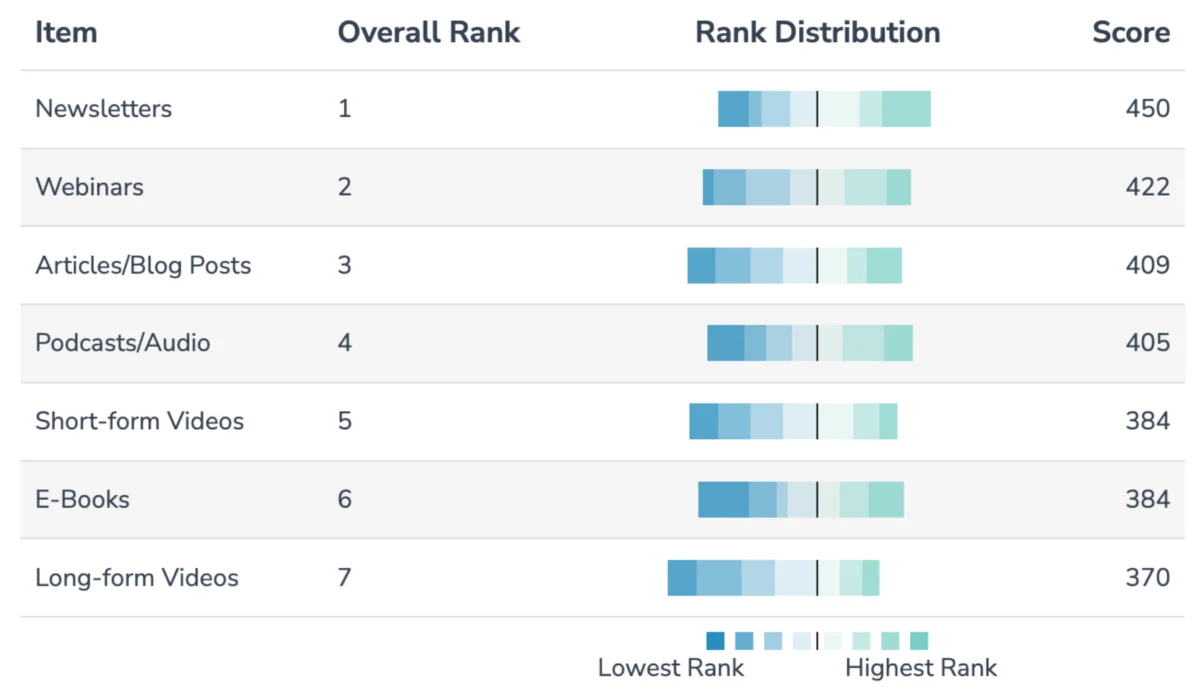
In an era defined by information saturation, the primary challenge for modern marketing leaders is no longer the acquisition of content—it is the filtering of it. Every day, the average executive’s inbox is besieged by a relentless deluge of reports, frameworks, industry whitepapers, and “must-read” think pieces. Yet, as the volume of available information climbs, the time available to digest it continues to shrink.
This paradox has created a fundamental crisis of attention. For the marketing leader, the ability to discern signal from noise is not just a productivity skill; it is a strategic imperative. As a result, we are witnessing a significant pivot in the digital landscape: the resurgence of the curated newsletter as the primary vehicle for industry intelligence.
The Data-Driven Demand for Curation
Recent audience research conducted by Convince & Convert (C&C) provides empirical evidence for this shift. In an annual survey of marketing leaders, the firm asked respondents to rank seven different content formats based on their preference for learning about industry trends and insights.
The results were decisive: newsletters were ranked as the preferred medium, outperforming short-form video, webinars, blogs, and podcasts by a significant margin. Specifically, respondents were nearly twice as likely to rank newsletters as their top-tier choice compared to any other format.
This data suggests that the "link-list" style of email—once the industry standard—is losing its efficacy. Today’s professionals are not looking for a laundry list of URLs; they are seeking "smart summaries." They want an informed, curated perspective that answers the question: What does this mean for me and my business?
The Evolution of "The Trendline"
Responding to these findings, Convince & Convert has officially retired its long-standing newsletter, ON, in favor of a newly architected product titled The Trendline. This transition represents more than a cosmetic rebrand; it is a tactical pivot in content strategy designed to prioritize utility over volume.
The Problem with Traditional Newsletters
For years, the industry playbook for newsletters was simple: aggregate content from the brand’s blog, podcast, and training modules, and push them to an email list. While this model functioned in a lower-density content environment, it has become increasingly ineffective. As content mediums have matured, the bar for engagement has risen.

If a brand continues to serve a generic list of links, they risk losing their authority. Modern readers are time-poor and expectation-rich; they demand value delivered directly within the email interface, without the "friction" of having to click through multiple pages to understand the core insight.
A New Strategic Architecture
The transition to The Trendline was predicated on the understanding that marketing leaders require "debriefs" rather than "deep dives." The new format focuses on:
- Strategic Context: Instead of just reporting what happened, the newsletter provides the team’s interpretation of why a story matters.
- Reduced Friction: Insights are presented in a way that allows the reader to absorb the core message without leaving their inbox.
- Structured Hierarchy: The format uses a clear, repeatable architecture that ensures readers know exactly what to expect in every edition, saving them cognitive load.
- Interactive Feedback: By introducing features like "Sound Off" (a recurring poll), the team is moving away from passive consumption toward active, data-driven engagement.
Why "Less" is the New "More"
The core thesis driving this industry-wide shift is simple: marketing leaders do not need more content. They need a filter.
When presenting to high-level stakeholders—such as CMOs or directors—the goal is never to overwhelm them with data points. It is to provide a synthesis that aids in decision-making. The same logic applies to newsletter marketing. If a brand wants to maintain a seat at the table in a leader’s daily workflow, it must provide a service that makes that leader’s job easier, not harder.
The Convince & Convert team noted that in their previous iteration, the reader was forced to perform the heavy lifting of synthesis. In the new format, the editorial team performs that labor, positioning the newsletter as a consultant-in-a-box rather than a marketing blast.
Implications for Content Strategy
The shift toward high-value, curated newsletters carries several broader implications for marketing departments looking to refine their own email strategies.
1. The Death of the "Link-Farm"
Brands that rely on newsletters merely as a traffic-driver for their websites will find their open and engagement rates trending downward. The modern audience prioritizes the "zero-click" experience. If you can deliver the value—the insight, the "Aha!" moment—inside the email, you build more trust than if you force the reader to visit your site.

2. The Rise of the "Personal" Brand
The success of platforms like Substack and independent newsletters has highlighted a critical truth: readers want a point of view. They are no longer interested in sterile corporate summaries. The Trendline succeeds because it utilizes the "strategic lens" of the C&C team, allowing their expertise to shine through rather than just reporting the news.
3. Owning the Audience
In an era of volatile social media algorithms, the email newsletter remains the last bastion of true, owned audience connection. By shifting to a more useful, insight-driven format, brands are not just sending emails; they are building a recurring habit. This habit is the foundation of long-term brand authority.
The Future of Engagement
As organizations look toward the future, the lessons from this transition are clear. The most successful content strategies of the next decade will be those that respect the reader’s time.
For those looking to overhaul their own email marketing, the following steps are essential:
- Audit for Utility: Remove content that exists only to promote other content. Ask: "Is this providing an insight, or just a distraction?"
- Prioritize Conciseness: If a point can be made in three sentences, do not use three paragraphs.
- Establish a "Debrief" Format: Create a structure that identifies the news, explains the "why," and poses the relevant strategic questions for the reader.
- Listen to the Metrics: Move beyond vanity metrics like open rates. Look at what people click on, what they reply to, and how they engage with polls.
Final Thoughts: A Call to Action
The evolution of The Trendline is a microcosm of a larger professional movement. As we navigate a landscape saturated with AI-generated content and infinite social feeds, the brands that win will be those that provide clarity, not just volume.
Marketing is fundamentally about solving problems. When you view your newsletter as a problem-solving tool—a resource that helps your audience think more strategically, understand their market more clearly, and save time—you move from being a source of noise to a source of truth.
In the final analysis, the goal is not to fill the inbox; it is to sharpen the mind of the reader. If you can accomplish that, you will have earned the most valuable commodity in the digital economy: attention. For those interested in seeing this new approach in practice, the Convince & Convert team invites you to observe the new format for yourself, noting that even for them, the strategy will remain a living, breathing project—constantly evolving based on the direct feedback of the very people they serve.


 Lina Irawan
 Nila Kartika Wati
 Ammar Sabilarrohman
 Asep Darmawan
 Asro
Asro
 Layla Zulfa
 Muslim