
 Nana
Nana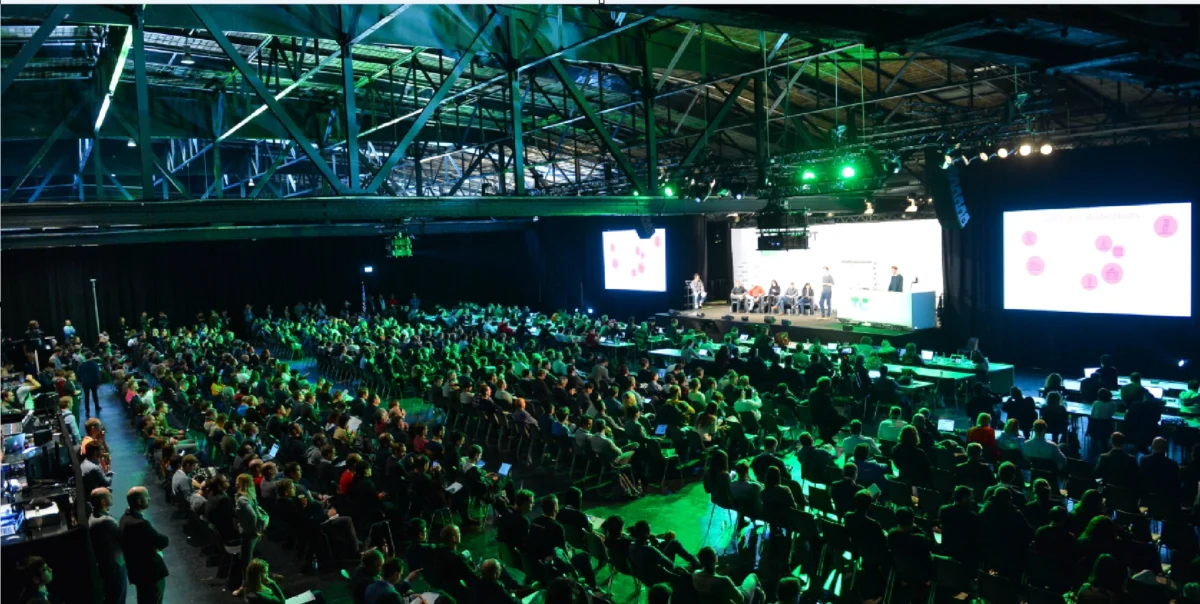
The landscape of software engineering is currently undergoing its most profound transformation since the advent of the high-level programming language. For decades, the developer’s workflow was defined by the manual translation of logic into syntax—a laborious, iterative process of drafting, debugging, and testing. Today, we are witnessing the migration from mere code completion to true autonomous agency.
As the industry pivots from simple generative prompts to complex, multi-agent systems capable of executing entire development lifecycles, the question is no longer "What can AI do?" but "What will it do next?" This shift will be the central theme of TechCrunch Disrupt 2026, taking place October 13–15 at the Moscone West Convention Center in San Francisco.
The Chronology of Coding: From Boilerplate to Agency
To understand the magnitude of the current AI revolution, one must trace the rapid evolution of the developer’s toolkit.
Phase I: The Era of Suggestions
The journey began with intelligent code completion. Tools that functioned as sophisticated predictive text engines analyzed existing codebases to suggest snippets, variable names, and boilerplate functions. This phase was essentially reactive; the AI waited for the human to type, acting as an accelerant for muscle memory rather than a partner in architecture.
Phase II: The Generative Leap
The subsequent phase introduced natural language processing to the IDE. Developers moved from "typing code" to "describing intent." With tools that could generate entire classes or refactor messy functions based on a simple prompt, the AI became a creative collaborator. However, the human remained the primary architect, responsible for validating every line and managing the integration of these fragments.
Phase III: The Rise of Autonomous Agents
We are now entering the age of the "Coding Agent." These systems do not merely write text; they operate within an environment. An agent can navigate a file system, compile code, run unit tests, analyze failure logs, and perform iterative self-correction. They can manage end-to-end workflows, effectively acting as junior-to-mid-level engineers that can handle maintenance, bug squashing, and technical debt resolution without human intervention at every step.
The TechCrunch Disrupt 2026 Experience
TechCrunch Disrupt 2026 serves as the primary forum for exploring these advancements. Over the course of three jam-packed days, the event will host 200+ conference sessions across six distinct stages, featuring insights from 250+ technology visionaries.
Why This Matters for the Modern Developer
The conference is designed to bridge the gap between theoretical AI research and practical application. Attendees will move beyond the hype to see how AI agents are fundamentally altering:
- Software Engineering: Automating the drudgery of pull requests and documentation.
- Enterprise Software: Scaling development teams without linear headcount growth.
- Information Security: Using agents to perform automated vulnerability scanning and remediation in real-time.
- Cloud Infrastructure: Reshaping SaaS architectures to be more responsive and self-healing.
Supporting Data: The Anthropic Paradigm
One of the most anticipated highlights of this year’s event is the deep-dive session featuring Steve Androulakis and Sachin Malhotra of Anthropic. As the creators of Claude Code, Anthropic has become a bellwether for how large-scale organizations can operationalize AI agents.
The session will provide a rare, "behind-the-curtain" look at how Anthropic deploys fleets of agents to manage its own internal software engineering pipelines. Attendees will learn specific, battle-tested patterns for:
- Delegating Complex Tasks: How to break monolithic coding projects into discrete agent-friendly modules.
- Reviewing Agent Output: Establishing human-in-the-loop (HITL) checkpoints to ensure quality control.
- Error Recovery: Implementing "rollback" logic for when an agent enters a hallucination loop or introduces a regression.
This session serves as a blueprint for engineering managers and CTOs looking to integrate agentic workflows into their own stacks without sacrificing reliability.
The Star-Studded Industry Vanguard
The Disrupt 2026 lineup is a "who’s who" of the industry. The event will feature leadership from the companies driving the AI infrastructure layer:
- Foundational Models: OpenAI, Anthropic, and Together AI.
- Developer Platforms: Atlassian, Replit, and GitHub (via integration partners).
- Infrastructure & Data: Databricks, NVIDIA, and Google.
- Security & Identity: Okta and emerging security-focused AI startups.
These leaders will converge to discuss the "next frontier"—moving from chatbots that write code to systems that can autonomously manage the entire lifecycle of a product, from ideation and deployment to scaling and security patching.
Implications for the Future of Innovation
The emergence of these agents carries significant implications for industries far beyond software. As AI agents become more autonomous, their influence is rippling through finance, healthcare, and manufacturing.
Reshaping Industries
In healthcare, AI agents are assisting in the development of bioinformatics tools, managing vast datasets to speed up drug discovery. In finance, they are enabling high-frequency audit logs and real-time fraud detection systems that adapt as quickly as the threats they mitigate. In manufacturing, they are optimizing supply chain codebases to handle predictive maintenance schedules with minimal downtime.
The Human-Agent Partnership
The ultimate takeaway from TechCrunch Disrupt 2026 will likely be the definition of a new role for the human engineer. Rather than being replaced, the professional developer is being promoted to the role of "System Architect" and "Agent Orchestrator." The ability to manage these agents, evaluate their output, and provide high-level strategic direction will be the most valuable skill set of the late 2020s.
Join the Conversation
The transition to an agent-driven world is happening now. Missing the opportunity to understand these tools is akin to ignoring the arrival of the cloud or mobile computing in the early 2000s.
TechCrunch Disrupt 2026 provides the networking, technical knowledge, and strategic foresight necessary to stay ahead of the curve. Whether you are a founder looking for the next pivot, an investor seeking the next unicorn, or an engineer trying to survive the AI transition, this is the environment where the future is codified.
Registration Details
- Event: TechCrunch Disrupt 2026
- Location: Moscone West Convention Center, San Francisco
- Dates: October 13–15, 2026
- Exclusive Offer: Use promo code INFOWORLD25 during registration to receive a 25% discount on your pass.
Note: The discount code is valid for Attendee, Founder, and Investor passes. Secure your spot today to join thousands of innovators as we collectively define the next era of technological development.
Register for TechCrunch Disrupt 2026 Today
By attending, you are not just participating in a conference; you are positioning yourself at the vanguard of the most significant shift in computing history. Do not miss your chance to engage with the architects of the future—from the pioneers at Anthropic and OpenAI to the entrepreneurs building the next generation of SaaS solutions. We look forward to seeing you in San Francisco.

 Nana Wu
 Asro
Asro
 Laily UPN
 Iffa Jayyana
 Rifan Muazin
 Suro Senen
 Lina Hope
 Lina Irawan