Iffa Jayyana
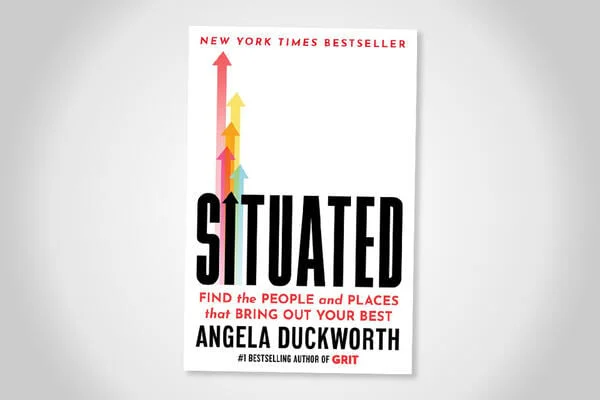
In September 2026, psychologist Angela Duckworth released her latest work, Situated: Find the People and Places That Bring Out Your Best. As the long-awaited follow-up to her 2016 international bestseller, Grit: The Power of Passion and Perseverance, the book marks a significant evolution in her scholarship. While Grit focused on the internal mechanisms of individual endurance—the "passion and perseverance" required to achieve long-term goals—Situated shifts the lens outward. Duckworth now argues that the environments we inhabit are not merely backdrops for our success but are, in fact, the primary architects of our potential.
However, the book’s arrival coincides with a period of profound instability in the professional landscape, particularly within higher education. As the academic sector grapples with budget constraints, enrollment volatility, and a shifting workforce, Duckworth’s thesis on "situational agency" has sparked a rigorous debate about the limits of individual control in an era of institutional precarity.
The Evolution of Duckworth’s Thesis: From Internal Grit to External Context
To understand the shift in Duckworth’s focus, one must look at the criticism that followed the publication of Grit. In 2016, the concept of grit was widely embraced by policymakers and educators, but it also faced sharp sociological critiques. Critics argued that by emphasizing individual character traits, the "grit narrative" inadvertently obscured the structural, economic, and systemic barriers that prevent individuals from thriving.
In a 2016 commentary, critics noted that the presentation of grit lacked a grounding in structural forces. As one observer put it: "What is left unspoken and unarticulated is the context in which success occurs."
Situated serves as a pragmatic response to this critique. While Duckworth remains a psychologist—meaning her focus remains on the individual’s psychology rather than macro-level sociological reform—she acknowledges that the individual is deeply embedded in a local environment. The book provides a roadmap for "situational design," teaching readers how to curate their immediate surroundings, build networks of support, and manipulate their daily habits to foster success. It is a nuanced argument for agency: we may not control the global economy or our institution’s balance sheet, but we can exercise granular control over our immediate surroundings.
The Crisis of the "Caring University": A Backdrop of Volatility
The release of Situated occurs in tandem with a growing alarm regarding the stability of the higher education workforce. Professor Kevin McClure, a scholar of higher education at the University of North Carolina at Wilmington and author of The Caring University (2025), has been a leading voice in articulating the new "seismic volatility" facing academic staff.
Historically, higher education was viewed as a stable, if lower-paying, career path. The "psychological contract" was clear: you sacrificed the salary potential of the private sector in exchange for job security and mission-driven work. McClure argues that this contract has been fundamentally breached.
The New Reality of Higher Ed Employment:
- Resource Constraints: Institutions are facing chronic budget shortfalls driven by demographic cliffs and declining enrollment.
- Federal Policy Whiplash: Shifts in federal funding and regulatory environments have left many universities in a state of perpetual fiscal anxiety.
- Corporate-Style Terminations: McClure highlights an increase in "needlessly insensitive" layoffs, noting that institutions are increasingly adopting "quiet firing" and aggressive restructuring tactics formerly reserved for the private sector.
The juxtaposition of Duckworth’s focus on individual agency and McClure’s description of systemic instability creates a compelling, if uncomfortable, tension. If the "situation" is one of active precarity, can individual agency ever be enough?
Supporting Data: The Illusion of Security
The data on current employment trends in academia suggest that the "stability" once promised by tenure-track or even staff-level university positions is eroding. According to recent labor market analyses, the number of non-tenure-track administrative and support roles has seen a massive surge over the last decade, yet these roles are increasingly being treated as "at-will" positions.
For the vast majority of university staff, the protection of tenure is a non-existent safeguard. These employees are susceptible to the same economic pressures as their corporate counterparts. When an institution faces a budget deficit, the first levers pulled are often the ones that remove human capital, regardless of the "grit" or dedication displayed by those employees.
This creates a paradox: Duckworth’s Situated encourages us to optimize our environment to reach our best selves. But if the environment itself is a sinking ship, does optimization simply lead to more efficient suffering?
Official Responses and Theoretical Counterpoints
While Duckworth has not explicitly engaged with the specific labor disputes cited by McClure, the philosophical implications of her work suggest a path forward. In her view, the inability to change the macro environment does not render the micro environment irrelevant.
Psychologists generally argue that focusing on what one cannot control—such as the university’s budget—leads to burnout and helplessness. By shifting the focus to what one can control, such as one’s local team culture, physical workspace, or professional network, an individual can maintain a degree of psychological health even in hostile climates.
However, critics of this approach suggest that it places an unfair burden on the employee. To suggest that an employee should "re-situate" themselves to find success in a crumbling institution may be perceived as "gaslighting"—asking the individual to fix a broken system through individual behavior modification.
Implications: Building a Life Around Work, or Work Around a Life?
The ultimate question for the modern academic worker is how to reconcile the advice in Situated with the harsh realities of the modern labor market.
Key Takeaways for Staff and Faculty:
- Prioritize Local Autonomy: If institutional stability is beyond your control, focus on the "small wins." Cultivate deep, supportive relationships with immediate colleagues. These networks act as a buffer against institutional volatility.
- Redefine "Productivity": If the institution no longer prioritizes the long-term well-being of the staff, staff must prioritize their own. This means establishing firm boundaries that protect time and energy for personal growth, family, and health.
- The Ethics of Mobility: Duckworth’s suggestion to "move more" is intellectually sound but practically difficult. For many in academia, the reality of child-rearing, caregiving, and community roots makes "moving" a privilege, not a choice. However, the psychological act of being ready to move—the cultivation of a "portable" skill set and a broad external network—is a vital form of self-protection.
- Rejecting Institutional Martyrdom: The most profound implication of this moment is the need to abandon the idea that personal sacrifice is a virtue in the face of structural decay. If an institution can let you go for "any reason or no reason at all," the work-life balance must shift decisively toward the "life" side of the equation.
Conclusion: Finding Agency in the Interim
Angela Duckworth’s Situated is a powerful, well-researched guide to the psychology of environment. It succeeds in showing that we are not islands; we are products of our local ecosystems. But as Kevin McClure rightly points out, the ecosystem of higher education is currently undergoing a painful transformation.
The synthesis of these two perspectives offers a new strategy for the academic worker: Strategic Agency. We must utilize the lessons of Situated to protect our mental health, foster local community, and optimize our personal flourishing, while simultaneously acknowledging that we are living through a period of deep institutional transition.
For the university staff member, the path forward is not found in "gritting out" a failing situation, nor in despairing over the macro-environment. Instead, it lies in the intentional, disciplined creation of a life that is robust enough to survive the volatility of the institution—a life where, regardless of the employer’s fate, the individual remains well-situated. As we navigate the coming years of academic disruption, perhaps the most "gritty" thing one can do is to stop prioritizing the institution and start building a life that remains, at its core, under one’s own control.

 Basiran

 Asro


 Lina Hope

 Lina Irawan