
 Azzam Bilal Chamdy
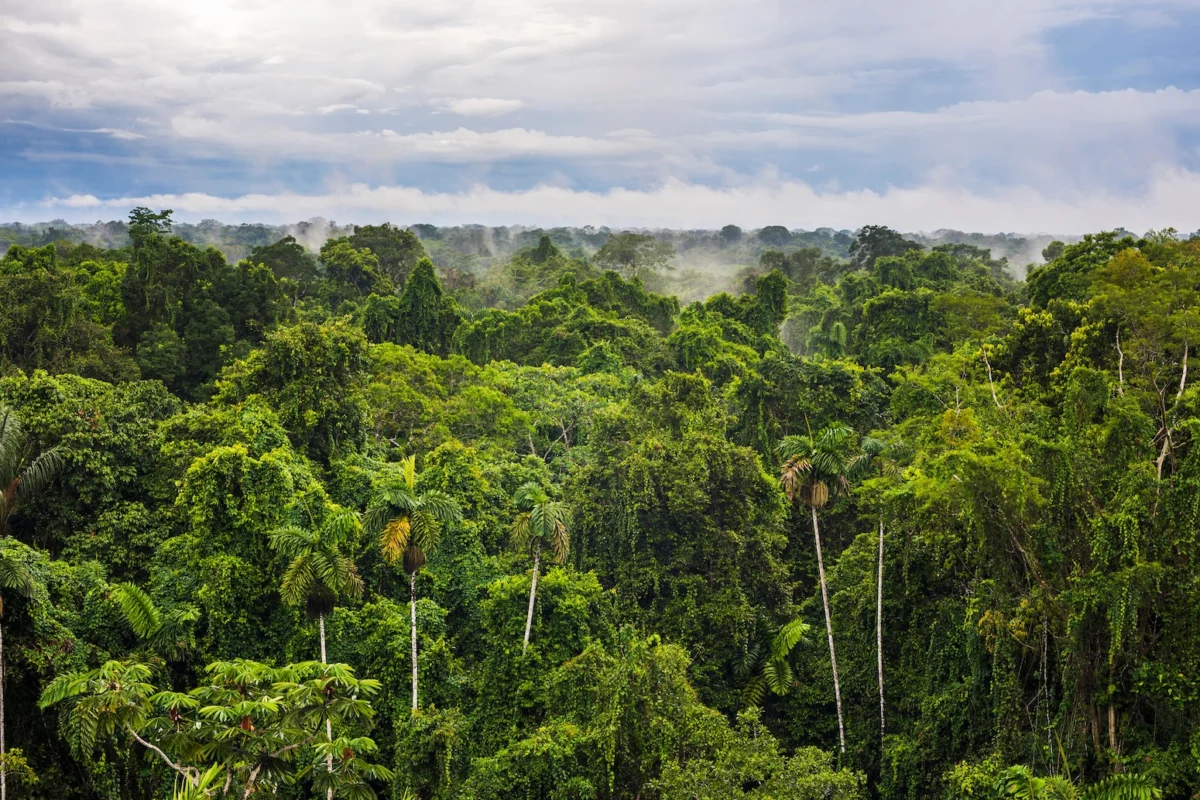
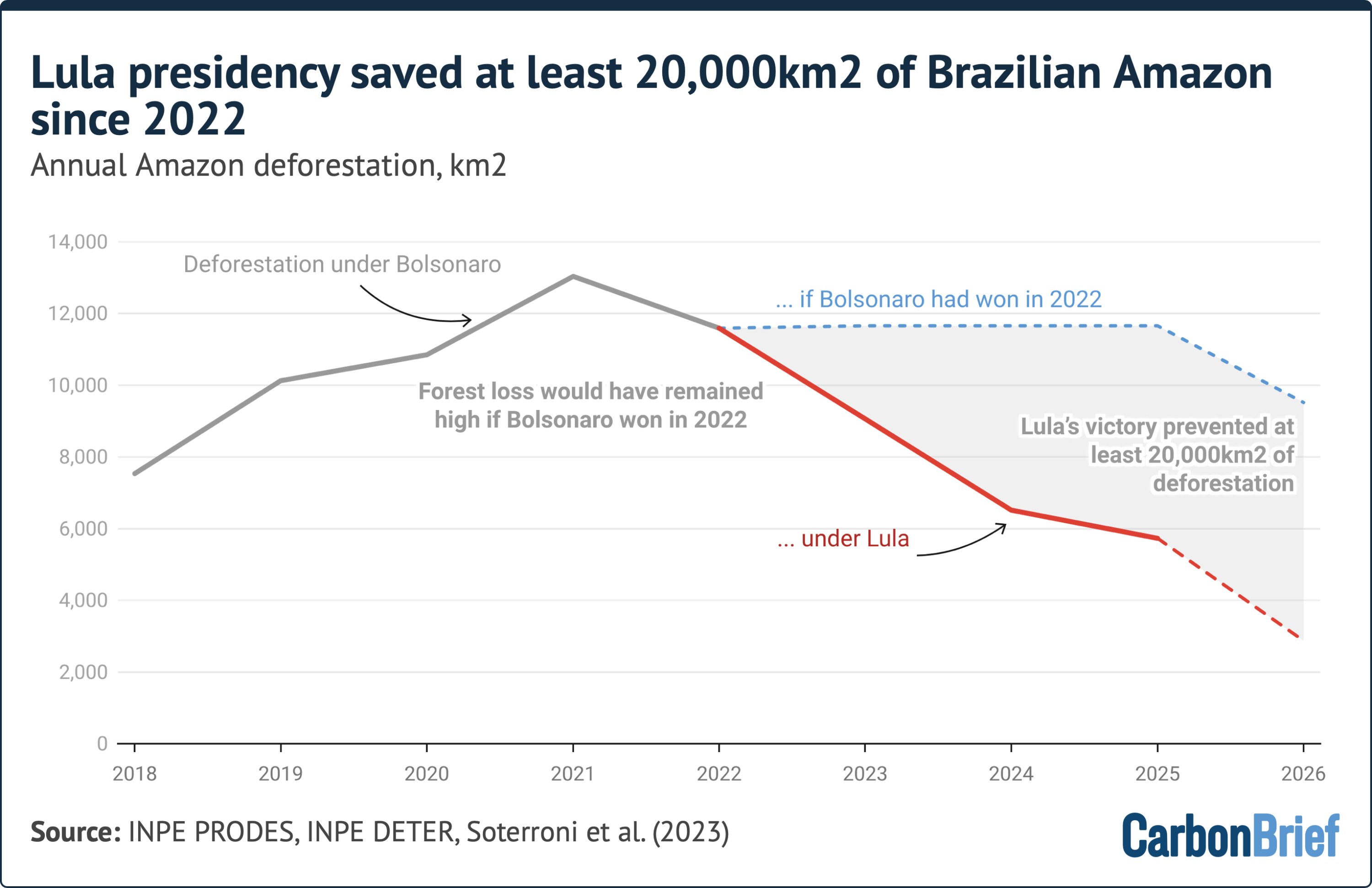
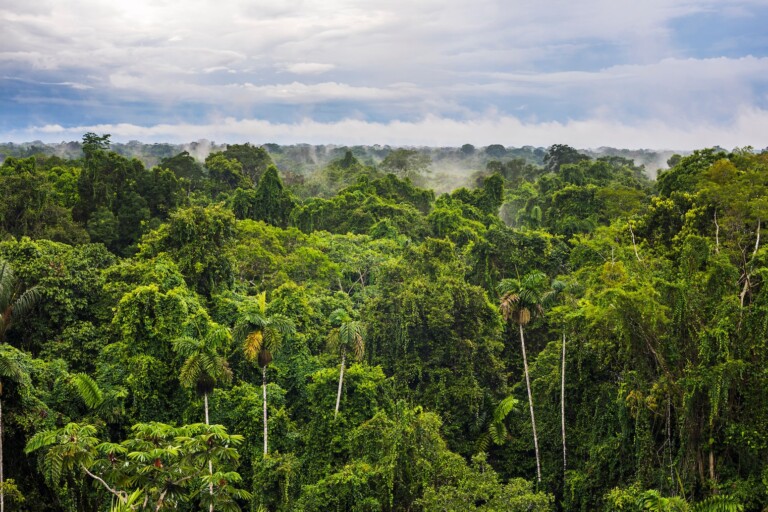
As Brazil navigates the conclusion of a historic electoral cycle, the fate of the Amazon—a critical bulwark against global climate collapse—hangs in the balance. Recent analysis from Carbon Brief provides a sobering look at what is at stake: through the proactive enforcement of environmental legislation under the administration of Luiz Inácio Lula da Silva, Brazil has effectively kept an area of forest roughly the size of New Jersey (20,000 square kilometers) standing, shielding it from the axe and the torch.
However, as the nation looks toward its future, that progress faces a stern test. Following a grueling electoral campaign, President Lula has secured a fourth term, yet he inherits a political landscape increasingly hostile to his environmental agenda. The contest against Flávio Bolsonaro, son of the former president, has underscored a deep ideological schism in Brazil regarding the value of its natural resources.

The Main Facts: A Tale of Two Policies
The stark contrast between the presidencies of Jair Bolsonaro and Lula da Silva is best illustrated by the data on deforestation. During the tenure of Jair Bolsonaro (2019–2022), the Brazilian Amazon suffered an unprecedented surge in illegal land clearing. By weakening environmental regulations, slashing the budgets of federal oversight agencies like IBAMA, and rhetorically empowering extractive industries, the Bolsonaro administration created an environment where deforestation became a normalized feature of the rural economy.
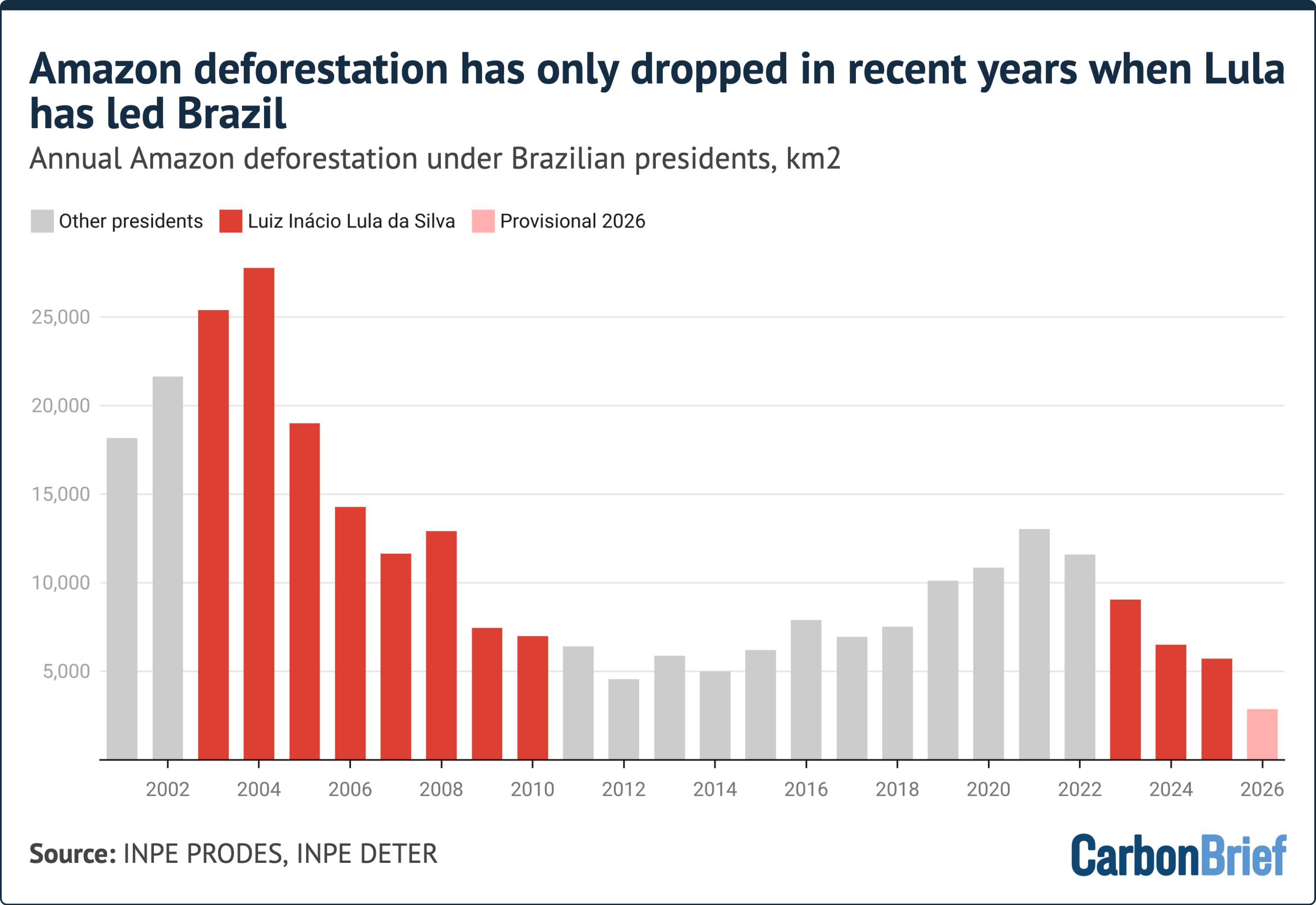
In contrast, Lula’s return to power in 2023 marked a definitive pivot. By reinstating the "Action Plan for the Prevention and Control of Deforestation in the Legal Amazon" (PPCDAM) and prioritizing the enforcement of the Forest Code—the flagship legislation requiring landowners to maintain native vegetation—Lula’s government succeeded in more than halving annual deforestation rates. From 11,594 km² in 2022, losses dropped to 5,731 km² by 2025. Projections for 2026 suggest the lowest levels of deforestation since records began in 1988, proving that political will remains the most potent tool in forest conservation.
Chronology: A History of Flux
The trajectory of the Amazon is not linear; it is a reflection of the political pendulum in Brasília.
- 2004–2012: Early in his political career, Lula oversaw significant declines in deforestation through aggressive monitoring and enforcement.
- 2019–2022: The Bolsonaro era saw the "deconstruction" of these mechanisms. Environmental agencies were gutted, and illegal mining and land-grabbing were largely ignored or encouraged.
- 2023: Lula begins his third term, declaring to the world at COP27 that "Brazil is back." The administration pivots to zero-deforestation targets.
- 2025–2026: While the administration makes progress, the political environment becomes increasingly volatile. Congress passes the controversial "devastation bill," and the Amazon soy moratorium faces a collapse as major traders withdraw.
- October 2026: Following a tight race against Flávio Bolsonaro, Lula secures his fourth term, setting the stage for a period of continued struggle between executive environmental policy and a conservative legislative body.
Supporting Data: Modeling the "What If"
The estimate that 20,000 square kilometers of forest were saved is not mere speculation; it is the result of rigorous modeling using the GLOBIOM-Brazil framework. Researchers from the University of Oxford, the International Institute for Applied Systems Analysis, and Brazil’s National Institute for Space Research (INPE) compared the current reality against a "baseline" scenario of non-enforcement.
Dr. Aline Soterroni, who led the 2023 analysis, notes that the model is "relatively conservative." It does not fully account for the potential for illegal land clearing that might have exploded under a regime that signaled impunity. Experts like Claudio Angelo of the Climate Observatory argue that had the previous trajectory continued, the destruction would have likely exceeded the model’s predictions, as the "political signal" from the top would have emboldened illicit actors across the Amazon basin.
Official Responses and Political Friction
The political landscape is fraught with tension. While Lula champions a goal of "zero deforestation by 2030," his opponents in the National Congress are actively working to dismantle the tools required to achieve it.

Flávio Bolsonaro, representing the right-wing opposition, has positioned himself as a climate skeptic, favoring the expansion of agribusiness and mining over preservation. His platform, while rhetorically committing to ending "illegal" deforestation by 2029, is viewed with deep suspicion by environmentalists. As Claudio Angelo puts it: "The only way you can trust him on this is to think that he is going to revoke the forest code and make all illegal deforestation legal."
Furthermore, the recent collapse of the Amazon soy moratorium—once hailed as the "most impactful voluntary supply chain policy"—has created a new threat. Major grain traders’ decision to step away from the agreement could lead to an additional 14,000 km² of deforestation by 2036, according to recent studies. This creates a challenging environment for the government, as the private sector now exerts pressure in the opposite direction of the state’s conservation goals.
Implications: The Regional and Global Stakes
The implications of Brazil’s internal politics extend far beyond its borders. Brazil is the world’s fourth-largest greenhouse gas emitter, with the vast majority of those emissions stemming from land-use change and deforestation. If Brazil fails to protect the Amazon, the global target of limiting warming to 1.5°C becomes mathematically impossible.
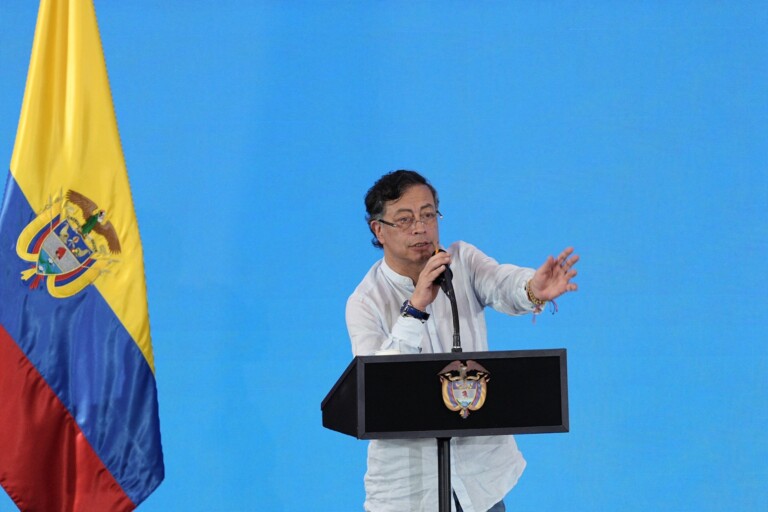
Moreover, there is a regional "rightward tilt" in South America that threatens to isolate Brazil’s environmental agenda. If right-wing governments in neighboring nations like Bolivia, Colombia, and Ecuador continue to prioritize resource extraction over conservation, approximately 95% of the Amazon could soon fall under the control of administrations that view the forest as a commodity rather than a climate stabilizer.

Dr. Patricia Pinho, deputy science director at the Amazon Environmental Research Institute, warns that the current situation is "devastating." She emphasizes that the focus on the economy and security during the election has pushed environmental concerns to the periphery, despite their critical importance to long-term national stability.
A Nation at a Crossroads
As Brazil looks toward the next four years, the message from the scientific community is clear: environmental protection is not merely a political preference, but a fundamental necessity for the country’s economic and physical survival. Dr. David Lapola of the University of Campinas sums up the gravity of the moment: "Land pillage, destruction of precious biodiversity and scorning of Indigenous peoples simply cannot be a nation’s project in the 21st century."
Lula’s victory provides a reprieve, but it does not guarantee victory for the Amazon. With a congress that has already bypassed presidential vetoes to push forward "devastation bills," the executive branch will need to leverage every tool at its disposal—from satellite monitoring and enforcement to international climate financing—to hold the line.
The "New Jersey-sized" success of the last few years proves that the Amazon is not yet lost. It remains a resilient, albeit wounded, ecosystem capable of regeneration if the political climate allows it. Whether Brazil can bridge the divide between its powerful, export-driven agribusiness interests and its responsibility to the global climate will define the nation’s legacy for generations to come. The era of "Brazil is back" has been extended, but the battle for the heart of the rainforest has only just begun.


 Lina Irawan
 Iffa Jayyana


 Pevita Pearce

 Suro Senen

 Muslim
