
 Basiran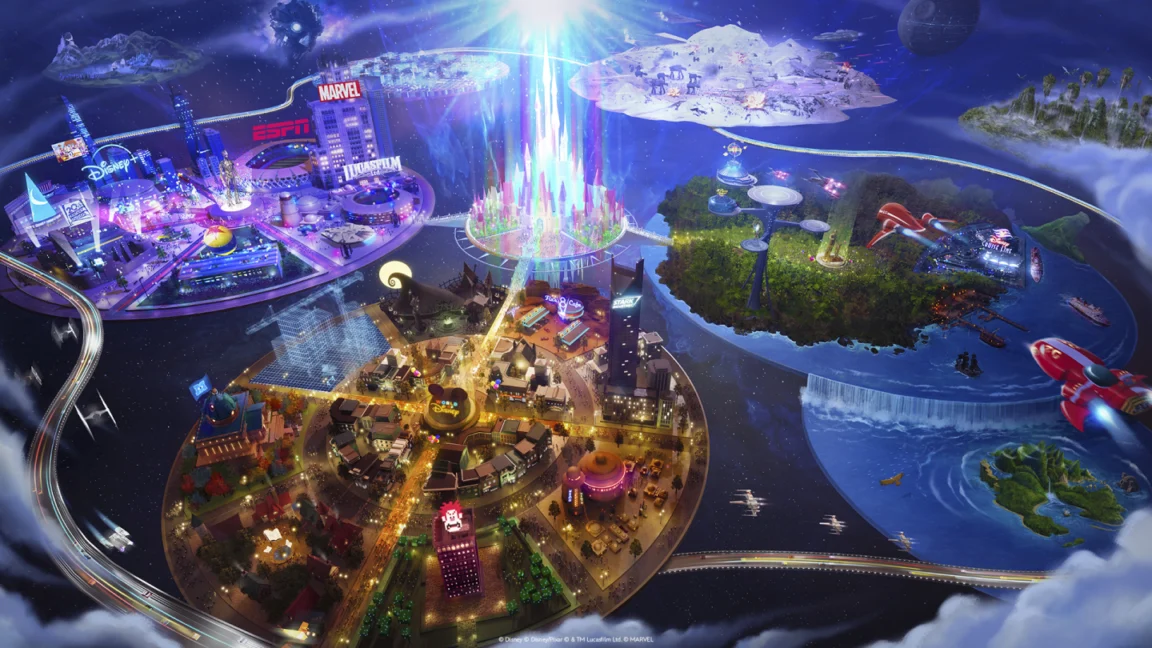
In a move that marks a tectonic shift in the video game industry, Epic Games has officially embraced an "AI-first" development mandate for its highly anticipated collaborative project with The Walt Disney Company. According to a recent report by Bloomberg, the Unreal Engine developer is pivoting away from traditional, manual software engineering in favor of a workflow dominated by generative artificial intelligence. This transition, which has resulted in the indefinite delay of a planned Marvel and Star Wars-themed shooter, signals a new era where the role of the human developer is being fundamentally redefined.
The Core Mandate: "No More Hand-Written Code"
The internal strategy shift at Epic Games is comprehensive. Sources familiar with the matter indicate that the studio is instructing its workforce to transition toward a paradigm where human developers function primarily as architects and editors of AI-generated output rather than creators of raw assets.
Internal communications viewed by Bloomberg reveal a stark directive: "no more hand-written code." Instead, the development team is being directed to utilize advanced large language models (LLMs)—specifically citing Anthropic’s Claude—to generate the foundational codebase for their projects. Similarly, the artistic production pipeline is moving toward "full AI workflows," where assets are generated by models and subsequently curated or refined by human artists.
This pivot represents a departure from the industry-standard "AI-assisted" development, where AI is used as a productivity tool (such as code completion or texture generation) to augment human effort. Epic’s new approach appears to prioritize the machine as the primary generator, with human labor acting as the oversight layer.
A Chronology of the Disney-Epic Partnership
To understand the weight of this decision, one must look at the timeline of the Epic-Disney relationship, which began with high-stakes ambition.
- February 2024: Epic Games and The Walt Disney Company announced a massive $1.5 billion investment deal. The vision was to create an expansive "gaming universe" that would live alongside Fortnite, featuring deep integrations with Disney’s massive intellectual property portfolio, including Marvel, Star Wars, and Pixar.
- Late 2024–2025: Throughout this period, development progressed under traditional workflows. However, reports of internal friction and slower-than-anticipated velocity began to emerge as the scale of the project grew beyond the capabilities of existing team sizes.
- Mid-2026: Recognizing the bottleneck, Epic leadership initiated a restructuring phase, internally debating the potential for generative AI to bridge the productivity gap.
- October 2026: The pivot is formalized. Following the realization that the initial March 2027 release window for the Disney shooter was unattainable, the project was delayed indefinitely. The company transitioned its staff to an AI-accelerated workflow, causing internal tremors as teams were retooled for this new operational model.
The Stakes: $1.5 Billion and the Future of Unreal
The $1.5 billion investment from Disney is not merely a partnership; it is a proof-of-concept for the future of interactive entertainment. By anchoring this project to their proprietary Unreal Engine, Epic Games is essentially using this collaboration as a "beta test" for how AI can scale game development across the entire industry.
If Epic can demonstrate that an AI-first workflow can produce high-fidelity, massive-scale gaming experiences with a smaller, more specialized team, it will set a new industry benchmark. However, the current delay suggests that the transition is fraught with technical and creative hurdles. Replacing the nuanced intuition of a human programmer or artist with an LLM-driven workflow introduces significant risks regarding quality control, code stability, and intellectual property consistency.
Official Responses and Corporate Strategy
The shift has been met with a mix of internal apprehension and public enthusiasm from Epic’s leadership.
In a formal statement, an Epic spokesperson attempted to frame the move as an empowering evolution of the craft: "We’re embracing AI-accelerated development, led by Epic developers who are the visionaries and creative drivers for everything we do."
CEO Tim Sweeney, known for his vocal advocacy of new technology, took to social media to provide further context. Addressing the concerns of the developer community and the public, Sweeney wrote:
"We have a huge pivot underway here at Epic, moving developers around to retool for maximum AI acceleration. The aim isn’t to do the same stuff with fewer people, but to enable everyone here to build MORE and BETTER stuff, and to bring the benefits to all teams using Unreal."
Sweeney’s comments suggest that Epic views AI not as a cost-cutting measure to reduce headcount, but as a "force multiplier" intended to push the boundaries of what is possible within a development cycle. By automating the "grunt work" of coding and asset creation, Epic believes it can empower developers to focus on higher-level systemic design and creative direction.
Implications for the Gaming Industry
The implications of Epic Games’ decision are profound and far-reaching.
1. The Death of Junior Roles
If the industry moves toward a model where AI writes the code, the traditional career path for junior developers—who often start by writing routine code to gain experience—could disappear. If the machine handles the syntax and basic architecture, how will the next generation of senior engineers gain the fundamental experience required to troubleshoot and guide these AI models?
2. Standardization vs. Artistic Soul
There is a growing fear among creators that AI-generated assets will lead to a homogenization of visual styles. If every studio uses the same high-tier AI models, the distinct "soul" or stylistic flair that defines a studio’s portfolio—such as the unique look of a Naughty Dog or Rockstar game—could be eroded by the algorithmic tendencies of the underlying models.
3. Intellectual Property and Legal Grey Areas
By feeding massive amounts of data into generative models, studios are navigating an uncertain legal landscape. As Disney, a company famously protective of its intellectual property, embraces this workflow, it raises questions about copyright ownership. If an AI generates a character design based on a Marvel property, who owns the "creative spark"? Furthermore, as AI models are trained on existing art, the potential for copyright infringement claims remains a significant risk.
4. Technical Debt and Maintenance
While AI can generate code at unprecedented speeds, it often creates "technical debt"—code that is bloated, inefficient, or difficult to maintain. Managing an AI-generated codebase, which may lack the logical clarity of human-written code, could become a massive long-term liability for game developers.
The Road Ahead: A Risky Gamble
The delay of the Disney project is a clear signal that the transition to AI-first development is not a "plug-and-play" solution. It requires a complete overhaul of corporate culture, software architecture, and artistic philosophy.
Epic Games is currently in a "trough of disillusionment." They have moved past the initial excitement of AI’s potential and are now facing the harsh reality of implementing it at scale. Whether this pivot will result in a revolutionary gaming experience that justifies the $1.5 billion investment, or a cautionary tale about the limits of automation in creative fields, remains to be seen.
One thing is certain: the entire industry is watching. If Epic succeeds, the "hand-written" era of game development may effectively end by the close of the decade. If they fail, it will serve as a stark reminder that in the world of creative entertainment, the human touch is not just a preference—it is a necessity. As the dust settles on this major reorganization, the industry waits to see if the "AI-accelerated" future will deliver the next generation of gaming, or if it will fundamentally break the creative spirit that built the medium in the first place.


 Neng Nana
 Nana Muazin

 Jia Lissa
 Laily UPN
 Asep Darmawan