
 Nila Kartika Wati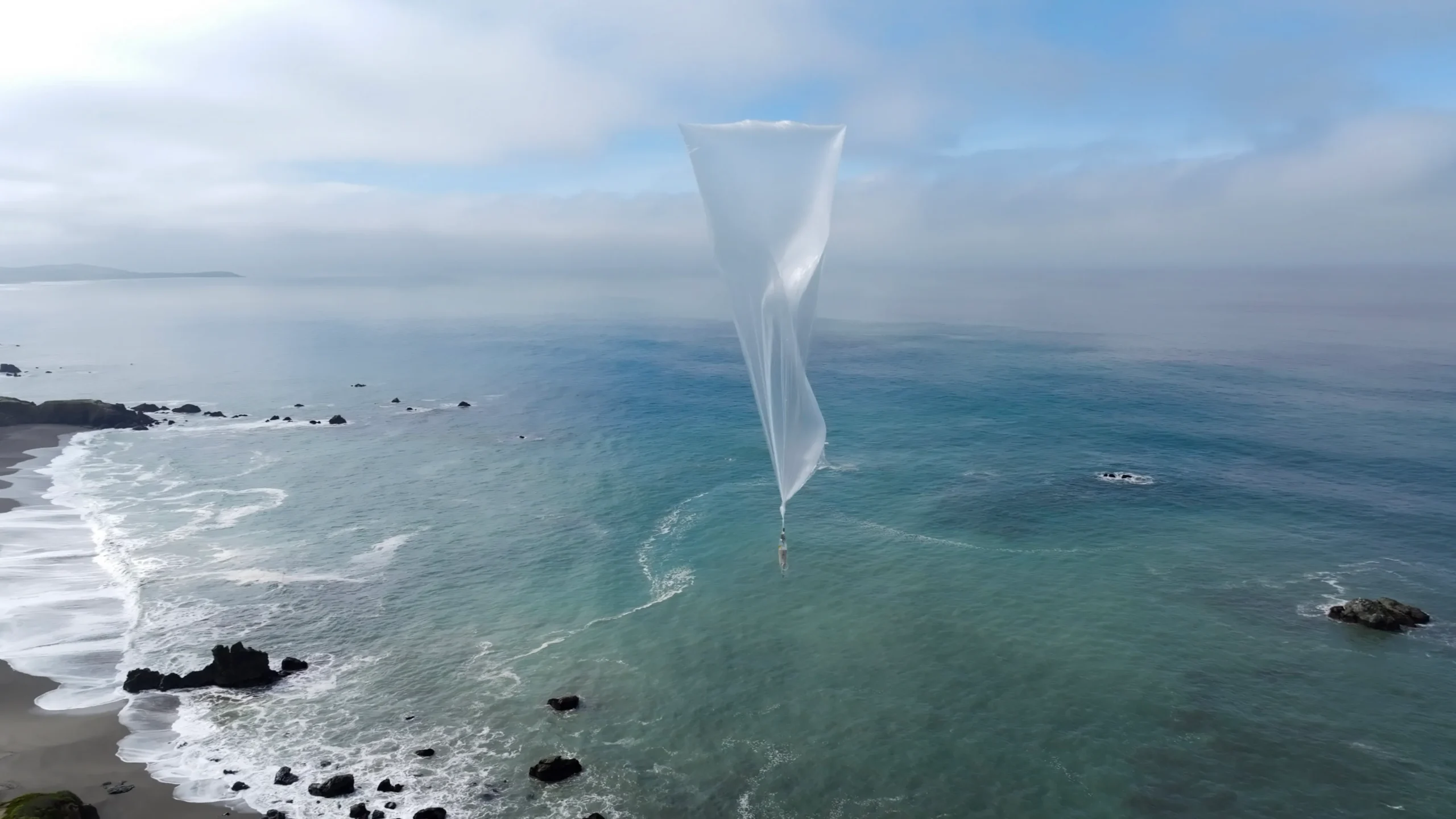
In an era where climate volatility is reshaping geopolitical stability and disaster preparedness, the U.S. Air Force has turned to a Redwood City startup to secure a technological edge. WindBorne Systems, a pioneer in autonomous, unpowered weather observation, has secured a landmark contract with the U.S. Air Force potentially worth up to $49 million. This agreement marks a pivotal moment in the integration of private-sector deep learning and proprietary hardware into the backbone of national defense and meteorological infrastructure.
The Core of the Contract: Precision in a Volatile Climate
The contract between the U.S. Air Force and WindBorne Systems is not a traditional lump-sum procurement. Instead, it functions as a flexible vehicle—a "pay-as-you-go" service agreement that allows the Air Force to task WindBorne’s fleet of approximately 700 autonomous balloons to collect atmospheric data in specific, high-priority regions at critical times.
While the total ceiling of the contract is set at $49 million, the current expenditure stands at approximately $1.7 million. This structure reflects the Air Force’s need for agility; rather than relying solely on legacy systems that may suffer from geographic blind spots, the military can now "order" weather data as if it were a tactical reconnaissance asset. The data gathered—ranging from humidity and pressure to wind speed and thermal layering—is fed directly into WindBorne’s proprietary AI forecasting model, providing a level of granular, real-time insight that was previously unattainable through static sensors or periodic satellite passes.
A Chronology of Innovation: From Startup to Strategic Partner
WindBorne’s ascent began in 2015, born from the realization that traditional weather modeling—reliant on physics-based simulations on massive, energy-hungry supercomputers—was becoming ripe for disruption.
- 2015–2020: Foundations and Flight Testing. The company focused on developing a fleet of low-cost, long-duration balloons capable of navigating global wind currents. By mastering the art of altitude adjustment—bleeding air to descend or dropping sand ballast to ascend—WindBorne created a "steerable" unpowered platform.
- 2023–2024: The AI Pivot. The company shifted from being a mere hardware provider to a data-intelligence firm. By integrating deep-learning architectures, they began training models on the empirical data collected by their own fleet, bypassing the limitations of traditional atmospheric equations.
- June 2026: WeatherMesh 6. The company launched its latest forecasting model, claiming it outperforms the European Centre for Medium-Range Weather Forecasts (ECMWF). This marked a shift in industry perception, moving from "experimental" to "operational."
- August 2026: Typhoon Breakthrough. In a feat of technical prowess, WindBorne successfully navigated an unpowered balloon into the eye of Typhoon Dolphin, providing unprecedented sensor data from the heart of a storm.
- Late 2026: The Air Force Contract. The Department of Defense formalized its reliance on WindBorne, awarding the $49 million contract without competitive bidding, citing the startup’s unique capability to provide global atmospheric intelligence that no other entity could replicate.
The Mechanics of the "Sky-Net": Supporting Data and Hardware
At the heart of the WindBorne ecosystem is the ability to navigate the atmosphere without an engine. This is a complex exercise in fluid dynamics. By maneuvering within the stratospheric wind currents, the balloons essentially "sail" the globe. This allows them to stay aloft for extended periods, maintaining a persistent presence over areas of interest.
The data these balloons collect is the fuel for "WeatherMesh 6." Unlike traditional models that approximate atmospheric behavior through physical equations, deep-learning models ingest decades of historical data, learning the "patterns" of the weather. When combined with the high-fidelity, real-time data from the 700-balloon fleet, the result is a predictive engine that can adapt to changing conditions with a speed that legacy supercomputers cannot match.
The Air Force’s decision to award this contract as a sole-source procurement underscores the "jagged frontier" of AI weather forecasting. According to WindBorne’s leadership, the government determined that no other company possessed the combination of a global, steerable sensor network and a proven deep-learning inference model to meet the specific requirements of modern military operations.
Official Perspectives: Bridging the Gap
Andrey Sushko, co-founder and CTO of WindBorne Systems, emphasizes that this contract is not just about revenue—it is about the acceleration of research and development.
"This is largely a vehicle through which continued growth of the constellation can be supported, as well as some work on research and development to continue to improve the hardware and performance of the balloons," Sushko noted in an interview with TechCrunch. He highlighted that the Air Force recognizes a fundamental shift: the transition from passive observation to active, data-driven navigation.
The partnership also reflects a broader trend within the U.S. government. As agencies like the National Weather Service and the Navy grapple with the increasing intensity of extreme weather events—driven by climate change—the reliance on private-sector agility is becoming a necessity. The government’s willingness to bypass traditional, lengthy bidding processes in favor of immediate access to WindBorne’s capabilities signals a strategic pivot toward "commercial off-the-shelf" (COTS) technology in national security.
Implications for Global Forecasting and Defense
The implications of this contract extend far beyond a single startup.
1. The Death of the "Static" Forecast
For decades, weather forecasting has been a game of averages. By using persistent, mobile sensors that feed real-time data into deep-learning models, WindBorne is moving the industry toward "dynamic" forecasting. This is critical for the Air Force, where precision in wind speed and visibility can determine the success or failure of aerial refueling, drone operations, or troop movements.
2. The Rise of AI Sovereignty
The fact that WindBorne’s model is competing with the ECMWF—a government-funded entity—suggests that AI has democratized weather forecasting. Frontier labs and startups are now capable of providing services that were once the exclusive domain of state-sponsored supercomputing centers.
3. Tactical Meteorology
The success of navigating a balloon into the eye of a typhoon is a proof-of-concept for a new kind of reconnaissance. In a conflict scenario, or even in civilian disaster response, the ability to deploy "eyes and ears" into the heart of an extreme weather event provides a tactical advantage that satellite imagery—which is often hampered by cloud cover—cannot provide.
4. Funding and Future Growth
With a recent $37 million Series B round led by investors who see the potential for commercializing weather data, WindBorne is well-positioned to scale. The Air Force contract serves as a "stamp of approval," likely opening doors for further partnerships with federal agencies, insurance companies, and global logistics firms that rely heavily on accurate, long-range weather predictions.
Conclusion: A New Horizon
The marriage of autonomous balloon technology and transformer-based AI architectures represents a fundamental change in how humanity monitors the atmosphere. As WindBorne Systems continues to expand its constellation and refine its WeatherMesh model, the boundary between "predicting" the weather and "observing" it in real-time is blurring.
For the U.S. Air Force, the $49 million investment is a hedge against the unknown. In an era where extreme weather is becoming the new normal, the ability to command a fleet of sensors that can traverse the globe at will is no longer just a scientific curiosity—it is a cornerstone of operational readiness. WindBorne Systems has moved from the startup fringe to the center of the storm, proving that the future of weather forecasting is not found in the static walls of a data center, but in the dynamic currents of the sky.


 Neng Nana
 Nana Muazin
 Basiran
 Jia Lissa
 Laily UPN
 Asep Darmawan