
 Ali Ikhwan
In the rapidly evolving landscape of global enterprise, few functions stand at as critical a crossroads as procurement. As artificial intelligence (AI) transitions from a theoretical buzzword to a fundamental operational pillar, the consensus among industry veterans is clear: the era of passive observation is over. Leaders are now faced with a binary choice—seize the transformative potential of AI to redefine their function, or face the obsolescence that comes with being disrupted by it.
Despite this clear mandate, the reality on the ground remains complex. While boardroom discussions often revolve around ROI, deployment strategies, and the design of future operating models, there is an undercurrent of hesitation. In recent dialogues, a candid perspective has emerged from within the CPO (Chief Procurement Officer) community: the procurement function is currently grappling with a widespread culture of fear, professional paralysis, and a "head-in-the-sand" approach to technological adoption.
The Anatomy of Paralysis: Why CPOs Are Hesitating
It is rare to find a senior leader willing to publicly critique their peers, yet the frustration within the procurement community is palpable. One prominent CPO recently broke the silence, describing the current state of the industry as one defined by systemic avoidance.
"What I’ve seen from an AI perspective with the majority of procurement professionals is that they are sticking their heads in the sand," the CPO remarked. "There is a phenomenal amount of fear out there."
This professional apprehension is not rooted in a single issue but rather a convergence of four distinct, compounding pressures:
1. The Existential Threat to Workforce Dynamics
At the core of the reluctance is the instinctive, and perhaps understandable, paranoia regarding the displacement of human labor. AI’s ability to automate complex sourcing, contract analysis, and spend categorization poses a direct challenge to traditional procurement roles. For many practitioners, the integration of AI feels less like a tool for empowerment and more like a threat to the job security of the teams they have spent years cultivating.
2. The Burden of Legacy Technology Failures
The skepticism is further compounded by the ghosts of past IT projects. Procurement has a long history of "big bang" technology rollouts that promised revolution but delivered marginal returns. Consequently, CFOs have become increasingly wary of the function’s investment requests. This creates a cycle of under-investment, where procurement is pushed down the priority list, making it even harder to prove the value of new AI initiatives.
3. The Spiraling Costs of Implementation
As the "AI Gold Rush" continues, the token costs and computational requirements for enterprise-grade AI are spiraling. Leaders are struggling to reconcile these high upfront costs with the pressure to demonstrate immediate, quantifiable value—a task made significantly harder by the long gestation period of AI-driven structural changes.
4. The Fallacy of the "Magic Bullet"
Perhaps the most damaging dynamic is the search for a single, all-encompassing software solution. Many CPOs are waiting for a "big box" product that will solve every procurement headache, from supplier risk to tail-spend management. This search for perfection often leads to inaction, as leaders wait for a silver bullet that, in the complex world of modern supply chains, does not exist.
The Call to Action: From Fear to Strategy
This brutal, no-holds-barred assessment of the current state of procurement serves as a much-needed wake-up call. It challenges the complacency that has set in among those who hope to wait out the current technological cycle.
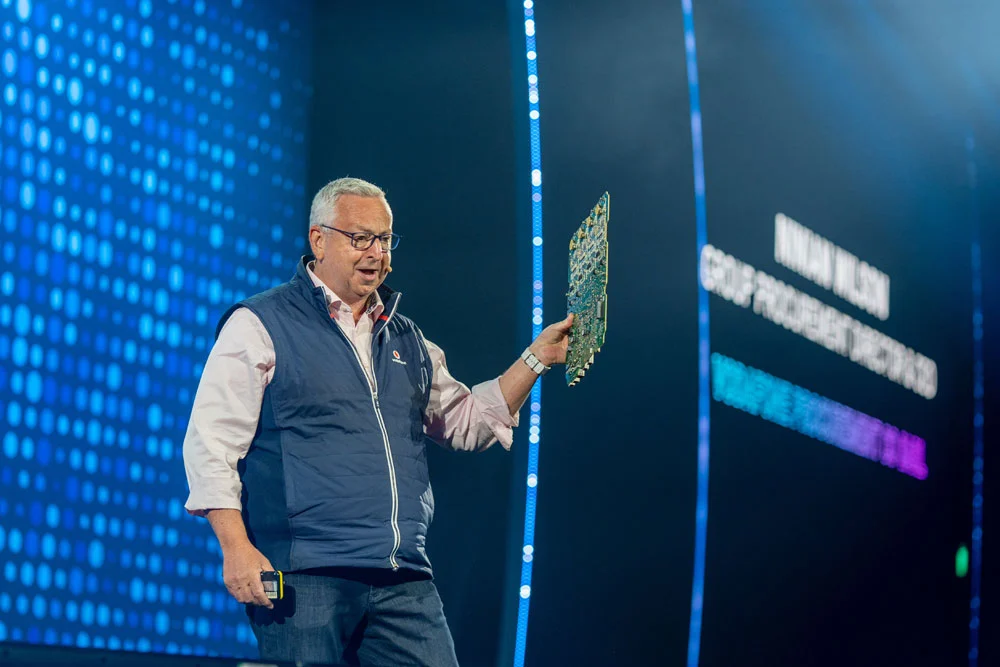
This perspective echoes the sentiments shared by Ninian Wilson, CPO of Vodafone, during his keynote address at the World Procurement Congress 2025. Wilson, a vocal proponent of aggressive digital transformation, urged his peers to reject the safety of the status quo.
"Adopt AI and bring it in," Wilson advised. "I encourage you all to seize the opportunity, seize the day, and don’t sit and wait, because you either do it to yourselves or it gets done to you."
The implication is stark: the "do it to yourselves" path represents proactive leadership—identifying where AI can augment human intelligence, re-skilling the workforce, and redesigning processes for maximum efficiency. The alternative, "having it done to you," implies a reactive posture where external market forces, competitors, or top-down executive mandates force a fragmented and chaotic adoption of technology that procurement leaders no longer control.
Chronology of the AI Shift in Procurement
To understand the urgency, one must look at the trajectory of AI in the corporate sphere:
- 2020–2022 (The Foundation): Procurement focused on digitizing data, moving away from legacy ERP reliance, and enhancing visibility during the supply chain crises of the pandemic.
- 2023 (The Generative Explosion): The release of Large Language Models (LLMs) shifted the conversation from "predictive analytics" to "generative capability," enabling machines to draft contracts and communicate with suppliers.
- 2024 (The Reality Check): Organizations began piloting AI, but faced immediate hurdles regarding data privacy, model hallucination, and integration costs.
- 2025 (The Pivot): A growing divide emerged between "AI-native" procurement teams—who have integrated AI into daily workflows—and those who remain mired in pilot purgatory.
- 2026 (The Integration Era): The current phase, characterized by the shift from isolated AI experiments to holistic, enterprise-wide integration strategies.
Data-Driven Implications for the Function
While CPOs remain cautious, the data surrounding AI-enabled procurement is compelling. According to various industry benchmarks, organizations that have successfully deployed AI in sourcing and procurement have seen a reduction in cycle times by up to 30% and an improvement in cost savings by an average of 10–15%.
However, the "return on investment" (ROI) is no longer just about hard savings. It is increasingly about "soft" metrics:
- Risk Mitigation: AI’s ability to monitor global news, weather patterns, and geopolitical shifts in real-time allows for proactive risk management that no human team could manage alone.
- Supplier Relationship Management (SRM): AI-driven sentiment analysis and performance tracking allow for more meaningful, data-backed conversations with key partners.
- Talent Retention: Contrary to the fear of displacement, AI is proving to be a tool that eliminates the "drudge work," allowing procurement professionals to focus on higher-level strategic sourcing and innovation—effectively increasing job satisfaction among high-performers.
Addressing the Skepticism: Official Industry Responses
Professional associations and industry leaders are responding to the current climate of paralysis with targeted initiatives. The focus has shifted from "what is AI" to "how do we govern it."
In recent months, organizations have begun establishing "AI Centers of Excellence" within procurement departments. These cross-functional teams, comprised of data scientists, procurement analysts, and change management experts, are tasked with demystifying AI and creating small-scale, "quick win" projects. By breaking the adoption process into manageable, high-impact modules, leaders are finding that they can circumvent the "big box" syndrome and build momentum.
Furthermore, the conversation is shifting toward ethical AI. By prioritizing transparency in how AI models evaluate suppliers or suggest price points, CPOs are addressing the skepticism of their CFOs and internal stakeholders, building the trust necessary to secure long-term funding.
Looking Ahead: Tomorrow’s Procurement Leader
The industry is currently congregating in Austin, Texas, for Tomorrow’s Procurement Leader 2026. This gathering is not merely a networking event; it is a critical forum for addressing the inertia described by the CPO community.
With contributions from industry giants such as Flex, Clorox, Meta, and Cisco, the event aims to provide a roadmap for the next two years. The objective is to move beyond the fear of the unknown and into the execution of the possible. For those in attendance, the key takeaway is clear: the technology is mature enough, the business case is urgent enough, and the risk of inaction is high enough that the wait-and-see approach is no longer a viable leadership strategy.
Conclusion: The Mandate for Change
The transformation of procurement via AI is not an optional upgrade; it is a fundamental shift in the definition of the function. For those who choose to lead, the opportunity is to elevate procurement from a back-office support function to a strategic engine of enterprise value.
For those who choose to ignore it, the future will be dictated by those who did not. As Ninian Wilson so aptly noted, the choice is ultimately between being the architect of your own evolution or becoming a casualty of a transformation you failed to steer.
The "head-in-the-sand" era is coming to a close. The age of the proactive, AI-enabled procurement leader is just beginning. The question for every CPO today is no longer whether AI will work, but whether they have the courage to make it work for them.

 Sagoh

 Rifan Muazin

 Raul Delapena Setiawan

 Reynand Wu



 Azzam Bilal Chamdy

